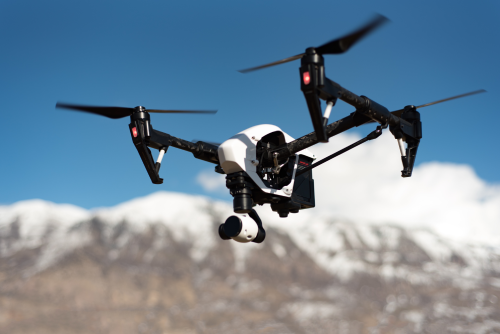
Roof inspections are one of the most practical real-world uses of drones. Instead of sending someone onto a hot, slippery, fragile, or hard-to-reach roof, a drone can capture detailed images from above and from the sides in minutes. In India, that is especially useful after monsoon damage, on large industrial sheds, and on terrace roofs where leaks often show up late.
Quick Take
- Drones are used in roof inspections to capture close visual evidence without putting people directly on the roof.
- They help identify common issues such as cracks, ponding water, broken tiles, corrosion, lifted sheets, blocked drains, flashing damage, and loose rooftop fittings.
- For homes, drones are useful for terrace waterproofing checks, tile roof condition, and post-storm review.
- For factories, warehouses, schools, malls, and housing societies, drones save time and reduce the need for scaffolding or repeated ladder access.
- Thermal cameras can sometimes help spot moisture or heat-related anomalies, but thermal alone is not proof of a leak.
- A drone inspection is often the first step, not the final diagnosis. Serious defects still need a roofer, contractor, engineer, or waterproofing specialist to verify and repair.
- In India, always verify the latest DGCA and airspace requirements before flying, especially in urban areas or near sensitive locations.
Why roof inspections are a strong use case for drones
A roof is a perfect example of a place that is important to inspect but awkward to reach safely.
Traditional roof inspection often means:
- climbing ladders
- walking on potentially weak or slippery surfaces
- setting up scaffolding or lift equipment
- spending a lot of time just accessing the area
A drone changes that. It gives the inspector a bird’s-eye view and a close side angle without direct contact.
That matters even more in India because many roof issues are seasonal and urgent:
- pre-monsoon checks for waterproofing and drainage
- post-monsoon leak investigation
- inspection after heavy wind, hail, or cyclone exposure in some regions
- summer heat-related expansion and cracking on terrace surfaces
- checks on metal industrial roofs exposed to rust, dust, and heat
For older or fragile roofs, the benefit is even bigger. A drone can inspect without someone stepping onto a weak tile, brittle sheet, or damaged membrane.
What drones actually look for on a roof
A good roof inspection is not just “fly up and record video.” The goal is to find visible signs of failure, wear, poor drainage, or impact damage.
On residential roofs
For villas, independent homes, duplexes, and bungalows, a drone is commonly used to inspect:
- broken or displaced tiles
- cracked terrace finish
- peeling or failed waterproof coating
- gaps around parapet walls
- blocked rainwater outlets
- water ponding on flat roofs
- damaged solar panel mounts
- loose dishes, tanks, pipes, or vents
- sealant failure around roof penetrations
On many Indian homes, the problem is not the main roof surface alone. Leaks often start near edges, corners, pipe entries, or poorly finished junctions between wall and slab.
On flat RCC terrace roofs
RCC means reinforced cement concrete, which is common in India. These roofs may look simple, but they develop many small issues over time.
A drone can help identify:
- hairline or wider cracks
- patches where waterproofing has separated
- standing water after rainfall
- slope problems where water is not draining
- damage around expansion joints
- loose protective tiles or pavers
- surface wear from heat and weather
From above, a drone can also show how widespread the issue is. That helps the owner decide whether the fix is local patchwork or a full waterproofing redo.
On industrial and warehouse roofs
Large industrial roofs are one of the best drone inspection use cases.
These roofs often include:
- long-span metal sheets
- fasteners and overlaps
- skylights
- gutters and downpipes
- ventilators
- rooftop service routes
- solar installations
Common defects include:
- rust and corrosion
- lifted or loose sheets
- failed joints and overlaps
- damaged fasteners
- clogged gutters
- dents from impact
- loose flashing near roof edges
- water ingress points near penetrations
Instead of stopping operations and sending people across a large shed roof, a drone can inspect most of the surface quickly and safely.
Around rooftop equipment
Many roofs are cluttered. You may find:
- overhead water tanks
- telecom equipment
- HVAC units
- ducts
- solar panels
- inverter rooms and cable runs
- service platforms
Leaks often begin around these installations, where the roof has been drilled, cut, sealed, or modified. A drone helps document whether the problem is coming from the main roof or from the installation points.
Common drone capture methods used in roof inspections
Not every roof inspection needs the same flying pattern. The method depends on the roof type and the problem being investigated.
| Drone capture method | Best for | What it reveals | Watch-outs |
|---|---|---|---|
| High overview pass | First look at the whole roof | Layout, debris, ponding, obvious damage, drainage pattern | Too high an altitude can miss small defects |
| Oblique angled pass | Sloped roofs and roof edges | Lifted tiles, flashing issues, seam gaps, side defects | Needs careful control near walls and trees |
| Close-up hover with zoom | Specific suspect areas | Fine cracks, loose fasteners, rust spots, sealant failure | Must keep safe distance from obstacles and wires |
| Automated grid mapping | Large terraces, campuses, warehouses | Consistent image coverage and stitched roof overview | Best when the roof is clear and lighting is steady |
| Orbit or perimeter pass | External roofline and facade transition | Edge conditions, parapet, gutters, upper wall junctions | Not always ideal in tight urban spaces |
| Thermal scan | Moisture suspicion, heat anomalies, solar roof issues | Hot and cold patterns that may suggest trapped moisture or insulation problems | Requires suitable timing and expert interpretation |
The best inspections combine methods. For example, an inspector may start with a wide overview, then do angled passes around edges, then zoom into suspected defects.
Step by step: how a drone roof inspection is usually done
This is what a practical roof inspection workflow looks like.
1. Define the purpose of the inspection
Before the drone goes up, the inspector should know what question needs answering.
Typical goals include:
- “We have a leak near the staircase room.”
- “Please check the terrace before monsoon.”
- “Inspect the entire warehouse roof for corrosion.”
- “Document storm damage for repair planning.”
- “Check the condition before buying or renting the property.”
This matters because a leak investigation needs more targeted flying than a general maintenance check.
2. Assess the site and risks
The pilot should review the surroundings first.
Important site risks include:
- nearby power lines
- trees and poles
- crowded roads
- neighbouring balconies and windows
- birds
- rooftop obstacles
- strong wind channels between buildings
- restricted or sensitive airspace nearby
In dense Indian cities, privacy is also a real consideration. The goal is to inspect the roof, not to capture unnecessary footage of neighbouring homes.
3. Plan the flight pattern
The pilot decides how to cover the roof.
A few common patterns:
- top-down passes for flat roofs
- angled passes for sloped roofs
- edge and parapet review
- specific close-ups near leak complaints
- stitched mapping for larger sites
For a warehouse roof, the pilot may use a repeatable grid so every section is covered. For a small home, manual flying with planned photo stops may be enough.
4. Capture still images first, then supporting video
This is where many beginners go wrong.
Video looks impressive, but still photos are often more useful for inspection reports because they are easier to zoom, compare, annotate, and archive.
A good inspection usually includes:
- overall roof shots
- medium-range context shots
- close-up images of defects
- edge and corner details
- drainage points
- roof penetrations
- rooftop equipment junctions
Video is useful as supporting evidence, especially for movement around the site and showing context.
5. Review the footage before leaving the site
A professional operator should not assume the job is done after landing.
Before packing up, they should check:
- are the images sharp?
- was every roof section covered?
- are suspect areas clearly visible?
- were shadows hiding important details?
- do any spots need another pass?
This simple step saves repeat visits.
6. Organise and interpret the data
After the flight, the images need structure.
A useful review process includes:
- grouping images by roof area
- marking visible defects
- comparing related images
- identifying severity
- separating confirmed damage from possible damage
If mapping software is used, the result may be a stitched top view of the roof. This is especially useful for large commercial buildings.
7. Recommend next action
The end goal is not “nice drone footage.” It is a maintenance decision.
Typical outcomes:
- no urgent visible defect, monitor over time
- minor repair needed in a few specific spots
- clean gutters and outlets immediately
- waterproofing contractor should inspect affected zone
- roofer or engineer should conduct physical verification
- unsafe or major damage requires urgent attention
Where drones help most in India
Roof inspection with drones is useful almost everywhere, but a few India-specific situations stand out.
After the monsoon
Many homeowners only notice roof problems once water appears indoors. By then, the source may have spread.
A drone can help inspect:
- terrace ponding
- coating failure
- blocked outlets
- parapet cracks
- displaced tiles
- damaged sheet overlaps
For housing societies, this is a practical way to inspect common terrace areas without sending multiple people across wet surfaces.
On large industrial sheds
Factories, warehouses, cold storage sites, and logistics buildings often have large sheet roofs that are time-consuming to inspect manually.
A drone is especially useful here because it can:
- cover wide areas quickly
- reduce work-at-height exposure
- inspect while limiting disruption to operations
- create photo documentation for maintenance teams
On fragile or older roofs
Some old roofs should not be walked on casually.
Examples include:
- brittle sheet roofing
- old tile roofs
- weathered waterproof membranes
- sections with suspected structural weakness
In these cases, the drone helps reduce direct loading on the roof until a specialist decides how to proceed safely.
Before buying, leasing, or renovating a property
A drone roof inspection can support due diligence.
It helps buyers or tenants spot:
- neglected roof maintenance
- obvious signs of water retention
- poor repair patches
- damage around rooftop additions
- large areas likely to need work soon
That does not replace a technical building survey, but it gives a faster and clearer first look.
Benefits compared with traditional roof checks
Drones are not magic, but they offer clear practical advantages.
Better safety
Less need for someone to climb or walk across a risky surface.
Faster coverage
A drone can inspect a large roof in a fraction of the time required for manual access.
Better documentation
Photos and videos provide a record that can be reviewed later, shared with contractors, or compared over time.
Easier repeat inspections
The same roof can be inspected again after repair, after monsoon, or at fixed intervals.
Less disruption
This matters for schools, factories, offices, and residential societies where setting up access equipment is inconvenient.
Access to awkward areas
Edges, upper gutters, high parapets, and roof-mounted equipment can often be seen more easily from the air than from the ground.
What drones cannot confirm on their own
A drone is an inspection tool, not a complete roofing diagnosis.
A drone may not reliably confirm:
- hidden structural weakness inside the slab or deck
- moisture trapped deep below the visible surface
- the exact leak source when water travels internally before appearing indoors
- underside damage below roof sheets
- small defects hidden under debris, shade, or equipment
- problems that need touch, pressure testing, or material sampling
Thermal imaging also has limits. Temperature differences can suggest an issue, but they can also be influenced by sunlight, surface material, recent weather, and time of day. Thermal findings usually need confirmation.
The right way to think about it is this: drones are excellent for screening, documenting, and narrowing down the problem area.
Choosing the right drone setup for roof inspections
If you are selecting a drone for this type of work, focus on practicality rather than hype.
Features that matter
- a stable gimbal for sharp images
- a camera good enough to crop into fine details
- reliable hovering near structures
- obstacle awareness features, where available
- decent dynamic range so bright roofs and dark corners are both visible
- zoom capability for safer standoff distance
- enough battery capacity for full-site coverage
- consistent reporting workflow after the flight
When thermal makes sense
A thermal camera may help in:
- moisture suspicion on flat roofs
- solar rooftop inspection
- building envelope heat anomalies
But it is not essential for every roof job. Many residential and small commercial inspections are handled well with a good visual camera alone.
Small home vs large industrial site
For a small terrace house, a compact camera drone may be enough if the operator can safely capture detailed imagery.
For industrial inspection work, professionals often prefer more capable platforms with:
- better zoom
- better wind handling
- optional thermal payload
- stronger reporting workflow
The drone matters, but pilot skill and inspection method matter just as much.
Safety, legal, and compliance in India
Roof inspection sounds harmless, but it is still a drone operation. In India, always verify the latest official requirements before flying.
Check the rules before every job
Depending on the drone category, the location, and whether the work is commercial or not, you may need to verify:
- airspace status
- Digital Sky requirements
- registration or identification requirements
- pilot eligibility or certification
- NPNT-related compliance where applicable
- local site permissions from the property owner or operator
Do not assume that a residential building or a factory roof is automatically safe to fly over just because the client invited you.
Practical safety points on site
- Avoid flying in rain or strong wind.
- Do not take off from crowded access areas.
- Keep non-essential people clear of the launch zone.
- Stay alert to birds, especially on terraces and near industrial sheds.
- Keep away from power lines, guy wires, masts, and rotating rooftop equipment.
- Maintain visual line of sight unless a specific operation is lawfully approved otherwise.
- Plan for signal loss, return path, and emergency landing area.
Privacy matters
In Indian urban areas, rooftops are close together. A drone pointed at one roof may accidentally capture neighbouring terraces, balconies, or windows.
That means you should:
- keep the camera task-focused
- avoid unnecessary low passes near adjacent homes
- brief the client about privacy boundaries
- store and share footage responsibly
Commercial operators should work like professionals
For paid inspection work, it is sensible to maintain:
- written checklists
- risk assessment notes
- client permission records
- flight logs
- maintenance records
- appropriate insurance, where relevant
Even when not strictly required in every case, these habits reduce risk and improve credibility.
Common mistakes in drone roof inspections
A lot of poor inspections happen not because the drone is bad, but because the method is weak.
1. Treating it like a cinematic shoot
Slow sweeping video may look good, but it often misses defect detail.
2. Flying too high
If the drone stays too far away, small cracks, rust spots, and sealant failure will not show clearly.
3. Missing angled views
Straight-down shots are useful, but many defects appear best from a side angle.
4. Ignoring drainage points
Outlets, gutters, downpipes, and parapet scuppers are common problem areas. They should be inspected deliberately.
5. Leaving the site without checking image quality
A soft, shadowed, or incomplete dataset is frustrating and expensive to redo.
6. Assuming thermal will “find the leak”
Thermal is helpful, not magical. It works best when used correctly and interpreted carefully.
7. Flying too close to obstacles
Roofs are full of antennas, rods, cables, tanks, and pipes. Rushing close passes increases collision risk.
8. Forgetting the repair context
An inspection should help someone fix the issue. If the report does not show exactly where the defect is, it is less useful.
What a useful roof inspection report should include
A good report turns drone images into action.
Include:
- property name and date
- reason for inspection
- weather and lighting conditions
- roof areas covered
- clear images of each issue
- marked locations of defects
- severity level, if appropriate
- likely next step: monitor, clean, repair, or specialist check
- limitations of the inspection
For large roofs, dividing the roof into zones makes follow-up easier for the maintenance team.
FAQ
Can a drone replace a manual roof inspection completely?
No. A drone can replace a lot of risky visual checking, but it cannot test materials by touch or confirm hidden structural issues. It often reduces the amount of manual inspection needed.
Can drones detect roof leaks?
They can detect visible signs linked to leaks, such as cracks, failed seals, ponding, damaged flashing, or displaced roof material. But the exact water entry point may still need physical verification.
Are drones useful for terrace waterproofing inspection?
Yes. They are especially helpful on flat terrace roofs to check cracks, ponding, coating condition, parapet junctions, and drain outlets.
Is a thermal camera necessary for roof inspections?
Not always. Many roof problems are visible with a good standard camera. Thermal is an extra tool for specific use cases, especially moisture suspicion and solar-related checks.
Can a drone inspect a roof after a storm or heavy rain?
Yes, once conditions are safe. Drones are very useful after storms because they can quickly document damage without sending someone onto a wet or unstable roof.
Is it legal to inspect roofs with a drone in India?
It can be legal, but legality depends on the drone, location, airspace, and type of operation. Always verify the latest DGCA, Digital Sky, and any other official requirements before flying.
What is better for roof inspection: photos or video?
Photos are usually better for detailed reporting. Video is useful as supporting context, but still images are easier to examine closely and include in reports.
Are drones good for inspecting industrial shed roofs?
Yes. This is one of the strongest use cases because industrial roofs are large, repetitive, and often risky to walk on. Drones can cover them quickly and document issues clearly.
How often should a roof be inspected with a drone?
That depends on the building and exposure. Common times include before monsoon, after monsoon, after severe weather, before major repair work, and as part of periodic maintenance on commercial properties.
Who should act on the drone findings?
Minor issues may go straight to a maintenance team or roofer. Suspected structural problems, widespread failure, or repeated leaks should be reviewed by a qualified contractor, engineer, or waterproofing specialist.
Final takeaway
How drones are used in roof inspections is simple in principle: they make roof checking safer, faster, and more visual. If you need to inspect a home terrace, a tile roof, or a large industrial shed, start with a properly planned drone survey, use it to identify the problem areas, and then bring in the right repair expert where the images show real risk.
