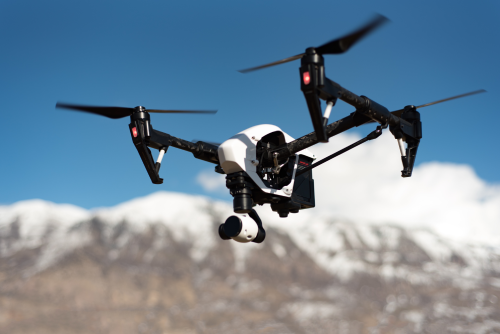
Drones are increasingly used in river and dam inspection because they can capture close, repeatable views of hard-to-reach structures without sending people onto steep slopes, spillways, or unstable riverbanks. For Indian operators, agencies, and contractors, the real value is not just aerial video, but faster inspections, better records, and safer decision-making before and after monsoon seasons.
Quick Take
- Drones are used in river and dam inspection for visual checks, mapping, erosion monitoring, seepage spotting, flood damage assessment, and progress tracking.
- A regular camera drone is useful for many jobs, but zoom, thermal, and LiDAR payloads are used for more specialised inspections.
- Multirotor drones are best for close inspection of dam faces, gates, spillways, and slopes.
- Fixed-wing or VTOL platforms are better for long river corridors, embankments, and wide floodplain mapping.
- Drone data can produce photos, videos, orthomosaics, 3D models, and elevation maps that engineers can review later.
- Drones improve safety and speed, but they do not replace every manual inspection. Underwater areas, internal galleries, and some structural tests still need other methods.
- In India, always verify current DGCA, Digital Sky, and local authority requirements before flying near dams, reservoirs, waterways, power infrastructure, or other sensitive sites.
Why drones make sense for rivers and dams
River and dam inspections are difficult by nature. Teams often deal with:
- steep concrete faces
- wet, slippery surfaces
- fast-moving water
- large distances
- restricted access roads
- vegetation covering embankments
- urgent checks after heavy rain or flooding
Traditional inspection methods may involve walking surveys, boats, scaffolding, rope access, or manned aircraft. Those still matter, but drones add a faster first layer of information.
For example, instead of sending a team across several kilometres of embankment just to identify weak spots, a drone can map the corridor and highlight the sections that need closer engineering review. On a dam, a drone can safely capture high-resolution images of spillways, gates, joints, and upstream or downstream faces before anyone decides whether hands-on access is necessary.
In India, this is especially useful before monsoon, after monsoon, and during flood response, when conditions change quickly and access can be limited.
How drones are used in dam inspection
Dam inspection is usually about finding visible defects early, documenting changes over time, and prioritising maintenance.
Visual inspection of dam faces, spillways, and gates
This is the most common use.
A drone with a high-resolution RGB camera, meaning a normal visible-light camera, can capture:
- cracks or surface lines that need review
- concrete spalling, where surface material has broken away
- staining or moisture marks
- rust on metal gates and fittings
- damaged joints, seal areas, or drainage outlets
- vegetation growth in unwanted locations
- debris around spillways or intake areas
A zoom camera is especially helpful because it lets the pilot inspect details from a safer stand-off distance. That matters near spillways, active water release zones, or structures with turbulent airflow.
Thermal inspection for abnormal temperature patterns
A thermal camera detects heat differences rather than visible colour.
In dam inspection, thermal imaging can help flag:
- possible seepage paths
- wet zones hidden from the eye
- unusual heat around electrical or mechanical systems
- bearing or motor overheating on gates or related equipment
Thermal data should be treated as an indicator, not a final diagnosis. If a thermal image suggests a problem, engineers usually verify it with ground inspection or other testing methods.
Thermal results are also affected by time of day, weather, wet surfaces, and sunlight. So the flight plan matters.
3D modelling of slopes, abutments, and surrounding terrain
Photogrammetry is the process of turning overlapping photos into measurements and 3D models. For dams, this helps create:
- orthomosaics, which are stitched map-like images
- 3D surface models
- digital elevation models, or terrain height maps
- volume estimates for debris or earthworks
- slope condition records over time
This is useful around:
- earthen dams
- rockfill dams
- embankments
- abutments
- access roads
- reservoir edge slopes
If there is a landslide risk, settlement concern, or erosion issue, repeat drone surveys can show whether the terrain is changing.
Post-event inspection after heavy rain, overflow, or structural stress
After intense weather or a sudden operational event, teams need fast situational awareness.
A drone can quickly inspect:
- downstream scour
- erosion near outlets
- displaced riprap or slope protection
- debris blocking structures
- fresh cracks or surface marks
- overtopping damage on embankments
- access road condition
This is often the difference between a same-day decision and a delayed site visit.
How drones are used in river inspection
River inspection is less about one structure and more about a moving system: banks, embankments, channels, floodplains, vegetation, water spread, and nearby human activity.
Riverbank erosion and embankment monitoring
One of the strongest drone use cases is tracking bank erosion.
By flying the same corridor at regular intervals, teams can compare change in:
- river edge position
- embankment shape
- slope failures
- cut banks
- protective works like pitching, gabions, and retaining sections
This is highly relevant in parts of India where monsoon flow can rapidly change river geometry. A good corridor survey gives planners a clearer view of where protective work is holding and where it is failing.
Flood damage assessment
After flooding, ground access is often patchy or unsafe. Drones can be deployed to review:
- breaches in embankments
- washed-out roads
- damaged culverts
- blocked drainage paths
- stranded debris
- inundated settlements or farms, if authorities need situational records
- weak sections needing immediate repair
For contractors and public agencies, this reduces the time spent trying to understand the scale of damage.
Encroachment, vegetation, and obstruction checks
Rivers and reservoirs often face gradual change, not just sudden damage.
Drone mapping can support checks for:
- encroachment along river margins
- unauthorised earth filling
- growth of invasive vegetation
- blockages in channels
- illegal dumping
- sediment build-up around structures
This is useful when a map-based record is needed rather than just site photos.
Sediment and siltation pattern observation
Drones cannot directly measure underwater sediment depth in the way sonar or specialised bathymetric tools can. But they can still help by showing visible patterns such as:
- exposed bars
- channel shifts
- shoreline movement
- delta formation at inlets
- reservoir edge changes
- dry-season contraction of water spread
When combined with historical surveys and ground data, drone imagery can help teams understand how siltation is affecting capacity and flow patterns.
Inspection of river-linked structures
Many river inspection jobs include nearby assets such as:
- barrages
- sluice gates
- canal intakes
- floodwalls
- revetments
- pump houses
The drone workflow is similar: high-resolution visual capture, geo-tagged evidence, and repeat surveys over time.
The main drone types and sensors used
Different inspection goals need different aircraft and payloads.
| Inspection need | Best drone type | Typical sensor | Main output |
|---|---|---|---|
| Close-up dam face, gate, spillway inspection | Multirotor | RGB camera, zoom camera | Defect photos, annotated visuals |
| Seepage or heat anomaly check | Multirotor | Thermal camera | Thermal images, hotspot report |
| Long river corridor or embankment survey | Fixed-wing or VTOL | RGB camera | Orthomosaic, corridor map |
| Terrain and slope monitoring | Multirotor or VTOL | RGB camera, sometimes LiDAR | 3D model, elevation map |
| Dense vegetation and terrain capture | VTOL or multirotor | LiDAR | Point cloud, terrain model |
| Emergency flood overview | Multirotor | RGB camera, sometimes thermal | Rapid damage assessment |
What each sensor actually does
RGB camera
This is the standard visible-light camera. It is enough for many inspection jobs, especially when the goal is:
- documentation
- crack spotting
- erosion mapping
- progress monitoring
- reporting to clients or engineers
Zoom camera
A zoom payload allows inspection from a safer distance. It is useful where getting too close is risky because of:
- strong wind shear
- water spray
- active structures
- difficult access
- public safety concerns
Thermal camera
Thermal cameras are useful when temperature differences matter, such as possible seepage or overheating equipment. But they require proper interpretation.
LiDAR
LiDAR stands for Light Detection and Ranging. It uses laser pulses to measure distance and build a point cloud, which is a dense 3D dataset. It is especially useful for terrain modelling and can perform better than normal photogrammetry in some vegetated areas.
LiDAR is powerful, but not always necessary. For many routine inspections, RGB mapping is more cost-effective.
A typical drone workflow for river and dam inspection
A good inspection is not just flying around and recording video. It follows a repeatable process.
1. Define the inspection objective
Before takeoff, the team should know exactly what they are trying to detect.
Examples:
- surface cracks on a spillway
- bank erosion over 5 km
- seepage indicators near an embankment
- flood damage after heavy rain
- progress on repair works
This decides the drone, sensor, altitude, flight pattern, and reporting format.
2. Study the site and risks
The crew reviews:
- terrain and access
- no-fly or sensitive areas
- nearby power lines and towers
- public movement
- water release schedules
- bird activity
- emergency landing spots
- weather and wind
For dams and rivers, wind can behave unpredictably near slopes, valleys, and spillways.
3. Confirm permissions and compliance
Before any professional operation in India, verify current requirements from:
- DGCA rules
- Digital Sky airspace checks
- site owner or operator
- local administration or security authorities, where applicable
Do not assume a dam or reservoir is a normal flying site. Some locations may be sensitive or require additional approvals. If the mission involves long corridor coverage, do not assume beyond visual line of sight is allowed without specific approval.
4. Plan the flight
The crew decides:
- manual close inspection or automated mapping
- flight altitude
- image overlap for photogrammetry
- safe stand-off distance
- time of day
- backup batteries and landing area
For repeat monitoring, consistent flight paths are important. That makes future comparisons much more useful.
5. Capture the data
A typical mission may include:
- overview photos
- detailed close-up images
- video of key defects
- mapping grids
- oblique images, meaning angled photos for 3D modelling
- thermal passes if needed
The pilot and spotter should continuously watch for birds, boats, people, and sudden gusts.
6. Process the data
After the flight, teams may produce:
- geo-tagged image sets
- defect logs
- orthomosaic maps
- 3D models
- elevation maps
- comparison images against previous surveys
7. Review with engineers or decision-makers
Drone images are most useful when they are reviewed by the right technical person. A drone can show a crack, damp patch, or erosion line, but an engineer decides how serious it is.
8. Archive for future comparison
One of the biggest advantages of drones is repeatability. The second or third survey is often more valuable than the first because change becomes measurable.
What a good inspection deliverable should include
If you are hiring a drone service provider, ask for more than a highlight video.
A useful inspection package may include:
- clear mission objective
- date, time, and weather notes
- geo-tagged photos
- annotated defect images
- map-based location references
- orthomosaic or 3D model if needed
- summary of observations
- limitations of the survey
- comparison with previous inspection, if available
This makes the output usable for maintenance planning, compliance records, and contractor review.
Benefits of using drones for these inspections
Safer access
Drones reduce the need to send people onto unstable slopes, near flowing water, or onto tall structures just for initial observation.
Faster coverage
A river corridor or large embankment can be inspected much faster from the air than on foot.
Better documentation
Images, maps, and models create a time-stamped record that can be compared later.
Less disruption
Many inspections can be done without boats, scaffolding, or heavy site disturbance.
Better prioritisation
Drones help teams identify where detailed engineering inspection is actually needed.
Limits you should understand
Drones are useful, not magical.
They have real limits:
- they cannot properly inspect submerged structures
- strong wind, rain, glare, and spray can reduce image quality
- dense vegetation can hide ground defects
- thermal images can be misread without experience
- long corridor missions may face airspace and line-of-sight constraints
- structural diagnosis still needs engineers and sometimes contact testing
For underwater scour, deep sediment measurement, or internal structural checks, other tools such as boats, sonar, ROVs, or manual inspection may still be required.
Safety, legal, and compliance in India
River and dam inspections often happen in places that are operationally and legally sensitive.
Keep these points in mind:
- Verify the latest DGCA and Digital Sky requirements before flight.
- Check whether your drone, pilot, and operation meet current Indian compliance requirements, including registration, pilot credentials, and features such as NPNT where applicable.
- Do not assume you can fly near dams, hydro sites, reservoirs, canals, or critical infrastructure without site-level permission.
- Some sites may involve additional security or departmental approvals. Always confirm with the asset owner or operator.
- Avoid flying over workers, the public, traffic, or boats unless the operation is specifically planned and authorised.
- Watch for power lines, cables, cranes, and bird activity.
- Do not fly in rain, lightning risk, or strong gusts simply because the inspection feels urgent.
- Handle imagery carefully. Sensitive infrastructure data should be stored and shared securely.
If there is any doubt about airspace status, site sensitivity, or operational legality, verify first and fly later.
Common mistakes in river and dam drone inspection
Treating the mission like a cinematic shoot
Inspection flying is not the same as filming a nice aerial video. You need repeatable angles, sharp images, overlap, and clear defect documentation.
Using the wrong drone for the job
A small camera drone may be fine for close visuals, but it is not ideal for a long river corridor. Likewise, a fixed-wing platform is not the best tool for close spillway inspection.
Flying too high
Many important defects are small. If the flight is too high, the data may look impressive but be useless for engineering review.
Ignoring lighting conditions
Harsh midday sun can hide cracks and create glare off water. Thermal inspections can also be misleading if flown at the wrong time.
Skipping repeatable planning
If each survey is flown differently, comparison becomes weak. Consistency matters in monitoring work.
No ground truth or expert review
A drone can highlight a suspicious area, but without engineering review, teams may overreact or miss the real issue.
Expecting the drone to solve underwater inspection
Aerial drones are poor substitutes for underwater tools. Do not promise what the platform cannot deliver.
FAQ
Can drones really detect cracks in a dam?
Yes, they can detect visible surface cracks if the camera resolution, flight distance, and lighting are suitable. But whether a crack is structurally important still needs review by a qualified engineer.
Are thermal cameras necessary for every dam inspection?
No. Many inspections can be done well with a normal RGB camera and a zoom lens. Thermal is useful when you want to investigate possible seepage, moisture patterns, or overheating equipment.
Can a single drone handle both river and dam inspection?
Sometimes, yes. A capable multirotor with a good camera can cover many jobs. But long river corridors often benefit from fixed-wing or VTOL platforms, while close dam inspection is usually easier with multirotors.
Can drones measure water depth in rivers or reservoirs?
Not reliably with a normal camera drone. Water depth and underwater profiles usually need sonar, bathymetric tools, or specialised methods. A drone can help map surface conditions and shoreline changes.
Are drone inspections near dams allowed in India?
They may be possible, but you should never assume so. Always verify current DGCA and Digital Sky requirements and obtain any site-specific permission from the dam owner, operator, or relevant authority.
What is the most useful output for a client?
Usually a combination of geo-tagged photos, annotated defect images, and a short technical summary. For larger areas, add an orthomosaic or 3D model so changes can be measured over time.
How often should rivers or dams be inspected by drone?
That depends on the asset and risk level. Common triggers include pre-monsoon, post-monsoon, after major rainfall, after flood events, and after repair work. High-risk sites may need more frequent monitoring.
What weather is unsuitable for these flights?
Avoid rain, lightning risk, poor visibility, and strong or gusty wind. Water spray and glare can also reduce image quality even if the drone is technically able to fly.
Is drone inspection cheaper than manual inspection?
Often it is more cost-effective for first-pass surveys and repeat monitoring, especially over large or difficult areas. But for final diagnosis or underwater issues, traditional methods may still be necessary.
Do hobby drones have a role here?
For learning and basic visual familiarisation, maybe. But professional river and dam inspection usually needs better cameras, safer workflows, stronger reliability, and proper compliance.
Final takeaway
Drones are used in river and dam inspection not just to “see from above,” but to make inspections safer, faster, and more measurable. If you are planning this kind of work in India, start by defining the exact problem, choose the right drone and sensor for that problem, and verify permissions before flight; that is what turns drone footage into usable inspection data.
