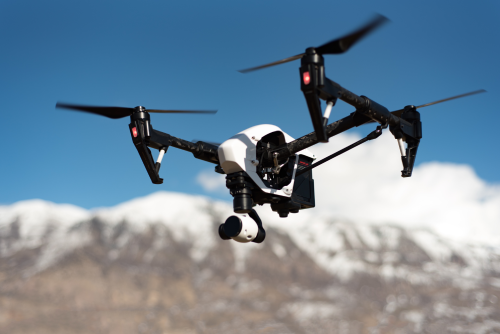
How drones are used in religious event management is no longer limited to aerial video for social media or television. In India, drones can help event organizers plan routes, watch crowd movement, inspect temporary structures, manage parking, and review what worked after the event ends. Used carefully, they support safety and coordination without taking attention away from the religious purpose of the gathering.
Quick Take
- Drones are most useful in religious events for planning, crowd observation, traffic visibility, route mapping, and documentation.
- They help before, during, and after the event, not just while the main ritual or procession is happening.
- In India, drones are especially valuable at yatras, melas, annual temple festivals, nagar kirtans, urs gatherings, church feasts, ghat events, and large local processions.
- A drone should support volunteers, police, marshals, CCTV, and public announcement systems, not replace them.
- Flights near large crowds, processions, heritage zones, airports, or sensitive areas need extra caution and permission checks.
- Organizers should verify the latest DGCA and Digital Sky requirements, along with any local police or district administration permissions, before flying.
- Quiet, stable camera drones are usually the right fit. Fast FPV-style flying is generally a poor match for religious events.
- Respect matters as much as technology. Avoid intrusive close passes, low hovering over devotees, or flying during sensitive moments unless clearly planned and approved.
Why drones matter at religious events in India
Religious gatherings in India are often logistically complex.
A local temple festival may involve temporary queue lines, roadside parking, food stalls, and one main procession route. A larger event may include multiple entry gates, bus drop-off points, medical posts, volunteer teams, police coordination, and crowd movement that changes by the hour.
From the ground, it is difficult to see the full picture.
A drone provides an elevated view that helps organizers answer practical questions such as:
- Where are queues building up faster than expected?
- Which lane is getting blocked by parked vehicles?
- Are barricades holding their shape?
- Is the rear part of the procession falling too far behind?
- Are emergency vehicles able to access the route?
- Has overflow parking started spilling onto a main road?
That overhead visibility is why drones have moved from being just a filming tool to a management tool.
Where drones add value most
| Use case | Typical example | Practical benefit | Main caution |
|---|---|---|---|
| Route mapping | Rath yatra, nagar kirtan, Muharram procession, village festival march | Identifies choke points, narrow turns, overhead wire risks, and volunteer placement needs | Must still be checked on foot |
| Crowd flow monitoring | Darshan queues, ghat gatherings, urs, church feast, langar area | Helps spot congestion and redirect movement early | Useful only if a control team can act on it |
| Traffic and parking overview | Shrine festivals, rural fairs, seasonal pilgrim traffic | Shows overflow, bus movement, and roadside blockage | Drone view alone will not manage traffic |
| Temporary structure inspection | Pandals, queue sheds, lighting towers, stage roofing | Safer visual checks of roofs, tarps, and cable routes | Final safety sign-off should be by qualified personnel |
| Broadcast and documentation | Major rituals, processions, annual celebrations | Captures scale without cranes or rooftops | Should not disturb prayer or solemn moments |
| Post-event review | Any recurring annual event | Reveals what worked, what failed, and where cleanup or redesign is needed | Needs organized analysis, not just stored footage |
How drones are used before the event
Site survey and route mapping
Before the event day, organizers can use a drone to understand the layout better than a ground walk alone.
For example, if a procession starts from a temple and moves through narrow market roads before returning, aerial footage can help the committee identify:
- very tight turns for chariots or decorated vehicles
- stretches with low tree branches
- overhead cables and loudspeaker wires
- places where roadside vendors may reduce walking space
- blind spots where volunteers should be posted
- spots where barricades need to be extended
This is especially useful in older Indian towns where streets were not designed for modern event volumes.
A drone recce, or reconnaissance survey, also helps when multiple activity zones are involved, such as:
- main prayer area
- queue line
- food distribution area
- shoe stand
- drinking water point
- parking zone
- first-aid tent
Seeing these zones together helps organizers improve flow before the crowd arrives.
Parking and vehicle planning
Many religious events struggle more with parking than with the main ritual.
A drone can show whether:
- parking rows are too tight for buses or vans
- the exit path from a temporary ground is workable
- roadside parking is narrowing emergency access
- pedestrian and vehicle movement are mixing dangerously
- overflow parking needs to be activated sooner
In rural events or hill shrines, this kind of bird’s-eye view can be even more useful because ground teams may not realize where the jam begins.
Inspecting temporary infrastructure
Religious events often use temporary structures such as pandals, tarpaulin roofs, queue sheds, lighting poles, archways, sound towers, and generators.
A drone can help teams visually inspect:
- roof sagging after wind or rain
- water collection on temporary covers
- loose fabric panels
- cable runs that cross crowd paths
- access gaps between structures
- blocked fire lanes or service routes
This does not replace a proper engineering or safety inspection. But it can help teams spot obvious issues quickly, especially across a large site.
How drones are used during the event
Crowd flow and queue management
This is one of the most valuable uses.
A drone can help the control team see crowd movement around:
- entry and exit gates
- darshan lines
- prasad counters
- ablution or wash areas
- langar serving lines
- ghats or riverfront access points
- shoe stand areas
- temporary bridges or narrow corridors
The biggest advantage is early warning.
On the ground, a volunteer may only see the local pressure around them. From above, the control team can see whether a queue is stretching into a road, whether two streams of people are crossing badly, or whether a barricade gap is becoming a bottleneck.
For example, during a temple festival, a drone may show that devotees leaving the sanctum area are crossing the path of people entering the annadanam hall. That is a small design issue from the sky, but a serious congestion issue on the ground. Organizers can then re-route one side before the area becomes unsafe.
Procession tracking
Religious processions often stretch across long routes and change shape as they move.
The head of the procession may be on time, while the middle slows near a market turn and the tail gets blocked by parked bikes, spectators, or a stalled support vehicle.
A drone helps organizers monitor:
- spacing between procession segments
- crowd spillover from one side of the road
- route blockages ahead
- whether marshals are positioned correctly
- whether the rear section is too compressed
- access for ambulance or police vehicles
This is useful for events such as chariot processions, nagar kirtans, tazia processions, festive marches, and local yatra routes.
A practical point: the drone should not fly low over the procession for dramatic shots if the real goal is management. Higher, steadier observation is usually safer and more useful.
Traffic and parking visibility
On a busy festival day, traffic problems may start outside the core venue.
A drone can help identify:
- where vehicles are being parked informally
- whether buses are blocking turning radius
- whether roadside vendors are narrowing a key road
- whether pedestrians are walking in the same lane as moving vehicles
- whether a second parking ground needs to be opened
In many Indian events, the most effective drone footage for management is not the ritual itself, but the surrounding roads.
Live broadcast and event documentation
Of course, drones are also widely used for visuals.
Trusts, committees, local media teams, and production crews use drones to capture:
- the scale of the gathering
- the route of a procession
- the decorated venue
- arrival of palkis, chariots, or ceremonial groups
- wide establishing shots for live streams or event films
This documentation has real management value too.
It can help with:
- annual reporting to the committee or trust
- sponsor presentations
- planning next year’s layout
- volunteer training
- public communication after the event
The important difference is intent. A drone used for management should not become so focused on cinematic content that it ignores safety or cultural sensitivity.
Emergency awareness and support
In a large gathering, small delays can become major problems.
A drone can help the control team notice:
- sudden compression near an entry gate
- a collapsed barricade line
- unusual crowd reversal
- blocked ambulance access
- smoke, dust, or visibility issues around the route
- trouble spots near water edges or steep approaches
If a medical team needs guidance, the drone feed may help identify the clearest approach route.
But this should be understood properly: a drone does not replace trained emergency management. It is an information tool. Ground response still depends on people, communication, and access.
How drones help after the event
Many organizers stop thinking about drones once the procession or ritual ends. That misses one of their most practical uses.
Post-event review
Aerial footage can show:
- where crowding actually happened
- which barricades worked well
- where parking overflow began
- which volunteer posts were poorly placed
- where vendors reduced walking space
- which roads became unusable first
This makes planning for the next year far more evidence-based.
Instead of relying only on memory or complaints, the committee can review what actually happened.
Cleanup and site condition checks
After a large gathering, drones can help assess:
- litter concentration areas
- blocked drains
- leftover temporary structures
- damage to open grounds
- traffic obstruction from remaining vehicles or stalls
That is useful for faster cleanup and for handing back public or private space responsibly.
What kind of drone setup works best
Religious event management usually needs a calm, stable drone setup rather than an aggressive one.
Best fit for most events
A practical setup usually includes:
- a stable camera drone with good hover performance
- clear live video feed to the operator or control point
- spare batteries and charging plan
- a bright display that can be viewed outdoors
- one pilot and, for larger events, one visual observer
A visual observer is a crew member who helps watch the drone, nearby people, and possible hazards while the pilot focuses on flying.
When zoom can help
A zoom-capable camera can be useful because it allows the operator to inspect a route segment or barricade gap without flying too close.
That said, zoom should be used for operational visibility, not for intrusive close-ups of worshippers.
What usually does not fit well
In most religious settings, these are poor choices:
- loud racing or FPV-style flights near people
- repeated low passes over prayer areas
- takeoff from within a dense crowd
- one operator trying to do safety monitoring and cinematic filming at the same time
The calmer the drone operation, the better it usually works.
A practical workflow for religious event organizers
If you want drones to actually help event management, follow a simple workflow.
1. Define the purpose clearly
Decide what the drone is for:
- route survey
- crowd observation
- parking visibility
- live broadcast
- post-event review
If the purpose is vague, the footage often becomes unusable.
2. Verify permissions and airspace before the event
Check the latest official rules that apply to your location, drone category, and kind of operation.
Also check whether you need approvals from:
- local police
- district administration
- venue authority or religious trust
- event committee
- property owners if using private land for takeoff and landing
Do this well before the event date, not on the morning of the function.
3. Walk the ground route as well
A drone survey is helpful, but it should not replace a physical recce.
Ground teams still need to inspect:
- cables
- temporary barriers
- slippery surfaces
- staircase widths
- rooftop activity nearby
- generator placement
- emergency vehicle access
4. Create safe flight windows
Not every moment needs a drone overhead.
Plan flight windows around:
- peak crowd density
- sensitive rituals
- fireworks
- smoke or incense-heavy phases
- VIP movement
- low-light periods
This helps reduce disturbance.
5. Set up a communication chain
The live video feed is useful only if somebody can act on it.
Decide in advance:
- who watches the feed
- who can order gate changes
- who talks to volunteers
- who contacts traffic or medical teams
- who can stop the drone operation if needed
6. Use a safe takeoff and landing zone
Choose a controlled area away from crowd pressure, loose fabric, dust, and vehicle movement.
Use cones, tape, or staff presence if needed.
7. Keep flights conservative
For management work, the most useful flights are usually:
- short
- stable
- repeatable
- high enough to avoid disturbing people
- focused on key areas
This is not the place for risky creativity.
8. Review and store footage responsibly
After the event, label the footage by time and location.
Keep only what is operationally useful, and control who can access it.
Safety, privacy, and compliance in India
This is the part organizers should treat seriously.
Drone operations around religious events can involve dense crowds, public roads, heritage zones, and emotionally sensitive spaces. The legal and practical requirements depend on the exact location and the nature of the flight.
What to verify before flying
Before any operation, verify the latest official requirements related to:
- DGCA drone rules
- Digital Sky airspace permissions or restrictions
- drone category and registration requirements, where applicable
- pilot qualification or certification requirements, where applicable
- NPNT compliance, if applicable to the drone and operation
- local police or district permissions for public-event flying
- any specific venue or trust restrictions
Requirements can change, and some locations may have additional local controls.
Extra caution areas
Take special care if the event is near:
- airports or air routes
- helipads
- defense or sensitive installations
- major government buildings
- heritage or protected zones
- crowded urban centers with heavy wiring and limited landing options
Do not assume a religious site is automatically permissible just because drone filming has happened there in the past.
On-ground safety basics
Even with permission, safe execution matters.
Good practice includes:
- never taking off or landing inside a dense crowd
- keeping clear of overhead wires, flags, masts, and lighting rigging
- maintaining visual line of sight where required
- staying alert for wind, dust, smoke, and sudden weather changes
- avoiding low hover over devotees, clergy, or ceremonial objects
- keeping distance from fireworks, flame rituals, and hot-air releases
- having a clear abort and emergency landing plan
Privacy and dignity
Religious events are public in one sense, but they are also deeply personal.
Organizers and operators should:
- avoid intrusive close-up filming of private devotional moments
- avoid using drone footage to identify individuals unless there is a clear lawful need
- inform the committee and relevant stakeholders how footage will be used
- control who can access stored footage
- delete non-essential footage after review, if appropriate to the event’s policy
The goal is coordination, not unnecessary surveillance.
Insurance and contractor checks
If the drone operation is being outsourced, organizers should ask the service provider about:
- experience with public-event flying
- safety process
- backup plan
- paperwork and permissions
- liability coverage, if expected by the venue or contract
Do not hire only on the basis of flashy sample videos.
Limits of drones in religious event management
Drones are useful, but they are not a magic solution.
They have clear limits:
- battery life is short compared to full event duration
- heavy wind, rain, smoke, or dust can stop operations
- very narrow streets may reduce safe operating options
- poor planning makes live video almost useless
- a drone feed can show congestion, but cannot clear it by itself
- ground volunteers and marshals still do the real control work
- fixed CCTV cameras may be better for some gates or queues
- audio from drones is usually not useful in loud event environments
The best results come when drones are one part of a larger event-control system.
Common mistakes to avoid
Treating the drone as a gimmick
If the drone is hired only because it “looks modern,” it usually adds little value.
Start with a management problem, not a gadget.
Flying for dramatic footage instead of operational usefulness
A sweeping shot may look great, but a steady 90-second observation of a gate may be far more helpful.
Taking off from inside the crowd
This is one of the worst operational habits.
Always create a safe launch and recovery area.
Ignoring religious sensitivity
Flying low during aarti, namaz-adjacent gathering flow, mass, kirtan, paath, or another solemn moment can feel intrusive even if technically possible.
Respect the timing and nature of the event.
Expecting one pilot to do everything
Live stream, cinematic coverage, safety observation, and crowd reporting are different jobs.
For larger events, separate responsibilities.
Forgetting that someone must act on the feed
If no one in the control room is authorized to redirect people or vehicles, the footage has limited value.
Keeping footage without a policy
Unplanned storage of crowd footage can create privacy concerns and confusion later.
FAQ
Is a drone useful only for very large religious events?
No. Even medium-size events can benefit from pre-event route mapping, parking planning, and post-event review. The larger the crowd, the more useful live observation becomes.
Can drones be flown over devotees or processions in India?
This needs extreme caution and may not be appropriate depending on the location, permissions, and current rules. In most cases, it is better to avoid direct overhead flying above dense crowds and verify the latest official requirements before planning any such operation.
Do organizers need permission from both aviation authorities and local administration?
Often, yes, different layers may matter. The exact path depends on the location, airspace, drone type, and nature of the event. Always verify the latest DGCA, Digital Sky, police, and district-level requirements that apply to your case.
Are drones better than CCTV for crowd management?
Not better in every situation. CCTV is stronger for continuous fixed monitoring of gates or queue points. Drones are better for temporary overhead visibility, route-wide awareness, and changing crowd patterns. They work best together.
What is the best type of drone for religious event management?
Usually a quiet, stable camera drone with reliable live feed is the best choice. For larger operations, a zoom option and a second crew member can help. Racing or very fast FPV-style drones are generally a poor fit.
Can one drone cover an entire yatra or long procession?
Usually not for the full duration. Battery limits, route complexity, and crowd density make that difficult. A drone is better used at key points, in planned windows, and alongside ground coordination.
Are drones useful at night events like aarti or festival processions?
They can be, but night operations are more complex due to visibility, low light, and regulatory considerations. Some events are also too sensitive or crowded for safe flying at night. Verify what is allowed and decide conservatively.
How can small committees use drones without overcomplicating the event?
Use them for one or two clear tasks: a pre-event route survey, parking overview, or post-event review. Do not try to run a full live control operation unless you have the people and process to use the feed properly.
Should the same drone team handle both filming and safety monitoring?
For small events, one team may manage both if the mission is simple. For larger gatherings, it is better to separate cinematic coverage from operational monitoring so safety decisions are not compromised.
What should organizers ask a drone service provider before hiring?
Ask about public-event experience, permissions process, safety planning, crew size, backup equipment, footage handling, and whether they understand the religious and cultural context of the event.
Final takeaway
If you are planning a religious event, use drones only where they solve a real management problem: route planning, crowd visibility, parking oversight, structure checks, or post-event review. Choose an experienced operator, verify the latest permissions, define safe flight windows, and keep the drone respectful, quiet, and purposeful. When used that way, a drone becomes a practical support tool, not a distraction from the event itself.
