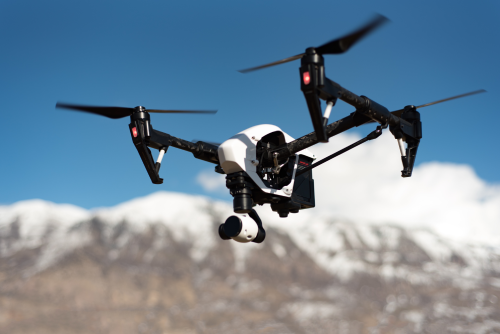
Plantation crops are spread out, repetitive, and often difficult to inspect properly on foot. That is exactly why how drones are used in plantation management has become such an important question for tea estates, coffee growers, rubber plantations, coconut farms, arecanut growers, fruit orchards, and other perennial crop businesses in India.
Used well, drones help managers see the full field faster, spot issues earlier, and make more targeted decisions on labour, irrigation, spraying, and harvest planning. They are not magic, but they can make plantation management more measurable and less guesswork-driven.
Quick Take
- Drones are most useful in plantation management for mapping, crop health monitoring, plant counting, irrigation checks, pest scouting, spraying, and progress tracking.
- In large or uneven plantations, drones save time because they cover more area than manual scouting.
- A basic camera drone can already help with row inspection, missing plant detection, drainage checks, and visual documentation.
- More advanced setups use multispectral cameras to measure crop stress and spraying drones for targeted input application.
- Drones work best when their data leads to action: replanting gaps, checking irrigation lines, isolating disease patches, or planning labour deployment.
- They do not replace agronomists, field staff, or ground inspection. They improve them.
- In India, operators must verify the latest DGCA, Digital Sky, airspace, pilot, and equipment compliance requirements before flying.
- For many plantations, the best starting point is not buying the most expensive drone. It is choosing one high-value use case and building a simple workflow around it.
Why drones fit plantation management so well
Plantation management is different from managing a small seasonal field. Plantation crops often involve:
- large continuous areas
- repeating rows or blocks
- tall crops or dense canopy
- difficult terrain
- labour-intensive inspection
- uneven irrigation and drainage conditions
- recurring pest and disease pressure
- the need to track performance block by block
Walking every section regularly is slow and expensive. Satellite imagery can help, but it may not be frequent enough, detailed enough, or cloud-free when you need it. Drones fill that gap by giving managers fast, high-resolution, on-demand field visibility.
This is especially useful in Indian conditions where plantations may face:
- monsoon drainage problems
- patchy irrigation performance
- localized pest outbreaks
- labour shortages
- mixed terrain and access issues
- a need for clear records for internal operations or audits
The main ways drones are used in plantation management
Mapping plantation boundaries, blocks, and access routes
The first practical use of a drone is often simple aerial mapping.
With a standard camera drone, plantation managers can create up-to-date overhead maps showing:
- field boundaries
- block divisions
- roads and trails
- irrigation channels
- storage points
- worker access routes
- drainage patterns
- areas affected by erosion or waterlogging
This matters because many plantations still rely on old paper maps, rough estimates, or fragmented records. A current map helps teams plan movement, divide work, and identify neglected sections.
Example
A coffee estate in Karnataka may use drone maps before the monsoon to identify:
- washed-out internal roads
- blocked drainage lines
- steep sections needing soil conservation work
- shaded pockets where inspection is harder
That is operationally useful, not just visually impressive.
Counting plants and detecting gaps
In plantations, missing plants directly reduce yield potential. But in large areas, counting manually is tiring and often inaccurate.
Drone imagery can help with:
- plant population estimates
- identifying missing or dead plants
- checking replanting success
- measuring survival rate after new plantation establishment
- finding weak growth patches
This is especially useful in plantations with clear spacing patterns such as:
- oil palm
- coconut
- arecanut
- banana
- mango orchards
- citrus orchards
- some rubber and timber plantations
For new or recently replanted blocks, drone-based stand counts can show where gaps need to be filled before they become long-term productivity losses.
Why this matters
If 3% to 8% of plants are missing in scattered patches, the loss may be invisible from ground level. From above, those gaps stand out quickly.
Monitoring canopy health
One of the most valuable uses of drones in plantation management is canopy monitoring.
A canopy is the top layer of leaves visible from above. Changes in canopy colour, density, and uniformity often reveal:
- nutrient deficiency
- water stress
- disease pressure
- pest attack
- poor root development
- shade or drainage problems
A regular RGB camera can detect obvious visual changes, such as:
- yellowing
- drying
- thinning foliage
- patchy growth
- storm damage
A more advanced multispectral camera can go further. It captures bands of light beyond normal visible colour and helps generate crop health maps. These maps do not “diagnose” problems automatically, but they highlight stressed zones that need field verification.
Important point
A drone image can show where the problem is. It cannot always confirm why the problem exists without ground inspection.
For example, a stressed patch in a tea estate may be caused by:
- nutrient shortage
- waterlogging
- root disease
- pest infestation
- shade imbalance
The drone points the team to the area faster. Agronomy and field checks confirm the reason.
Detecting irrigation problems and water stress
In plantation crops, irrigation issues often develop unevenly. Some sections may receive too little water, while others suffer from leakage, clogging, or excessive moisture.
Drone surveys can help identify:
- dry patches
- broken irrigation lines
- poor sprinkler coverage
- blocked channels
- waterlogging after rain
- low-lying zones retaining water
- stressed plants along line failures
In drip-irrigated orchards and plantations, this is especially useful because a blockage may affect one row or one block without being noticed immediately.
Thermal imaging can sometimes help detect temperature differences linked to water stress, but even normal aerial imagery can reveal patterns that suggest irrigation failure.
Example
In a mango orchard, if one section shows smaller canopy size and lighter leaf tone, the issue may be a poorly performing irrigation zone. A drone helps the manager compare that section against the rest of the orchard in one flight.
Pest and disease scouting
Pests and diseases rarely spread uniformly at first. They often begin in hotspots.
Drones are useful for early scouting because they can reveal:
- unusual canopy discoloration
- defoliation
- infestation spread patterns
- edge effects near roads or neighboring land
- disease hotspots after humid weather
- isolated blocks needing urgent field inspection
This is valuable in crops like:
- tea
- coffee
- banana
- citrus
- mango
- rubber
- coconut
- arecanut
For example, if a manager sees a cluster of stressed trees along one slope, the response can be focused. Instead of sending workers to inspect the entire plantation, the team can first inspect the affected block.
What drones cannot do on their own
They usually cannot replace laboratory confirmation, pest identification, or professional agronomy advice. A drone may indicate a suspicious patch, but treatment decisions still need correct diagnosis.
Spraying and spot treatment
Spraying drones get the most attention, but they are only one part of plantation management.
In suitable conditions, spraying drones can be used for:
- targeted pesticide application
- fungicide application
- foliar nutrient spraying
- treatment in difficult terrain
- spot spraying of affected areas instead of blanket coverage
- spraying in fields where manual movement is slow or hazardous
This can be valuable in plantations with:
- slope challenges
- muddy conditions
- tall crop structure
- labour limitations
- urgent treatment windows
Where spraying drones help most
They are often most useful when the objective is precision and timing, not just speed. For example:
- treat only the infected block
- spray only low-vigor zones with foliar nutrients
- manage a disease outbreak before it spreads wider
- cover inaccessible sections after rain, where ground equipment cannot move easily
But spraying drones have limits
Coverage quality depends on:
- nozzle setup
- droplet size
- flight height
- speed
- wind conditions
- canopy density
- chemical suitability
- operator skill
Dense canopies may block penetration, so a “sprayed” field is not always an evenly treated field. That is why test runs, calibration, and label compliance matter.
Checking terrain, slope, and drainage
Many Indian plantations are located in areas with uneven topography. Drones help managers understand land shape and surface flow in ways that are hard to judge from the ground.
This supports decisions on:
- where runoff is collecting
- where bunding or trenches are needed
- where erosion is developing
- how roads should be aligned
- where planting should be avoided or adjusted
- how to improve drainage before the monsoon
For tea, coffee, and hill plantations, this use case can be especially practical because one drainage error can affect a large block.
Estimating yield and planning harvest
Drones are not perfect yield prediction tools, but they can improve planning when used consistently.
Depending on the crop and the level of analysis, drone data may help estimate:
- bearing plant count
- canopy size differences
- fruiting zone uniformity
- block-wise productivity potential
- stress areas likely to reduce output
- harvest readiness patterns
This can help management with:
- labour planning
- transport planning
- storage readiness
- staggered harvest decisions
- identifying underperforming blocks
In orchards and plantations, even a rough block-level estimate can be useful when compared across months or seasons.
Tracking plantation development over time
Drones are excellent for repeatable progress documentation.
Managers can compare monthly or seasonal flights to track:
- new plantation establishment
- canopy growth
- replanting success
- storm damage recovery
- irrigation improvements
- disease spread or control
- road and infrastructure work
- pruning results
This is valuable for plantation owners, managers, agronomists, cooperatives, and even lenders or insurers where records matter. The key benefit is consistency. Flying the same blocks at similar height and timing creates a visual history of change.
Supporting labour and operations planning
Drone data can improve day-to-day management, not just agronomy.
For example, managers can use it to decide:
- which team goes to which block first
- where inspection teams should focus
- where replanting labour is needed
- which internal roads need repair before movement
- which patches can be skipped because they are normal
- which sections need urgent spraying or drainage work
This is often where return on investment becomes clear. The drone does not just create maps. It reduces wasted movement and improves work planning.
A simple plantation drone workflow that actually works
Many plantations fail to get value from drones because they collect images without a decision-making process. A simple workflow is better.
Step 1: Pick one business problem
Start with one use case such as:
- missing plant detection
- irrigation issue mapping
- disease hotspot scouting
- spraying targeted blocks
- pre-monsoon drainage inspection
Do not start with “we need a drone for everything.”
Step 2: Divide the plantation into blocks
Create a practical block system based on:
- crop type
- age
- irrigation zone
- terrain
- management history
This makes drone outputs easier to compare and act on.
Step 3: Fly at regular intervals
For most plantation use cases, a repeatable schedule matters more than occasional random flights.
Examples:
- weekly during a disease-risk period
- before and after monsoon
- monthly for growth tracking
- after major spraying or nutrition interventions
Step 4: Review the data with field staff
Bring together:
- drone operator
- field supervisor
- agronomy adviser if available
- irrigation or operations staff where relevant
The goal is to convert images into action points.
Step 5: Ground-check suspicious areas
Never rely only on images.
If the drone shows a stressed patch, send a team to verify:
- pest presence
- soil moisture
- drainage blockage
- nutrient issue
- plant mortality
- physical damage
Step 6: Record action and recheck
After intervention, fly again and compare.
That closes the loop between:
- observation
- decision
- field action
- result
Without this loop, drone use becomes a one-time visual exercise rather than a management system.
Which type of drone is used for which plantation task?
| Plantation task | Best-fit drone/sensor | What it helps with |
|---|---|---|
| Boundary mapping and block planning | Standard camera drone | Maps, roads, drainage lines, access planning |
| Missing plant detection | Camera drone, sometimes AI-based image analysis | Gap mapping, replant planning, survival counts |
| Canopy health inspection | Camera drone for visible issues; multispectral for stress mapping | Stress zones, non-uniform growth, block comparison |
| Irrigation and drainage checks | Camera drone, sometimes thermal | Dry patches, waterlogging, leak patterns, blocked channels |
| Pest and disease scouting | Camera drone; multispectral in advanced setups | Hotspot detection, spread patterns, focused field checks |
| Targeted spraying | Agricultural spraying drone | Spot treatment, foliar application, difficult terrain operations |
| Terrain and erosion review | Camera drone with mapping workflow | Slope understanding, runoff paths, erosion points |
| Progress documentation | Standard camera drone | Seasonal comparison, reporting, plantation records |
Do small plantations benefit too, or only large estates?
Large estates see the biggest time-saving benefit, but smaller plantations can benefit too if the use case is clear.
Drones make sense for smaller operations when:
- the land is fragmented or hard to access
- labour for inspection is limited
- disease or irrigation issues need fast detection
- the crop has high per-acre value
- the manager wants accurate documentation for multiple blocks
Drones may not be worth it if:
- the plantation is very small and easy to inspect manually
- there is no one to interpret the data
- flights are too infrequent to support decisions
- the operator only wants marketing footage, not management value
For many small and medium growers, hiring a service provider for scheduled surveys may be more practical than buying a drone immediately.
Benefits of using drones in plantation management
When used properly, drones can improve plantation management in four major ways.
1. Faster visibility
Managers can inspect far more area in less time than by walking.
2. Earlier intervention
Problems become visible before they are obvious from ground level across the whole block.
3. Better targeting
Instead of applying labour, water, or chemicals everywhere, teams can focus on specific sections.
4. Better records
Repeatable aerial data creates evidence for planning, follow-up, and review.
Real limitations you should not ignore
Drones are useful, but they do not solve every plantation problem.
They cannot see through dense canopy easily
If the crop is very dense, problems below the top layer may remain hidden.
They do not automatically diagnose agronomic issues
A drone can show a stressed patch. It cannot always confirm whether the cause is fungus, nutrient deficiency, root damage, or irrigation failure.
Weather affects usefulness
Wind, rain, haze, and strong midday glare can reduce image quality and spraying accuracy.
Data is only valuable if someone acts on it
A folder full of drone images is not plantation management. Decisions and follow-up matter more than flying.
Advanced sensors add cost and complexity
Multispectral and thermal tools can be useful, but only if the plantation team knows how to interpret the outputs.
Safety, legal, and compliance points in India
Drone use in plantations is not just a technical issue. It also involves safety and compliance.
Because rules can change, readers should verify the latest official guidance before flying. This is especially important if the operation involves commercial activity, mapping, or spraying.
Key points to verify before operating
- whether the drone model and category are compliant for your intended use
- current airspace restrictions for the plantation location
- whether permissions or prior approvals are needed
- operator training or certification requirements
- Digital Sky requirements, if applicable to the operation
- NPNT-related compliance, where relevant
- local restrictions near sensitive areas, infrastructure, or habitations
- insurance and liability considerations for commercial operations
For spraying operations, be extra careful
Agricultural spraying involves added risk because you are not just flying an aircraft; you are applying chemicals.
Check:
- whether the chemical label allows the intended application method
- manufacturer instructions for the spraying drone
- weather suitability, especially wind
- worker exclusion zones during operation
- proper protective equipment and chemical handling
- safe storage, mixing, and tank cleaning procedures
- buffer considerations near people, homes, roads, water bodies, and neighboring crops
If you are outsourcing drone spraying, do not assume the service provider has handled every compliance issue correctly. Ask for documents, SOPs, and operating procedures.
Safety on the plantation itself
Even in a remote plantation, a drone can create hazards.
Avoid:
- flying over workers unnecessarily
- operating near power lines without planning
- flying in poor visibility
- spraying in gusty conditions
- taking off from unstable ground
- pushing battery limits far from recovery points
Common mistakes plantation managers make with drones
Buying a drone before defining the use case
A drone is a tool, not a strategy. Start with the management problem first.
Expecting automatic disease diagnosis
Most drone systems highlight anomalies. They do not replace field expertise.
Flying only when something looks wrong
Routine flights often catch problems earlier than emergency inspections.
Ignoring ground-truthing
If the team never checks drone-detected problem areas on the ground, decisions can be wrong.
Using spraying drones in unsuitable weather
Wind can cause drift, uneven deposition, and safety issues.
Collecting data without block-wise records
Images become hard to compare if naming, block mapping, and dates are inconsistent.
Thinking one drone can do everything
A camera drone, a multispectral system, and a spraying drone solve different problems.
Overlooking training
Even a good drone produces poor results in the hands of an untrained operator or team that cannot interpret outputs.
When should a plantation buy a drone and when should it hire a service provider?
Buying may make sense if:
- the plantation is large and needs frequent flights
- a trained internal team is available
- data privacy and regular monitoring matter
- the same workflow will be repeated all season
Hiring a service provider may make sense if:
- the need is seasonal or occasional
- the plantation is small to medium in size
- advanced mapping or sensor analysis is required only sometimes
- you want to test value before investing in hardware and training
A practical approach for many Indian plantations is to begin with a service provider for one season, measure results, and then decide whether in-house operations are justified.
FAQ
Are drones useful only for very large plantations?
No. Large plantations benefit the most in terms of coverage and labour efficiency, but smaller plantations can also benefit if they need better scouting, mapping, or targeted intervention.
Can a normal camera drone help, or is a multispectral drone necessary?
A normal camera drone is useful for many tasks such as mapping, gap detection, visible stress spotting, drainage checks, and progress tracking. Multispectral systems are helpful when you need more advanced crop stress analysis.
Can drones detect plant disease early?
They can sometimes detect early visual or spectral signs of stress, but they usually cannot confirm the exact disease on their own. Ground inspection and agronomy support are still needed.
Are spraying drones always better than manual spraying?
Not always. They can be faster and more practical in difficult terrain or urgent situations, but coverage quality depends on calibration, canopy structure, weather, and operator skill.
How often should a plantation use drones?
That depends on the crop and objective. Common patterns include weekly scouting during high-risk periods, monthly monitoring for growth comparison, and event-based flights before or after rain, storms, or interventions.
Do drones work in dense plantations with heavy canopy cover?
They work best for top-canopy observation. In dense plantations, problems under the canopy may be harder to detect. Drones are still useful, but ground inspection remains important.
Is it better to buy one drone or use separate drones for mapping and spraying?
For most serious operations, mapping/scouting and spraying are different jobs. A standard camera drone is typically used for observation, while spraying requires a dedicated agricultural drone.
Do plantation managers need internet in the field to use drones?
Not always for flight itself, but mission planning, syncing records, software processing, and compliance steps may require connectivity at some stage. Plan for an offline workflow if the plantation has weak network coverage.
Can drone data help with labour planning?
Yes. Drone maps can show which blocks need urgent attention, which roads are usable, where gaps need replanting, and where teams should be sent first.
What is the smartest way to start using drones in plantation management?
Start with one measurable use case such as missing plant mapping, disease hotspot scouting, or irrigation issue detection. Run it consistently for one season and compare decisions, labour use, and outcomes.
Final takeaway
Drones are most valuable in plantation management when they help you make one better decision faster: where to inspect, where to spray, where to replant, where water is failing, or which block is slipping behind. If you manage a plantation in India, start small, choose one high-impact use case, verify the latest legal requirements, and build a repeatable workflow before spending heavily on equipment.
