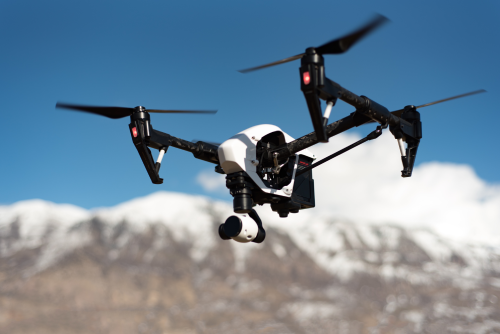
Agricultural drones are changing how pesticide spraying is done by helping farmers and service providers cover crops faster, with less walking through the field and often less water than traditional methods. In India, they are especially useful when the field is wet, the crop is tall, labour is short, or the spray window is very small.
But a spraying drone is not a magic shortcut. Good results depend on correct chemical selection, proper calibration, safe weather, a trained operator, and up-to-date legal compliance.
Quick Take
- Drones are used in pesticide spraying mainly for fast, targeted crop protection over fields that are hard to access on foot or by tractor.
- They are most useful for time-sensitive sprays, wet fields, tall crops, spot treatment, and reducing direct worker exposure to chemicals.
- A spray drone carries a liquid tank, pump, and nozzles, then follows a planned route to apply the spray evenly across the crop.
- In India, they can be valuable for paddy, cotton, soybean, maize, sugarcane, and some horticulture situations, but not every crop or field is equally suitable.
- Drone spraying can reduce crop trampling and often uses less carrier water, but it does not automatically mean less pesticide use or perfect coverage.
- Wind, droplet drift, canopy density, poor calibration, and refill logistics can affect real-world performance.
- Before operating commercially or on farms, verify the latest DGCA, Digital Sky, airspace, training, and drone compliance requirements.
- Always check the pesticide label and agronomy guidance. Not every product, crop, or pest situation is suitable for drone application.
What a pesticide spraying drone actually does
A pesticide spraying drone is a purpose-built agricultural drone designed to carry spray liquid and apply it over crops in a controlled pattern.
Unlike a camera drone, it is built around:
- A tank for the spray mixture
- A pump to move liquid
- Nozzles to break the liquid into droplets
- A flight controller to maintain speed, height, and route
- Batteries for repeated short missions
- Sensors that help the drone follow terrain and maintain stable application
The drone flies over the field in parallel lines, similar to how a tractor boom sprayer covers rows, but from the air. The rotors push air downward. This downward airflow, often called downwash, can help droplets settle onto the crop.
That said, coverage still depends on:
- Flight height
- Flight speed
- Nozzle type
- Flow rate
- Wind conditions
- Crop shape and canopy density
A few basic terms are useful here:
- Payload: how much liquid the drone can carry in one trip
- Flow rate: how much spray liquid comes out per minute
- Swath width: the width the drone covers in one pass
- Calibration: adjusting the drone so the crop gets the intended amount of spray
In practice, many agricultural drones are used not only for pesticides, but also for foliar nutrients and some biologicals. However, the application method must match the product instructions and agronomy recommendation.
How drones are used in pesticide spraying
There is no single “drone spraying use case.” Farmers and service providers use them in several practical ways.
Whole-field spraying
This is the most common use. The drone follows a pre-planned path and applies the spray evenly across the field.
Typical use cases include:
- Fungicide spraying when disease risk appears across the whole crop
- Insecticide spraying during a pest outbreak
- Herbicide application in situations where the product and method are suitable
This works best when the field is reasonably open, boundaries are known, and refill logistics are efficient.
Spot spraying and patch treatment
Sometimes only part of a field is affected. If scouting shows pests or disease in a limited area, a drone can treat only those patches instead of the whole field.
This can be useful for:
- Border infestations
- Localized disease spread
- Repeat treatment of missed or heavily affected spots
The practical benefit is not just saving chemical. It can also save time and avoid unnecessary exposure of the rest of the crop.
Spraying when fields are wet or inaccessible
This is one of the biggest reasons drones are used in India.
After rain or irrigation, some fields become difficult to enter with tractors or even by foot. A drone can still spray because it never touches the soil.
This is especially relevant in:
- Paddy fields
- Low-lying fields
- Soft black-soil regions after rain
- Fields where entry would damage the crop or compact the soil
Spraying tall or dense crops
When crops grow tall, manual spraying becomes tiring, slow, and more hazardous for workers.
Drones are often used where:
- The crop canopy is above shoulder height
- Workers would have to push through dense growth
- The operator would be directly exposed to spray cloud and chemical contact
Examples include sugarcane and some later-stage field crops.
Time-critical pest and disease response
Many crop protection sprays work best in a narrow time window. Missing that window can sharply reduce effectiveness.
Drones help when:
- Labour is not available at short notice
- Large areas need quick treatment
- Weather is changing and only a small spray window is available
- The pest or disease is spreading rapidly
A drone’s value is often less about “high-tech farming” and more about doing the job at the right time.
Service-based spraying for small farmers
In India, many farms are small and fragmented. That means buying a spray drone may not make sense for every farmer.
A common model is:
- A local service provider owns the drone
- Farmers book spraying per acre or per job
- The operator handles planning, flying, and basic records
- The farmer focuses on crop decisions and timing
For many villages, this is more realistic than every farm buying its own drone.
Where drone spraying makes the most sense in India
The usefulness of drone spraying depends heavily on crop type, field shape, and local conditions.
Paddy and wet fields
Paddy is one of the clearest use cases because fields can stay muddy and difficult to walk through.
Why drones help:
- No foot movement through standing or wet areas
- Faster response during pest or disease pressure
- Less disturbance to the field
- Useful when backpack spraying is physically demanding
Cotton, soybean, maize, and pulses
These crops often involve large field blocks where quick coverage matters. Drones can be useful for insecticide or fungicide application, especially when labour is tight.
Best fit:
- Flat or moderately even fields
- Clear field boundaries
- Repeated in-season sprays
- Areas where quick application is important
Sugarcane and other tall crops
Tall crops create access problems. Workers can struggle to move through them, and coverage by manual spraying may become inconsistent.
Why drones are used:
- Reduced worker contact with chemicals
- Faster movement over the field
- No need to physically enter dense growth
Still, nozzle setup and flight plan become important because crop structure affects where droplets land.
Orchards and horticulture crops
This is where expectations need to be realistic.
Drones can help in some orchard situations, especially for top-canopy or broad-area coverage. But very dense trees can make full inner-canopy penetration harder. In some cases, a ground sprayer may still do a better job inside the canopy.
Drone spraying in orchards makes more sense when:
- Tree spacing is manageable
- The goal is top or outer canopy coverage
- The operator has experience with that specific crop
- Product label and agronomy advice support the method
Sloped or difficult terrain
In some areas, ground equipment is hard to use due to uneven land. Drones can reduce physical effort and access problems, but flight planning, obstacle awareness, and terrain following become more important.
How a typical drone pesticide spraying job works
A well-run spray job is not just “fill tank and fly.” The workflow matters.
1. Identify the actual crop problem
Before any spraying, the farmer or agronomy adviser should confirm:
- What pest, disease, or weed is present
- Whether spraying is actually needed
- What product is suitable
- Whether the crop stage is correct for treatment
A drone cannot fix a wrong pesticide choice.
2. Confirm the product can be applied this way
Check:
- Crop and pest listed on the product label
- Dose and dilution instructions
- Any restriction related to aerial or drone application
- Re-entry and safety instructions
- Harvest interval, if relevant
If anything is unclear, verify with the manufacturer, agronomist, or official guidance before spraying.
3. Survey the field and mark risk zones
The operator should inspect or map:
- Field size and shape
- Trees, wires, poles, and buildings
- Nearby roads, houses, schools, or livestock areas
- Water bodies, wells, ponds, and sensitive zones
- Areas that should not be sprayed
No-spray zones and buffer areas are a major part of safe drone operation.
4. Choose the weather window
Safe spray conditions matter as much as the drone itself.
Avoid spraying when:
- Wind is too strong
- Rain is expected too soon
- Temperatures are very high
- The air is unstable and drift risk is high
Early morning or calmer parts of the day are often preferred, but actual suitability depends on local conditions.
5. Mix the chemical safely and calibrate the drone
This step is critical.
The operator must:
- Wear proper personal protective equipment, or PPE
- Mix only the recommended quantity
- Use clean water if required
- Set the correct flow rate, flight speed, and swath width
- Check nozzle condition and spray pattern
Calibration means the field receives the intended spray amount. Without calibration, even an expensive drone can underdose or overdose.
6. Fly the mission in planned passes
Most spray jobs are flown in repeatable lines across the field.
During spraying, the operator monitors:
- Battery status
- Remaining liquid
- Flight height
- Wind changes
- Coverage consistency
Many jobs require several refill-and-battery cycles.
7. Check coverage and job quality
After spraying, it helps to inspect the field:
- Was the coverage uniform?
- Were any strips missed?
- Did drift occur outside the field?
- Did the crop show visible wetting where expected?
This feedback helps improve future calibration.
8. Clean the system and record the job
After use:
- Flush the tank, lines, and nozzles safely
- Dispose of residues according to label and local guidance
- Store chemicals securely
- Record what was sprayed, where, and when
Good record-keeping matters for repeat sprays, service businesses, and compliance.
Why farmers and service providers choose drones for pesticide spraying
The strongest case for drone spraying is usually operational, not just technological.
Faster response
If pest pressure appears suddenly, getting the spray done quickly can matter more than absolute per-hour claims on a brochure.
Reduced direct worker exposure
Workers do not have to walk through the field carrying chemical on their back. Mixing and loading still involve chemical handling, but field exposure can be lower.
No wheel damage or trampling from entry
A drone does not crush plants like some ground equipment can. This is useful in standing crops and wet conditions.
Often lower carrier water use
Many drone spray programs use lower spray volumes than traditional methods. That can simplify water logistics in some situations.
Important: lower water use does not automatically mean better spraying. Coverage still has to be adequate.
Useful in wet or inaccessible fields
This is one of the most practical advantages and often the deciding factor.
Better for service-based farming models
A single machine can serve many nearby farms if scheduling, batteries, transport, and refill support are organized well.
Manual vs tractor vs drone spraying
| Factor | Backpack sprayer | Tractor/boom sprayer | Spray drone |
|---|---|---|---|
| Field access in wet conditions | Possible but tiring | Often poor | Usually good |
| Worker exposure to chemicals | Higher | Medium | Lower during application, but mixing/loading still matters |
| Crop damage from field entry | Possible from walking | Possible from wheel tracks | Minimal from application itself |
| Speed on large areas | Low | High where access is good | Medium to high depending on logistics |
| Water requirement | Often higher | Often higher | Often lower |
| Best use case | Very small plots, low-cost spraying | Large accessible fields | Time-sensitive sprays, wet fields, tall crops, service operations |
| Main limitation | Labour and exposure | Needs field access and turning space | Battery/refill cycles, drift control, calibration |
Limits you should understand before depending on drone spraying
Drone spraying is useful, but it has real limits.
It is not ideal for every canopy
Very dense canopies can be hard to penetrate evenly. Top-surface coverage may be good while inner leaves receive less spray.
Drift is a serious risk
Small droplets can move with wind. Nearby houses, roads, livestock, and water bodies increase the risk.
Productivity depends on support logistics
Real output is shaped by:
- Battery charging or swapping
- Refill speed
- Distance between vehicle and field
- Water availability
- Field size and fragmentation
A drone may look fast in a demo but slow down in scattered village plots.
Training matters
Good spraying is not just drone piloting. It also requires understanding of crop protection, calibration, weather, and field safety.
Not every product is suitable
Some products may not be appropriate for drone application, especially if label instructions do not support it or coverage requirements are different.
Maintenance cannot be ignored
Agricultural drones handle corrosive liquids and repeated field work. Pumps, nozzles, seals, arms, motors, and batteries all need routine care.
Safety, legal, and compliance checks in India
If you are planning pesticide spraying by drone in India, be conservative and verify the current rules before acting. Regulations, permitted workflows, and documentation requirements can change.
Key checks include:
- Verify the latest DGCA and Digital Sky requirements for agricultural drone operations.
- Confirm whether the drone is legally compliant for use in India, including any registration, identification, and NPNT-related requirements that currently apply.
- Use an appropriately trained operator, and confirm whether a remote pilot certificate or any other qualification is required for your exact type of operation.
- Check airspace restrictions before flying. Do not assume farmland automatically means unrestricted airspace.
- Verify any local district, state agriculture, police, or land-use restrictions that may affect operations.
- Confirm that the pesticide product is registered for the intended crop and pest, and that the application method is acceptable under current guidance.
- Keep people, children, livestock, and bystanders away from the treatment area.
- Maintain safe distance from homes, roads, power lines, and water bodies.
- Use proper PPE during mixing, loading, cleaning, and handling of leftover chemical.
- Keep application records for the job, especially if the operation is commercial.
- For business use, check insurance and liability requirements with the latest official and professional guidance.
Just as important: a legally flyable drone mission is not automatically a legally correct pesticide application. Aviation compliance and pesticide-use compliance are separate issues, and both matter.
Common mistakes in drone pesticide spraying
These are some of the most common failures seen in the field.
Treating drone spraying like camera flying
A spray mission is not a simple up-and-down flight. It involves chemical handling, dose accuracy, drift control, and field safety.
Flying in unsuitable wind
This is one of the biggest reasons for poor results and complaints from neighbours.
Skipping calibration
If flow rate, speed, and height do not match, the crop may get too little or too much spray.
Believing brochure productivity claims
Real acreage per day depends on refill setup, field layout, battery turnaround, and operator skill.
Using the wrong nozzle setup
Nozzles affect droplet size and coverage. The wrong setup can increase drift or reduce deposition on the crop.
Ignoring canopy structure
A crop with open leaves behaves differently from a dense orchard or a tall standing crop. One setup does not fit all.
Spraying without proper scouting
If the pest is misidentified, even perfect drone coverage will not solve the problem.
Poor chemical mixing and tank hygiene
Incorrect mixing order, residue in the tank, or cross-contamination from previous jobs can damage crops or reduce effectiveness.
Not planning no-spray zones
Edges near ponds, schools, roads, bee activity, or homes need extra caution.
Buying too soon
Many operators buy a drone before they have: – Enough seasonal demand – Local service support – Spare batteries – Training – A workable business model
Should you buy a spraying drone or hire a service?
For many users, hiring is the smarter first step.
Hiring makes more sense if you are:
- A small farmer with seasonal need
- Still learning whether drone spraying suits your crops
- In an area with available service operators
- Uncertain about maintenance, training, or compliance
Buying makes more sense if you are:
- A large farm with repeated spray demand
- An FPO, cooperative, or custom hiring centre
- A rural entrepreneur building a spray service business
- Able to manage batteries, transport, spares, records, and support
Before buying, ask vendors practical questions:
- Who handles local service and repairs?
- How long is turnaround for spare parts?
- How is the drone calibrated for your target crops?
- What training is included?
- What happens if the pump, nozzle system, or battery fails during season?
- Can they demonstrate performance in your crop, not just on paper?
FAQ
Is drone pesticide spraying legal in India?
It may be legal under certain conditions, but you should not assume blanket permission. Verify the latest DGCA, Digital Sky, airspace, operator qualification, and drone compliance requirements before flying. Also verify pesticide-use rules separately.
Can a small farmer benefit from drone spraying?
Yes, especially through a local service provider. Small farmers may benefit most when the field is wet, labour is short, or a spray must be done quickly.
Do drones always use less pesticide?
Not necessarily. Drones often use less carrier water, but the actual pesticide amount should follow the approved dose and crop recommendation. Savings come mainly from better targeting, fewer overlaps, and timely spraying, not from guessing a lower dose.
Can drones spray all crops?
No. Suitability depends on crop height, canopy density, field shape, nearby obstacles, and whether the product and application method are appropriate. Dense orchards and complex canopies may need special consideration.
Are drones better than backpack sprayers?
They can be better in speed, worker exposure, and access to wet or tall crops. But they require skill, calibration, batteries, and legal compliance. For very small jobs, a backpack sprayer may still be practical.
How much area can a spray drone cover in a day?
There is no single honest number for every situation. It depends on payload, battery swaps, refill speed, field distance, crop type, wind, and operator efficiency. Real performance is often lower than ideal demo conditions.
Is drone spraying safe for nearby people and animals?
Only if the operation is properly planned. Drift, chemical handling, and bystander exposure are real risks. Keep people and animals away from the spray area and use proper buffers and weather judgment.
What training does a spray drone operator need?
Beyond flying skills, the operator should understand calibration, weather, chemical handling, field mapping, emergency procedures, and current legal requirements. Verify the latest official training and certification rules for your operation type.
Should I buy a drone for my farm business?
Buy only if you have enough recurring work, local support, trained operators, and a clear plan for maintenance and compliance. If demand is uncertain, start by hiring or partnering with a service provider.
The practical takeaway
Drones are used in pesticide spraying because they solve a real farm problem: getting the right spray onto the crop quickly when ground access, labour, or timing becomes difficult. They are especially valuable in wet fields, tall crops, and time-sensitive crop protection work.
If you are curious about using one, do not start with brochure claims. Start with your crop, your field conditions, your spray timing problems, and the latest legal requirements. Then decide whether hiring a trained service provider or investing in a professional setup makes more sense for your situation.
