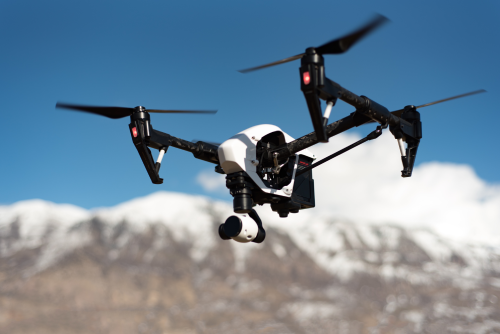
Oil and gas assets are difficult, risky, and expensive to inspect the traditional way. That is why understanding how drones are used in oil and gas site inspection matters: they help teams check pipelines, tanks, flare stacks, terminals, and remote facilities faster, with better visual records and less exposure to working at height.
For Indian operators, EPC contractors, service firms, and inspection teams, drones are especially useful where sites are large, weather is harsh, access is limited, or shutdown time is costly. But they work best when paired with the right sensor, a clear inspection goal, and strict safety and compliance planning.
Quick Take
- Drones are used in oil and gas inspection for visual checks, thermal surveys, corridor monitoring, leak investigation, construction tracking, and emergency assessment.
- They are most valuable where inspections are dangerous, repetitive, or spread across large areas.
- Common assets inspected by drones include flare stacks, storage tanks, pipelines, compressor stations, pump stations, refinery structures, and tank farms.
- A standard camera drone is useful for many tasks, but some jobs need thermal cameras, zoom payloads, LiDAR, or specialized gas-detection systems.
- Drones reduce human exposure to heights and hard-to-reach areas, but they do not remove risk. The risk shifts to flight planning, site safety, and data interpretation.
- In India, commercial operations must be planned carefully around current DGCA and airspace rules, site security requirements, and any sensitive-location restrictions. Always verify the latest official requirements before flying.
- Not every leak or defect is visible from the air. Drones are powerful inspection tools, but they are not a magic replacement for all human inspection methods.
Why oil and gas inspection is such a strong drone use case
Oil and gas sites combine three things that suit drones well:
- Large and complex infrastructure
- Hard-to-reach inspection points
- High consequences if something is missed
Traditional inspections often involve scaffolding, rope access, shutdowns, man-lifts, walking long distances, or even helicopter support for corridor monitoring. Drones can often capture the first layer of inspection data without sending people into the most exposed positions right away.
That matters in India because many assets sit in hot, dusty, coastal, flood-prone, or remote conditions. Think of long pipeline stretches crossing farms and riverbeds, tank farms near ports, desert installations, or refinery structures where access is tightly controlled. Drones give teams a way to see more, sooner.
Where drones fit across the oil and gas chain
Upstream
In upstream operations, drones are commonly used around:
- Well pads
- Drilling and production sites
- Access roads
- Flare systems
- Perimeter and environmental monitoring areas
- Temporary construction zones
Typical tasks include progress monitoring, earthwork measurement, visual checks on elevated equipment, and site overview surveys after weather events.
Midstream
Midstream is one of the clearest drone use cases because assets are spread out over distance.
Common inspection targets include:
- Cross-country pipelines
- Compressor and pump stations
- Valve stations
- River crossings
- Right-of-way corridors
- Storage and transfer infrastructure
In India, pipeline patrol by drone can be useful after monsoon damage, erosion, unauthorized activity near the right-of-way, or when road access is poor.
Downstream
In refineries, depots, terminals, and tank farms, drones are used for:
- Storage tank roof and shell inspection
- Flare stack and chimney checks
- Structural visual inspection
- Thermal scanning of selected assets
- Construction and shutdown planning support
- Post-incident documentation after site clearance
Downstream sites are often the most operationally complex because of congestion, radio interference, strict HSE rules, and security controls.
The main inspection jobs drones perform
How drones are used in oil and gas site inspection becomes clearer when you break the work into specific tasks.
| Inspection need | Typical drone setup | What the team wants to find |
|---|---|---|
| Elevated structure inspection | Multirotor with high-resolution camera and zoom | Corrosion, cracks, loose fittings, coating damage, missing bolts, deformation |
| Tank roof and shell checks | Camera drone with zoom, sometimes thermal | Standing water, roof drain issues, shell damage, insulation problems, roof appurtenance condition |
| Pipeline corridor patrol | Multirotor or longer-endurance platform, RGB and sometimes thermal/LiDAR | Encroachment, erosion, exposed pipe, vegetation issues, access damage, third-party activity |
| Thermal inspection | Thermal camera payload | Hot spots, insulation loss, refractory issues visible externally, overheated electrical components |
| Leak and emission investigation | Specialized gas imaging or gas-sensing payloads | Possible hydrocarbon plume or suspected leak source |
| Construction and stock measurement | Mapping drone with photogrammetry or LiDAR | Progress, volumes, layout verification, equipment placement |
| Incident response support | Camera and thermal drone | Situational awareness, safe standoff visualisation, residual heat patterns after clearance |
Visual inspection of elevated structures
One of the oldest and strongest use cases is checking structures that are high, narrow, or difficult to access.
Examples include:
- Flare stacks
- Chimneys
- Pipe racks
- Towers
- Elevated process lines
- Steel structures
- Cooling towers and similar high assets
A drone with a stabilised camera and optical zoom can capture close-up images from a safer stand-off distance than a person using ladders or access equipment. Inspectors can then review:
- Surface corrosion
- Coating failure
- Weld condition
- Distortion
- Loose brackets
- Missing hardware
- Bird nesting or obstruction
This does not always replace detailed hands-on inspection, but it helps decide where a closer follow-up is truly needed.
Tank roof and tank farm inspection
Storage tanks are another major drone application.
A drone can quickly inspect:
- Fixed roofs
- Floating roof areas visible from above
- Roof fittings and seals visible externally
- Shell condition
- Stairways and platforms
- Bund or dyke areas
- Water accumulation after rain
- General tank farm housekeeping and drainage issues
A practical example: after heavy rainfall, a drone can check tank roofs for standing water, blocked drain paths, or visible roof accessory issues before maintenance teams decide whether physical access is needed.
For external tank inspections, drones are especially useful because they create a visual record over time. That makes it easier to compare one inspection cycle with the next.
Pipeline corridor and right-of-way monitoring
This is one of the most valuable drone applications in India.
Pipeline operators need to monitor long corridors for:
- Encroachment
- Excavation activity nearby
- Soil erosion
- River crossing changes
- Exposed sections
- Access road damage
- Landslip or washout after rain
- Vegetation growth affecting visibility or access
- Possible tampering or suspicious activity
A drone does not replace all ground patrols, but it can help teams cover targeted stretches much faster, especially after weather events or when a SCADA alarm, pressure drop, or field report points to a specific zone.
For shorter sections, a multirotor is often enough. For larger patrol work, longer-endurance systems may be preferred if legally and operationally suitable.
Thermal inspection
A thermal camera shows heat differences rather than normal visible-light detail. That makes it useful for finding issues that show up as abnormal temperature patterns.
In oil and gas environments, thermal drones may help identify:
- Hot spots on electrical equipment
- Insulation damage visible as abnormal heat loss or gain
- Refractory or cladding issues visible externally
- Residual heat after an incident
- Mechanical anomalies that create unusual temperature signatures
But thermal has limits. It does not automatically “see through” equipment, and it does not identify every leak. Interpretation requires training, correct settings, and awareness of reflected heat, wind, sun loading, and background temperature.
Leak investigation and emission surveys
This area is widely discussed and often misunderstood.
A normal camera drone cannot reliably detect most gas leaks. A thermal camera also cannot see every gas plume. For leak and emissions work, some operators use specialized payloads such as:
- Optical gas imaging cameras for certain hydrocarbons
- Gas-sniffing sensors
- Methane-focused systems
- Hybrid survey setups that combine aerial and ground confirmation
Performance depends on many factors:
- Gas type
- Concentration
- Wind
- Temperature contrast
- Distance to target
- Background conditions
- Flight stability
So the correct mindset is: drones can support leak detection and emission surveys, but sensor selection and field method matter a lot.
Construction, shutdown, and turnaround support
Oil and gas companies do not use drones only after an asset is built.
They also use them during:
- Site development
- Tank farm expansion
- Pipe rack construction
- Shutdown planning
- Turnaround documentation
- Contractor coordination
A drone map or 3D model can show material staging, access routes, crane planning areas, and construction progress. This is useful for EPC companies, project managers, and maintenance planners who need current visual data rather than old drawings alone.
Emergency and post-incident assessment
After a site event, drones can help teams get a fast overview from a safer distance, but only after the emergency command structure allows it and the area has been assessed for safe drone use.
Typical uses include:
- Rapid scene documentation
- Checking adjacent structures for visible damage
- Thermal scanning for residual hot areas
- Mapping debris zones
- Supporting planning before human teams re-enter
In hazardous environments, this is never a casual flight. It must sit inside the site’s emergency and HSE procedures.
What equipment is typically used
Different inspection jobs need different drone setups.
Common drone types
- Multirotor drones: Best for close inspection, hovering, precise positioning, and refinery or tank farm work.
- Longer-endurance or corridor platforms: Better for covering longer pipeline sections or large sites where hover performance is less important.
- Confined-space or caged drones: Used for certain indoor or enclosed inspections, typically under controlled conditions.
Common payloads
- RGB camera: Standard visual camera for photos and video.
- Zoom camera: Lets the pilot stay farther away while capturing detail.
- Thermal camera: Shows temperature patterns.
- LiDAR: Laser-based sensing used for accurate 3D mapping, especially where vegetation or complex geometry is a factor.
- Specialized gas sensors or optical gas imaging: Used in more advanced leak or emissions workflows.
- RTK/PPK positioning: Methods that improve map and model accuracy.
For many inspection teams, the most useful starting point is a stable enterprise multirotor with a good zoom camera and a thermal option. That covers a large share of everyday inspection needs.
A typical drone inspection workflow on an oil and gas site
Good drone inspections are not just “fly and film.” They follow a clear process.
1. Define the inspection question
Start with the maintenance need:
- Are you checking corrosion?
- Looking for a hot spot?
- Monitoring a pipeline corridor?
- Investigating a suspected leak?
- Documenting progress?
If the question is vague, the drone data will be vague too.
2. Review safety and approvals
Before flight, teams should check:
- Site HSE requirements
- Work permits and internal approvals
- Airspace status and current Indian drone requirements
- Security restrictions for the location
- Weather and wind
- Emergency procedures
- Communication channels with operations and security teams
3. Select the right drone and sensor
A close visual task may need only zoom imagery. A thermal anomaly investigation needs a thermal payload. A corridor mapping job may need a different aircraft entirely.
4. Plan the flight path and stand-off distance
At industrial sites, getting too close is not smart. Pilots must account for:
- Structures and obstacles
- Heat plumes
- GNSS signal quality
- Magnetic interference from steel
- Wind funnels around tall equipment
- Safe takeoff and landing areas
5. Capture repeatable data
The best inspections are repeatable. That means flying consistent angles, distances, and photo sequences so future comparisons are meaningful.
6. Process and review the data
Outputs may include:
- Tagged defect photos
- Orthomosaics, which are stitched top-down maps
- 3D models
- Thermal snapshots
- Annotated inspection reports
7. Hand findings to the right team
The value of the drone flight appears only when maintenance, integrity, or HSE teams can act on the data. Reports should identify:
- What was observed
- Where it was observed
- How serious it appears
- Whether a follow-up inspection is needed
What drones do well, and where they still fall short
Strong advantages
- Reduce exposure to heights and hard access points
- Speed up first-pass inspections
- Create visual records for comparison over time
- Cover large sites and corridors efficiently
- Support targeted maintenance rather than blind inspection
- Help teams inspect after weather events or during planning windows
Real limitations
- Battery endurance limits continuous work
- Wind, heat shimmer, rain, and glare can reduce data quality
- Thermal images are easy to misread without training
- Not all leaks are visible from the air
- Dense steel structures can interfere with navigation
- Some close-proximity flights are unsafe or operationally impractical
- Drones cannot replace every hands-on inspection, thickness test, or internal examination
A useful rule: use drones to reduce uncertainty, not to pretend uncertainty is gone.
Safety, legal, and compliance points in India
Oil and gas inspections combine aviation risk with industrial risk, so compliance needs a double check.
Aviation and airspace
Before any commercial operation in India, verify the latest official requirements on:
- Pilot and operator eligibility
- Drone category and documentation
- Airspace permissions or flight authorization where applicable
- Platform compliance, including current Indian requirements such as NPNT where relevant
- Location-specific restrictions
Do not assume that being inside a private refinery, depot, terminal, or pipeline facility means the airspace is automatically clear to use.
Site-specific industrial safety
Oil and gas operators should also consider:
- Hazardous area classification
- Ignition risk
- HSE induction and permit-to-work rules
- Emergency shutdown or evacuation procedures
- Security and escort requirements
- Radio and communications policies
- Data handling for critical infrastructure imagery
A very important point: many standard drones are not automatically suitable for use inside classified explosive atmospheres. If the site has hazardous zones, the operator must follow the asset owner’s HSE process, equipment suitability guidance, and risk assessment.
If you are hiring a service provider
Ask for:
- Relevant industrial inspection experience
- A clear method statement and risk assessment
- Sample deliverables, not just cinematic footage
- Sensor justification for your inspection goal
- Current compliance documents and operating procedures
- Data security and reporting workflow
- Escalation criteria for urgent findings
Common mistakes in oil and gas drone inspection
1. Flying for visuals instead of inspection outcomes
A nice video is not an inspection report. The mission should start with an engineering or maintenance question.
2. Using the wrong sensor
Thermal is not the answer to every problem. Zoom is not enough for mapping. Gas detection needs specialized capability.
3. Getting too close to structures
Pilots sometimes try to compensate for a weak camera by flying dangerously close. A better approach is using the right zoom level, angle, and standoff distance.
4. Ignoring repeatability
If inspection images are captured randomly each time, comparing asset condition across months becomes difficult.
5. Missing site hazards outside the drone itself
Heat plumes, cranes, power lines, metallic interference, vapours, and moving vehicles all matter.
6. Treating thermal data as proof by itself
Thermal imagery often indicates where to investigate further. It is not always a final diagnosis.
7. Delivering raw footage without defect tagging
Maintenance teams need organized findings: location, image reference, suspected issue, severity, and next step.
FAQ
Are drones replacing human inspectors in oil and gas?
No. They reduce exposure and improve visibility, but many tasks still need certified inspectors, NDT methods, manual verification, or shutdown-based inspection.
Can drones detect gas leaks?
Some can support gas leak and emissions work, but only with the right payload and method. A standard camera drone is not enough, and even specialized systems depend on conditions such as wind, gas type, and distance.
Are thermal drones enough for leak detection?
Not always. Thermal helps with heat-related anomalies and some inspection tasks, but it does not reliably detect every gas or liquid leak. It is one tool, not a universal solution.
Can drones inspect inside tanks?
They can in some controlled situations, usually with specialized confined-space systems and only after proper isolation, gas-free procedures, and site approval. Standard outdoor drone operations are a different case entirely.
What type of drone is best for pipeline inspection?
For shorter targeted sections, a multirotor often works well. For larger corridor coverage, longer-endurance platforms may be better. The right choice depends on terrain, legal constraints, payload needs, and the exact inspection objective.
Are drones useful only for large oil and gas companies?
No. Smaller depots, storage terminals, city gas operators, service contractors, and EPC firms can also benefit, especially for tank checks, project monitoring, and targeted infrastructure inspection.
How accurate are drone maps and measurements?
Accuracy varies with the drone, sensor, flight method, ground control, and processing workflow. For measurement-heavy work, ask specifically about survey method, expected accuracy, and validation process instead of assuming all drone maps are equal.
Are drones allowed at refineries and terminals in India?
They may be, but only after proper planning and approval. You must verify current Indian airspace and compliance requirements, and the site owner may impose additional security, HSE, and operational restrictions.
What should a good inspection report include?
At minimum:
- Asset name and date
- Location of findings
- Clear defect images
- Thermal images where relevant
- Severity or priority notes
- Recommended follow-up action
- Limits of the survey
The takeaway
Drones are most useful in oil and gas inspection when they answer a specific operational question: what changed, where is the problem, and what needs a closer follow-up. If you are planning to use drones on an Indian oil and gas site, start by defining the inspection objective, then match the right sensor, workflow, and compliance plan to that job.
