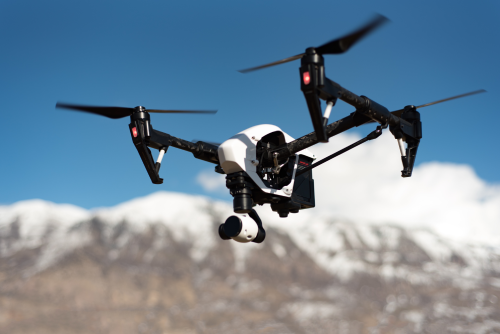
Drones have made mountain mapping faster, safer, and far more practical than sending survey teams across every steep slope. In India, where roads, hydropower sites, hill towns, forests, and landslide-prone valleys often sit in difficult terrain, drones can capture detailed map data with much less time in the field.
How drones are used in mountain mapping is not just about taking aerial photos. A well-planned drone mission can create contour maps, 3D terrain models, landslide assessments, route layouts, and repeat surveys that engineers, planners, researchers, and site teams can actually use.
Quick Take
- Drones are used in mountain mapping to create accurate aerial maps, 3D terrain models, slope data, and change reports.
- They are especially useful where ground access is slow, risky, or expensive.
- Common mountain mapping jobs include road alignment planning, landslide monitoring, hydropower surveys, forestry work, watershed studies, and disaster response.
- The main outputs are usually orthomosaics, contour maps, digital surface models, digital terrain models, and point clouds.
- Multirotor drones suit smaller or more complex sites. Fixed-wing or VTOL platforms can cover larger mountain corridors, but need more planning.
- In India, mountain areas often involve extra legal and safety checks because of border sensitivity, controlled airspace, forests, wildlife zones, or critical infrastructure. Always verify the latest official rules before flying.
Why mountain mapping is hard in the first place
Mountains are one of the toughest environments to map well.
On flat land, survey teams can often move equipment easily, maintain line of sight, and work in predictable conditions. In mountain terrain, almost everything gets harder:
- Slopes are steep and uneven.
- Access roads may be narrow, damaged, or seasonal.
- GNSS signals can be affected by valley walls and terrain masking.
- Shadows change quickly and can hide terrain detail.
- Wind can become unpredictable near ridges and saddles.
- Vegetation may cover the actual ground.
- Weather can shift within minutes.
- Cold temperatures can reduce battery performance.
Traditional ground survey still matters, especially for engineering-grade control and validation. But sending crews across unstable slopes, loose rock, snow edges, or landslide zones is slow and sometimes dangerous.
Satellite imagery helps at larger scale, but it may lack the resolution, freshness, or angle needed for a project site. Manned aircraft can cover more area, but they are usually costlier and less practical for many smaller jobs.
This is where drones fit in. They can fly low enough to collect high-detail data, repeatedly, on demand, and over areas that are difficult to walk.
How drones are used in mountain mapping
Creating base maps of difficult terrain
One of the most common uses is building a base map of the site.
A drone flies a planned grid pattern and captures overlapping images. Software then stitches those images into an orthomosaic, which is a corrected aerial map where distances and positions are far more reliable than in a normal photo.
In mountain work, this is useful for:
- mapping a hillside village expansion area
- documenting an access road and nearby slopes
- planning trail improvements
- surveying a hydropower approach road
- checking a telecom tower approach route
- updating maps after monsoon damage
For a team in Himachal Pradesh or Uttarakhand, for example, a drone orthomosaic can quickly show where retaining walls, drainage channels, cut slopes, or debris zones actually sit relative to the road.
Building 3D terrain models and contour maps
Mountain mapping is rarely only about a top-down image. Teams usually need to understand height, slope, and shape.
Drone data can be processed into:
- Digital Surface Model (DSM): shows the top surface, including trees, rocks, buildings, and other objects
- Digital Terrain Model (DTM): aims to represent the bare earth surface, where possible
- Contours: lines that connect points of equal elevation
- Point cloud: a dense 3D collection of measured points
These outputs are used for:
- slope analysis
- route alignment
- cut-and-fill planning
- drainage design
- platform leveling
- volume calculation
- rock face assessment
If a road contractor needs to widen a mountain road, drone-derived terrain data can help identify where the slope is too steep, where excavation may be needed, and where debris disposal might be practical.
Monitoring landslides, erosion, and unstable slopes
This is one of the strongest use cases for drones in the mountains.
A landslide-prone slope changes over time. Cracks may widen, loose soil may shift, drainage paths may change, and debris fans may spread downhill. Repeated drone surveys allow teams to compare one date with another and measure visible change.
This is valuable for:
- landslide monitoring
- erosion tracking
- rockfall risk zones
- gully expansion
- embankment distress
- post-rainfall inspection
In a place like Uttarakhand or Sikkim, where rain-triggered slope instability is a serious concern, repeated drone mapping can show whether a slide area is stabilising or continuing to move. It can also help engineers see whether a blocked channel is creating new risk downstream.
Drones do not replace geotechnical investigation. But they give a fast and clear site-wide picture that ground teams can then verify.
Planning mountain infrastructure
Mountain infrastructure needs good terrain intelligence.
Drones are often used before and during projects such as:
- hillside roads and bypasses
- ropeways
- transmission lines
- pipelines
- hydropower components
- hill-cut building sites
- water supply schemes
- retaining structures
- mountain resorts and tourism facilities
For example, an engineering consultant may use drone mapping to compare multiple alignment options for an access road in a steep valley. Instead of relying only on scattered ground points, the team can inspect a full 3D model of the corridor and spot drainage problems, cliff zones, settlement edges, and earthwork constraints much earlier.
Mapping forests, watersheds, and mountain ecology
Not every mountain mapping job is about construction.
Drones are also used for:
- forest edge mapping
- plantation boundary updates
- watershed documentation
- stream corridor inspection
- habitat monitoring
- alpine meadow change detection
- post-fire or post-storm assessment
With a standard RGB camera, teams can map visible land cover and terrain. With specialised sensors, they can extract more information about vegetation health or surface moisture patterns.
In heavily vegetated mountain areas, however, the actual ground may be hidden by tree canopy. That is where sensor choice becomes important, especially if the project needs true terrain rather than just a top surface model.
Supporting disaster response and route access decisions
After cloudbursts, landslides, flash floods, or slope failures, getting a clear picture quickly matters.
Drones can help teams:
- identify blocked roads
- map debris spread
- locate damaged culverts or bridges
- see alternate foot or vehicle access
- assess whether equipment can reach the site
- document conditions before cleanup begins
This is especially helpful when the area is too dangerous for immediate foot access.
In mountain environments, even a small delay in situational awareness can slow rescue, restoration, or supply movement. A drone survey can give district teams, contractors, or utility operators a current map within hours, provided flying is legal and conditions are safe.
What a typical mountain mapping project delivers
| Deliverable | What it means | Common mountain use |
|---|---|---|
| Orthomosaic | A stitched, corrected aerial map | Site layout, route planning, visual documentation |
| DSM | Surface model including trees and structures | Slope visualisation, drainage paths, ridge analysis |
| DTM | Bare-earth terrain model where possible | Contours, engineering planning, earthwork analysis |
| Point cloud / 3D mesh | Dense 3D representation of the site | Cliff faces, cut slopes, structures, complex terrain |
| Contour map | Elevation lines at set intervals | Design, planning, slope interpretation |
| Change detection report | Comparison between two or more surveys | Landslides, erosion, construction progress |
| Volume calculation | Measured amount of cut, fill, debris, or stockpile | Roadworks, spoil disposal, post-slide cleanup |
A practical mountain mapping workflow
Not every job is complex, but good mountain mapping usually follows a clear process.
1. Define the end use first
Before flying, ask what the map is for.
The mission plan for a tourism site brochure is very different from the plan for an engineering contour survey. Clarify:
- area size
- required output
- expected accuracy
- deadline
- repeat survey frequency
- final file format
If the client needs design-grade inputs, the survey plan must be more rigorous than a simple visual inspection job.
2. Check airspace, permissions, and local constraints
This step is critical in India, especially in mountain regions.
Many hilly areas are near international borders, defence zones, sensitive infrastructure, forests, wildlife habitats, dams, or other restricted locations. Check the current airspace status on official systems such as Digital Sky and verify what permissions, pilot qualifications, drone compliance requirements, and site approvals apply to the specific job.
Also confirm:
- local administration requirements, if any
- client or landowner consent
- forest or protected-area permissions where relevant
- telecom coverage limitations
- access and emergency evacuation options
Never assume that a scenic mountain valley is automatically legal to fly in.
3. Choose the right platform and sensor
The right drone depends on area, terrain, vegetation, and output.
A small RGB multirotor may be enough for a short slope or building site. A larger corridor survey may need a fixed-wing or VTOL platform. Dense forest or a bare-earth requirement may push the job toward LiDAR.
4. Plan the mission with terrain in mind
This is where many beginners go wrong.
Mountain flights should usually be planned with terrain following, which means the drone adjusts altitude relative to the ground rather than staying at one fixed height from the takeoff point. Without terrain following, image scale and overlap can vary badly across a steep slope.
You also need to think about:
- takeoff and landing safety
- ridge and valley wind patterns
- overlap between images
- sun angle and shadows
- battery swap points
- lost-signal behavior
- return-to-home path in rising terrain
A return path that is safe on flat ground may be unsafe in the mountains if high terrain lies between the drone and home point.
5. Set ground control and checkpoints where needed
For more reliable positioning, teams often place ground control points on the site. These are visible markers measured accurately from the ground. Separate checkpoints help validate the final model.
For a simple visual map, this may not be essential. For engineering, progress certification, or dispute-sensitive work, it is often very important.
In steep terrain, vertical reliability matters as much as horizontal position, sometimes more.
6. Fly during the best weather window
Mountain flying rewards patience.
Ideal conditions are usually:
- stable wind
- clear visibility
- no rain, fog, or snowfall
- enough light without extreme shadow contrast
- temperatures that will not stress batteries too much
Early morning can be calmer, but shadows may be deeper. Midday can reduce shadows on some slopes, but glare can become a problem on rock or snow. The best choice depends on terrain, season, and output needs.
7. Process the data and clean the model
After the flight, images are processed in mapping software.
The team checks for:
- missing areas
- blurred images
- poor overlap
- warped edges
- incorrect elevation surfaces
- holes in the model
- vegetation misclassification
In mountain terrain, cliffs, snow patches, water, shadow, and dense vegetation can all create weak spots in the output. Processing is not just a button click; it needs review.
8. Validate before delivering
A map that looks good is not always a map that is reliable.
Before sending files to a client, confirm:
- checkpoint accuracy
- contour reasonableness
- slope continuity
- drainage direction
- datum and coordinate system
- whether DSM or DTM is being supplied
- any known blind spots or limitations
This last step is what separates a professional survey output from a pretty aerial graphic.
Which drone setup makes sense for mountain mapping?
RGB multirotor drone
Best for:
- small to medium sites
- steep localised slopes
- construction areas
- landslide patches
- quick inspection and repeat surveys
Strengths:
- easy deployment
- precise low-speed flight
- safer in tight terrain than some larger platforms
- good image quality for photogrammetry
Limits:
- shorter endurance
- less efficient on long mountain corridors
- may struggle in stronger winds
RTK multirotor drone
RTK stands for real-time kinematic positioning, a method that improves positional accuracy during flight when used correctly.
Best for:
- jobs needing better geotag quality
- quicker field setup
- projects where full ground control is limited but validation is still needed
Strengths:
- stronger positioning workflow
- useful for repeatable surveys
- efficient for engineering and progress monitoring
Limits:
- still not a magic replacement for proper checkpoints
- mountain signal conditions can still affect workflow
- more planning and verification needed
Fixed-wing or VTOL mapping drone
VTOL means vertical takeoff and landing. These platforms can cover larger areas than many multirotors.
Best for:
- long mountain corridors
- valley-scale mapping
- large catchments or infrastructure routes
Strengths:
- better area coverage
- more efficient for longer missions
Limits:
- more operational complexity
- launch, recovery, and airspace planning matter more
- not ideal for every steep, confined site
LiDAR drone system
LiDAR uses laser pulses to measure surfaces. In mountain mapping, it becomes especially useful where vegetation hides the ground.
Best for:
- forested slopes
- bare-earth terrain extraction
- complex topography under canopy
- higher-end engineering and geospatial work
Strengths:
- better ground penetration through vegetation than RGB photogrammetry
- strong for terrain modeling in difficult cover
Limits:
- higher cost
- more specialised processing
- often unnecessary for basic visual mapping jobs
How accurate is drone mountain mapping?
The honest answer is: it depends on the workflow.
Accuracy changes with:
- sensor quality
- flight altitude
- overlap
- terrain following quality
- control points
- checkpoints
- vegetation cover
- shadow conditions
- processing choices
A consumer drone can produce excellent-looking maps, but appearance is not the same as survey confidence. For planning, inspection, and many progress-monitoring tasks, drone outputs can be very useful even without heavy ground control. For engineering design, quantity verification, or legal dispute work, proper control and validation matter much more.
In mountain terrain, vertical accuracy is often the harder part. Slopes magnify small errors.
Safety, legal, and compliance checks in India
Mountain mapping should never be treated like a casual recreational flight.
Before any real project in India, verify the latest official requirements. Rules can change, and mountain regions often involve added sensitivity.
Key checks include:
- confirm current airspace status through official systems such as Digital Sky
- verify whether the drone, pilot, and mission type meet current DGCA requirements
- check whether the site is near an international border, defence area, dam, strategic installation, or other sensitive zone
- obtain written permission from the client, site owner, or landholder where needed
- confirm forest, wildlife, or local administrative approvals if the area falls under those controls
- maintain safe separation from people, vehicles, roads, power lines, and active worksites
- avoid fog, rain, snowfall, and strong ridge winds
- plan for battery temperature, emergency landing options, and loss-of-signal behavior
- brief the ground team so nobody walks under the aircraft path or enters the takeoff zone unexpectedly
If you are a buyer or small business exploring this field, do not assume that owning a capable drone means you are ready for mountain mapping work. The compliance and risk planning side matters just as much as the aircraft.
Common mistakes in mountain mapping
Treating the site like flat land
A standard flat-grid mission can fail badly on a steep slope. Use terrain-aware planning.
Flying too high above one side of the slope
If altitude varies too much relative to the ground, image detail and overlap become inconsistent. That hurts the model.
Skipping control and checkpoints on critical jobs
For inspection photos, you may get away with it. For engineering or volume work, this can create expensive errors.
Ignoring wind near ridgelines
Wind at takeoff can feel manageable while ridge-level gusts are much worse. Always plan with the upper terrain in mind.
Trusting automatic return settings without checking terrain
An auto-return path can be dangerous if the drone has to cross rising ground to get home.
Mapping in fog, cloud shadow, or low contrast snow conditions
Poor visibility affects both safety and the software’s ability to match images correctly.
Expecting RGB cameras to reveal bare ground under dense forest
They usually cannot. If the ground is hidden, the model may represent canopy instead of terrain.
Delivering images instead of decision-ready outputs
Clients often need contours, volumes, cross-sections, or change reports, not just a folder full of photos.
FAQ
Can drones replace ground survey in the mountains?
Not fully. Drones are excellent for site-wide data capture, visual documentation, and repeat mapping, but ground survey is still important for control, validation, and certain engineering tasks.
Can a normal camera drone map a mountain slope?
Yes, for many small and medium jobs. But the mission must be planned properly, especially for overlap, terrain following, and safe return paths. For higher-accuracy work, add control and validation.
What is terrain following, and why does it matter?
Terrain following means the drone adjusts height relative to the ground as the land rises or falls. In mountain mapping, it helps keep image quality and overlap more consistent across slopes.
What is better for mountains: multirotor or fixed-wing?
For tight, steep, or localised sites, multirotors are usually easier to manage. For very large corridors or valleys, fixed-wing or VTOL platforms can be more efficient if the site allows safe operations.
Can drones map through trees?
A standard camera usually cannot see the actual ground under dense canopy. It captures the top of vegetation. LiDAR is more suitable when a project needs bare-earth terrain in forested mountain areas.
Do I need internet at the site?
Not always during the flight, but poor connectivity is common in mountain areas, so offline planning is important. Airspace checks, permissions, maps, and mission files should be prepared in advance whenever possible.
How often should a mountain site be mapped again?
It depends on the job. Active construction sites or landslide-prone slopes may need frequent repeat surveys, especially before and after heavy rain. Stable sites may need only occasional updates.
Can drones fly safely in fog, snowfall, or strong mountain winds?
Usually those conditions are poor for both safety and data quality. Even if the drone can stay airborne, the resulting map may be unreliable. In most cases, postponing is the better decision.
What should a client ask a drone mapping service before hiring them?
Ask about the deliverables, expected accuracy, use of control points or checkpoints, legal permissions, pilot experience in mountain terrain, safety planning, and whether they can repeat the survey consistently over time.
Final takeaway
If you want to understand how drones are used in mountain mapping, think beyond aerial photos. Their real value is in turning hard-to-reach terrain into usable maps, models, and repeatable measurements for planning, monitoring, and decision-making.
For small visual jobs, an RGB multirotor may be enough. For engineering, forested slopes, or high-risk terrain, you need a tighter workflow, stronger validation, and sometimes more advanced sensors. In India, the smart next step is simple: define the output you need, verify the legal status of the site, and choose a drone workflow built specifically for mountains rather than for flat land.
