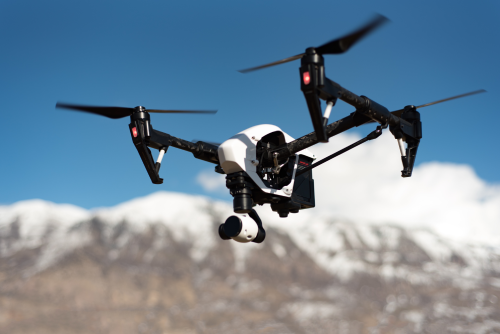
How drones are used in medical supply delivery is easier to understand if you think less about consumer parcel drops and more about urgent healthcare logistics. In the right situation, a drone can move blood, vaccines, lab samples, or emergency medicines faster than road transport, especially in remote, congested, hilly, island, or disaster-affected areas.
For India, this matters because healthcare access often depends on distance, terrain, and time. Drones are not a replacement for ambulances or full supply chains, but they can be a very useful tool for small, critical, time-sensitive deliveries.
Quick Take
- Medical delivery drones are mainly used for small, urgent, high-value cargo such as blood, vaccines, medicines, diagnostic samples, and test kits.
- They are most useful when roads are slow, damaged, crowded, or unreliable.
- In India, they can be especially relevant for rural health centres, hilly regions, islands, flood-prone areas, and inter-facility transfers.
- The biggest benefit is not “flying instead of driving” in every case. It is reducing delay for supplies that cannot wait.
- Good medical drone operations depend on packaging, temperature control, tracking, chain of custody, and trained ground staff, not just the aircraft.
- Payload, weather, battery life, landing space, and regulation are the main limits.
- Any real deployment in India must be checked against the latest DGCA and Digital Sky requirements, along with healthcare handling rules for the cargo being moved.
What medical drone delivery actually means
Medical supply delivery by drone usually happens between healthcare points, not always directly to a patient’s doorstep.
In practice, the most common missions are:
- District hospital to primary health centre
- Community health centre to diagnostic lab
- Blood bank to hospital
- Warehouse to vaccination site
- Emergency medical hub to remote clinic
- Relief base to disaster-affected location
This is often called middle-mile or last-mile logistics.
- Middle-mile means moving supplies between two facilities.
- Last-mile means the final leg to the point of care.
For healthcare, the drone’s job is usually simple: move a small package quickly, safely, and with proof that it stayed in the right condition.
What drones typically deliver
Not every medical item is suitable for drone delivery. The best cargo is light, urgent, and easy to secure.
| Medical item | Why speed matters | Drone fit | Special handling |
|---|---|---|---|
| Blood and blood components | Needed urgently for surgery, trauma, obstetrics | Very good for short to medium urgent routes | Temperature control, shock protection, documented handover |
| Vaccines | Delays can interrupt immunisation schedules | Good for planned routes to remote sites | Cold chain, tamper-proof packing |
| Diagnostic samples | Faster transport can speed up diagnosis | Very good for rural-to-lab transfers | Leak-proof packaging, labeling, temperature as required |
| Emergency medicines | Stock-outs can become life-threatening | Good for urgent replenishment | Secure packing, correct inventory documentation |
| Test kits and small medical devices | Useful during outbreaks or emergencies | Good for time-critical dispatch | Moisture protection, clear receiving process |
The phrase cold chain means keeping a product within its required temperature range from dispatch to delivery. For vaccines, insulin, some biologics, and certain blood products, that is a major part of the job.
Where drones make the biggest difference
Blood and blood component delivery
Blood is one of the clearest examples of where drones can help.
Imagine a smaller hospital or health centre that needs blood urgently but is far from the nearest blood bank. Road transport may be delayed by traffic, poor roads, rain, or distance. A drone can carry a limited quantity much faster on a direct route.
This can matter in situations such as:
- Postpartum haemorrhage care
- Trauma cases
- Emergency surgery
- Rare blood group requests
- Inter-facility replenishment
The key is not just speed. Blood delivery also needs:
- Proper insulated packaging
- Minimal vibration and impact
- Temperature monitoring
- Confirmed recipient handover
- Clear return or disposal protocol if the shipment is compromised
A hospital cannot treat blood like an ordinary parcel. The drone flight is only one part of the process.
Vaccine delivery to remote areas
Vaccines are often needed in places where transport is the hardest.
In parts of India, outreach vaccination sites may be far from storage points. Reaching them can take hours by road, especially in hilly regions, forest routes, islands, or monsoon-affected areas. Drones can help replenish small vaccine batches or send urgent top-up supplies when planned stock runs short.
This is valuable when:
- A vaccination session is underway and supply is low
- The nearest cold-chain point is far away
- Roads are blocked or unreliable
- Rapid transport can avoid wasting a session day
For vaccine delivery, the real challenge is not just flying the drone. It is preserving the cold chain from loading to handover.
Diagnostic sample transport
This is one of the most practical and underappreciated uses of medical drones.
Small health centres often collect samples but depend on distant labs for testing. If those samples move slowly, patients wait longer for results, and treatment decisions are delayed.
Drones can transport:
- Blood samples
- Swab samples
- Pathology specimens
- Test cartridges or kits
- Urgent documents linked to diagnostics
A useful India-specific example would be a rural clinic that can collect samples in the morning and send them to a district lab by drone instead of waiting for a vehicle trip later in the day. That can shorten turnaround time significantly, especially where roads are long or inconsistent.
This use case works well because samples are often:
- Lightweight
- Time-sensitive
- Repetitive in route pattern
- Moving between known, controlled facilities
Emergency medicines and antivenom
Some medical items are small but critical. When a clinic runs out, the issue is not convenience. It is patient safety.
Drones can be used to send:
- Emergency antibiotics
- Antivenom where appropriate
- Insulin and other urgent medicines
- Maternal care medicines
- Small resupply packs for remote health units
This is especially relevant in locations where:
- A road journey is long compared with the urgency
- Stock-outs happen unexpectedly
- The clinic has a safe landing or receiving point
- The weather is still within safe flying limits
The goal is usually fast replenishment to keep treatment going until regular resupply arrives.
Disaster and outbreak response
During floods, landslides, cyclones, or other disruptions, a drone may be one of the few ways to move small essential items quickly.
Possible uses include:
- Sending essential medicines to cut-off areas
- Transporting test kits
- Moving protective medical supplies
- Carrying samples out for testing
- Supporting temporary medical camps
This is where drones can shine, but also where careless use can create risk. Disaster zones are complicated. There may be rescue helicopters, unstable weather, crowds, damaged power lines, and changing ground conditions. So the use case is strong, but the need for coordination is even stronger.
How a medical drone delivery mission works
A good medical drone operation is more like a healthcare workflow than a hobby flight.
Step 1: The request is validated
The sending facility confirms:
- What item is needed
- Quantity and urgency
- Destination
- Whether drone delivery is appropriate
If the item is bulky, heavy, extremely fragile, or needs a person accompanying it, a drone may not be the right choice.
Step 2: The cargo is packed correctly
Medical cargo is packed based on its type.
This may include:
- Insulated box
- Secondary leak-proof container
- Shock protection
- Tamper-evident seal
- Temperature logger
- Labels and dispatch note
For medical cargo, packaging is part of safety, not an afterthought.
Step 3: The flight is planned
The team checks:
- Route
- Distance
- Airspace status
- Weather
- Battery reserve
- Take-off and landing conditions
- Backup landing or return plan
For longer routes, especially those beyond the pilot’s direct sight, additional operational and regulatory requirements may apply. That must be verified in advance.
Step 4: Chain of custody is documented
This means the sender records exactly:
- What was sent
- When it was packed
- Who handed it over
- Condition at dispatch
For healthcare, accountability matters. Every handover should be clear.
Step 5: The drone flies the mission
The flight may be:
- A direct hub-to-clinic run
- A scheduled route
- An emergency dispatch
- A round trip with return cargo such as samples
During flight, the control team monitors position, battery, telemetry, and mission status.
Step 6: Delivery happens in a controlled way
The safest method for medical delivery is usually a controlled landing and handover.
Some systems use drop or winch methods, but those are only suitable when the cargo, landing environment, and operating approvals support them. For many medical items, hand-to-hand transfer after landing is better because it protects the package and preserves traceability.
Step 7: Receipt and condition are confirmed
The receiving facility checks:
- Seal integrity
- Item count
- Temperature record if relevant
- Damage or leakage
- Delivery time
Only then is the cargo moved into use or storage.
Why drones help healthcare logistics
Drones are useful in medicine because healthcare often rewards reliability and speed more than sheer carrying capacity.
Main benefits include:
Faster movement on difficult routes
A drone flies a more direct path than a vehicle. That matters in:
- Hill areas with winding roads
- Islands and river crossings
- Urban congestion
- Flooded or damaged roads
Better access to remote points
Small health centres do not always need truckloads of supplies. Often they need one small, urgent package.
More predictable emergency dispatch
If a route is mapped, tested, and approved, a drone mission can be repeatable. That helps with planning for urgent replenishment.
Lower dependency on one transport mode
In some regions, healthcare delivery relies heavily on road availability. Drones add another option.
Useful for scheduled sample runs
Not every mission is an emergency. Repeated daily or twice-daily sample transport can be a strong use case if the route is stable.
But drones are not the answer to every medical delivery problem
A drone is not automatically the best option just because it is fast.
Use a drone when the cargo is:
- Light
- Urgent
- High value or medically important
- Going to a hard-to-reach location
- Moving on a repeatable route
A drone is usually a poor fit when the cargo is:
- Heavy or bulky
- Needed in large volume
- Going into severe weather
- Headed to a site with no safe receiving area
- Part of a situation where a human medical escort is needed
In other words, drones are best as a precision tool, not as a blanket replacement for vans, ambulances, or couriers.
What kind of drone is used for medical delivery?
Different missions need different aircraft types.
Multirotor drones
These are common for short routes and precise landing.
Best for:
- Smaller payloads
- Hospital compounds
- Shorter emergency deliveries
- Locations with tight landing space
Trade-off:
- Shorter range and lower efficiency than fixed-wing systems
Fixed-wing drones
These are more efficient over long distances.
Best for:
- Longer routes
- Remote corridors
- Repeated inter-facility transport
Trade-off:
- Usually need more space or a special launch and recovery method
Hybrid VTOL drones
VTOL means vertical take-off and landing. These combine some fixed-wing range benefits with vertical landing ability.
Best for:
- Long routes with limited landing space
- More advanced medical logistics networks
Trade-off:
- Greater complexity and usually higher operating demands
What a good medical delivery drone system must get right
The aircraft matters, but the system around it matters more.
A reliable medical delivery setup should include:
- Stable flight performance
- Payload box designed for medical cargo
- Temperature protection if needed
- Tracking and telemetry
- Clear dispatch and receiving SOPs
- Trained staff at both ends
- Battery and maintenance discipline
- Backup communication
- Emergency recovery process
- Delivery proof and record keeping
SOPs are standard operating procedures. In simple words, they are written steps the team follows every time so the mission is consistent and auditable.
Safety, legal, and compliance points in India
This is the part many people underestimate.
Medical delivery may sound like a public-good activity, but the aircraft still operates in regulated airspace. In India, any practical deployment should be planned conservatively and checked against the latest official rules before operation.
Keep these points in mind:
Verify the current DGCA and Digital Sky position
Rules can change. Before any commercial, institutional, or repeated medical drone operation, confirm the latest requirements on:
- Airspace permissions
- Drone category and registration requirements
- Pilot competency or training requirements
- Operational limitations
- Platform compliance features
- Whether NPNT applies to the drone and operation
NPNT means No Permission, No Takeoff, a framework intended to ensure that certain drones do not take off without digital permission where applicable.
Treat BVLOS operations with extra caution
BVLOS means beyond visual line of sight. Many meaningful medical routes may need this, especially between distant facilities.
Because these flights can involve higher risk and additional approvals or conditions, operators should verify the current regulatory framework before attempting them.
Check sensitive surroundings
Medical sites can be near:
- Airports
- Heliports
- Security-sensitive areas
- Dense population zones
- Power lines and telecom towers
Some hospitals also have helipads or occasional emergency aviation activity. That makes local airspace awareness essential.
Follow medical handling rules too
Drone compliance is only one layer.
The cargo itself may also be subject to health-sector requirements such as:
- Cold-chain protocols
- Pharmaceutical handling standards
- Sample transport procedures
- Biohazard precautions where relevant
- Chain-of-custody documentation
Build emergency procedures before the first flight
Plan for:
- Lost communication
- Return-to-home failure
- Unexpected weather
- Forced landing
- Damaged package
- Temperature breach
- Wrong recipient handover
For medical cargo, a failed delivery is not just an operational issue. It can become a patient safety issue.
Common mistakes in medical drone delivery
Even strong drone teams can struggle if they treat medical missions like regular logistics.
1. Focusing only on the aircraft
A high-end drone alone does not create a healthcare delivery system. Packaging, documentation, staff coordination, and receiving workflow are just as important.
2. Using brochure range instead of real-world range
Wind, payload weight, temperature, altitude, and routing all affect performance. Plan with margin, not marketing numbers.
3. Ignoring temperature control
A medicine can arrive quickly and still be unusable if the cold chain failed.
4. Skipping chain-of-custody discipline
If no one can prove when the package was packed, handed over, received, and checked, the operation is weak.
5. Choosing bad delivery points
A landing zone should be clear, controlled, and known in advance. Crowded areas, uneven surfaces, and ad hoc receiving spots create avoidable risk.
6. Forgetting weather realism
Healthcare urgency does not make bad weather safe. A delayed delivery is better than a reckless one.
7. Not involving the medical staff early
Doctors, pharmacists, lab staff, and store managers should help define packaging, urgency rules, and acceptance checks. This cannot be designed by the drone team alone.
8. Assuming drones are always cheaper
For some routes, a drone may save time but not money. The value may come from better outcomes, reduced delay, and improved access, not just lower transport cost.
Frequently asked questions
Can drones safely deliver blood?
Yes, they can, if the system is designed for it. The key requirements are proper packaging, temperature control, shock protection, and documented handover. The drone itself is only part of the solution.
Are medical delivery drones mostly for rural India?
Rural and remote areas are a strong fit, but not the only one. Drones can also help in cities when traffic makes urgent inter-facility transport slow and the route is operationally and legally workable.
Can a drone deliver medicine directly to a patient’s home?
In theory, some models could support direct-to-patient delivery, but in practice this is more complex because of airspace, landing safety, identity verification, and medicine handling. Inter-facility delivery is usually the more realistic first use case.
Do medical drones need special cold boxes?
For temperature-sensitive cargo, yes. The packaging must maintain the required range for the full mission, including loading, flight, and receiving delay. A simple consumer box may not be enough.
How much weight can a medical delivery drone carry?
It varies widely by drone type and mission design. Some carry only small sample boxes, while others can carry several kilograms. Always evaluate real payload, range, weather margin, and compliance together.
Are long-distance medical drone flights allowed in India?
This depends on the latest DGCA and Digital Sky framework, the route, airspace, drone category, and operating approvals. If a mission goes beyond visual line of sight or crosses sensitive airspace, extra requirements may apply. Always verify before planning service.
What happens if the weather changes after take-off?
A proper system should have a response plan, such as return to launch, diversion, or mission abort. Medical urgency should never override basic flight safety.
Is a drone cheaper than sending a bike or ambulance?
Not always. On easy routes, traditional transport may be more economical. Drones make the most sense when speed, access, and route difficulty matter more than bulk transport cost.
Do hospitals need special training to receive drone deliveries?
Yes, at least basic process training. Staff should know how to receive, inspect, document, and store cargo, and what to do if a package is damaged or outside the required temperature range.
Final takeaway
Medical drone delivery works best when the cargo is small, urgent, and hard to move quickly by road. In India, that makes drones especially useful for blood, vaccines, diagnostic samples, and emergency medicines moving between healthcare facilities in remote or difficult areas.
If you are evaluating this space, do not start by asking, “Which drone should we buy?” Start by asking, “Which route, which cargo, which safety process, and which regulatory pathway make sense?” In healthcare, the winning system is not the one that flies the farthest. It is the one that delivers the right item, in the right condition, to the right hands, every time.
