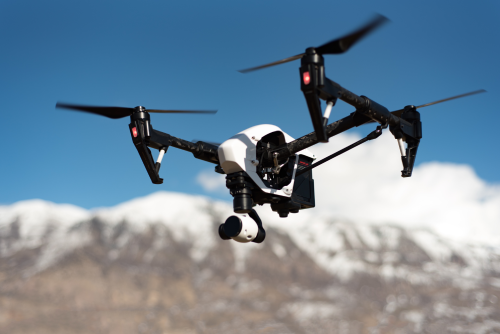
How drones are used in logistic operations is often misunderstood. Most people think only of package delivery, but in practice drones also help with inventory checks, movement of urgent parts inside large facilities, remote supply runs, and yard visibility. For Indian businesses, the real value is usually not “replace all delivery vehicles,” but “solve specific logistics bottlenecks faster and more safely.”
Quick Take
- Drones in logistics are best for small, urgent, lightweight, high-value, or hard-to-reach shipments.
- They are also useful inside warehouses for stock checks and in large yards for asset visibility.
- The strongest use cases are usually:
- last-mile delivery for critical items
- inter-facility movement inside campuses
- remote-area supply runs
- warehouse inventory scanning
- container, pallet, and yard monitoring
- Drones do not replace trucks, vans, or bikes for bulk movement. They complement them.
- In India, outdoor commercial drone operations must be planned conservatively. Always verify the latest DGCA, Digital Sky, airspace, and local permission requirements before operating.
- For many companies, the easiest starting point is a controlled route or an indoor warehouse use case, not open city delivery.
What “logistic operations” really include
Logistics is much broader than delivery. It covers the full movement of goods from one point to another, including storage, picking, dispatch, tracking, handover, and sometimes returns.
In a typical business, logistics may include:
- moving goods from warehouse to customer
- shifting spare parts between factory buildings
- checking stock in storage racks
- monitoring pallets, containers, or vehicles in a yard
- moving medical supplies between a lab and a hospital
- collecting samples, documents, or repair items
This is why drones fit into logistics in more than one way. Sometimes they carry an item. Sometimes they collect visual or scan data that helps the logistics team work faster.
Where drones fit best
A drone becomes useful when at least one of these conditions is true:
- the shipment is time-sensitive
- road access is slow, blocked, risky, or expensive for that specific route
- the payload is small enough for a drone to carry safely
- the route is repetitive and predictable
- the origin and destination have safe takeoff and landing zones
- the cost of delay is higher than the cost of the flight
- people currently spend too much time on manual stock or yard checks
This is why drone logistics often works best for:
- medicines, samples, documents, and critical spares
- industrial campuses
- mining, energy, and infrastructure sites
- warehouses with high racks and frequent cycle counts
- remote villages, hilly areas, islands, and emergency response situations
Dense urban doorstep delivery sounds attractive, but it is usually the hardest model to scale because of people, buildings, wires, landing constraints, compliance, and public safety concerns.
Main ways drones are used in logistic operations
Last-mile delivery for urgent parcels
Last-mile delivery means the final leg from a local hub to the customer or destination site.
This is the most talked-about use of drone logistics, but it only makes sense in certain cases. Drones are strongest when the parcel is:
- small and light
- urgent
- valuable or delay-sensitive
- going to a location with difficult road access
- headed to a fixed delivery point, not a crowded random address
Examples include:
- medicines to a rural clinic
- diagnostic samples where handling rules permit
- essential documents
- critical electronic parts
- emergency maintenance components
A practical Indian example would be a distributor sending an urgently needed medicine pack from a town hub to a primary health centre in a hilly area where road travel takes much longer than a direct flight path.
Where this works well: – fixed routes – repeat deliveries – known landing spots – low crowd density
Where it struggles: – apartment towers – busy markets – unpredictable customer presence – bulky parcels – monsoon or strong wind conditions
Campus and facility-to-facility movement
Many logistics tasks happen within a large controlled area, not across an entire city. This is one of the most practical uses of drones today.
Think about:
- manufacturing plants
- refineries
- ports
- power plants
- solar parks
- university campuses
- hospital networks
- mining sites
In these places, a drone can move a small item between two buildings or work zones much faster than a person on foot or a vehicle taking a longer internal route.
Typical payloads include:
- maintenance spares
- tools
- test samples
- paperwork
- sensors or small equipment
- replacement components for field teams
This model is attractive because the route is controlled, the landing area can be planned, and the organization can create standard operating procedures more easily.
For many businesses, this is a better first pilot than consumer delivery.
Remote and hard-to-reach deliveries
India has many regions where road transport is slowed by terrain, seasonal weather, river crossings, or disaster conditions. In these scenarios, drones can play a meaningful support role.
Use cases include:
- delivering supplies to remote communities
- moving small medical consignments
- reaching flood-affected or landslide-prone areas
- supporting relief logistics after disruptions
- servicing telecom or infrastructure teams in isolated sites
The key advantage is not just speed. It is reliability when ground routes are unreliable.
That said, these operations are not simple. They require:
- route planning
- weather assessment
- safe landing or drop procedures
- payload security
- communication with receiving teams
- strict compliance checks for the airspace and type of operation
For critical humanitarian or medical movement, the logistics value can be very high, but the operating discipline must also be very high.
Warehouse inventory checks and cycle counting
One of the most practical drone uses in logistics has nothing to do with outdoor delivery.
Inside warehouses, drones can help scan shelf labels, barcodes, QR codes, or other stock identifiers on high racks. This reduces the need for workers to repeatedly use ladders, scissor lifts, or manual counting methods.
Cycle counting means checking a small portion of inventory regularly instead of waiting for a full stock audit. Drones can support this process by:
- flying along aisles
- capturing stock location data
- comparing actual shelf positions with records
- flagging missing or misplaced items
- reducing counting time in tall storage areas
This is especially useful in:
- large distribution centres
- e-commerce fulfilment operations
- spare parts warehouses
- cold-chain storage environments where time inside the zone matters
- facilities with frequent stock movement
Indoor drone systems may use cameras and vision-based positioning because GPS signals can be weak or unavailable inside a warehouse.
For many companies, this is the clearest business case because the environment is controlled and the return on time saved can be easier to measure.
Yard, container, pallet, and asset monitoring
Logistics does not stop at the warehouse door. Yards, loading zones, and container areas are often where delays begin.
Drones can help teams quickly view and verify:
- container positions
- pallet stacks
- parked vehicles
- congestion at loading bays
- material movement across large open yards
- temporary storage areas
At large sites such as ports, freight yards, industrial depots, and construction logistics bases, a drone can provide a top-down view in minutes.
This helps with:
- faster counting
- spotting misplaced assets
- reducing time spent searching for inventory
- checking whether a dispatch zone is ready
- documenting yard conditions during shift changes
A drone does not replace a warehouse or yard management system, but it can feed faster field visibility into those systems.
Emergency logistics and critical spare parts
Downtime is expensive. When a machine stops because one small part is missing, the logistics question becomes urgent.
Drones are increasingly relevant for moving:
- maintenance spares
- sensors
- small repair kits
- inspection tools
- urgent consumables
- calibration items
Imagine a wind or solar operations team waiting for a small replacement part at a distant field location. A conventional vehicle may take much longer because of internal site roads or terrain. A drone can be a rapid-response layer for that final movement.
This use case works best when:
- the part is lightweight
- downtime cost is high
- the route is short and known
- the destination team can receive the item safely
Reverse logistics, pickups, and sample collection
Logistics is not only outbound. Sometimes the important task is bringing something back.
Drones can also support:
- document pickup
- sample collection from satellite sites
- small repair item returns
- movement of test materials back to a central lab
- retrieval of critical storage media or instruments
This tends to work better in controlled networks such as healthcare, industrial testing, or internal company operations than in general consumer returns.
Best-fit use cases at a glance
| Use case | Best fit | Main advantage | Main limitation |
|---|---|---|---|
| Last-mile urgent delivery | Small, time-sensitive parcels | Faster final leg on specific routes | Hard to scale in dense urban areas |
| Campus transport | Factories, hospitals, ports, mines | Predictable routes and controlled landing points | Needs strong internal SOPs |
| Remote-area supply | Hilly, island, disaster-hit, low-access zones | Reaches places where roads fail | Weather and compliance planning are critical |
| Warehouse inventory | High-rack storage and regular stock checks | Reduces manual counting time and risk | Needs system integration and indoor navigation reliability |
| Yard and container monitoring | Large open logistics sites | Quick visibility and counting | Data still needs human verification |
| Critical spare movement | Energy, telecom, industrial maintenance | Cuts downtime for small urgent parts | Only suitable for light payloads |
How a drone logistics workflow actually works
A good drone logistics operation is more like a mini transport system than a casual flight.
1. Select the right task
Start by choosing a use case that fits drone strengths.
Good first candidates include:
- urgent parcel transfer between fixed points
- indoor inventory checks
- lightweight spare delivery on private sites
- repeated runs on a known route
Avoid trying to solve every logistics problem at once.
2. Define the payload
The item must be checked for:
- weight
- dimensions
- fragility
- packaging stability
- temperature needs
- tamper protection
- legal transport restrictions if any apply
A parcel that is “light enough” on paper may still be a poor fit if it shifts in flight or needs special handling.
3. Plan the route and landing zone
This includes:
- takeoff point
- flight path
- altitude plan
- destination handover point
- emergency landing options
- communication process with the receiver
The landing zone matters as much as the drone. A poor landing area can destroy an otherwise good business case.
4. Check permissions and compliance
For outdoor operations, verify the latest requirements from official sources before each type of deployment. This may include airspace checks, platform permissions, operator documentation, and site approvals depending on the mission.
Do not assume that because a drone can physically fly, the operation is automatically lawful.
5. Fly, monitor, and document
The actual mission should include:
- pre-flight checks
- battery health check
- weather confirmation
- payload lock verification
- live monitoring where applicable
- exception handling if a flight must be aborted
For logistics work, documentation is essential. You need a record of dispatch, flight status, and handover.
6. Confirm delivery or pickup
A logistics mission is only complete when the transfer is verified.
This can include:
- receiver confirmation
- photo or video evidence where appropriate
- scan-based proof of delivery
- chain-of-custody record for sensitive items
- time stamp and exception note if something changed
7. Feed the data back into operations
The best drone logistics systems do not operate in isolation. They connect back to existing workflows like:
- warehouse management systems
- dispatch records
- maintenance systems
- inventory updates
- service reports
Without this step, the drone may create activity, but not operational improvement.
Benefits businesses care about
When used well, drones can improve logistics in very specific ways:
- Faster movement of urgent, lightweight items
- Less dependence on slow or indirect internal transport routes
- Better access to difficult terrain
- Reduced manual stock checks in tall warehouses
- Lower worker exposure to certain repetitive or risky tasks
- Faster visibility in large yards and depots
- Better response during disruptions and site emergencies
The biggest benefit is usually not “cheap delivery for everything.” It is “time saved where time matters most.”
Limits and trade-offs you should not ignore
Drone logistics has real constraints.
- Payload is limited compared with bikes, vans, and trucks.
- Flight time is limited by battery and mission conditions.
- Wind, rain, dust, and heat can reduce reliability.
- Safe landing and handover points are often harder to arrange than expected.
- Urban obstacles such as wires, poles, terraces, and moving people increase risk.
- Indoor inventory drones still need good data capture and integration quality.
- Staff training, maintenance, batteries, software, and redundancy all add operational complexity.
- A drone that works in a pilot may fail at scale if the workflow around it is weak.
This is why successful operators design the whole system, not just the aircraft mission.
Safety, legal, and compliance points in India
If you are planning any real drone logistics operation in India, be conservative.
Keep these points in mind:
- Verify the latest DGCA and Digital Sky requirements before operating outdoors.
- Check current airspace status before each mission.
- Use compliant drones and permissions as applicable, including NPNT, which stands for No Permission, No Takeoff, where it applies.
- Ensure pilot qualifications, operator approvals, and documentation are current as required for the operation.
- Do not assume a controlled pilot route means approval for wider deployment.
- Keep clear of crowds, busy public roads, sensitive locations, and unsafe landing zones.
- If the concept requires beyond visual line of sight, or BVLOS, treat it as a higher-complexity operation and verify the current official framework before investing.
- Get site consent for takeoff and landing locations.
- Build procedures for loss of signal, low battery, return-to-home behavior, and emergency recovery.
- Protect privacy and data, especially if onboard cameras capture people, private property, or commercial facilities.
- For medicine, samples, or regulated goods, also verify packaging, chain-of-custody, and handling requirements under the relevant rules.
Indoor use inside a warehouse may avoid some outdoor airspace issues, but it still requires workplace safety procedures, trained operators, and site approval.
Common mistakes businesses make
Treating every parcel as drone-friendly
Drones are not for bulk goods, large consumer parcels, or random unpredictable deliveries. Start with small, repetitive, urgent movements.
Ignoring the landing zone
A perfect route on a map is useless if the receiver has nowhere safe to accept the parcel.
Focusing only on flight time
The full workflow matters more than the flight itself. Loading, permissions, battery change, handover, and documentation all affect real delivery time.
Skipping integration
If delivery proof, inventory updates, or maintenance records stay manual, the drone’s value drops.
Underestimating weather
Indian conditions can change quickly. Wind, rain, dust, and summer heat can affect both flight performance and battery behavior.
Using drones where a ground vehicle is simpler
If a bike can do the same task safely, cheaply, and predictably, a drone may not be the right answer.
Starting with citywide delivery hype
A controlled pilot on a fixed route is much smarter than trying to launch a wide consumer network on day one.
FAQ
Are drones replacing delivery vans and trucks?
No. Drones are best used as a specialized layer for urgent, lightweight, or hard-to-reach movement. Ground vehicles remain essential for bulk logistics.
What kinds of goods are best suited for drone logistics?
Small, time-sensitive, high-value items are the best fit. Examples include medicines, samples, documents, and critical spare parts, subject to handling and legal requirements.
Can drones be used inside warehouses?
Yes, indoor inventory and scanning is one of the most practical logistics use cases. It can help with high-rack stock checks and cycle counting in controlled environments.
Are drone deliveries practical in Indian cities?
They can be in very specific conditions, but dense urban delivery is one of the hardest models because of safety, obstacles, landing constraints, and compliance complexity.
Do I need special permissions for drone logistics in India?
You should verify the latest official rules before acting. Outdoor commercial operations may involve airspace checks, platform permissions, compliant equipment, and operator requirements depending on the mission type.
What is the biggest operational challenge in drone logistics?
Usually it is not flying. It is building a reliable end-to-end workflow: packaging, landing area, handover, documentation, weather planning, and system integration.
Can drones handle reverse logistics or pickups?
Yes, in some controlled networks. Sample pickup, document return, and internal item retrieval are practical examples. General consumer returns are usually more complex.
Are drones cheaper than traditional delivery methods?
Not always. For bulk or routine city transport, ground vehicles are often better. Drones make sense when delay costs are high or access is difficult.
What is a sensible first pilot for a small business?
A fixed route between two known points, or an indoor inventory project. These are easier to measure and manage than open-network consumer delivery.
Final takeaway
The best answer to how drones are used in logistic operations is simple: they solve narrow, high-value logistics problems better than they solve everything. If you are exploring drone logistics in India, start with one controlled use case, verify compliance from official sources, and measure whether the drone improves speed, safety, or visibility enough to justify the workflow around it.
