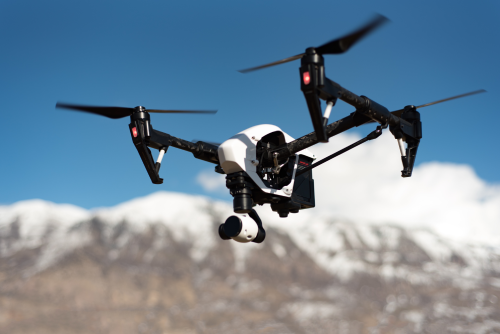
How drones are used in irrigation planning is simpler than it sounds: they help farmers and planners see where water is going, where it is not reaching, and how the field itself is shaping the result. On Indian farms dealing with uneven rainfall, rising pumping costs, and patchy soils, that aerial view can turn guesswork into a clearer irrigation plan.
Quick Take
- Drones help irrigation planning by mapping field slope, low spots, channels, crop stress, and wet or dry zones.
- A normal RGB camera drone can already be useful for field mapping, drainage checks, and visible crop variation.
- Multispectral and thermal sensors add more insight, especially for spotting plant stress and uneven water application.
- Drones do not directly replace soil testing, moisture probes, or field inspection. They work best when combined with ground checks.
- They are especially useful in orchards, vegetables, sugarcane, cotton, vineyards, and larger or uneven fields.
- In India, drone operations must follow the latest DGCA and Digital Sky requirements. Always verify current rules before flying or hiring a provider.
- The real value is not the map itself. It is the irrigation decision that follows: levelling, fixing a leak, changing watering schedules, or redesigning zones.
Why irrigation planning needs better data
Irrigation problems are often uneven problems.
A farmer may feel that “the whole field is dry,” but the actual issue could be only one corner with poor pressure, one low patch collecting water, or a blocked lateral line affecting a few rows. Walking the field helps, but it is slow and easy to miss patterns.
This is where drones become useful. They cover the entire field quickly and create a stitched high-resolution map, often called an orthomosaic, that shows the plot as one detailed image. With the right survey and processing, drones can also help create elevation maps, plant health maps, and heat maps.
In India, this matters for several reasons:
- Monsoon timing is less predictable in many regions.
- Groundwater is stressed in parts of Punjab, Haryana, Rajasthan, Karnataka, and elsewhere.
- Pumping water costs money, whether through diesel or electricity.
- Field conditions can change sharply even within a small area because of soil type, levelling, bunds, channels, and past land use.
- Many farmers are shifting toward drip and sprinkler systems, where layout and pressure uniformity matter a lot.
A drone cannot create water. But it can help you use available water more intelligently.
What kind of drone data helps in irrigation planning?
Not every drone survey gives the same kind of insight. The sensor matters.
| Drone data type | What it shows | Best irrigation use | Main limit |
|---|---|---|---|
| RGB camera map | Visible detail such as field shape, channels, bunds, standing water, bare patches, crop gaps | Field mapping, drainage checks, visible wet/dry patterns, layout planning | Does not directly measure moisture or plant stress |
| Multispectral map | Plant reflectance in specific light bands, often used to create vegetation indices such as NDVI | Identifying uneven crop vigor that may be linked to water stress | Low vigor is not always caused by irrigation; nutrient or pest issues can look similar |
| Thermal map | Surface temperature of crop or soil | Spotting hotter, stressed zones and checking irrigation uniformity | Strongly affected by time of day, weather, and recent irrigation |
| Elevation or terrain model | Slope, depressions, ridges, micro-topography | Levelling, water flow planning, drainage improvement, furrow planning | Needs a well-planned survey and careful processing |
For many irrigation planning jobs, an RGB map plus a terrain model is enough to find obvious problems. Multispectral and thermal data become more valuable when the crop is already established and the goal is to understand variation across the field.
How drones are used in irrigation planning
Mapping field shape, bunds, channels, and access
The first use is basic but important: understanding the actual layout of the land.
Drone maps can clearly show:
- Plot boundaries
- Field bunds
- Inlet and outlet points
- Open channels and field drains
- Farm roads and access paths
- Tree lines, poles, or structures that affect pipeline routing
This is useful when planning:
- New drip or sprinkler layouts
- Channel repair
- Irrigation block division
- Field consolidation on larger holdings
- Water movement between adjoining plots
On many farms, the paper sketch and the real field are not the same. A drone map gives a shared visual reference for the farmer, irrigation contractor, agronomist, and service provider.
Finding high spots, low spots, and poor levelling
Water does not spread evenly on uneven land.
This is especially important in flood irrigation, furrow irrigation, basin irrigation, and any system where slope affects application. Even small height differences can lead to:
- Water collecting in one section
- Dry ridges or strips
- Uneven germination
- Fertilizer movement problems
- Root disease in low-lying zones
With overlapping drone images, software can generate a terrain model. This helps identify:
- Depressions where water will collect
- Raised sections that receive less water
- Wrong slope direction
- Uneven field levelling after land preparation
This kind of survey is often most useful before planting or after harvest, when the soil surface is visible.
Practical example
A farmer preparing a vegetable field for drip and mulch may assume the land is level enough. A drone-based terrain map shows a low patch near one corner. Instead of discovering the issue after repeated waterlogging, the farmer can correct levelling first and avoid root problems later.
For paddy areas, such mapping can also support better field levelling and more uniform water spread, though the interpretation should be done with the crop and irrigation method in mind.
Spotting crop stress linked to uneven watering
Once the crop is growing, drones are often used to spot areas where plants are not receiving water uniformly.
This can appear as:
- Stressed rows in orchards
- Hot patches in a vegetable field
- Uneven canopy growth in sugarcane
- Irregular vigor across cotton or maize plots
- Dry strips caused by pressure loss or clogging
Thermal cameras help because plants under water stress often become warmer. Healthy plants usually cool themselves through transpiration, which is the release of water vapor from leaves. When that process drops, leaf temperature can rise.
Multispectral cameras help by showing differences in plant vigor that may be linked to irrigation problems.
But this is important: not every weak-looking patch is a water problem.
The same pattern could also come from:
- Nutrient deficiency
- Pest or disease pressure
- Soil salinity
- Compaction
- Shallow soil depth
- Poor plant stand
That is why drone maps should lead to field checking, not instant assumptions.
Improving drip irrigation planning
Drip systems are efficient only when the layout, pressure, and block design are sensible.
Drone surveys can support drip planning by helping teams estimate:
- Actual cultivated area
- Row spacing and row length
- Tree count or plant count in orchards
- Slope across the field
- Sections that should be split into separate irrigation zones
- Obstacles that affect mainline or sub-main routing
In orchards like pomegranate, grapes, citrus, mango, and banana, drone imagery can also reveal gaps, missing plants, and weaker sections. This helps avoid designing the same irrigation output for areas that do not need it.
What drones do not do here
A drone does not replace hydraulic design.
You still need a proper irrigation designer or experienced installer to calculate:
- Pressure requirements
- Pipe diameters
- Emitter discharge
- Filtration needs
- Pump compatibility
- Block sizes and run times
Think of the drone as the field intelligence layer. It improves the plan, but it is not the full engineering solution.
Detecting leaks, blocked lines, and uneven application
One of the most practical uses of drones in irrigation planning is not just planning a new system, but improving an existing one.
A drone can help reveal patterns such as:
- One row or section staying weaker than the rest
- A greener strip caused by leakage
- Water pooling near a buried line
- Dry patches caused by clogged emitters
- Pressure drop affecting the far end of a block
- Uneven sprinkler coverage
The drone is not seeing inside the pipe. It is seeing the effect of the fault on the crop or soil surface.
Mini scenario
In a grape orchard, two rows start showing slightly weaker growth. From the ground, it looks minor. A drone map shows the problem continues along one sub-line much farther than expected. The team checks that section and finds a pressure issue and several clogged emitters. Without the full-field view, the problem might have been treated as a fertilizer or disease issue instead.
Tracking drainage problems and waterlogging
Good irrigation planning is not only about supplying water. It is also about getting excess water out.
After rainfall or irrigation, drone maps can identify:
- Standing water
- Poorly drained corners
- Seepage from channels
- Saturated strips along bunds
- Repeated wet zones that may invite root disease
This is highly relevant in Indian conditions where heavy monsoon events can suddenly overload a field that was already irrigated. In black cotton soils, low-permeability zones may hold water longer than expected. In orchard systems, repeated waterlogging can damage roots even when the rest of the farm looks fine.
If a field repeatedly shows the same wet pattern, the response may include:
- Field re-levelling
- A drainage channel
- Changing irrigation duration
- Splitting irrigation zones
- Repairing seepage points
- Adjusting bed and furrow design
Supporting farm pond, channel, and water-harvesting planning
In many parts of India, irrigation planning starts with water capture and storage.
Drone mapping can support planning around:
- Farm ponds
- Field channels
- Small check structures
- Distribution lines from storage to fields
- Silted or damaged feeder paths
- Catchment flow patterns on and around the farm
This can be useful for larger farms, institutions, FPO-led projects, and village-level planning where one storage point serves multiple fields.
Still, a drone map alone is not enough for civil work. If the job involves excavation, embankment design, or structures affecting runoff and neighboring land, proper technical advice and local permissions are essential.
Prioritising irrigation on larger farms
On a small field, the farmer can often inspect everything personally. On a large farm, estate, seed production plot, or institutional farm, that becomes harder.
Drones help managers prioritise:
- Which fields need irrigation first
- Which blocks are underperforming
- Where pump or line issues may exist
- Where to send maintenance teams
- Which plots need ground inspection today
This can save time and prevent the common problem of applying the same irrigation schedule everywhere even when the field condition is clearly uneven.
A typical drone irrigation planning workflow
If you are hiring a service provider or planning a survey, this is what a useful workflow usually looks like.
-
Define the real question – Are you checking levelling? – Looking for stress in a standing crop? – Planning a new drip system? – Investigating waterlogging? The survey should be designed around the question.
-
Choose the right timing – For levelling and water-path analysis, fly when the soil surface is visible. – For crop stress, fly when the canopy is developed enough to show pattern. – For post-irrigation or post-rain drainage checks, fly soon after the event. – For thermal surveys, timing and weather stability matter a lot.
-
Use the right sensor – RGB for mapping and visible patterns – Thermal for canopy temperature differences – Multispectral for vigor variation – Terrain mapping for slope and low spots
-
Process the data into decision-ready outputs A good output is not just a colourful image. It should show: – Problem zones – Boundaries or measurements – Notes on likely causes – A simple action plan
-
Ground-check the suspicious areas Visit the hot, weak, wet, or uneven zones with: – Soil feel or moisture checks – Irrigation line inspection – Pressure checks – Crop health observation – Fertility or pest review if needed
-
Convert findings into irrigation actions This might mean: – Repairing a leak – Flushing drip lines – Re-levelling a section – Changing block schedules – Splitting an irrigation zone – Adding drainage
-
Recheck after changes The biggest value comes from verifying whether the fix actually improved uniformity.
When drones are most useful for irrigation planning
Drones are especially worth considering when:
- The field is large enough that walking it misses patterns
- The crop value is high enough that uneven irrigation is costly
- You suspect slope or levelling issues
- There is a drip or sprinkler system with uneven output
- Waterlogging appears repeatedly
- You manage orchards or row crops with clear plant-to-plant patterns
- A contractor or agronomy team needs a visual basis for decisions
They are less useful when:
- The main problem is simply no water source at all
- The field is too small and uniform for aerial data to add value
- You expect the drone to replace basic agronomy and maintenance
- The survey is done at the wrong crop stage or wrong time of day
- No one will act on the results
Common mistakes farmers and service providers make
Treating every bad patch as an irrigation issue
A weak zone may be caused by insects, disease, salinity, or nutrient shortage. Always ground-check.
Flying once and expecting a full answer
Irrigation planning is often seasonal. One map is a snapshot, not the whole story.
Using the wrong sensor for the job
An RGB drone can show visible patterns, but it may not reveal early stress as clearly as thermal or multispectral data.
Ignoring timing
A thermal survey done under unstable weather or too soon after irrigation can be misleading. A terrain survey done when the crop canopy fully hides the ground may miss levelling issues.
Looking at pretty maps without an action plan
The goal is not “a report.” The goal is to change something useful on the ground.
Skipping field verification
A drone should tell you where to inspect more closely, not eliminate inspection.
Redesigning irrigation without proper engineering
Drone data improves design inputs, but pipe sizing, pressure, filtration, and pumping still require technical planning.
Safety, legal, and compliance points in India
Drone use in Indian agriculture still has to follow the law.
Before flying or hiring a commercial survey, verify the latest official requirements related to:
- DGCA rules
- Digital Sky permissions and airspace checks
- Pilot requirements
- Drone category and compliance status
- Local restrictions near sensitive areas
Rules can change, so do not rely on old advice or social media summaries.
Also keep these practical points in mind:
- Do not fly over people, roads, or nearby homes carelessly.
- Take extra care around power lines, mobile towers, and trees.
- Farms can be close to villages, highways, railway lines, or restricted areas.
- Get the landowner’s consent and avoid filming neighboring property unnecessarily.
- If you hire a provider, ask who owns the data and what deliverables you will receive.
- If the survey is for business use, make sure responsibilities for safety and liability are clearly understood.
For many farmers, the most sensible route is to hire a compliant local service provider rather than trying to figure out operations alone.
FAQ
Do drones directly measure soil moisture?
Usually, no. Most drones infer irrigation-related problems through crop appearance, temperature, or terrain. Direct soil moisture measurement still generally needs ground sensors, probes, or physical inspection.
Is a regular camera drone enough for irrigation planning?
For basic mapping, drainage checks, and visible wet or dry patterns, yes, it can be useful. For deeper analysis of crop stress, thermal or multispectral sensors are often more informative.
What is the best time to survey a field?
It depends on the purpose. Bare-soil surveys are best for levelling and flow paths. Standing-crop surveys are better for detecting stress patterns. Thermal surveys need careful timing and stable weather.
Can drones help in drip irrigation design?
Yes, especially with field layout, row length, tree count, slope, and zoning. But final hydraulic design still needs proper technical calculations.
Are drones useful on small Indian farms?
They can be, especially if the crop value is high or the problem is persistent. But for very small, uniform plots, hiring a drone may only make sense when the issue is hard to diagnose from the ground.
Can a drone tell the difference between water stress and fertilizer stress?
Not reliably on its own. A drone can show where the crop is different. Field verification is needed to understand why.
How often should irrigation-related drone surveys be done?
There is no fixed rule. A practical approach is one survey before or during system planning, one during crop growth if problems appear, and one follow-up after corrective action.
Should a farmer buy a drone or hire a service provider?
Most farmers are better off hiring a capable provider first. That lets them test whether drone-based irrigation planning actually improves decisions before investing in equipment, training, software, and compliance.
Can drones reduce water use?
They can help reduce waste by improving targeting, uniformity, and timing. But the water saving comes from better decisions after the survey, not from the drone itself.
Final takeaway
The best way to use drones in irrigation planning is not to start with technology, but with a real field problem: uneven growth, standing water, poor pressure, or suspected levelling issues. If a drone survey can clearly show the pattern, confirm the cause on the ground, and lead to one practical fix this season, it has done its job.
