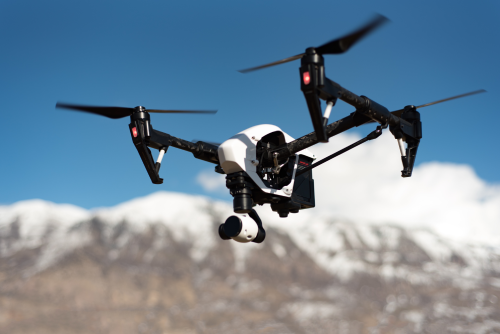
Gram Panchayat surveys are no longer limited to measuring tapes, paper sketches, and slow field visits. Today, drones are being used across rural India to create faster, clearer, and more useful village maps for property records, public asset planning, water management, and work monitoring.
For Panchayats, the real value is not just the drone flight. It is the quality of the final map, the accuracy checks on the ground, and how that data is used for decisions that affect roads, drains, ponds, public land, and village households.
Quick Take
- Drones help Gram Panchayats survey villages faster than manual-only methods, especially for visible surface features.
- The most common output is an orthomosaic: a high-resolution map made by stitching many drone photos into one measured image.
- Drones are especially useful for:
- habitation and property mapping
- public asset inventory
- drainage and waterbody planning
- encroachment checks
- monitoring village development works
- flood or erosion assessment
- In India, drone surveys have become especially relevant in rural mapping initiatives such as SVAMITVA, where drone-based village mapping supports property record processes.
- A drone map is powerful, but it is not automatically a final legal proof of ownership. Ground verification, revenue records, and official procedures still matter.
- Before any survey, operators must verify the latest DGCA, airspace, and local administrative requirements and use a compliant workflow.
What a Gram Panchayat survey usually covers
A Gram Panchayat survey is not just about land boundaries. In practice, it may include:
- houses and building footprints
- internal roads and pathways
- drains and culverts
- ponds, tanks, canals, and wells
- schools, anganwadis, health sub-centres, and Panchayat buildings
- grazing land, playgrounds, and commons
- public utilities such as water tanks and hand pumps
- ongoing works under rural schemes
- low-lying areas, erosion zones, or flood-affected patches
Traditionally, much of this work depended on manual inspection, old paper maps, and separate records maintained by different departments. Drones do not replace every part of that process, but they make the visual and geographic part much faster and easier to update.
Why drones are useful for village-level surveys
The main strength of a drone is that it can capture a large area from above in a short time and turn it into a map that everyone can understand.
What drones do better than a normal site visit
- They show the entire village layout in one view.
- They capture current ground reality, not just old records.
- They help measure area, distance, and location more consistently.
- They create a visual record that can be revisited later.
- They make it easier to compare before-and-after changes.
For a Panchayat, this matters because many planning problems are spatial. If a drain is blocked, a pond has shrunk, a pathway is encroached, or a new cluster of houses has come up, the issue becomes much easier to discuss when there is a recent map.
How drones are used in Gram Panchayat surveys
1. Mapping inhabited village areas and properties
One of the most important uses is mapping the abadi area, meaning the inhabited part of the village.
The drone flies over the settlement and captures overlapping images. Software then combines those images into an orthomosaic. This map can show:
- building footprints
- lanes and internal roads
- courtyards and open spaces visible from above
- current occupation pattern
- relation between houses and nearby public land
This kind of mapping has become widely discussed in India because of the SVAMITVA approach, where drones are used to survey inhabited rural areas and support property record creation.
A key point: the drone image alone does not settle ownership. Actual property cards or official record updates depend on state procedure, ground verification, dispute resolution, and coordination with revenue authorities.
2. Creating a village asset inventory
Many Panchayats struggle with scattered records of public assets. A drone survey helps create a visual base map on top of which assets can be marked and verified.
Assets commonly mapped include:
- school buildings
- Panchayat office
- anganwadi centres
- village roads
- culverts
- drains
- ponds and tanks
- hand pumps and water storage structures
- community halls
- cremation or burial grounds
- playgrounds and open land
Once this inventory is geotagged, it becomes much easier to plan repairs, budget maintenance, and identify gaps in service delivery.
3. Checking encroachments on public land
Encroachment is one of the most sensitive village-level issues. It may involve:
- road margins
- drains
- pond boundaries
- common grazing land
- school land
- village pathways
- open land reserved for community use
A drone survey can help flag areas where ground reality appears different from old records. It is useful for identifying where detailed field verification is needed.
But Panchayats should be careful here. A drone map should be treated as a decision-support tool, not a shortcut to enforcement. Encroachment matters often need local inquiry, record matching, and due process under the relevant authority.
4. Planning drainage, ponds, and water conservation works
Water-related planning is one of the best practical uses of drones in rural India.
A drone survey can help Panchayats understand:
- where water collects after rain
- how drains connect or fail to connect
- whether a pond has shrunk or silted up
- which bund, trench, or recharge structure may help
- what land slope looks like in broad terms
If the survey is processed correctly, teams may generate an elevation model, which is a 3D representation of the land surface. This helps planners see low-lying areas and likely flow directions.
This is especially useful for:
- village drainage planning
- pond rejuvenation
- check dam or farm-pond planning
- erosion monitoring
- watershed work review
5. Monitoring roads, drains, and other public works
Panchayats often need to monitor development works over time, not just once. Drones are well suited for this because the same location can be captured repeatedly.
Typical examples include:
- road construction or widening
- drain construction
- pond desilting
- boundary wall works
- water harvesting structures
- MGNREGA-related site progress
- restoration after monsoon damage
A before-during-after set of drone maps makes it easier to check whether work actually happened where planned, whether dimensions look broadly consistent, and whether the site condition improved.
6. Supporting village planning and budgeting
Once a Panchayat has a current village map, planning becomes more grounded.
For example, the map can help answer practical questions such as:
- Which hamlet is farthest from the main road?
- Where are new houses coming up?
- Is the existing drain network serving all streets?
- Which public building lacks proper access?
- How much open land is left for future community use?
- Which pond or water channel needs priority before monsoon?
This supports more realistic annual planning instead of relying only on verbal estimates.
7. Disaster and seasonal assessment
After heavy rain, flooding, erosion, or storm damage, a drone can quickly document the affected area without requiring long physical inspection of every corner first.
For Panchayats, that is useful for:
- assessing washed-out roads
- locating cut-off habitations
- measuring visible damage to embankments or drains
- documenting erosion near ponds or riverbanks
- prioritising response teams
In such cases, the drone is not just a mapping tool. It becomes a rapid assessment tool.
A simple way to understand the main outputs
| Survey need | Drone output | Why it matters |
|---|---|---|
| Property and habitation mapping | Orthomosaic with visible building layout | Helps compare current occupation pattern with records |
| Public asset survey | Base map with geotagged assets | Easier maintenance and planning |
| Pond, drain, and water planning | Area map and, where suitable, elevation data | Supports drainage and water conservation decisions |
| Work monitoring | Before-and-after imagery | Helps track progress and site condition |
| Encroachment review | Current high-resolution visual record | Supports field verification |
| Disaster assessment | Rapid aerial overview | Faster damage prioritisation |
How a Gram Panchayat drone survey typically happens
A good village survey is not just “fly and finish.” It usually follows a structured workflow.
1. Define the exact purpose
Start with one clear question. For example:
- Do you need a property base map?
- Are you surveying public assets?
- Is the goal drainage planning?
- Are you checking progress of works?
- Do you need an updated map before preparing a village development plan?
A vague brief leads to weak outputs.
2. Gather existing records first
Before any flight, the survey team should review:
- old village maps
- available revenue records
- ward boundaries
- road and drain plans
- lists of public assets
- earlier survey data if any
This avoids confusion later.
3. Plan permissions, airspace, and compliance
For any drone operation in India, the latest official requirements must be checked before flying. Depending on the type of drone, area, and nature of operation, this may involve:
- verifying airspace status
- using a compliant drone and workflow
- ensuring the operator is properly qualified as required
- coordinating with local administration where necessary
- following current DGCA and Digital Sky procedures
Rules can change, and project conditions vary. Panchayats and vendors should verify the latest official position before scheduling a mission.
4. Inform the village and local stakeholders
This step is often ignored, but it matters a lot.
Villagers should know:
- why the drone is being flown
- when the survey will happen
- which area will be covered
- who is conducting the work
- whom to contact in case of questions or objections
This reduces fear, rumours, and privacy complaints.
5. Set up accuracy control on the ground
If higher mapping accuracy is needed, survey teams may use ground control points or check points. These are known marked locations on the ground used to improve and verify map accuracy.
Some advanced mapping workflows also use RTK or similar positioning methods to improve precision, but even then, field validation remains important.
6. Fly the mission properly
A mapping mission is different from casual drone photography. It requires:
- planned flight lines
- consistent altitude
- enough image overlap
- stable weather
- safe take-off and landing zones
If these basics are weak, the final map quality suffers.
7. Process the images into usable maps
The software usually creates:
- orthomosaic map
- point cloud or 3D surface data where needed
- elevation model for terrain analysis if relevant
- measurement layers
- georeferenced files for GIS use
This is where raw photos turn into survey outputs.
8. Verify on the ground
The processed map should be reviewed with:
- Panchayat representatives
- field staff
- local knowledge holders
- revenue or technical officials where needed
This helps identify mismatches between imagery and reality.
9. Prepare clear deliverables
A Panchayat should not accept only a folder full of photos. Useful deliverables often include:
- final orthomosaic map
- ward-wise or area-wise map sheets
- asset layers
- area and distance measurements where required
- notes on accuracy and limitations
- raw data archive for future reference
Where drones work well, and where they do not
Drones are excellent for mapping visible surface features. But they are not a magic solution.
Drones work well for
- open habitation areas
- roads, drains, ponds, and public structures
- visible land-use change
- repeat monitoring over time
- visual documentation of works or damage
Drones are limited when
- tree cover hides the ground
- boundary markers are missing or disputed
- narrow property distinctions are not visible from above
- underground utilities are involved
- legal demarcation requires formal cadastral or revenue action
- heavy rain, fog, or strong winds affect capture quality
In short, drones give excellent spatial evidence, but they still need ground truth.
Safety, legal, and compliance points Panchayats should not ignore
This area deserves special care.
Use only a compliant and verified workflow
Do not assume that rural areas are automatically free for flying. Some villages may still fall near controlled or sensitive zones. The operator should verify the latest official airspace and flight requirements before launch.
Keep trained operators in charge
A drone survey should be carried out by people who understand:
- airspace checks
- mission planning
- safety setup
- battery and weather risk
- map accuracy workflow
- emergency procedures
A casual hobby-style flight is not the same as a public survey.
Respect privacy
Villagers may worry that the drone is filming private life. Good practice includes:
- explaining the purpose in advance
- avoiding unnecessary hovering over homes
- keeping capture focused on survey needs
- storing data securely
- limiting access to sensitive imagery
Avoid flying over crowds or unsafe areas
Take-off and landing zones should be clear. Surveys should be planned to reduce risk to people, animals, vehicles, and property.
Verify the latest official rules before acting
Because compliance requirements can change, Panchayats, contractors, and survey teams should confirm the current DGCA, state, and local administrative requirements before starting any project.
Common mistakes in Gram Panchayat drone surveys
1. Starting without a clear objective
If the brief is simply “make a drone map,” the output may look impressive but be hard to use.
2. Treating the drone image as final legal truth
Drone imagery supports decision-making. It does not by itself replace formal ownership records, demarcation, or legal process.
3. Ignoring ground verification
Local knowledge matters. Old paths, disputed corners, and traditional use areas may not be obvious from the air.
4. Choosing the wrong drone or workflow
A basic camera drone may be fine for visual inspection, but not always for survey-grade mapping. The right setup depends on the required accuracy and output.
5. Flying in poor conditions
Strong wind, rain, haze, harsh shadows, or low battery discipline can ruin data quality and create safety risk.
6. Using poor image overlap or inconsistent flight planning
Survey mapping needs systematic capture. Random photos do not produce reliable maps.
7. Failing to communicate with villagers
Lack of prior notice can lead to mistrust, complaints, or unnecessary disruption.
8. Accepting weak deliverables from vendors
If the Panchayat receives only images and no properly structured map outputs, the survey may not be useful for future planning.
What Panchayats should ask a drone survey provider
If a Panchayat hires an external team, these are good questions to ask:
- What exactly will be delivered?
- What accuracy level is realistic for this job?
- Will ground control or validation be used?
- How will old records be aligned with the new map?
- Who is responsible for permissions and flight compliance?
- How will data be stored and handed over?
- Can the output be reused later for future updates?
- What are the limitations of this survey?
This prevents misunderstandings and helps compare vendors on quality, not just price.
FAQ
Is a drone survey enough to prove land ownership in a village?
No. A drone survey is a strong mapping and documentation tool, but ownership and boundary finalisation depend on official records, verification, and due process.
Are drones already being used in Indian village property surveys?
Yes, drone-based rural mapping has been used in programmes such as SVAMITVA to support property record creation in inhabited village areas, subject to state procedures and verification.
Can a normal camera drone do Gram Panchayat survey work?
It can help with visual inspection, but proper survey work usually needs planned mapping flights, good georeferencing, and a skilled processing workflow. For accuracy-sensitive tasks, basic casual capture is not enough.
How accurate are drone maps?
Accuracy depends on the drone, flight planning, altitude, camera quality, positioning method, ground control, and data processing. For planning and monitoring, results can be very useful. For disputes or legal boundary issues, field verification is still essential.
What is an orthomosaic?
It is a detailed map created by stitching many overlapping drone photos into one corrected image so distances and locations can be measured more reliably.
Can drones help in drainage and pond planning?
Yes. They are very useful for mapping visible water channels, pond edges, low-lying zones, and site conditions. If processed properly, elevation data can also support drainage planning.
How often should a Panchayat repeat a drone survey?
That depends on the purpose. A base village map may be updated after major changes, while work monitoring or flood-prone areas may need more frequent repeat surveys.
What should villagers be told before a survey?
They should be informed about the date, purpose, area of coverage, the agency conducting the survey, and how questions or concerns can be raised.
Is a drone survey always cheaper than traditional surveying?
Not always. For broad-area mapping and repeat monitoring, it is often faster and more cost-effective. But when very high boundary precision or heavy legal verification is needed, ground survey effort still remains important.
Do Panchayats need to check drone rules before flying?
Yes. The latest DGCA, airspace, and local administrative requirements should always be verified before any survey mission.
Final takeaway
Drones are most useful in Gram Panchayat surveys when the goal is clear, the mapping is tied to ground verification, and the final output is used for real decisions. If your Panchayat wants results, start with one focused use case, such as habitation mapping, asset inventory, or pond and drain planning, and get it done through a compliant survey workflow that villagers can trust.
