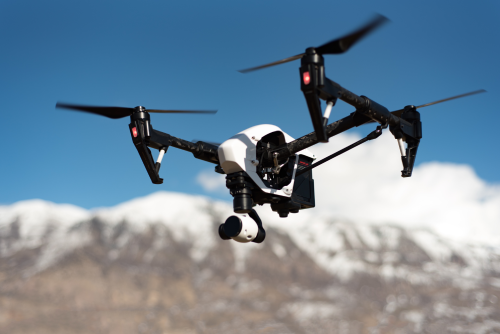
Government agencies and contractors are increasingly using drones in roads, rail, irrigation, urban works, power infrastructure, and public building projects. In simple terms, drones help teams see more, measure faster, inspect safer, and document progress with clearer evidence than many traditional site visits alone.
If you want to understand how drones are used in government infrastructure projects in India, the practical answer is this: they are most valuable when they turn site conditions into usable maps, measurements, and inspection records that engineers can act on.
Quick Take
- Drones are widely useful in surveying, mapping, inspection, progress monitoring, and damage assessment.
- In government infrastructure projects, they are especially useful for large, remote, risky, or fast-changing sites.
- Common outputs include orthomosaic maps, 3D models, elevation data, volume calculations, and inspection images.
- Drones do not replace engineers, conventional survey tools, or compliance processes. They support them.
- In India, drone use must follow the latest DGCA and related official requirements, plus site-specific approvals and security rules.
- The best results come when agencies define the purpose clearly: measurement, monitoring, inspection, or documentation.
Why government infrastructure teams are turning to drones
Government projects are often spread across large areas, involve many contractors, and need regular reporting. Traditional site checks still matter, but they can be slow, inconsistent, and difficult in hazardous or hard-to-reach locations.
Drones help solve that in a practical way.
Here is why departments, consultants, and EPC contractors use them:
Faster coverage
A drone can capture a large road stretch, canal section, construction yard, or bridge approach much faster than walking the site with a camera. That matters when teams need regular updates.
Better visibility
A top-down aerial view often reveals problems that are easy to miss from ground level, such as:
- uneven earthwork
- blocked drainage paths
- slope erosion
- material stockpile changes
- construction bottlenecks
- access route issues
Safer inspections
Instead of sending people onto steep embankments, high roofs, bridge undersides, towers, or unstable areas, drones can perform the first inspection pass from a safer distance.
Measurable records
Drone data can be geo-referenced, meaning it is tied to real-world coordinates. This helps teams compare progress over time rather than relying only on photos from different angles.
Better coordination
Aerial maps and 3D site views help project managers, consultants, surveyors, and government officials discuss the same conditions using the same visual reference.
Stronger documentation
For public projects, documentation matters. Drones can help create dated visual records that support reviews, contractor meetings, quantity checks, and progress presentations.
That said, drones are not a magic shortcut. Their value depends on planning, data quality, accuracy standards, and how well the outputs are used by the engineering team.
How drones are used across the project lifecycle
The easiest way to understand drone use in government infrastructure is to look at the project in phases.
Pre-construction: survey, mapping, and planning
Before work starts, project teams need to understand the land, access, terrain, existing structures, utilities, and environmental conditions.
This is one of the strongest use cases for drones.
Topographic survey support
A drone can capture aerial images that are processed into terrain models and contour maps. These help with:
- route planning
- grading studies
- drainage planning
- identifying low-lying areas
- understanding cut-and-fill requirements
For large sites or long corridors, this can speed up the early survey process. However, if high engineering accuracy is required, teams usually combine drone data with ground control points, GNSS measurements, total station checks, or other survey methods.
Land and corridor mapping
For highways, rail lines, canals, pipelines, and utility corridors, drones can map long stretches of land and show:
- current site condition
- nearby structures
- tree cover
- access roads
- crossing points
- water bodies
- encroachments or obstructions visible from above
Site feasibility and planning
Before setting up camp areas, equipment yards, batching plants, or temporary access roads, drone maps help planners understand what space is actually available.
Baseline documentation
A “before work begins” drone survey is valuable. It gives the department and contractor a shared baseline of the site condition. This can reduce future confusion over what changed during construction.
Construction phase: monitoring progress and measuring work
Once construction starts, drone use becomes more frequent. This is where many public works teams see the biggest day-to-day benefit.
Progress monitoring
Regular drone flights can show how much work has moved forward between reporting periods. This is useful for:
- roads and embankments
- bridge foundations and superstructure
- canal lining works
- building construction
- station or depot development
- utility trenching
- urban development packages
Instead of relying only on text updates, teams can compare visual records from week to week or month to month.
Earthwork and stockpile measurement
Drones can help estimate volumes of excavated material, fill material, or stockpiles. This is useful in:
- highway earthwork
- dam and embankment works
- quarry-linked public projects
- large site grading
- aggregate stock monitoring
Volume outputs are helpful, but they should be checked against the project’s measurement and quality procedures. Drone outputs support decision-making; they should not be treated casually as automatic billing truth without verification.
Monitoring construction sequencing
On a large project, one delay can affect many teams. Drone imagery helps managers see:
- which zones are active
- where access is blocked
- whether structures are ready for the next stage
- how material is being staged
- whether temporary works are interfering with permanent works
This is particularly useful on crowded urban sites such as flyovers, metro work zones, and public building campuses.
Supporting review meetings
A map or 3D site model often makes review meetings more productive than a stack of ground photos. Decision-makers can understand the whole site quickly and focus on action items.
Dispute reduction and audit support
Geo-tagged and date-stamped drone records can help create a clearer project history. They may support internal reviews, consultant assessments, and progress validation, provided the capture method is consistent and the data is properly stored.
Post-construction: inspection, maintenance, and asset management
Drones are not only for building infrastructure. They are equally useful after construction is complete.
Bridge and flyover inspection
Bridges are difficult and sometimes risky to inspect manually, especially when access is limited. Drones can help inspect:
- deck surface condition
- expansion joints
- bearings area visibility
- pier surfaces
- underside sections where accessible by view
- cracks, corrosion, spalling, or water staining visible on camera
A drone inspection does not replace structural engineering judgment. But it can help identify areas that need closer manual inspection.
Road and pavement monitoring
For roads, drones can help monitor:
- shoulder condition
- drainage effectiveness
- slope stability
- erosion near embankments
- visible pavement distress patterns
- work zone safety layout
This is especially useful after monsoon damage or in remote sections where routine inspection is difficult.
Canals, dams, and embankments
Water-related infrastructure is a strong drone use case in India. Drones can support:
- canal alignment checks
- embankment condition review
- erosion mapping
- vegetation overgrowth identification
- visible seepage signs
- inspection of inaccessible slopes
Thermal cameras may sometimes help identify temperature differences that suggest moisture-related issues, but those findings must always be confirmed on the ground.
Government buildings and public facilities
For public buildings, schools, hospitals, offices, depots, and utility structures, drones can inspect:
- roofs
- facades
- drainage outlets
- solar panel arrays
- water tank tops
- hard-to-reach exterior defects
This reduces the need for immediate scaffolding or risky ladder access for basic visual inspection.
Utilities and public service assets
Drones are also used around public infrastructure such as:
- power transmission lines
- substations
- water treatment plants
- elevated reservoirs
- street lighting corridors
- solid waste facilities
Aerial inspection can reveal vegetation encroachment, visible damage, overheating signs in thermal use cases, or access issues.
Emergency response and rapid damage assessment
When floods, landslides, storms, or construction incidents affect infrastructure, drones become especially useful because they can capture the situation quickly.
Typical emergency uses include:
- mapping washed-out road sections
- assessing bridge approach damage
- checking riverbank erosion
- identifying blocked culverts and drains
- surveying flood-affected public assets
- documenting landslide impact on roads or utilities
- locating safe access routes for response teams
In these cases, speed matters. Aerial imagery can help authorities prioritize which locations need urgent field teams first.
Common government infrastructure use cases at a glance
| Project type | How drones are used | Typical output | Main advantage |
|---|---|---|---|
| Roads and highways | corridor mapping, earthwork tracking, drainage and slope inspection | orthomosaic map, elevation model, volume report | faster coverage of long stretches |
| Bridges and flyovers | visual inspection of deck, piers, bearings zones, approaches | zoom imagery, inspection report, 3D model | safer access to difficult areas |
| Rail and metro works | alignment review, station construction monitoring, depot mapping | corridor map, progress images, 3D site view | better sequencing and coordination |
| Dams and canals | embankment inspection, erosion mapping, visible seepage checks | aerial map, elevation data, thermal images where relevant | easier monitoring of long or inaccessible sections |
| Urban development | road network progress, drainage mapping, roof and facade checks | stitched site map, progress visuals, 3D mesh | clear overview in dense sites |
| Public utilities | line inspection, substation review, pipeline corridor checks | zoom imagery, thermal outputs, annotated reports | reduces manual exposure and repeat visits |
What drone data actually looks like
A lot of confusion comes from not knowing what a drone team delivers. The most useful outputs are not just attractive photos.
Orthomosaic map
This is a large stitched image made from many drone photos and corrected so it behaves like a measurable map. Teams use it to see layout, progress, and surface condition.
3D model or 3D mesh
This gives a three-dimensional view of the site or structure. It is useful for visual understanding, presentations, and some inspection contexts.
Point cloud
A point cloud is a dense collection of measured points in space. It is used in surveying and modeling workflows.
Elevation model
This shows height information across the terrain. It helps with slope, drainage, and grading analysis.
Volume report
This is used for stockpiles, excavations, embankments, and fill areas.
Inspection imagery
High-resolution photos or videos are used for visible defect checks, progress proof, and comparison over time.
Thermal imagery
A thermal camera shows temperature differences. In infrastructure, it may help with certain inspections such as electrical systems or moisture-related investigations, but it is not a universal solution.
A practical drone workflow on a government project
When drone operations work well, they usually follow a clear process.
1. Define the purpose
Start with one question:
What exactly should the drone help measure, inspect, or document?
For example:
- monthly road progress
- bridge surface defect screening
- canal embankment condition
- stockpile quantity estimation
- post-flood damage assessment
Without a clear purpose, teams often end up with a folder full of footage and no usable result.
2. Choose the right platform and sensor
Different jobs need different tools.
- Multirotor drones are good for detailed inspection and smaller sites.
- Fixed-wing drones are better for very large areas and long corridors.
- RTK or PPK-enabled systems help improve positional accuracy.
- Thermal sensors are useful for select inspection tasks.
- LiDAR systems are used in specialized cases, especially where vegetation or terrain complexity makes standard photogrammetry less effective.
Not every project needs expensive sensors. Many jobs are handled well with a standard high-quality RGB camera and proper survey planning.
3. Plan flight timing and site control
Good data depends on:
- stable weather
- safe access
- low interference with site operations
- consistent flight pattern
- control points or checkpoints where accuracy matters
Capturing at the same stage every month improves comparability.
4. Fly safely and capture complete coverage
The drone team should avoid ad hoc flying just for visuals. Professional capture usually follows a planned grid, corridor route, or inspection path.
5. Process the data
This is where raw imagery becomes a useful output such as a stitched map, 3D model, elevation surface, or defect report.
6. Validate against ground reality
If the output will influence engineering decisions, quantities, or inspections, the team should validate it with field checks and project records.
7. Deliver an action-oriented report
The best drone reports answer practical questions:
- What changed since the last survey?
- Where is work delayed?
- Which areas need inspection?
- What quantities appear to have changed?
- What visible defects require engineering review?
Safety, legal, and compliance points in India
This part matters. A government project site is not automatically a free-fly zone.
Drone operations in India can involve DGCA rules, Digital Sky processes, airspace restrictions, pilot requirements, equipment compliance, and local administrative permissions. Because requirements can change, readers should always verify the latest official rules before planning operations.
Key points to keep in mind:
Airspace and permissions
Before flying, verify whether the location falls in a restricted, controlled, or sensitive area. Infrastructure projects near airports, defence installations, ports, strategic assets, or certain government facilities may have additional restrictions.
Pilot and operational compliance
Use appropriately qualified operators and compliant equipment for the intended operation. If your work depends on regulated permissions, do not assume a contractor’s general experience is enough. Ask for current documentation and verify it.
NPNT and platform compliance
Where applicable under current Indian rules, ensure the platform meets required compliance norms. If you are unsure, confirm with official guidance rather than relying on vendor claims.
Site safety
Construction sites bring their own hazards:
- cranes and lifting operations
- traffic movement
- power lines
- dust
- unstable ground
- crowds
- reflective surfaces
- radio interference
Drone flights should be coordinated with the site team and stop-work zones if needed.
Privacy and data handling
Government infrastructure data can be sensitive. Teams should define:
- who owns the data
- who can access raw imagery
- how long records are stored
- whether maps can be shared outside the project
- how data is backed up securely
Border and strategic sensitivity
Projects in border, coastal, defence, or other sensitive regions may need extra caution and approvals. Never assume ordinary project practice applies everywhere.
Common mistakes to avoid
Even good drone hardware gives poor results when the workflow is weak.
Using drones only for presentation footage
A slick video may look good in a meeting, but it is not the same as a measurable survey or a structured inspection.
Skipping accuracy planning
If the output will be used for quantities, contours, or engineering review, plan for checkpoints, control, and validation. Otherwise, the map may only be visually useful.
Inconsistent repeat surveys
If monthly progress flights use different heights, angles, coverage, or timing, comparison becomes messy.
Choosing the wrong drone type
A small inspection drone may be inefficient for a long corridor survey. A mapping drone may be poor for tight close-up facade inspection.
Ignoring data management
Large projects generate a lot of files. Without naming standards, dates, version control, and storage discipline, useful evidence becomes hard to find later.
Expecting drones to replace all fieldwork
Drones reduce effort, but they do not eliminate site engineering, quality checks, material testing, or physical inspection where required.
Flying without full coordination
Unplanned flights can interfere with site operations and create safety risk, especially near cranes, traffic, or electrical infrastructure.
What departments and contractors should ask before hiring a drone service provider
A simple vendor checklist can prevent many problems.
Ask:
- What exact deliverables will you provide: map, volume report, 3D model, inspection report, or all of these?
- What accuracy can you realistically achieve on this site, and how will you verify it?
- What permissions and compliance steps apply here?
- Who will fly the drone, and what experience do they have with infrastructure work?
- How will you manage raw data, backups, and secure sharing?
- Can you repeat the same survey format every reporting cycle?
- How will findings be presented so engineers can act on them?
FAQ
Are drones replacing surveyors and engineers in infrastructure projects?
No. Drones are tools that support surveyors, engineers, inspectors, and project managers. They speed up data capture and improve visibility, but human expertise is still essential.
Which government projects benefit the most from drones?
Large, linear, remote, or hard-to-access projects benefit the most. Roads, rail corridors, canals, bridges, dams, public buildings, and utility inspections are strong examples.
Are drone surveys accurate enough for official project decisions?
They can be, but accuracy depends on the method, equipment, control points, processing, and validation. For engineering-grade work, always define the required accuracy and verify the result.
What is the biggest advantage of drones during construction?
Regular, visual, measurable progress tracking. Teams can see site changes quickly and compare them over time with more consistency than ordinary photos.
Can drones help with quantity measurement?
Yes, especially for stockpiles, excavations, and earthwork-related tracking. But the project team should confirm how those measurements fit into official quantity and billing procedures.
Are thermal drones widely useful in public infrastructure?
They are useful in selected cases such as electrical inspection or certain moisture-related investigations. They are not necessary for every project.
What is the difference between a drone map and a drone video?
A drone video is mainly visual. A properly processed drone map can be measured, compared over time, and used in planning or reporting.
Do government projects need special permission just because a department is involved?
Not automatically. A government site does not remove aviation, security, or airspace requirements. Always verify the latest official rules and local permissions before flying.
Can small businesses offer drone services for public works?
Yes, if they can meet compliance requirements, deliver reliable outputs, and understand engineering workflows. The real value is not just flying the drone, but delivering usable project data.
How often should a project be surveyed by drone?
It depends on the project stage and purpose. Some teams use weekly or monthly schedules, while others fly only at milestones or after events like heavy rain or structural changes.
Final takeaway
Drones are most useful in government infrastructure projects when they solve a specific problem: map the site, measure change, inspect risk, or document progress. If you are planning to use drones on a public works project in India, start with one clear use case, define the required output and accuracy, verify compliance from official sources, and make sure the data feeds real engineering decisions rather than just creating impressive visuals.
