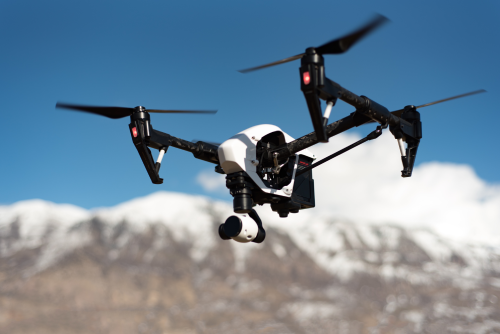
How drones are used in forest monitoring makes more sense when you look at the daily problems forest teams face: huge areas, rough terrain, seasonal access, and the need to spot change early. A well-planned drone mission can map canopy cover, detect fire damage, monitor plantations, and document encroachment far faster than foot patrols alone, which is why drones are becoming valuable across India’s forest and restoration landscapes.
Quick Take
- Drones help forest teams see changes quickly, especially in areas that are hard to reach on foot.
- The biggest use cases are canopy mapping, tree health checks, fire assessment, encroachment detection, erosion monitoring, and plantation survival audits.
- A basic RGB drone uses a normal colour camera and is enough for many mapping tasks. More advanced work may use multispectral, thermal, or LiDAR sensors.
- Drones do not replace forest guards, ecologists, or satellite imagery. They work best as part of a larger monitoring system.
- In India, forest-related drone operations can involve both aviation compliance and local permissions. Always verify the latest DGCA, airspace, and forest authority requirements before flying.
- Good forest monitoring depends less on “cool footage” and more on repeatable flight plans, careful data processing, and ground checks.
Why drones matter for forest monitoring
Forest monitoring is not just about counting trees. It includes checking forest cover, canopy gaps, water flow, fire damage, plantation survival, invasive plants, human disturbance, and habitat condition.
In India, this is especially challenging because forests vary widely. A team working in Himalayan slopes faces very different problems from one working in central Indian dry deciduous forests, mangroves on the coast, or restoration plots in the Western Ghats.
Traditional ground surveys are important, but they are slow and labour-intensive. Satellite images are excellent for large-area trends, but cloud cover, revisit timing, and lower detail can make small changes hard to detect. Drones sit in the middle:
- more detailed than most satellite views
- faster than only walking the site
- safer for first inspections in difficult terrain
- easier to repeat over the same area at regular intervals
That is why forest departments, NGOs, researchers, plantation managers, and restoration teams increasingly use drones as a practical field tool.
The main ways drones are used in forest monitoring
Mapping forest cover and canopy gaps
One of the most common uses is creating a high-resolution map of the area. Drone images can be stitched into an orthomosaic, which is a map-like aerial image built from many overlapping photos.
This helps teams:
- measure canopy cover
- identify open patches and storm damage
- locate degraded edges
- monitor how regeneration is progressing
- compare the same block over time
For example, if a restoration site was planted two monsoons ago, a drone can show which patches are closing well and which still have large gaps.
Monitoring tree health and stress
A normal camera can show obvious stress such as dead crowns, broken branches, or leaf loss. But more advanced sensors can go further.
- Multispectral cameras capture light beyond normal visible colour and can help reveal plant stress earlier.
- Thermal cameras detect heat differences and can sometimes help identify water stress, hotspot areas, or unhealthy patches.
This is useful in plantation blocks, mangroves, riparian restoration zones, and disease-prone areas. But interpretation matters. A stressed-looking patch in the data may be caused by shade, soil differences, seasonal leaf drop, or recent rain rather than disease. That is why field verification is essential.
Detecting illegal logging, encroachment, and route changes
Drones are useful for checking forest boundaries and disturbed edges. A repeat survey can reveal:
- newly cleared land
- fresh tracks or access paths
- expanded cultivation along forest margins
- material stockpiles
- changes near roads, quarry edges, or settlements
In open or moderately dense areas, they can also help identify recent felling patterns. In very dense canopy, however, standard cameras may not show individual stumps under the trees.
For officials and land managers, the value is speed. A drone can document a suspected change quickly and create a date-stamped visual record for follow-up action.
Fire detection and post-fire assessment
Forest fires are one of the clearest applications. Drones can help in two phases:
- During active response, trained teams may use them to look for fire edges, smoke spread, and hotspots.
- After the fire, they can map the burnt area, identify smouldering pockets, and assess damage.
Thermal imaging can be useful here, especially for hotspot detection in low-light conditions. But it is not magic. Heat reflections, hot rocks, and midday conditions can confuse readings. Also, flying near active fire, strong winds, or dense smoke requires trained operators and strict safety planning.
In India’s dry season, drones can be especially useful for rapid assessment in deciduous forests and grass-forest mosaics after a fire event.
Monitoring soil erosion, streams, and watershed health
Forest monitoring is not only about trees. Soil, slopes, and water are equally important.
Drones can help teams assess:
- gully erosion
- landslide scars
- siltation in water bodies
- blocked drainage lines
- condition of check dams or small structures
- streambank damage after heavy rain
In hilly and high-rainfall landscapes, a drone survey after the monsoon can quickly reveal where runoff is damaging slopes or where restoration work needs reinforcement.
Tracking plantations, afforestation, and restoration work
Many public and private projects need proof that plantation work actually survived and established well. Drones are very useful here because they can check large blocks more consistently than manual counting alone.
Typical uses include:
- measuring planted area
- estimating survival rate
- identifying missing rows or poor patches
- tracking canopy growth over seasons
- documenting before-and-after progress for funders or internal review
This matters for compensatory planting, riverbank restoration, CSR-funded greening work, agroforestry edges, and degraded forest rehabilitation. A drone does not replace sample plot surveys, but it makes auditing faster and often more transparent.
Supporting wildlife habitat management
When people hear “wildlife drones,” they often imagine chasing animals from the air. That is not the right way to think about it.
In most forest contexts, drones are more useful for habitat monitoring than for direct wildlife pursuit. They can help teams examine:
- waterhole condition
- grassland quality inside forest landscapes
- spread of invasive plants
- corridor blockages
- nesting or roosting habitat structure
- disturbance near sensitive areas
Direct wildlife counting with drones is possible in some open habitats, wetlands, coastlines, or large clearings, but it must be done carefully. Many species are sensitive to noise and low-altitude flight. In protected areas, such work should only happen with proper scientific design and official approval.
Assessing storm, flood, and landslide damage
After cyclones, flash floods, cloudbursts, or landslides, forest access may be cut off. Drones can provide a rapid first look without immediately sending people into unsafe zones.
They can show:
- fallen-tree corridors
- broken tracks and culverts
- flood-scoured river edges
- landslide impact zones
- damage in mangroves or coastal forest belts
- access routes for crews
For forest and disaster teams, this kind of quick situational awareness can save time and reduce risk.
What drone setups are commonly used
Not every forest job needs an expensive payload. The right setup depends on the problem you are trying to solve.
| Setup | Best for | Main advantage | Main limitation |
|---|---|---|---|
| Small multirotor with RGB camera | Small blocks, plantation audits, edge inspections, canopy maps | Easy to deploy, affordable, good image detail | Limited flight time and area coverage |
| Multirotor with multispectral camera | Tree stress, restoration health, vegetation comparison | Reveals plant reflectance patterns not visible in normal images | Costlier and needs careful interpretation |
| Multirotor with thermal camera | Hotspot checks, fire assessment, some habitat work | Detects heat differences | Readings vary with time of day, weather, and surface heating |
| Fixed-wing mapping drone | Large landscape surveys | Covers more area per flight | Needs open launch and landing space, less flexible in tight terrain |
| LiDAR-carrying platform | Canopy structure, terrain modelling under vegetation | Best for 3D forest structure work | Expensive, specialist-grade, complex processing |
A simple rule works well for beginners: start with RGB unless the monitoring question truly requires more.
A practical forest-monitoring workflow
Good drone data comes from a repeatable process. Here is a simple workflow that suits many forest jobs.
1. Define the exact question
Do not begin with “Let’s fly the forest.” Start with a specific goal, such as:
- How much of this plantation survived?
- Where are the canopy gaps after the storm?
- Did the fire cross the containment line?
- Is the streambank erosion getting worse?
The sensor, flight height, and revisit schedule all depend on this question.
2. Choose the right season and time
Forests look very different across seasons. In India, the same site may be green and closed in one month and open and dry in another.
Think about timing:
- Post-monsoon may be best for plantation survival checks.
- Late dry season may reveal canopy gaps or fire scars more clearly.
- Early morning or late evening may suit thermal work better than midday.
- Avoid strong wind, rain, and low-visibility conditions.
3. Clear permissions and sensitivity checks
Before any mission, confirm:
- whether the airspace allows the planned operation
- whether forest, park, district, or local authorities need to approve it
- whether the area is ecologically sensitive or wildlife-sensitive
- whether nearby villages, roads, or infrastructure create privacy or safety issues
In forest work, local permissions are often just as important as aviation compliance.
4. Plan a repeatable flight
A forest monitoring mission is only useful if you can compare it later.
Keep these consistent as much as possible:
- flight altitude
- camera angle
- image overlap
- time of day
- takeoff location
- area boundary
That way, your next survey can be compared with the first one.
5. Fly with field discipline
In the field:
- do a pre-flight check
- watch wind changes and tree turbulence
- keep the aircraft within visual line of sight unless specifically authorised otherwise
- avoid low passes over wildlife
- maintain safe buffer zones from people, roads, and structures
- stop if birds begin reacting aggressively
A mission abandoned early is better than a risky mission completed badly.
6. Process the data into useful outputs
Photos alone are not the result. The useful outputs are usually:
- orthomosaic maps
- elevation or surface models
- hotspot maps
- vegetation index maps from multispectral data
- change-detection comparisons between dates
This is the stage where raw images become management information.
7. Ground-truth the findings
Ground-truthing means checking some drone findings on site.
For example:
- a “bare patch” may actually be natural rock
- a “stressed zone” may be normal seasonal variation
- a “new track” may be a planned access route
Even a few field checks can prevent wrong conclusions.
8. Turn the survey into action
A useful forest monitoring report should answer:
- what changed
- where it changed
- how certain the finding is
- what should be inspected or acted on next
That is the difference between a drone hobby flight and a professional monitoring workflow.
Safety, legal, and compliance points in India
Forest drone work in India should be treated as a regulated activity, not casual flying.
Keep these points in mind:
- Verify the latest DGCA rules, airspace status, and Digital Sky requirements before each operation.
- Confirm whether the drone, operation type, and pilot qualifications are compliant for the planned mission.
- Check whether NPNT, remote pilot, or other compliance requirements apply to your setup. Rules can evolve, so verify the current position rather than relying on old advice.
- Many forest areas, protected landscapes, border-sensitive zones, wildlife habitats, and government lands may have additional restrictions or special permissions.
- If the area falls under a forest department, park authority, research project, or local administration, get written clarity before flying.
- Do not fly in a way that disturbs animals, breeding sites, or nesting colonies.
- Respect the privacy of forest-edge communities, settlements, and tribal areas. Monitoring forests does not give anyone a free pass to record people carelessly.
- Carry emergency procedures, battery safety gear, and a recovery plan for loss of link or forced landing.
If the mission has conservation value but unclear permissions, pause and verify first. In forest environments, compliance mistakes can damage both safety and trust.
Limits you should understand
Drones are powerful, but they are not all-seeing.
- A normal camera usually cannot see through dense canopy to the forest floor.
- Battery life limits coverage, especially in remote terrain.
- Monsoon weather and mountain wind can cancel missions.
- Thermal data is highly sensitive to timing and conditions.
- Data processing takes skill and time.
- Some questions still need field plots, satellite data, traps, or laboratory analysis.
The best forest monitoring systems combine multiple methods instead of depending on only one.
Common mistakes in forest drone monitoring
Flying for visuals instead of data
A cinematic orbit may look good, but it is not the same as a measurable survey. Monitoring needs mapped, repeatable coverage.
Using the wrong sensor
A basic RGB drone is great for many jobs, but it is not ideal for every health analysis. On the other hand, buying thermal or multispectral gear without a clear use case wastes money.
Ignoring repeatability
If every flight uses a different height, angle, season, and route, comparison becomes weak. Consistency matters.
Skipping ground checks
Misreading vegetation, shadows, rocks, smoke, or seasonal leaf drop is common when teams rely only on images.
Flying too low near wildlife
This can disturb birds, mammals, and nesting areas. Lower is not always better.
Underestimating permissions
Forest areas often involve layers of authority. A technically good mission can still become unusable if approvals are missing.
Choosing the wrong time of day
Harsh midday light can hide detail, and thermal readings often become less useful when the landscape is uniformly hot.
Not planning for data handling
Large surveys generate a lot of imagery. If files are not backed up, geotagged properly, and labelled clearly, analysis becomes messy fast.
FAQ
Can a normal camera drone be useful for forest monitoring?
Yes. A standard RGB camera drone can handle many practical tasks such as canopy mapping, plantation checks, boundary inspection, erosion spotting, and post-event documentation. It is often the best starting point.
Can drones see through dense forest canopy?
Usually not with a normal camera. Dense canopy blocks the view of the ground. LiDAR can help capture structure beneath vegetation more effectively, but it is a high-end solution.
Are drones better than satellite imagery?
They are better for local detail and on-demand surveys. Satellites are better for very large areas and regular regional coverage. In practice, the two are complementary.
Which is better for forest work: multirotor or fixed-wing?
Multirotors are easier for small areas, tight takeoff spots, and detailed inspection. Fixed-wing drones are better when you need to cover large landscapes efficiently.
Can drones detect forest fires?
They can help identify hotspots, map burnt areas, and support post-fire assessment. But active fire operations are high-risk and should only be done by trained teams with proper safety planning.
How often should a forest area be surveyed?
It depends on the goal. Plantation monitoring may be seasonal, fire-prone zones may need frequent checks in dry months, and erosion or storm damage may be monitored after major weather events. The key is consistency over time.
Can drones be used for wildlife counting?
Sometimes, especially in open habitats or for certain nests or colonies. But wildlife disturbance is a serious concern, and species-specific methods matter. Habitat monitoring is often a safer and more common use than direct counting.
What permissions are usually relevant in India?
You may need to verify aviation compliance, airspace status, and platform-related requirements, and you may also need approval from forest, wildlife, district, or land authorities depending on the location. Always confirm the current official requirements before flying.
Is thermal imaging always better for forest monitoring?
No. Thermal is excellent for some tasks, especially hotspot and heat-pattern detection, but it can also be misleading if used at the wrong time or in the wrong conditions. It should be chosen for a specific need, not as a default upgrade.
Is drone mapping enough to prove plantation success?
Not by itself. It can show coverage, survival patterns, and visible gaps, but serious evaluation still benefits from sample plots, species checks, and on-ground verification.
Final takeaway
If you want to use drones in forest monitoring, start with one clear job, not a vague ambition. A simple, repeatable RGB mapping workflow for plantation survival, canopy gaps, erosion, or post-fire assessment often delivers more value than an expensive sensor used without a plan. Get the permissions right, protect wildlife, verify findings on the ground, and use the drone as part of a broader monitoring system rather than a standalone answer.
