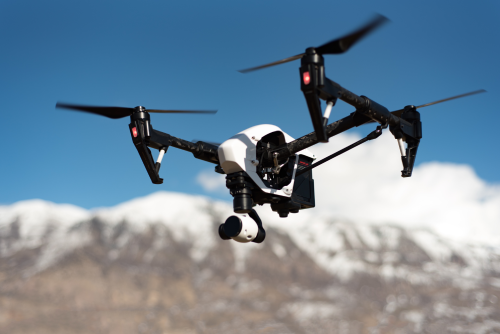
How drones are used in e-commerce delivery experiments is very different from the cinematic idea of hundreds of parcels flying over cities. In practice, these trials are tightly controlled logistics tests designed to answer one simple question: can a drone move a small package faster, safely, and at a sensible cost on a specific route? For Indian readers, the important point is that drone delivery is still best understood as a targeted application, not a mass-market replacement for normal courier networks.
Quick Take
- E-commerce drone delivery experiments usually focus on small, lightweight, urgent parcels.
- Most serious trials do not start with random doorstep delivery in crowded city areas. They start with fixed routes, known landing points, and predictable environments.
- The most practical models are:
- hub-to-hub transfer
- hub-to-customer in gated or controlled areas
- rural and hard-to-reach delivery corridors
- urgent replenishment between warehouses, dark stores, or local stores
- A delivery drone experiment is really a logistics project, not just a drone flight test.
- The biggest challenges are not only range and battery life. They are airspace compliance, weather, safe landing or handover, package security, and operational reliability.
- In India, anyone exploring this space must verify the latest DGCA rules, Digital Sky permissions, airspace status, and any local approvals before operating.
Why e-commerce companies are experimenting with drones
E-commerce works on speed, consistency, and cost. The last mile, which is the final leg from a local hub to the customer, is often the most expensive and unpredictable part of delivery.
That is why companies experiment with drones in situations where road transport struggles.
Typical reasons include:
- Road congestion that makes short trips surprisingly slow
- Rural or semi-rural routes where access is poor
- Hilly, island, flood-prone, or river-crossing areas
- High urgency items such as medicines, essentials, or replacement parts
- Controlled environments like campuses, industrial parks, or townships
- Demand for same-day or near-instant service in limited zones
A drone does not need to replace the whole delivery chain to be useful. If it can save time on one difficult leg of the route, the experiment may still be worthwhile.
What a drone delivery experiment actually looks like
A lot of people imagine a customer taps “Buy Now,” a drone lifts off, and a parcel lands at the door. Real experiments are much more structured.
They usually test one or more of these questions:
- Can the drone carry the target payload safely?
- Can it complete the route repeatedly in changing conditions?
- Can the operator get reliable proof of delivery?
- Is the total cost lower or justified by the speed advantage?
- Can the operation scale without creating safety or compliance problems?
In other words, the experiment is not just about whether the drone can fly. It is about whether the entire delivery workflow works.
The typical workflow in a drone delivery test
1. Order selection
Not every order is suitable.
The system first filters for parcels that match the drone’s limits, such as:
- low weight
- compact size
- non-fragile or properly protected goods
- low-risk contents
- delivery address inside an approved service zone
In many experiments, companies do not start with open public orders. They start with internal transfers or deliveries to a controlled customer group.
2. Package preparation
The parcel is packed specifically for drone transport.
That often means:
- secure sealing
- water-resistant outer protection where needed
- balanced weight distribution
- clear barcode or ID tag
- tamper-evident packaging
- shock protection for vibration during flight
For drone delivery, packaging matters more than many people expect. A box that works fine in a van may shift, swing, or catch wind when attached to a drone.
3. Flight planning
Before takeoff, the operator plans the mission.
This can include:
- route selection
- altitude planning
- geofencing, which means virtual boundaries that keep the drone inside approved areas
- weather checks
- battery reserve planning
- takeoff and landing area confirmation
- emergency procedures
For experimental delivery, the route is usually pre-approved and repeated multiple times to measure consistency.
4. Permission and compliance checks
This step is especially important in India.
Depending on the mission profile, the operator may need to verify:
- airspace availability
- Digital Sky permissions or other required clearances
- drone platform compliance
- operator and pilot qualifications
- landowner permission at takeoff and delivery points
- any security or local authority coordination needed for that site
The key point is simple: drone delivery is not the same as casually flying a consumer drone for fun.
5. Takeoff and monitoring
Once launched, the drone is monitored through telemetry, which is the live stream of flight data such as position, speed, battery status, and system health.
In many experiments, there is still strong human oversight even when navigation is automated.
The people involved may include:
- remote pilot
- mission supervisor
- ground crew
- safety observer
- receiving staff at the destination
This is why drone delivery is often more labour-intensive in testing than people assume.
6. Delivery or handover
This is where the experiment becomes interesting.
There are several handover methods:
Landing at a designated pad
The drone lands at a marked area and the parcel is collected.
Best for:
- campuses
- warehouses
- controlled compounds
- clinics or local collection points
Lowering the package on a tether
Instead of landing, the drone hovers and lowers the parcel on a cable.
Best for:
- uneven ground
- places without a clean landing area
- situations where rotor wash near people must be reduced
Drop at a secured box or locker
The parcel is released into a protected receiving unit.
Best for:
- fixed delivery points
- repeated routes
- customer pickup after arrival notification
Delivery to a staffed receiving point
The package goes to a local shop, kiosk, guard gate, or village collection centre instead of a doorstep.
Best for:
- semi-rural areas
- apartment-heavy zones
- trials where customer identity and package control matter
This is a major reality check for beginners: many “e-commerce drone delivery” experiments are not true doorstep drops. They are controlled handovers.
7. Proof of delivery
A professional experiment tracks every result.
Proof of delivery may include:
- scan confirmation
- app acknowledgement
- OTP verification
- QR code handover
- timestamped mission log
- destination camera or receiving station record
Without reliable proof of delivery, the test may fail even if the flight itself goes well.
8. Return, recharge, and maintenance
After delivery, the drone returns or moves to a recovery point.
The team then checks:
- battery health
- motor and propeller condition
- package attachment system
- flight log
- route deviations
- weather impacts
- turnaround time before the next mission
A delivery experiment becomes useful only when it can be repeated reliably, not when it succeeds once.
Delivery models being tested in e-commerce
Different operators test different models depending on terrain, order type, and regulation.
| Experiment model | How it works | Best suited for | Main challenge |
|---|---|---|---|
| Hub-to-hub transfer | Drone moves parcels between two fixed facilities | warehouses, dark stores, pharmacies, local stores | needs reliable landing infrastructure |
| Hub-to-customer in controlled zone | Drone flies from local hub to a customer area with defined handover point | gated communities, campuses, industrial parks | customer handover and safety around people |
| Rural delivery corridor | Drone serves a village or remote cluster from a nearby town node | essentials, medical items, lightweight consumer goods | weather, terrain, connectivity, recovery planning |
| Warehouse-to-store replenishment | Drone carries urgent stock to prevent local stock-outs | quick commerce, spare parts, pharmacy | limited payload and scheduling complexity |
| Truck-drone hybrid | Van carries drones that handle selected nearby drops | low-density areas and planned routes | high operational complexity |
For India, the most realistic near-term models are controlled corridors and node-to-node movement, not unrestricted open-city doorstep delivery.
What kinds of products fit drone delivery best
Drone delivery experiments work best with items that are small, valuable to receive quickly, and not too delicate.
Good candidates include:
- pharmacy and wellness products
- urgent documents
- phone accessories and small electronics
- replacement parts
- beauty and personal care items
- compact grocery essentials
- lab samples in non-consumer logistics settings
- lightweight premium goods
Poor candidates include:
- large grocery baskets
- heavy household goods
- bulky fashion orders
- fragile items with poor packaging
- returns that require inspection at pickup
- cash-on-delivery workflows with complex verification
This is why drone delivery is often tested first on a narrow product set.
Why India is a special case
India is a huge opportunity for drone delivery, but also a hard operating environment.
Urban density makes experiments difficult
Dense cities create multiple problems at once:
- limited safe landing zones
- crowded rooftops
- wires, poles, and street clutter
- high-rise apartment access issues
- unpredictable pedestrian movement
- security and privacy concerns
- stronger public sensitivity to noise
So while urban demand is high, urban operations can be the toughest to execute safely.
Rural and semi-rural routes may be more practical
In some parts of India, roads, rivers, terrain, or seasonal conditions make short-distance travel slow and unreliable.
That is where drones may make more sense:
- village collection point delivery
- inter-clinic or pharmacy transfer
- e-commerce essentials in flood-affected or remote zones
- island and hill routes with known receiving points
Controlled environments are ideal test beds
The most practical Indian experiments often happen in places like:
- industrial campuses
- large educational institutions
- hospital networks
- private townships
- mining or energy sites
- logistics parks
These environments reduce uncertainty and make it easier to measure results.
What companies are really measuring in these experiments
A drone test is not successful just because the drone arrived.
Operators usually measure:
- average delivery time
- consistency across repeated missions
- battery use per route
- package damage rate
- weather-related cancellations
- successful handover rate
- operator workload
- cost per completed delivery
- turnaround time between flights
- customer acceptance and trust
This last point matters. Even a technically successful system can fail if customers do not know where to receive the parcel, do not trust the process, or find it inconvenient.
The main technologies behind delivery experiments
You do not need to be an engineer to understand the basics.
Aircraft type
Most delivery tests use one of these:
- multirotor drones for short routes and precise takeoff or landing
- fixed-wing or hybrid VTOL drones for longer routes
VTOL means vertical takeoff and landing. A hybrid VTOL drone takes off like a multirotor but flies more efficiently like an aircraft during cruise.
Navigation systems
Delivery drones use satellite navigation, onboard sensors, and route software.
In more advanced operations, they may also use:
- terrain awareness
- obstacle sensing
- geofenced corridors
- return-to-home fail-safes
- remote identification systems where applicable
NPNT and permission-linked operation
In India, NPNT means No Permission, No Takeoff. On applicable systems, the idea is that the drone should not launch without required digital permission.
Readers should still verify the latest official implementation details and category-specific requirements before assuming a particular drone or mission is compliant.
Fleet and operations software
A real delivery experiment is heavily software-driven.
The operator needs tools for:
- order routing
- mission scheduling
- battery tracking
- fleet status
- incident logging
- proof of delivery
- maintenance records
This is why a drone delivery company is as much a software and operations business as it is an aviation business.
Benefits being tested against road delivery
When drone delivery works, the benefits can be very real.
Faster delivery on difficult routes
A short aerial route may beat a much longer road route, especially where roads are congested or indirect.
Better service to hard-to-reach areas
For remote communities, a drone can connect a local node faster than a ground vehicle.
Urgent replenishment
A store or dark store that is out of one key item may not need a vanload of inventory. A drone can test the idea of sending one small, urgent batch.
Lower dependency on one delivery model
Companies like resilience. Drones may become one option inside a mixed network that includes vans, bikes, and pickup points.
Data for future scaling
Even when a pilot is not immediately profitable, it teaches the operator:
- which routes make sense
- what payload mix works
- what customers accept
- what infrastructure is needed
The limits that stop drone delivery from becoming universal
This is where hype usually crashes into reality.
Payload is limited
Drones are best for small parcels. They do not replace the average courier van.
Weather matters a lot
Wind, rain, heat, visibility, and sudden weather changes can disrupt operations quickly.
Landing and handover are hard
Flying from point A to point B is often easier than safely handing the parcel to the correct person.
Noise and public acceptance matter
Even if legal, a noisy low-flying drone over residential areas can trigger complaints.
Scale is operationally complex
More flights mean more battery management, maintenance, staffing, route control, and compliance work.
Unit economics can be tricky
A drone may be faster, but not necessarily cheaper, especially in low-volume or labour-heavy operations.
That is why the best experiments focus on specific routes where the value is obvious.
Safety, legal, and compliance points for India
This topic cannot be separated from compliance.
If you are reading this as a startup, seller, campus operator, or drone professional in India, treat these as baseline checks:
- Verify the latest DGCA rules before planning any delivery project.
- Check the current Digital Sky process and airspace status for every planned route.
- Confirm whether the mission involves beyond visual line of sight, or BVLOS, operations. BVLOS means the drone goes beyond the pilot’s direct visual range, and this is a more sensitive category of operation.
- Use only appropriate drone platforms and procedures for commercial delivery work.
- Confirm pilot competency, operational manuals, emergency procedures, and maintenance practices.
- Take landowner consent seriously for launch, landing, and receiving points.
- Plan for data privacy if cameras or customer location data are involved.
- Consider insurance and liability requirements for clients and partners.
- Build clear no-fly, abort, and lost-link procedures into the mission plan.
Rules can evolve. Local enforcement expectations can also vary by site and mission. So readers should always verify the latest official position rather than relying on old forum advice or viral videos.
Common mistakes in e-commerce drone delivery experiments
Starting with the hardest use case
Many teams dream of city apartment delivery first. That is often the worst place to begin.
A smarter starting point is:
- fixed route
- known receiving point
- low payload
- repeatable timing
- limited public exposure
Treating it like a drone demo instead of a logistics project
A flashy video is not a viable delivery system.
If the team does not design for:
- packaging
- handover
- customer communication
- mission logging
- maintenance
- exception handling
the pilot will look impressive but teach very little.
Ignoring customer-side friction
If the customer has to stand in an unsafe location, answer too many calls, or walk far to collect the parcel, the system may fail even if flight performance is good.
Underestimating weather disruption
A route that works on calm mornings may fail during windier afternoon conditions. Good pilots test with realistic operating windows, not only perfect weather.
Measuring only speed
Speed matters, but so do:
- completion rate
- damaged parcel rate
- reattempt rate
- safety events
- labour intensity
- customer satisfaction
Forgetting the return journey
A delivery route is not solved unless the drone can safely return, recover, recharge, and launch again on schedule.
If you are a small business, what should you evaluate first?
If you run an e-commerce operation, pharmacy, quick-commerce outlet, or campus delivery network, ask these questions before getting excited:
- Which deliveries are truly time-critical?
- Which parcels are lightweight and standardized?
- Do we have fixed, safe dispatch and receiving points?
- Is the route in a controlled environment or a hard-to-reach corridor?
- Can customers accept a collection-point model instead of doorstep handoff?
- What would success look like: lower time, better service, or lower cost?
- Can we verify the legal and operational pathway before spending on hardware?
If you cannot answer these clearly, a drone pilot project may be premature.
FAQ
Are drone deliveries already common in India?
Not in the everyday mass-market sense. The more realistic picture is selective pilots, controlled use cases, and route-specific experiments rather than citywide routine parcel delivery.
What items are best suited to drone delivery tests?
Small, lightweight, urgent, and easy-to-package items are the best fit. Medicines, small electronics accessories, documents, and compact essentials are more practical than bulky household orders.
Can a drone deliver directly to an apartment balcony?
In theory, some people imagine that model, but in practice it is difficult and risky. Balconies, wires, wind, people movement, and building access create major safety and operational issues. Many experiments use common receiving points instead.
Why don’t companies use drones for every order?
Because most orders are too heavy, too bulky, too low-priority, or too difficult to hand over safely. Road networks remain far better for high-volume mixed parcels.
How far can a delivery drone fly?
There is no single answer. It depends on aircraft type, payload weight, wind, temperature, battery condition, route design, and required safety reserve. Serious operators plan around reliable mission margins, not marketing claims.
Are delivery drones fully autonomous?
Many systems automate navigation, but human supervision is still important in most serious operations. Commercial delivery trials usually depend on a tightly managed workflow rather than a completely hands-off system.
Do drones simply drop the package from the sky?
Not usually in the careless way people imagine. Professional experiments prefer controlled landing, tethered lowering, or secure receiving points. The handover method must suit the site and the approved operating procedure.
Can a small Indian e-commerce business launch its own drone delivery service?
Not by treating it as a hobby extension. A proper project needs compliant operations, trained personnel, mission planning, safe sites, and verified permissions. For many businesses, partnering with a specialized operator may be more realistic than building everything in-house.
What happens if weather changes mid-flight?
A professional operation should have pre-defined abort and recovery procedures. That may include returning to base, diverting to a safe landing point, or delaying launch until conditions improve.
Is drone delivery mainly about saving money?
Not always. In many experiments, the early value is faster service, reaching difficult areas, or preventing urgent stock-outs. Cost savings may come later only if the operation becomes repeatable and efficient.
The takeaway
The real story behind e-commerce drone delivery experiments is not “flying parcels everywhere.” It is testing where a drone can outperform a bike or van on one specific leg of the network without compromising safety, compliance, or customer trust. If you want to understand where this is heading in India, watch controlled campus routes, rural corridors, and hub-to-hub pilots first; that is where drone delivery is most likely to prove itself before it ever becomes a normal checkout option.
