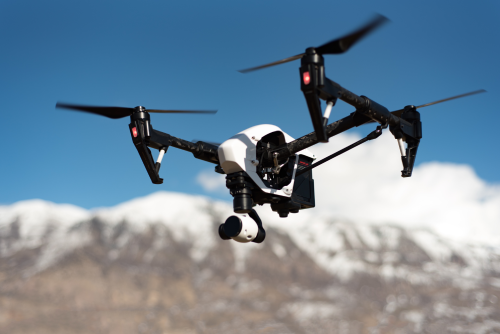
Drones are used in crop disease detection by scanning fields from above and spotting stress patterns that are easy to miss from the ground. In practice, they help farmers, agronomists, and agri service providers identify suspicious patches early, check how fast a problem is spreading, and target field visits and treatment more intelligently.
Quick Take
- Drones do not usually “see the disease germ” directly. They detect plant stress, colour change, canopy damage, heat differences, and spread patterns that may indicate disease.
- A standard RGB camera can help with basic crop scouting. Multispectral and thermal sensors can reveal stress earlier or more clearly, but they need better planning and interpretation.
- The best results come from combining drone maps with field inspection, agronomy advice, and sometimes lab testing.
- In India, drone-based disease scouting is especially useful in paddy, cotton, sugarcane, grapes, vegetables, banana, and other crops where fast scouting matters.
- For many growers, hiring a trained drone service or using an FPO or shared model is more practical than buying advanced equipment outright.
- Always verify the latest DGCA and Digital Sky requirements before flying. Farm land is not the same as unrestricted airspace.
Why crop disease detection is hard from the ground
Crop disease rarely begins as a dramatic, field-wide event. It often starts in small pockets.
From the ground, those pockets are easy to miss because:
- symptoms may first appear in only a few rows or corners
- early colour changes can be subtle
- dense crop canopies hide lower leaves and stems
- large fields take too long to inspect manually
- after rain or high humidity, disease can spread faster than scouting teams can cover the area
- what looks like disease may actually be nutrient deficiency, irrigation stress, pest damage, or chemical injury
This is where drones help. They give a fast, top-down view of the whole field, so abnormal areas stand out sooner and more clearly.
How drones are used in crop disease detection
At a basic level, a drone captures images of the crop. Software then turns those images into maps that highlight unusual zones. Those zones are checked on the ground and matched with real symptoms.
RGB imaging: the simplest entry point
RGB means the same visible colours a normal camera sees: red, green, and blue.
An RGB drone can help detect:
- yellowing or browning patches
- uneven canopy density
- wilting zones
- defoliation
- lodged or damaged crop
- unusual spread patterns along rows, water channels, or low-lying patches
This is often enough for first-level scouting.
For example, a cotton field may show a few irregular patches where the canopy looks thinner and duller. A drone cannot confirm the exact disease from that image alone, but it can tell the farmer where to walk first instead of checking the entire field randomly.
Multispectral imaging: seeing stress beyond normal colour
A multispectral camera captures specific bands of light beyond what the human eye normally uses, including near-infrared and red-edge light.
Healthy plants reflect and absorb light differently from stressed plants. As disease affects chlorophyll, leaf structure, and moisture balance, that reflection pattern changes.
This allows software to create vegetation indices. A vegetation index is a simple formula that converts reflected light into a crop health map. Common examples include NDVI and NDRE.
In plain English, these maps help answer questions like:
- which parts of the field look healthier or weaker
- where stress is appearing before severe visual damage
- whether the problem is isolated or spreading
- which zones need urgent inspection
Multispectral data is especially useful in larger farms, orchards, vineyards, seed plots, and high-value horticulture where early detection matters.
Thermal imaging: finding temperature differences
A thermal camera measures canopy temperature.
This matters because stressed plants often run warmer than healthy ones. When plants are affected by disease, blocked transpiration, or root stress, leaf temperature may rise. Thermal mapping can therefore help flag areas where something is wrong even before obvious colour change appears.
But thermal data needs caution.
A hot patch in a field may be caused by:
- disease
- water stress
- poor irrigation coverage
- compacted soil
- drainage issues
- exposed soil between rows
- recent weather change
So thermal imaging is best used as a clue, not a final diagnosis.
AI and analysis software: useful, but not magic
Once images are captured, software stitches them into one large map of the field. This stitched image is often called an orthomosaic, which simply means a single corrected map made from many overlapping drone photos.
Some software can also:
- mark anomaly zones automatically
- compare maps from different dates
- calculate vegetation indices
- classify high-risk areas using machine learning
- estimate severity or spread trends
This can be helpful, especially for repeated monitoring.
But accuracy depends on:
- the sensor quality
- correct flight planning
- local crop type and variety
- crop stage
- weather during capture
- good ground-truth data
Ground truthing means checking flagged spots physically in the field. Without it, even advanced software can misread stress.
Which sensor is best for crop disease detection?
| Sensor type | What it captures | Best use | Main limitation |
|---|---|---|---|
| RGB camera | Normal visible images | General scouting, visible symptoms, canopy gaps, patch mapping | May miss early or subtle stress |
| Multispectral camera | Selected light bands such as red-edge and near-infrared | Early stress mapping, repeat monitoring, zone comparison | Needs calibration, interpretation, and higher investment |
| Thermal camera | Canopy temperature | Stress hotspots, irrigation issues, possible disease-related heat changes | Very sensitive to weather and does not identify the cause by itself |
For many first-time users, RGB is the practical starting point. Multispectral and thermal become more valuable when the use case is frequent, the crop is high value, or the field area is large enough to justify deeper analysis.
The real workflow: how disease detection with drones actually happens
A useful drone operation is not just “fly, click, and diagnose.” The real value comes from a repeatable workflow.
1. Define the purpose before flying
Ask what you are trying to detect:
- early stress after rain
- unusual patches seen during manual scouting
- spread after a confirmed outbreak
- row-wise variability in orchards or vineyards
- pre-spray or post-spray assessment
A vague mission produces vague results.
2. Fly at the right time and in the right conditions
For disease scouting, consistency matters.
Good practice usually includes:
- stable daylight conditions
- low wind
- enough image overlap
- similar timing across repeat flights
- avoiding very harsh shadows when possible
If you compare one flight taken in very different light or weather from another, the map may mislead you.
3. Process the images into useful maps
After the flight, images are processed into:
- a stitched field map
- crop health layers
- anomaly zones
- temperature maps if thermal data is available
- block-wise or row-wise reports
This turns hundreds of photos into something a farmer or agronomist can act on.
4. Ground-truth the suspicious zones
This is the most important step.
A drone may show a stressed patch. The field team then visits that spot and checks:
- leaf symptoms
- stem damage
- root condition where relevant
- pest presence
- waterlogging or drainage problems
- fertilizer application pattern
- herbicide drift or spray injury
- disease signs such as lesions, mildew, rot, or wilt
Only after this step can you say whether the drone spotted disease, nutrient stress, pest attack, or something else.
5. Decide the action zone by zone
Once the cause is better understood, the farmer can decide what to do:
- inspect more closely
- isolate an infected patch
- improve drainage
- adjust irrigation
- consult an agronomist
- plan targeted plant protection measures
- re-scout after a few days
The benefit is not just detection. It is better decision-making with less wasted time.
6. Repeat the flight to track spread or recovery
One map is a snapshot. Repeated flights show trend.
That helps answer:
- Is the problem expanding?
- Did treatment slow it?
- Are some parts recovering and others worsening?
- Is the disease linked to a drainage line, wind direction, or field boundary?
This time-series view is one of the strongest advantages of drone-based crop monitoring.
What drones can tell you, and what they cannot
This is where many people get confused.
What drones can do well
Drones are good at:
- flagging abnormal zones quickly
- showing the size and pattern of affected areas
- comparing blocks, plots, or rows
- identifying hidden variability in large fields
- monitoring spread over time
- improving scouting efficiency
What drones cannot do reliably on their own
Drones usually cannot confirm:
- the exact pathogen species
- whether the stress is definitely disease and not nutrient deficiency
- whether the root zone has a hidden issue unless symptoms affect the canopy
- the correct treatment without agronomic interpretation
Think of drones as an early warning and decision-support tool, not as a laboratory in the sky.
Practical crop disease detection use cases in India
Indian agriculture is diverse, so the value of drone scouting changes by crop, farm size, and local conditions.
Paddy after humid weather
In paddy, disease risk often rises after prolonged humidity, standing water issues, or weather swings. A drone can quickly reveal patchy yellow-brown stress zones across a field that might be hard to notice from one bund to the next.
What happens next:
- the suspicious patches are checked on foot
- the team separates likely disease from nutrient or water issues
- only the affected areas get priority attention
This is useful when fields are large or scattered and manual scouting is slow.
Grapes and other vineyard-style crops
Row crops like grapes are well suited to drone mapping because canopy patterns are easier to compare row by row.
Repeated flights can help growers and consultants:
- find blocks where canopy health is dropping
- compare disease-prone and healthy rows
- monitor recovery after intervention
- detect drainage or microclimate-related stress areas
In high-value crops, even a small early warning can be worth a lot if it prevents wider spread.
Cotton in large open fields
In cotton, visual stress may not look the same across the whole field. A drone can help spot:
- irregular canopy thinning
- discoloured patches
- stressed zones following irrigation differences
- areas worth immediate field inspection
The key point is that cotton stress is often mixed. Disease, pest pressure, and moisture problems can overlap. Drone maps help narrow the search but should not replace agronomy checks.
Vegetables such as chilli, tomato, and onion
Vegetable crops often need frequent monitoring because disease can move fast, especially in warm and humid periods.
Drone scouting can support:
- fast scanning after rain events
- identifying poor-performing beds or blocks
- checking whether the problem is clustered or widespread
- comparing field sections under different irrigation or management
For commercial vegetable growers, speed is the main advantage.
Banana, sugarcane, and plantation-style blocks
In larger plantations or contract-farmed areas, disease-like stress may relate to drainage, soil variation, or uneven management.
Drones help managers see patterns at scale:
- repeated trouble zones
- edge effects
- low-lying disease-prone patches
- sections needing more field staff attention
This is particularly useful when one supervisor must monitor many acres.
Where drone-based disease detection makes the most sense
This approach tends to work best when at least one of these is true:
- the crop is high value
- the area is large enough that manual scouting is slow
- the farm has repeat disease pressure
- the crop has a uniform canopy that maps well
- quick decisions matter
- the user can repeat flights over time
- there is agronomy support to interpret results
For very small and highly fragmented plots, the economics may be weaker if a grower buys advanced sensors personally. In such cases, a service provider, cooperative, FPO, university project, or input-company-supported scouting model may make more sense.
Common mistakes to avoid
Assuming the drone will name the disease automatically
This is the biggest mistake. Most of the time, the drone detects stress, not a confirmed pathogen.
Flying only once and expecting a full answer
Disease management improves when you compare maps over time. A single flight gives limited context.
Ignoring field verification
If nobody checks the flagged zones on the ground, decisions can go wrong very quickly.
Confusing disease with other stress
These can look similar from above:
- nutrient deficiency
- pesticide burn
- water stress
- pest attack
- soil compaction
- poor germination
- weed competition
Flying at poor times
Very low light, harsh shadows, strong wind, and inconsistent timing reduce map quality and comparability.
Using advanced sensors without a plan
A multispectral or thermal camera does not create value by itself. You need a workflow, interpretation skill, and repeat use.
Overlooking data handling
Images and maps should be labelled by date, field, crop stage, and location. Otherwise, trend analysis becomes messy and unreliable.
Safety, legal, and compliance in India
Drone work on farms still needs care and compliance.
Before any operation, verify the latest official guidance from DGCA and the Digital Sky system. Rules, workflows, and applicable requirements can change.
Keep these points in mind:
- Use a drone that is compliant for the intended category and use case.
- Check current requirements related to registration, pilot training or certification, and flight permissions, wherever applicable.
- Confirm the airspace status before flying. Agricultural land is not automatically unrestricted.
- Take landowner or farm manager consent before capturing data.
- Avoid flying over people, homes, public roads, livestock groups, or power lines.
- Maintain visual line of sight unless you have specific authorisation for anything beyond standard operations.
- If the farm is near an airport, defence area, industrial site, or other sensitive location, be extra cautious and verify the latest restrictions.
- If you are collecting crop maps for clients, clarify who owns the data and how it will be stored and shared.
- Handle batteries carefully in hot field conditions, and keep basic fire safety precautions in place.
If you are hiring a drone operator, ask about:
- training and experience in mapping, not just flying
- crop scouting workflow
- sensor type used
- report format
- how they validate findings on the ground
- whether they understand compliance requirements
Is buying a drone necessary?
Not always.
For many Indian users, the best path is:
- start with a service provider or shared access model
- test drone scouting on one crop and one season
- compare the maps with real field outcomes
- decide later if ownership makes sense
Ownership is easier to justify when the user has:
- repeated demand across many fields
- a trained team
- a need for frequent monitoring
- access to agronomy interpretation
- enough acreage or enough clients
FAQ
Can drones identify the exact crop disease?
Usually not by themselves. They mostly detect abnormal plant stress and spread patterns. Exact diagnosis often needs field inspection, expert advice, and sometimes a lab test.
Is a normal camera enough, or do I need a multispectral sensor?
A normal RGB camera is often enough for first-level scouting and visible symptom mapping. Multispectral becomes more useful when you need earlier stress detection, repeat comparisons, or better health mapping across larger or higher-value crops.
How often should a field be scanned?
It depends on the crop and risk period. In practice, scouting is more useful when flights are repeated during weather conditions or crop stages where disease pressure is likely to rise.
Can small farmers benefit from crop disease detection by drone?
Yes, but usually through shared services rather than buying advanced equipment individually. FPOs, cooperatives, local service providers, and agri projects can make it more practical.
What is the best time of day to fly for crop scouting?
Consistent daylight with stable conditions is generally better than poor or rapidly changing light. For repeat monitoring, similar timing across flights helps comparison.
Can drones see disease under a dense canopy?
Not reliably in all cases. Drones mainly observe the top of the canopy. If disease begins on lower leaves, stems, or roots, the drone may only detect indirect stress later.
Are thermal cameras better than multispectral cameras?
Not universally. Thermal is good for spotting heat-related stress patterns, while multispectral is strong for plant health mapping. The better choice depends on the crop, the problem, and how the data will be interpreted.
Can a spray drone also be used for disease detection?
Some operations use separate systems, while others combine scouting and spraying within a broader workflow. The important point is that detection quality depends on the sensor and mapping process, not just the drone’s ability to carry payloads.
Does drone disease detection replace agronomists or field scouts?
No. It makes them more efficient. It tells them where to look first and where conditions are changing, but the final diagnosis still depends on human expertise.
Takeaway
Drones are most useful in crop disease detection when you treat them as an early warning system, not a magic diagnosis tool. If you want practical results, start small: use drone scouting on one crop block, verify the suspicious patches on the ground, and see whether repeat monitoring actually improves your decisions before investing further.
