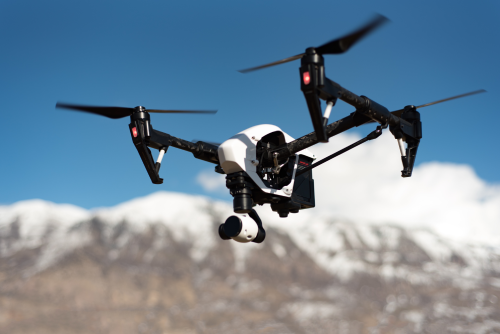
Coastal surveillance is one of the most practical ways to understand how drones are used beyond photography. Along beaches, ports, estuaries, fishing zones, and disaster-hit shorelines, drones help teams spot problems faster, cover more ground, and guide responders with live visual information.
Quick Take
- Coastal surveillance means watching shorelines, nearshore waters, ports, beaches, estuaries, and coastal infrastructure for safety, security, rescue, and environmental monitoring.
- Drones are used to detect suspicious vessel movement, support search and rescue, monitor crowds, inspect coastal assets, identify pollution, and track shoreline changes.
- Multirotor drones are best for close inspection and fast deployment. Fixed-wing and hybrid VTOL drones suit longer patrols.
- Useful payloads include standard cameras, optical zoom, thermal imaging, mapping cameras, and sometimes loudspeakers or spotlights on specialised platforms.
- In India, coastal operations can involve sensitive airspace near ports, airports, naval facilities, refineries, and other strategic locations. Always verify current DGCA, Digital Sky, and local authority requirements before flying.
- Drones work best as part of a larger system with patrol teams, boats, CCTV, radar, marine communications, and clear operating procedures.
What coastal surveillance actually includes
When people hear “coastal surveillance,” they often think only about national security or border monitoring. In practice, it is wider than that.
A coastal surveillance mission can involve:
- Watching beaches for crowd safety
- Looking for missing swimmers or stranded people
- Checking small boat activity near harbours or creeks
- Monitoring illegal dumping, oil sheen, or floating debris
- Inspecting embankments, jetties, breakwaters, and port edges
- Tracking shoreline erosion after rough weather
- Watching protected coastal ecosystems such as mangroves
- Supporting disaster response after cyclones or storm surges
So, when we ask how drones are used in coastal surveillance, the answer is not just “for security.” It is also about faster observation, safer response, and better information.
Why drones are so useful near the coast
Coastal areas are difficult to monitor from the ground alone.
A shoreline can have:
- Long open stretches
- Inlets, creeks, and marshy patches
- Sandbars and tidal zones
- Limited road access
- Harsh wind and glare conditions
- Large crowds during tourist or festival periods
A drone solves one big problem immediately: it gives a fast overhead view.
Compared with sending a patrol team on foot or waiting for a boat, a drone can often be airborne in minutes. Compared with manned aircraft, it is usually cheaper, easier to deploy, and better suited for low-altitude visual checking over a smaller area.
That does not mean drones replace everything else. They do not. A drone is best seen as a rapid-response observation tool.
Main ways drones are used in coastal surveillance
Monitoring beaches, shorelines, and nearshore waters
This is the most straightforward use case.
A drone can patrol:
- Popular beaches
- Fishing landing points
- Coastal roads
- Tidal flats
- River mouths and estuaries
- Harbour approaches
Operators can use live video to look for:
- Unusual movement
- Unattended boats
- People entering unsafe areas
- Strong rip-current zones that are visible from above
- Hazardous crowd build-up
Practical example
Imagine a district administration team during a holiday weekend at a busy beach. A drone with a zoom camera can quickly check whether crowds are gathering too close to restricted surf zones, rocky edges, or temporary no-entry areas.
From the ground, this takes time. From the air, one operator can scan a much wider area.
Detecting suspicious boats or unauthorised coastal activity
One important coastal surveillance role is identifying small moving objects that are hard to track from shore, especially in creeks, backwaters, or low-visibility approaches.
A drone can help detect:
- Small boats moving without lights in low light conditions
- Unusual landing activity on isolated beach stretches
- Boats loitering near sensitive areas
- Transfers between vessels close to shore
- Movement in shallow areas where larger patrol craft cannot easily operate
A zoom camera is particularly useful here. It allows teams to stay at a safer distance while still reading details such as vessel type, colour, markings, or behaviour.
Drones are especially helpful for “look, verify, hand off” tasks: 1. Spot the object 2. Confirm whether it is unusual 3. Share coordinates and live visuals with the response team
Search and rescue
This is one of the most valuable public-safety uses of drones in coastal regions.
During a search and rescue mission, time matters. A drone can quickly scan:
- Surf lines
- Rocky shore sections
- Sandbanks
- Flooded coastal roads
- Mangrove edges
- Areas where a person was last seen
Thermal imaging can sometimes help, especially in low light or when scanning land-water edges, rocks, vegetation, or boats. But readers should know the limitation: detecting a person in open water with thermal alone is not always easy, because water temperature, waves, wind, and reflections can reduce contrast.
That is why many search teams use a mix of: – Daylight video – Optical zoom – Thermal views – Search grid flying – Ground or boat coordination
Practical example
A missing fisher is reported near a creek mouth at dusk. A drone team launches from a safe shoreline point, flies a planned grid, marks observed items, and relays the exact location of a drifting boat to marine responders.
Without the drone, the search may begin with much less situational awareness.
Monitoring ports, jetties, and coastal infrastructure
Ports and coastal facilities often need visual inspection and security monitoring.
Drones can help observe:
- Jetty edges
- Breakwaters
- Fuel or cargo handling areas
- Perimeter fencing near the waterfront
- Access roads and storage yards
- Mooring zones
- Structural damage after rough weather
For this work, drones are useful because they can inspect awkward angles over water without needing scaffolding, a boat, or a risky manual check.
But this is also one of the most sensitive operating areas from a compliance point of view. Airspace and security restrictions near ports, airports, refineries, naval facilities, and other strategic assets may apply. In India, this must be checked carefully before any operation.
Supporting fisheries and marine enforcement
Drones can help authorities or authorised operators monitor fishing zones, landing points, and coastal protected areas.
Possible uses include: – Checking boat concentration near restricted areas – Looking for activity inside no-entry or eco-sensitive zones – Verifying whether a shoreline area is being used in an unauthorised way – Monitoring fish landing points for crowd or traffic management
A drone does not replace waterborne enforcement. It helps direct it.
If a suspicious boat is seen, the drone’s real value is in giving responders: – The latest position – Direction of travel – Video evidence – Better route planning
Detecting pollution and environmental damage
Coastal surveillance is not only about security. Environmental teams can also use drones to spot and document:
- Oil sheen on water
- Floating waste
- Foam or discharge near drains and outfalls
- Damage to mangroves
- Coastal erosion after storms
- Beach littering hotspots
- Sediment movement after heavy rain
For this role, a mapping workflow is often more useful than a casual fly-around. Repeating a similar route over time helps compare changes.
Example
After a storm, a drone survey of a coastal embankment can show where erosion has undercut the structure, where access roads are broken, and where water has breached into nearby settlements.
Disaster response after cyclones, storm surge, or coastal flooding
For India, this is a major use case.
Many coastal states deal with: – Cyclones – High winds – Flooding – Saline water ingress – Damaged roads – Communication disruption
After an event, drones can help officials quickly understand: – Which villages are cut off – Whether embankments have failed – Which roads are passable – Where stranded people or livestock are located – Whether boats, nets, or debris are blocking channels – What the shoreline looks like compared with pre-event condition
This makes drones highly relevant for district disaster management, local administration, and infrastructure assessment teams.
Mapping erosion and shoreline change
Some coastal surveillance missions are less urgent but equally important.
Repeat drone surveys can be used to monitor: – Beach width change – Sand movement – Cliff or dune erosion – River mouth shifting – Encroachment in coastal belts – Damage to protective structures
In this role, the drone is not just a camera in the sky. It is a data collection tool.
When flown with proper overlap and positioning, it can produce: – Orthomosaics, which are stitched top-down maps – Elevation models – Before-and-after comparisons – Accurate visual records for planning
Crowd management and public safety at beaches
Busy beaches, festivals, pilgrim routes, and waterfront events can become difficult to monitor from ground level.
Drones can support: – Crowd density checks – Detection of blocked access routes – Monitoring of temporary structures near the shore – Watching surf areas where people go beyond warning lines – Identifying areas where more lifeguards or police presence is needed
This should be done carefully and lawfully, with attention to privacy and safe stand-off distance from people.
Which types of drones are used for coastal surveillance
Different missions need different airframes.
| Drone type | Best for | Strengths | Limits in coastal use |
|---|---|---|---|
| Multirotor | Beaches, ports, rescue support, close inspection | Fast launch, hover capability, precise camera control | Shorter endurance, affected by strong wind, smaller area coverage |
| Fixed-wing | Long shoreline patrols, larger survey areas | Covers more distance, better endurance | Needs more launch/recovery planning, cannot hover |
| Hybrid VTOL | Mixed missions needing range plus vertical take-off | Good compromise between endurance and flexibility | Usually more complex and costlier to operate |
| Tethered drone | Persistent watch over one location | Long-duration overwatch from a fixed point | Limited movement, needs ground power setup |
For many practical coastal tasks, a multirotor with a good zoom camera is the most realistic starting point. For longer patrols, a hybrid VTOL platform becomes more useful if the team has trained operators and the right approvals.
Sensors and features that matter most
A coastal drone is only as useful as its sensor setup and its ability to handle tough conditions.
Standard daylight camera
This is the basic payload for most visual patrols.
Useful for: – General observation – Recording evidence – Crowd monitoring – Beach and shoreline checks
Optical zoom camera
This is one of the most valuable upgrades for surveillance.
Why it matters: – Lets the drone keep more distance from the subject – Helps identify boats, people, structures, and movement patterns – Improves safety near crowds, birds, and sensitive assets
Thermal camera
Thermal imaging shows heat differences rather than normal colour images.
Useful for: – Searching shore vegetation or rocky areas – Spotting people or vehicles in low light – Detecting hot equipment or fire-related risk near coastal assets
But over open water, thermal results can be inconsistent. It should not be treated as magic.
Mapping camera and RTK
RTK stands for Real-Time Kinematic, a satellite correction method that improves positional accuracy.
Useful for: – Shoreline mapping – Erosion documentation – Post-disaster surveying – Infrastructure change tracking
Weather resistance and corrosion handling
Near the sea, salt is a real enemy.
Important considerations: – Wind tolerance – Stable gimbal performance – Clear screen visibility in bright sun – Battery reliability in heat – Corrosion resistance – Ease of cleaning and maintenance – Strong after-sales support
A drone that looks excellent on paper but is difficult to maintain after salt exposure may become expensive very quickly.
A typical coastal surveillance workflow
Here is how a serious coastal drone operation usually works.
1. Define the mission clearly
Ask: – Are you searching for a person? – Monitoring a beach crowd? – Checking a suspicious boat report? – Surveying storm damage? – Inspecting a jetty?
The answer decides the drone, payload, route, crew size, and flight timing.
2. Check airspace, permissions, and local sensitivity
Before launch, review: – Current Indian drone rules and Digital Sky status – Local authority permissions if required – Security sensitivity near ports, refineries, naval areas, or airports – Weather, wind, tide, visibility, and rain risk
3. Choose the right launch point
A coastal launch site should be: – Clear of crowds – Above immediate wave reach – Safe from moving vehicles – Free of overhead wires – Stable even if tide rises
4. Plan the route
A good route considers: – Wind direction – Sun angle and glare – Return path against wind – Lost-link behaviour – Alternate landing spot – Communication handoff to patrol or rescue teams
5. Fly for information, not just footage
The operator should capture: – Live visual confirmation – Geotagged imagery if available – Clear frames of any target object – Relative location to landmarks – Time and direction of movement
6. Relay findings quickly
The best drone team does not just “see.” It communicates.
Useful outputs include: – Coordinates – Short incident description – Screenshot or clipped footage – Safe approach route for responders
7. Log and preserve evidence
If the mission involves enforcement or investigation, store: – Flight logs – Original media – Time stamps – Observer notes – Maintenance record for the aircraft used
8. Clean and inspect after flight
After operating near salt air or sea spray: – Wipe down the aircraft carefully – Inspect motors, vents, connectors, and gimbal parts – Check props for sand damage – Store batteries correctly – Follow manufacturer-approved cleaning practice only
India-specific realities operators should keep in mind
India’s coastal environment is diverse. Conditions differ sharply between:
- Sandy tourist beaches
- Industrial ports
- Creeks and mangroves
- Backwaters
- Delta regions
- Island territories
- Cyclone-prone east coast zones
- High-humidity west coast areas
That means there is no single “best” coastal drone setup for everyone.
For Indian operators, practical concerns often matter more than marketing claims:
- Can the drone handle coastal wind?
- Is the service network reliable?
- Are spare batteries easy to get?
- Can the camera read detail through haze?
- Does the team understand tide, weather, and marine risk?
- Is the operation legally cleared for that location?
In many Indian coastal areas, heat, humidity, glare, birds, and sudden weather shifts are bigger operational issues than brochure range numbers.
Safety, legal, and compliance points in India
This part matters.
Coastal surveillance can easily involve sensitive locations, people, and restricted airspace. Rules can change, and some operations may require approvals beyond what a normal hobby flight would need.
Before any real mission, verify the latest official guidance.
Key points to check
- Confirm current DGCA and Digital Sky requirements before flight.
- Verify whether the area is close to an airport, heliport, port, naval zone, refinery, or other strategic site.
- Do not assume beach areas are automatically open for drone use.
- Night operations, beyond visual line of sight, flights over people, and operations in security-sensitive zones may require special approval or may not be suitable for ordinary civilian operators.
- If you are working as a contractor for a government or industrial client, clarify who is responsible for flight permissions, local coordination, and data handling.
- Respect privacy. Avoid unnecessary filming of homes, resort areas, private gatherings, or identifiable individuals outside the mission requirement.
- Keep clear of crowds, birds, boats, and emergency helicopters.
- Use compliant aircraft and verify current certification, pilot, and operational requirements applicable to your mission.
Safety tips that are specific to coastal flying
- Do not take off too close to surf or loose sand.
- Plan for strong return-headwind conditions.
- Avoid flying low over crowds on beaches.
- Watch for seabirds, especially near nesting or feeding areas.
- Be careful with compass and signal interference near large metal structures.
- Leave a bigger battery reserve than you might inland.
- Do not push range just because the area looks open.
Common mistakes in coastal drone operations
Even experienced pilots can make poor choices near the sea.
1. Using the wrong drone for the mission
A small camera drone may be fine for beach visuals, but it may not be enough for: – Long patrol routes – Windy harbour edges – Detailed vessel identification – Serious search work
2. Ignoring glare and time of day
Water reflection can destroy visibility.
Early planning should consider: – Sun position – Target direction – Need for zoom rather than getting physically closer
3. Flying with too little battery margin
Returning against coastal wind can consume far more power than expected.
4. Underestimating salt exposure
Sea air and spray can shorten component life. A drone flown repeatedly at the coast needs stricter maintenance than one used inland.
5. Launching from unstable or crowded ground
Wet sand, loose mats, beach traffic, and rising tide can all ruin a simple operation.
6. Treating drones as standalone surveillance systems
A drone should connect to a response workflow. If no one can act on the information, the mission loses value.
7. Forgetting data discipline
If footage is meant for reporting or enforcement, unlabelled files and poor logs reduce its usefulness.
8. Assuming open shoreline means open legal airspace
This is a common and risky mistake in India. Coastal zones can overlap with sensitive locations. Always verify.
FAQ
Can a regular consumer drone be used for coastal surveillance?
For basic beach observation or visual shoreline checks, sometimes yes. For serious surveillance, rescue support, port monitoring, or long-duration patrols, a more capable platform with zoom, better wind handling, and stronger operational controls is usually needed.
Are thermal drones effective over the sea?
They can help, especially near shore, rocks, vegetation, boats, or in low light. Over open water, performance is less predictable because temperature contrast can be weak. Thermal should be treated as one tool, not the only tool.
What is better for coastal patrol: multirotor or fixed-wing?
A multirotor is better for short-range observation, hovering, inspection, and rapid deployment. Fixed-wing or hybrid VTOL is better for longer stretches of coastline if the team has the training, space, and approvals to use it properly.
Do drones replace patrol boats, CCTV, or radar?
No. Drones are best as a fast aerial layer on top of those systems. They help verify what other sensors or reports suggest.
Are drones allowed near ports and beaches in India?
It depends on the exact location and mission. Some beaches may appear open but still fall near restricted or sensitive areas. Ports and related infrastructure are especially sensitive. Always verify current official requirements and local permissions before flying.
How useful is zoom in coastal surveillance?
Very useful. A good optical zoom camera often matters more than raw flying distance because it lets you identify objects from a safer and more compliant standoff position.
Can drones be used after a cyclone or coastal flood?
Yes, drones are often very useful for rapid damage assessment, route checking, and locating stranded people or blocked access. But weather, airspace status, and emergency coordination still need to be checked before deployment.
What maintenance matters most after coastal flying?
Inspect for salt, sand, moisture, and corrosion signs. Pay attention to motors, propellers, gimbal parts, vents, and connectors. Follow the manufacturer’s cleaning guidance and do not improvise with liquids or methods that may damage the aircraft.
Is one drone enough to monitor a large coastal area?
Usually not. Large coastal surveillance works better with a system: multiple launch points, trained crew, clear communications, response teams, and sometimes integration with boats, CCTV, radar, or patrol units.
What should buyers prioritise for coastal work?
Focus on wind handling, zoom quality, battery ecosystem, service support, maintenance practicality, low-light performance, and legal suitability for your operation. Fancy features matter less if the drone cannot survive daily coastal use.
The practical takeaway
If your goal is beach safety, harbour watch, rescue support, or shoreline inspection, start with the mission, not the drone. For short-range coastal surveillance, a stable multirotor with good zoom, reliable batteries, and strong after-sales support is usually the smartest choice. For long coastal patrols, move to hybrid or fixed-wing platforms only when you also have trained crew, a legal operating framework, and a response system that can act on what the drone finds.
