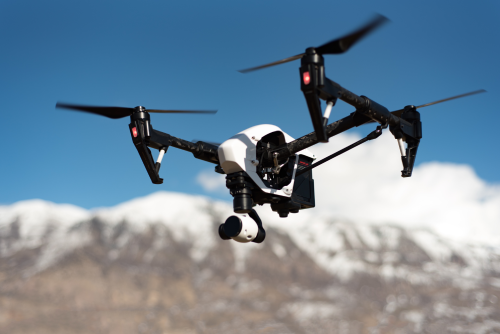
Building facade inspections used to mean binocular checks from the ground, costly scaffolding, or risky rope access. Today, drones are used in building facade inspections to capture close visual data from the exterior of a structure quickly, safely, and with far less disruption.
For apartment societies, facility managers, contractors, and consultants in India, this makes drones especially useful for high-rises, glass buildings, ageing facades, post-monsoon checks, and maintenance planning. The key is to use them as a serious inspection tool, not just as a camera in the air.
Quick Take
- Drones help inspect exterior walls, glass, cladding, balconies, parapets, joints, and roof-edge areas without immediately setting up scaffolding.
- They are especially useful for spotting visible cracks, water staining, loose elements, sealant failure, corrosion, paint deterioration, and storm damage.
- A drone inspection is often the best first step, but it does not replace every hands-on structural check.
- Good results depend on planning, pilot skill, safe flying, and a report that clearly marks defects by location and severity.
- In India, always verify the latest DGCA, Digital Sky, airspace, and local operational requirements before any commercial building inspection flight.
- If a building is occupied, privacy, safety cordons, and permissions from the owner or management are just as important as the drone itself.
What a building facade inspection actually means
A building facade inspection is an assessment of the outer skin of a building. This usually includes:
- External walls
- Glass panels and curtain walls
- ACP or metal cladding
- Tiles and stone facings
- Balconies and railings
- Sealant joints
- Sunshades and projections
- Parapets and roof-edge details
The purpose is to find defects early, document them clearly, and decide what needs repair, monitoring, or urgent manual investigation.
Traditionally, this work relied on:
- Ground observation
- Binoculars
- Rope access technicians
- Boom lifts
- Scaffolding
Those methods still matter. But drones now offer a fast and practical first-pass inspection, especially for tall or hard-to-reach facades.
Why drones are becoming popular for facade inspections in India
India has a growing stock of high-rise residential towers, commercial glass buildings, hotels, hospitals, institutions, and mixed-use complexes. Many of them face tough weather conditions, including:
- Heavy monsoon exposure
- Strong summer heat
- Coastal corrosion in cities near the sea
- Pollution-related staining
- Water seepage around joints and windows
- Ageing finishes in older apartment buildings
This creates a real need for periodic facade checks.
Where drones fit in best
Drones are particularly useful when a building owner or facility team wants to:
- Inspect visible exterior damage quickly
- Check multiple elevations in a short time
- Compare facade condition before and after monsoon
- Verify the condition of high or inaccessible zones
- Document defects before repair work
- Create a visual record for vendors, engineers, or insurers
- Reduce initial inspection cost and disruption
For many buildings, a drone inspection becomes the screening step that tells you where deeper investigation is actually needed.
What drones look for during a facade inspection
A drone does not “understand” a building the way an engineer does. What it does very well is collect high-quality visual data so defects can be reviewed properly.
Here are some of the most common problems drones help detect:
| Defect or issue | What it may look like from drone images | Best capture method | Usual follow-up |
|---|---|---|---|
| Surface cracks | Thin or wide lines in plaster, concrete, masonry, or finish | Close RGB photos, zoom shots | Engineer review, crack monitoring, manual check if serious |
| Spalling | Broken concrete, exposed reinforcement, chipped edges | Oblique close-ups, zoom | Urgent physical inspection in severe cases |
| Loose tiles or cladding | Gaps, lifted edges, uneven panels, missing pieces | Side-angle images, zoom | Immediate safety review if material may fall |
| Sealant failure | Open joints around windows or panels, hardened or missing sealant | Close visual shots | Re-sealing, water ingress assessment |
| Water ingress signs | Damp patches, staining, streaking, algae, efflorescence | RGB photos, sometimes thermal | Waterproofing or joint investigation |
| Corrosion | Rust marks near metal anchors, railings, frames, or exposed steel | Zoom photos | Structural and material assessment |
| Glass damage | Cracks, impact marks, panel misalignment, failed seals | High-resolution zoom | Specialized glass facade review |
| Paint or coating failure | Blistering, peeling, fading, patchy wear | Context and close-up images | Recoating and substrate check |
| Bulging or uneven surfaces | Distortion, bowing, panel movement | Oblique shots from multiple angles | Immediate engineering review |
RGB, zoom, and thermal cameras
Most facade inspections begin with a standard high-resolution RGB camera, meaning a normal color camera.
Depending on the building, operators may also use:
- Zoom cameras for close detail without flying too close to the facade
- Thermal cameras to detect temperature differences that may hint at moisture, insulation gaps, or delamination
Thermal data can be useful, but it needs careful interpretation. Sun exposure, reflective surfaces, and time of day can all affect thermal images. A thermal camera is not magic, and it should not be treated as automatic proof of a hidden defect.
How drones are used in a typical facade inspection workflow
The best drone facade inspections follow a clear process. The flying is only one part of the job.
1. Define the inspection goal
Before the drone even comes out, the client and operator should agree on the purpose:
- General condition survey
- Crack documentation
- Water seepage investigation
- Post-storm or post-incident check
- Handover snag list
- Periodic maintenance comparison
- Repair verification
This matters because the flight plan for a general overview is very different from the plan for finding fine facade cracks.
2. Review the building and the site
A proper pre-inspection review usually includes:
- Building height and shape
- Number of elevations
- Material type
- Nearby trees, wires, roads, and adjacent buildings
- Pedestrian and vehicle movement
- Wind patterns around the structure
- Reflective glass surfaces
- Take-off and landing area options
In dense Indian cities, this step is critical. Urban canyons, traffic, overhead obstructions, and restricted airspace can change how or whether the inspection can be done safely.
3. Confirm permissions and safety controls
For a commercial facade inspection, the operator should verify:
- Whether the flight is legally allowed in that location
- Airspace status and operational restrictions
- Building owner or management approval
- Site access and security coordination
- Privacy controls for occupied buildings
- Emergency procedures and exclusion zones
If the building is occupied, residents, office users, or staff may need advance notice so the operation does not create panic or privacy complaints.
4. Plan the capture method
Facade inspections usually need more than one shot style:
- Wide context images to show the full elevation
- Systematic grid coverage so no area is missed
- Oblique angles to reveal depth, bulges, or joint conditions
- Close-up defect shots for detailed review
- Repeat passes for doubtful areas
For mapping-style documentation, the drone may capture overlapping photos that software later stitches into a large, reviewable image or 3D model. This process is called photogrammetry.
5. Fly slowly and collect usable data
This is where inspection flying differs from casual filming.
The pilot usually needs to:
- Maintain stable positioning near the facade
- Avoid drifting caused by wind and air turbulence
- Keep safe distance from the building
- Adjust angle to avoid missing recesses or undercuts
- Capture details with enough clarity for review
- Check images on-site before leaving
Fast cinematic fly-bys may look good, but they are often useless for inspection.
6. Review and process the data
After the flight, the images are sorted, labelled, and reviewed. Depending on the project, the operator or consultant may prepare:
- Annotated defect photographs
- Elevation-wise issue logs
- Marked-up facade maps
- Before-and-after comparisons
- Thermal overlays
- A stitched visual record of each side of the building
7. Convert images into decisions
The final output should help the client answer practical questions:
- What is damaged?
- Where exactly is it?
- How serious is it?
- Does it need immediate action?
- Does it need monitoring?
- Does it require rope access or structural testing next?
Without that final step, drone data remains just a folder full of pictures.
Where drone facade inspections are most useful
Residential towers and apartment societies
This is one of the biggest use cases in India. Drones help RWAs, housing societies, and facility teams check:
- Cracks on external plaster or concrete
- Balcony edge deterioration
- Water seepage marks after monsoon
- Loose exterior tiles
- Parapet and terrace edge issues
- Paint and waterproofing failure
For large societies with multiple towers, drones make comparison much easier.
Commercial offices and glass buildings
In office towers and business parks, drones are useful for:
- Curtain wall visual checks
- Sealant joint review
- Glass panel damage spotting
- Cladding alignment review
- Upper-level facade maintenance planning
They are especially helpful where access equipment would disrupt tenant operations.
Hotels, hospitals, schools, and institutions
These buildings often need inspections with minimal disturbance. Drones help with:
- Quick external review
- Safety checks of elevated areas
- Documentation before maintenance contracts
- Inspection of courtyards or inaccessible side elevations
Older buildings and redevelopment candidates
Before major repairs or redevelopment discussions, a drone survey can build a visual record of external distress. It does not replace structural investigation, but it helps identify where deeper attention is needed first.
Post-event inspections
After strong wind, heavy rain, local facade failure, or visible falling material, drones can support a rapid visual assessment of the exterior before sending people into risky areas.
What drones do better than traditional methods
Compared with ground observation alone, drones offer:
- Much closer visual access
- Better image documentation
- Faster inspection of upper levels
- Easier repeat inspections over time
- Better evidence for maintenance decisions
Compared with immediate scaffolding or rope access, drones often offer:
- Lower disruption at the first stage
- Faster deployment
- Less need to expose people to height risk for preliminary review
- Broader coverage in one session
But drones are not a complete replacement
A drone cannot:
- Tap a tile to check hollowness
- Remove a panel
- Test material strength
- Measure internal reinforcement condition
- Confirm hidden corrosion inside a wall
- Replace all non-destructive testing
- Repair anything
The best way to think about it is this: drones are excellent for finding, documenting, and prioritising facade issues. They are not the final answer for every technical diagnosis.
What a good drone facade inspection report should include
If you are hiring a service provider, ask what the final deliverable looks like. A useful report usually includes:
- Scope of inspection
- Date, weather, and site conditions
- Building name, block, and elevation references
- Method used for image capture
- Clear defect photos with annotations
- Location marking by floor, grid, or facade side
- Severity or urgency category
- Areas that could not be inspected properly
- Recommendations for monitoring, repair, or manual follow-up
A weak report is just a video montage. A strong report helps you take action.
Common tools and sensor setups used
Standard camera drones
These are used for most general facade inspections. The important factors are:
- Stable hover
- Sharp image quality
- Good low-speed control
- Reliable obstacle awareness
- Safe performance around structures
Zoom-enabled drones
Useful when:
- The facade has fragile projections
- There is limited safe stand-off distance
- Fine details must be captured without getting too close
- Wind near the building makes close flight risky
Thermal drones
Useful for selected tasks such as:
- Suspected moisture paths
- Detachment patterns
- Heat leakage clues
- Roof-to-facade junction anomalies
Thermal surveys should be planned carefully. Time of day, building orientation, and recent heating or rain can affect the result.
Photogrammetry workflows
When a client wants repeatable documentation or a larger overview, operators may create:
- Stitched elevation imagery
- 3D models
- Measurable visual records
This can be very useful for consultants and maintenance teams managing large properties.
Safety, legal, and compliance considerations in India
Facade inspections often happen in dense, occupied, urban environments. That makes safety and compliance central to the job.
What to verify before the flight
Because rules and digital procedures can change, always verify the latest official position on:
- DGCA drone rules
- Digital Sky requirements
- Airspace permissions or restrictions
- NPNT-related compliance, where applicable
- Pilot and operator eligibility for the planned operation
- Local security or police coordination, if required
- Any building-specific restrictions near sensitive locations
Do not assume that flying within private property automatically makes a drone operation unrestricted. Always verify.
Site safety matters just as much as aviation compliance
For building facade work, good practice includes:
- Written authorization from the owner or management
- A defined take-off and landing zone
- Keeping non-involved people away from the operating area
- A visual observer or support crew when needed
- Clear abort procedures for wind, signal issues, or crowd movement
- No flights in unsafe weather
- Care around reflective glass, metal facades, and narrow spaces
Privacy and data handling
Facade inspections can unintentionally capture:
- Apartment balconies
- Office windows
- Occupants
- Nearby properties
So the operator should:
- Limit capture to inspection needs
- Brief the client about privacy-sensitive areas
- Store images securely
- Share data only with authorized stakeholders
For residential projects, informing residents in advance is often a smart step even when not formally required by the client.
Practical tips if you are hiring a drone service for facade inspection
If you are a building manager, housing society, architect, or maintenance contractor, these tips will save time and disappointment.
Ask for inspection output, not just flying
Specify that you need:
- Defect-focused stills
- Annotated findings
- Elevation-wise organisation
- A short issue summary
- Recommendations for next action
Share building history in advance
Give the service provider:
- Prior repair records
- Known leak locations
- Complaint patterns
- Old photos if available
- Architectural elevations if available
This helps the pilot and reviewer focus on the right areas.
Plan around weather and lighting
For best results:
- Avoid heavy wind
- Avoid rain
- Avoid poor visibility
- Consider sun angle, especially for reflective glass or thermal work
Include repeatability
If you want seasonal comparison, ask for:
- Similar flight paths
- Similar image angles
- Consistent location tagging
That makes future inspections far more useful.
Pair the drone team with an engineer when needed
For buildings with serious distress signs, the best outcome often comes from combining:
- Drone image capture
- Structural or facade consultant review
- Targeted manual inspection
Common mistakes to avoid
Treating drone footage like a marketing video
Smooth video alone is not an inspection. If the operator cannot identify defects by exact location, the job is incomplete.
Flying too far from the facade
When the drone stays too far away, hairline cracks, failed joints, and edge damage may not be visible.
Flying too close without a plan
Getting unnecessarily close to glass, cables, projections, or balconies can increase collision risk. Inspection flying needs control, not bravado.
Ignoring wind around high-rises
Tall buildings create unpredictable airflow. A calm ground-level day can still produce turbulence near corners and roof edges.
Depending only on thermal images
Thermal can support findings, but it should not be the only basis for major repair decisions.
Failing to mark defect locations clearly
A photo of a crack is not enough if no one knows whether it is on Tower B, west elevation, 14th floor, balcony slab edge, or parapet joint.
Skipping stakeholder communication
In occupied buildings, surprise drone flights can cause confusion, complaints, or site stoppages.
Assuming a drone replaces all access methods
If there is falling material, suspected structural distress, or hidden envelope failure, manual expert inspection may still be urgent.
When drone facade inspections may not be enough
A drone inspection is helpful, but some cases need more than visual capture.
That usually includes:
- Severe concrete spalling
- Suspected loose facade elements that may fall
- Repeated water ingress with unclear source
- Hidden corrosion or anchor concerns
- Internal wall cavity issues
- High-risk glass or cladding failures
- Buildings with many inaccessible recesses or enclosed shafts
In these situations, drones help identify problem zones quickly, but the final diagnosis may still require rope access, boom lifts, testing, or engineering analysis.
FAQ
Are drone facade inspections legal in India?
They can be, but legality depends on the latest official rules, airspace status, type of operation, operator compliance, and site conditions. Always verify current DGCA and Digital Sky requirements before the job.
Can a drone detect structural cracks accurately?
A drone can capture visible cracks very well if the images are sharp and taken properly. But whether a crack is cosmetic or structurally significant usually needs an engineer’s review and sometimes manual investigation.
Is a thermal camera necessary for facade inspection?
Not always. Many facade issues can be identified with a good visual camera. Thermal becomes useful in selected cases like moisture suspicion, insulation issues, or hidden separation patterns, but it must be interpreted carefully.
Can drones inspect glass curtain walls safely?
Yes, in many cases they can help document glass and sealant conditions. But reflective glass, wind, and tight stand-off distances make this a skilled operation, and some findings may still need specialist facade review.
How often should a building facade be inspected?
There is no one-size-fits-all answer. It depends on the building’s age, height, material, location, exposure, complaint history, and local maintenance practices. Many properties benefit from periodic checks and additional inspections after severe weather or visible damage.
Do I still need rope access or scaffolding after a drone inspection?
Sometimes yes. A drone is often the screening and documentation tool. If it finds serious defects or areas that need physical testing or repair, rope access, lifts, or scaffolding may still be required.
What should I ask before hiring a drone inspection provider?
Ask about their inspection workflow, reporting style, safety process, compliance approach, urban flying experience, data quality, defect annotation method, and whether an engineer reviews the findings.
Can a drone inspection be done during monsoon?
Flying in rain or unsafe weather is not advisable. However, a well-timed inspection before monsoon and another after heavy rain can be very useful for identifying water-related facade issues.
Are drone inspections useful for apartment societies?
Very much so. They help societies inspect upper floors, parapets, balcony edges, and exterior finishes faster than traditional first-stage methods, especially when multiple towers are involved.
What is the biggest limitation of drone facade inspection?
It is mainly a visual tool. Drones are excellent for seeing and recording external problems, but they cannot physically test materials or confirm every hidden defect.
Final takeaway
For most buildings, drones are best used as the first smart step in facade inspection: fast, visual, safer than sending people up immediately, and strong for documentation. If you manage a high-rise, apartment society, commercial block, or ageing property, the right next move is to use a compliant, inspection-focused drone team and turn the findings into a targeted repair or engineering plan, not just a pretty video.
