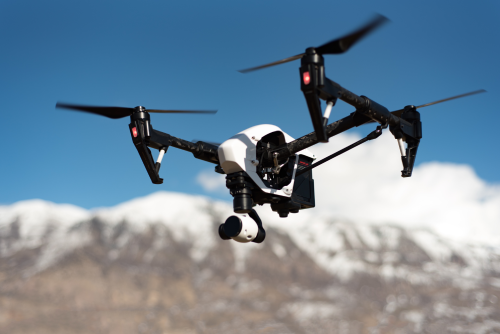
Bridge inspection is one of the most practical professional uses of drones. Instead of depending only on scaffolding, rope access, or large inspection vehicles for every visual check, teams can use drones to examine hard-to-reach bridge areas faster, more safely, and with better photo and video records.
How drones are used in bridge inspection is not about flashy flying. It is about collecting clear, repeatable evidence of defects so engineers and asset owners can make better maintenance decisions.
Quick Take
- Drones help inspect bridge decks, undersides, piers, abutments, bearings, joints, cables, and high steel members without putting people in risky positions for every visual check.
- They are especially useful for routine visual inspections, post-flood or post-collision checks, construction monitoring, and repeat documentation over time.
- High-resolution cameras, zoom cameras, thermal cameras, and sometimes LiDAR can each serve different inspection goals.
- Drones reduce access difficulty and traffic disruption, but they do not replace structural engineers, hands-on testing, or underwater inspection.
- In India, every project should be checked against the latest DGCA and Digital Sky requirements, plus site-specific permissions from the bridge owner and any local authority involved.
Why bridge inspection is a strong use case for drones
Bridges are difficult assets to inspect well.
Many critical parts are not easy to see from the road surface. The underside of the deck, called the soffit, may sit above traffic, water, rail tracks, or deep ground. Bearings and joints may be tucked into corners. Steel truss members may be high above the deck. Cables and anchor zones on cable-stayed bridges can be visually accessible only from awkward angles.
Traditional inspection methods often involve:
- lane closures
- access platforms
- rope access teams
- boats or barges
- long setup times
- higher risk for inspection crews
A drone does not remove the need for engineering judgment, but it gives the team eyes where people cannot easily stand.
That matters in India, where bridges range from urban flyovers and metro viaducts to river bridges, rail bridges, industrial crossings, and rural road bridges spread across large distances. A quick, well-planned drone survey can help teams cover more structures and flag urgent issues earlier.
How drones are used in bridge inspection
Routine visual inspections
The most common use is a visual condition survey.
A drone can fly around the bridge and capture close images of:
- concrete surfaces
- steel members
- expansion joints
- parapets and railings
- drainage outlets
- pier caps and columns
- deck edges
- cable anchor areas
This helps inspectors look for visible defects such as:
- cracks
- spalling, where concrete breaks away
- exposed reinforcement bars
- rust staining
- corrosion on steel
- paint failure
- water leakage marks
- damaged joint seals
- loose or missing fittings
- vegetation or debris buildup
For a highway flyover, for example, a drone may be used to inspect the outside faces, the underside between spans, and the tops of piers. For a steel truss bridge, the focus may shift to gusset plates, member connections, corrosion zones, and access points that are difficult to see from the ground.
Close-up imaging of hard-to-reach parts
One of the biggest advantages of a drone is safe close-up inspection.
A high-resolution camera or zoom camera can get near areas that are difficult or expensive to reach manually, such as:
- the underside of a bridge over a river
- tall pylons and cables
- high bearings near the pier cap
- complex steel joints
- overhangs above traffic lanes
This is often where drones deliver immediate value. Instead of sending a team onto special access equipment just to find out whether a stain is serious or whether a bolt looks missing, the drone can give the engineer a first detailed look.
That said, “close” must still mean safe. Flying aggressively near steel, cables, traffic, or people is poor practice. Good bridge inspection pilots work slowly, keep stable standoff distance, and capture useful angles rather than cinematic moves.
3D models and change tracking
Drones are also used to create 3D records of a bridge using photogrammetry, which means building a model from many overlapping photos.
This can help with:
- documenting the structure before repairs
- comparing a bridge over time
- estimating areas affected by surface damage
- checking visible deformation or settlement clues
- creating a digital record for maintenance planning
For example, a contractor repairing a flyover can capture a pre-repair model, record the rehabilitation work, and then repeat the same capture after completion. An asset owner can compare images from different years and see whether cracking, corrosion, or leakage is spreading.
On larger or more complex structures, some teams also use LiDAR, a laser-based sensing method that captures geometry well, especially where shape and clearance matter.
Thermal and special-sensor inspections
Not every bridge survey is just normal video.
Some inspections use thermal cameras, which detect surface temperature differences. In the right conditions, thermal data can help flag:
- moisture ingress
- water trapped behind surfaces
- some delamination clues in concrete
- insulation or heat-related issues on special structures
Thermal is useful, but it is not magic. Results depend heavily on weather, sun exposure, material type, and correct interpretation. A thermal image may suggest a problem area, but engineers usually need visual confirmation or another test before making a repair decision.
LiDAR or higher-end mapping sensors may be used where geometry, clearance, or large-scale documentation is the priority. For many routine bridge jobs, though, a good RGB camera, meaning a normal visual camera, remains the main tool.
Rapid assessment after floods, impacts, or other events
Drones are especially valuable after an unusual event.
Examples include:
- post-monsoon checks
- flood debris accumulation around piers
- possible scour signs near the foundation area above waterline
- vehicle impact damage
- barge or boat impact
- fire or smoke damage
- earthquake-related visual checks
- storm-related damage to railings, signage, or attached utilities
In these cases, the first question is often simple: is there visible damage, and how serious does it look?
A drone can quickly collect overview imagery and close shots without sending people immediately into a potentially unstable or hard-to-access area. It can help engineers prioritize which bridges need urgent manual inspection next.
Important limit: a drone can support post-flood assessment, but it cannot by itself confirm underwater scour or hidden foundation damage. Those usually need other methods.
Construction, rehabilitation, and maintenance documentation
Bridge inspection is not only about old bridges.
Drones are also used during:
- bridge construction
- widening projects
- repair and strengthening work
- painting and corrosion-control projects
- bearing replacement
- cable maintenance
- deck rehabilitation
They help document progress, verify whether access scaffolding covers the right zones, and create photo evidence for project records. For owners and contractors, this visual history can be useful during billing, quality checks, handover, and future maintenance.
Which drone sensor is used for what?
| Inspection need | Typical sensor or setup | What it helps reveal | Key limitation |
|---|---|---|---|
| General visual inspection | High-resolution RGB camera | Cracks, spalling, corrosion, leakage marks, missing fittings | Cannot confirm internal damage |
| Close-up of distant members | Zoom camera | High steel members, bearings, bolts, cable details | Image quality depends on lighting and stability |
| Moisture or subsurface clues | Thermal camera | Temperature differences linked to moisture or possible delamination | Needs correct conditions and expert interpretation |
| Geometry and surface documentation | Photogrammetry or LiDAR | 3D model, shape, clearance, repeat records | May not capture tiny defects as well as close-up photos |
What defects can drones realistically help detect?
A well-planned drone inspection can help identify or document:
- visible concrete cracks
- surface spalling
- honeycombing or poor surface finish
- exposed or corroded reinforcement
- rust on steel members
- coating or paint breakdown
- water leakage and staining
- blocked drainage outlets
- expansion joint damage
- bearing misalignment clues
- deformation visible from the outside
- loose-looking fixtures or cover plates
- bird nesting, vegetation, or debris accumulation
But there is an important distinction here: drones help see defects. They do not automatically diagnose the structural cause.
A crack visible on video still needs engineering interpretation. Corrosion seen on the surface may or may not indicate serious section loss. A bearing that “looks off” in a photo may require closer measurement. This is why the best bridge inspection workflows combine drone operators with bridge engineers, not one or the other alone.
A practical drone workflow for bridge inspection
1. Define the inspection scope
Start by asking what the team actually needs.
Is this:
- a routine visual survey
- a post-event rapid check
- a pre-maintenance record
- a detailed close-up review of known defects
- a 3D documentation job
A clear scope decides the drone, sensor, crew size, flight plan, and safety controls.
2. Review drawings, past reports, and access constraints
Before flying, the team should study:
- bridge type
- span arrangement
- likely defect zones
- traffic conditions
- nearby utilities or power lines
- water, rail, or road hazards
- previous inspection notes
This avoids wasting battery time on generic footage and helps prioritize critical areas such as joints, pier caps, cable anchorages, and underside zones.
3. Plan permissions and site coordination
Bridge work usually involves more than airspace approval alone.
Depending on the site, the team may need coordination with:
- the bridge owner
- road authority or project consultant
- contractor or maintenance agency
- local traffic police
- railway authorities, if near or above rail lines
- industrial or port security, if applicable
In India, the operator should also verify the latest DGCA and Digital Sky requirements before the mission. If the operation involves special conditions, restricted surroundings, or sensitive infrastructure, do not assume a routine drone setup is enough.
4. Carry out a site risk assessment
On site, check:
- wind behavior around the bridge
- GPS or signal reliability under the deck
- bird activity
- reflective water glare
- traffic movement
- pedestrian exposure
- safe takeoff and landing areas
- emergency landing options
Bridge environments can confuse even capable drones. Steel members, tight spaces, poor satellite visibility, and sudden wind changes can affect stability. Experienced manual control matters.
5. Capture data in a repeatable way
A good inspection flight is methodical.
Typical sequence:
- Start with wide overview shots of the full structure.
- Move to each span and key component one by one.
- Capture overlapping images from more than one angle.
- Take close-up shots of any suspicious area.
- Record voice notes or defect references while on site.
- Recheck critical areas before landing.
For defect documentation, it is better to fly slower and collect sharp, well-framed images than to capture lots of fast, shaky footage.
6. Review the data before leaving
A common failure is returning from site and later discovering that the most important bearing or joint is blurred, shadowed, or missing.
Always review:
- focus
- exposure
- shadow problems
- file completeness
- coverage of known problem zones
If needed, refly while the team is still on site.
7. Process and organize the outputs
Depending on the project, the deliverables may include:
- annotated photos
- inspection video
- a defect map
- a component-wise image folder
- a 3D model
- comparison with earlier surveys
- a maintenance priority list prepared by the engineer
A good deliverable is not just a media dump. It should make it easy for the owner to understand what was found and where it is located.
8. Use the drone results to guide the next action
The most useful bridge inspection programs treat drones as part of a decision chain.
Typical outcomes are:
- no urgent issue, monitor at next cycle
- targeted manual inspection needed
- repair planning needed
- emergency restriction or closure review needed
- post-repair reinspection needed
That is where drones save time and money in a meaningful way: they help direct attention to the right places.
Benefits for Indian bridge owners, contractors, and consultants
For Indian conditions, drone bridge inspection offers some clear practical advantages.
Faster coverage across scattered assets
Many agencies and contractors manage multiple bridges across districts or corridors. A drone team can inspect more locations in a day than traditional access-heavy methods in many situations.
Less disruption to traffic
Urban flyovers and busy approach roads are hard places to close for long periods. Drones can often reduce the amount of access equipment and lane management needed for initial visual assessment.
Better post-monsoon response
Heavy rain, flooding, drainage problems, and debris buildup are common concerns. Drones can quickly provide visual evidence after weather events and help prioritize field crews.
Safer first look at risky areas
If a pier has impact damage or the underside shows signs of distress, the drone can provide a first visual check before staff are exposed to the area.
Better recordkeeping
A photo set captured in a repeatable way is far more useful than vague notes like “minor rust seen near support.” Over time, that record becomes valuable for maintenance planning and contractor accountability.
Where drones fall short
Drones are powerful, but they are not a complete bridge inspection solution.
They cannot do everything.
- They cannot see inside concrete or steel members.
- They cannot replace hammer sounding, thickness testing, or other non-destructive testing methods where those are needed.
- They are limited in rain, strong wind, poor light, and tight under-deck environments.
- They cannot by themselves inspect underwater foundations or confirm scour below the waterline.
- They may struggle under bridges where GPS reception is weak or where magnetic and visual conditions are difficult.
- They do not replace a qualified engineer’s judgment.
A good rule is simple: use drones to improve access, speed, and documentation, not to oversell certainty.
Safety, legal, and compliance points in India
Any professional bridge inspection flight in India should be planned carefully.
Keep these points in mind:
- Verify the latest DGCA and Digital Sky requirements before every project.
- Check current airspace restrictions for the exact location. Bridges may be near urban areas, rail corridors, strategic sites, or other sensitive zones.
- Use a compliant drone and verify any current NPNT, registration, pilot, or operational requirements that apply to your mission.
- Get permission from the bridge owner or the agency responsible for the structure.
- Coordinate locally where needed, especially if the work affects traffic, rail movement, industrial premises, or public access.
- Maintain safe separation from people, vehicles, and active work zones.
- Do not fly recklessly under a bridge, over moving traffic, or in tight spaces unless the operation is properly controlled and the crew is trained for it.
- Keep the mission within the legal operating limits applicable at the time, including visual line of sight unless you hold the specific approvals required otherwise.
- If the project contract requires insurance, method statements, or safety documentation, confirm those in advance.
- Handle images responsibly, especially in urban areas where surrounding property and public spaces may also appear in the footage.
For rail bridges, major city corridors, defence-sensitive regions, and certain government assets, assume extra coordination may be needed. Verify first, fly later.
Common mistakes during bridge drone inspection
These mistakes reduce the value of the inspection more than people expect.
- Flying too fast: Good inspection imagery needs slow, deliberate passes.
- Using only wide shots: Overview footage is useful, but defects often need close-up framing.
- Ignoring lighting: Deep shadows under decks can hide cracks, corrosion, and leakage.
- Missing the underside plan: Many pilots capture the bridge sides and forget the most critical soffit areas.
- Overtrusting automated flight: Under bridges and near steel, manual control skill matters.
- No engineer input on scope: The pilot may miss the components that actually matter.
- Poor file organization: Hundreds of unnamed photos are difficult to use later.
- Leaving site without checking footage: A blurred bearing photo is useless after the crew has gone home.
- Claiming the drone “certified” the bridge as safe: A drone survey provides evidence, not a structural guarantee.
- Treating compliance as an afterthought: Airspace, owner permissions, and public safety must be handled before takeoff.
What matters in a drone setup for bridge work
If you are evaluating equipment for this kind of work, the most useful features are usually:
- a stable high-resolution camera
- good zoom capability for distant details
- reliable obstacle awareness
- strong low-speed control
- good performance in mixed light
- enough battery inventory for repeat passes
- precise positioning or RTK if repeat documentation matters
- thermal capability only if you have a real thermal use case and trained interpretation
In many bridge jobs, the best tool is not the biggest or fastest drone. It is the one that can hover steadily, capture sharp detail, and operate predictably in difficult geometry.
FAQ
Can drones replace manual bridge inspection completely?
No. They reduce access difficulty and improve visual documentation, but they do not replace hands-on checks, measurements, non-destructive testing, or engineering judgment when deeper assessment is needed.
Can a drone detect very small cracks?
Sometimes, yes, if the camera resolution, distance, lighting, and angle are good enough. But very fine cracks may still require closer manual inspection, reference scales, or specialist methods to measure accurately.
Are drones useful for inspecting under a bridge?
Yes, but this is one of the harder flight environments. GPS can be weak, light can be poor, and obstacles can be dense. Under-bridge work needs careful planning and a skilled pilot.
What is the best camera for bridge inspection?
For most jobs, a high-resolution RGB camera is the starting point. A zoom camera is very useful for distant members and safer stand-off inspection. Thermal and LiDAR are specialist tools for specific tasks.
Can drones inspect damage after floods?
They are excellent for rapid above-water assessment after floods. They can show debris accumulation, visible impact damage, blocked drainage, and some signs of distress. They cannot confirm underwater damage on their own.
Do bridge inspections with drones still need an engineer?
Absolutely. A drone pilot collects the data. A bridge engineer interprets what the data means for safety, maintenance, and repair priority.
What permissions are usually needed in India?
At minimum, verify the latest DGCA and Digital Sky requirements and obtain permission from the structure owner or project authority. Depending on location, additional local coordination may be needed for traffic, rail, industrial, or security reasons.
Are drones useful only for large bridges?
No. They can also be useful on smaller road bridges, culverts with difficult access, pedestrian bridges, industrial crossings, and urban flyovers where quick visual records save time.
How often should a bridge be inspected with a drone?
There is no single universal schedule. Frequency depends on the bridge type, owner policy, traffic importance, age, environment, and recent events such as floods or impacts. The inspection program should be set by the responsible engineer or authority.
Final takeaway
Drones are used in bridge inspection best as a practical visual tool: they make hard-to-reach areas visible, speed up post-event checks, improve documentation, and help engineers focus attention where it matters most. If you are planning bridge inspection work in India, the smart next step is to build a workflow that combines a trained drone team, an engineer-led inspection scope, and verified compliance before the first flight.
