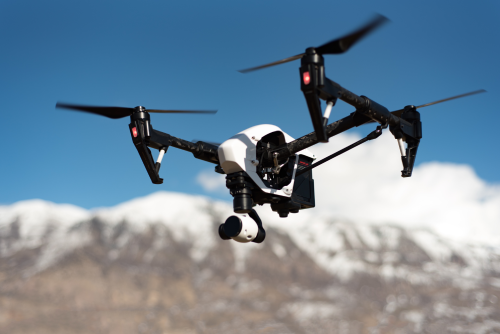
If you are comparing a GPS drone vs non-GPS drone, the real question is not which one is more advanced on paper. It is which one fits your skill level, flying environment, and what you want the drone to do. For most Indian buyers who want stable outdoor flying and useful aerial footage, a GPS drone is usually the smarter buy. A non-GPS drone still makes sense for indoor practice, tight budgets, and manual flying skills.
Quick Take
- Buy a GPS drone if you want:
- Stable hovering outdoors
- Easier control as a beginner
- Return-to-Home support
- Better video results
-
A drone for travel, content creation, inspection, or business use
-
Buy a non-GPS drone if you want:
- A low-cost trainer
- Indoor practice
- A simple toy drone for casual fun
- Manual flying skill development
-
An entry point into FPV-style control
-
GPS does not automatically mean legal or compliant in India.
- Non-GPS does not automatically mean rule-free.
- Before buying, verify the latest DGCA and Digital Sky guidance for your drone’s category, use case, and flying location.
What is a GPS drone?
A GPS drone uses satellite-based positioning to understand where it is in the sky. In consumer drone marketing, “GPS” is often used as shorthand, even though many drones actually use multiple satellite systems together.
A typical GPS drone also uses:
- IMU (Inertial Measurement Unit), which senses movement and orientation
- Compass, which helps with direction
- Barometer, which helps with altitude
- Sometimes vision sensors, which help with low-altitude positioning
All of this allows the drone to do things like:
- Hover in one place with less drift
- Hold its position better in light wind
- Return to its takeoff point if signal is lost or if you press Return-to-Home
- Fly smart modes more reliably
- Produce steadier footage
For a beginner, this usually means less panic and fewer sudden surprises.
What is a non-GPS drone?
A non-GPS drone does not rely on satellite positioning for hover and navigation. It may still have basic sensors for stability, but it does not know its location the same way a GPS drone does.
That usually means:
- It drifts more, especially outdoors
- You need to correct its position manually
- It may not have proper Return-to-Home
- It can be harder to get smooth video
- It often costs less and is cheaper to repair
Some non-GPS drones use optical flow or vision positioning. That is not the same as GPS.
Optical flow is not GPS
Optical flow uses a downward-facing sensor to “see” the ground and help the drone stay steady. It can work reasonably well in good lighting over a textured surface. But it is limited.
It may struggle:
- Outdoors in wind
- Over shiny or uniform surfaces
- In dim light
- At higher altitudes
So if a seller advertises a non-GPS drone as “stable hover,” check whether that stability is only from optical flow. For real outdoor confidence, GPS still matters more.
GPS drone vs non-GPS drone: the differences that actually affect your purchase
| Factor | GPS Drone | Non-GPS Drone | Why It Matters |
|---|---|---|---|
| Hovering | Much steadier outdoors with good satellite lock | Drifts more; some models are okay indoors | Easier learning and smoother shots |
| Beginner friendliness | Usually easier | Harder | Beginners make fewer control mistakes with GPS |
| Return-to-Home | Common on many models | Rare or basic | Helpful in signal loss or disorientation |
| Wind handling | Better, though not magic | Usually weaker | Important for outdoor flying in India |
| Camera results | More repeatable and stable | Often shaky or inconsistent | Matters for creators and business use |
| Indoor flying | Often less ideal | Often better for small indoor practice | GPS is less useful indoors |
| Learning manual control | Easier but less “raw” | Better for pure stick control practice | Hobbyists may enjoy this |
| Cost of ownership | Higher | Lower | Batteries, repairs, parts usually cost more on GPS models |
| Smart flight modes | More common | Limited | Helpful for filming and repeatable shots |
| Compliance | Depends on category, use case, and Indian rules | Same | GPS alone does not decide legality |
Why most buyers end up happier with a GPS drone
For the average buyer, a GPS drone solves the most common beginner problem: the drone does not stay where you expect it to stay.
With GPS, the aircraft can pause, hover, and resist minor drift. That changes the entire flying experience. Instead of constantly correcting left-right-forward-back movement, you can focus on framing your shot, checking surroundings, and flying safely.
This matters even more in Indian conditions, where many new buyers fly outdoors in open grounds, fields, hills, beaches, or semi-urban spaces. In those situations, wind and orientation confusion are very common.
A GPS drone also makes more sense if you want to:
- Shoot travel videos
- Capture property exteriors
- Document a site from the air
- Make YouTube or Instagram content
- Learn camera drone flying with less stress
If your main goal is a drone that “just feels under control,” GPS is usually worth it.
When a non-GPS drone is the better buy
A non-GPS drone is not automatically “bad.” It is just built for a different job.
Buy a non-GPS drone if your priority is one of these:
You want a cheap trainer
If you are completely new and want to learn stick control without spending much, a small non-GPS drone can be a useful practice tool.
It teaches:
- Throttle control
- Orientation
- Gentle turning
- Recovery from drift
- Basic landing habits
But understand what it is: a trainer, not a serious camera drone.
You plan to fly mostly indoors
GPS is less useful indoors because satellite lock is often weak or unavailable. Small non-GPS drones, especially those with prop guards, can make more sense for indoor practice in a safe space.
You want raw manual flying
Some hobbyists enjoy the direct feel of a drone that does not constantly self-correct. If you are interested in pure manual control or FPV-style learning, a non-GPS model may suit you better.
If that is your goal, many pilots actually start with a simulator before flying a real craft.
You want low repair stress
Crashing a small, simple drone is usually less painful than damaging a larger GPS camera drone. For students and hobby tinkerers, that matters.
GPS drone vs non-GPS drone for different buyers in India
Beginner who wants a first serious outdoor drone
Choose a GPS drone.
Reason: easier hovering, less panic, better footage, more useful long term.
School or college student learning basic flying
Choose a non-GPS drone if the goal is pure practice and budget control.
Reason: cheaper to learn on, simpler to repair, less fear of damage.
Travel creator or content maker
Choose a GPS drone.
Reason: you need stable positioning, predictable movement, and better camera support.
Real estate, site progress, or inspection beginner
Choose a GPS drone.
Reason: professional-looking results depend heavily on stability and repeatability.
Indoor hobby flyer
Choose a small non-GPS drone.
Reason: GPS gives little advantage indoors, and a compact manual drone is usually safer for practice.
FPV-curious buyer
Usually start with a simulator or a dedicated small FPV trainer rather than a regular GPS camera drone.
Reason: GPS camera drones and FPV training machines are different tools.
The biggest trade-off: easier flying vs cheaper learning
This is the core decision.
A GPS drone gives you more help from the aircraft. A non-GPS drone demands more from the pilot.
That means:
- GPS drones reduce beginner frustration
- Non-GPS drones improve manual control discipline
- GPS drones produce better usable footage sooner
- Non-GPS drones are less expensive to crash
If your priority is results, go GPS.
If your priority is practice at minimum cost, non-GPS can work.
What many buyers get wrong about GPS drones
A GPS drone is not a magic safety shield.
It can still:
- Drift before full satellite lock
- Get confused by compass interference
- Struggle in strong wind
- Behave unpredictably if you do not understand its failsafe settings
- Be a poor indoor flyer
So do not buy a GPS drone thinking it will save every mistake. It reduces workload, but it does not replace skill.
A good beginner still learns:
- Smooth stick inputs
- Pre-flight checks
- Safe takeoff and landing habits
- Wind awareness
- Line-of-sight flying
- Emergency response
How to choose the right one: a practical buying process
1. Decide where you will fly most often
This one question rules out a lot of bad purchases.
Choose GPS if you mostly fly:
- Outdoors
- In open fields
- During travel
- For photography or videography
- In places with light wind
Choose non-GPS if you mostly fly:
- Indoors
- In a controlled practice area
- For basic skill-building
- For short casual sessions
2. Be honest about your actual goal
Ask yourself: do you want flying fun, or do you want useful footage?
If the answer is “I want stable aerial video,” then a non-GPS drone is usually a false economy. You will save money up front and lose satisfaction later.
If the answer is “I just want to learn without risking much money,” then a non-GPS trainer makes sense.
3. Set a full budget, not just a drone budget
In India, many first-time buyers spend all their money on the drone and forget everything else.
Budget for:
- Extra batteries
- Spare propellers
- Charger and safe charging habits
- Storage card if needed
- Carry case
- Prop guards if relevant
- Landing surface or pad for dusty areas
- Repair and replacement availability
A cheap drone with no spare parts is often a worse buy than a slightly costlier drone with reliable support.
4. Check after-sales support and spare parts in India
This is one of the most overlooked buying factors.
Before purchasing, check:
- Is the brand officially sold in India?
- Are batteries easy to replace?
- Are propellers and arms available?
- Is there service support?
- Can the seller actually help with warranty or only with delivery?
This matters more on GPS drones, because repairs and batteries are usually more expensive.
5. Verify compliance before you pay
Do not depend only on a marketplace listing or a seller’s casual claim that a drone is “legal.”
Check the latest official Indian guidance on:
- Drone category or weight class
- Recreational vs commercial use
- Whether the model is intended for India
- Any required documentation or platform-related compliance
- NPNT, or No Permission No Takeoff, where applicable
- Airspace and location restrictions
Rules can change. Always verify before buying and definitely before flying.
6. Consider your upgrade path
A non-GPS drone is often a stepping stone. A GPS drone is often a longer-term tool.
Ask:
- Will this drone still satisfy me after 3 months?
- Will I outgrow it quickly?
- Is it a practice drone or a real content tool?
- If I start freelance work later, will I need to replace it immediately?
For most adults buying a first real drone, an entry-level GPS drone is usually the better long-term value.
Safety, legal, and compliance notes for India
Whether you buy a GPS drone or a non-GPS drone, fly conservatively and verify the latest official guidance before each serious use case.
Here are the practical rules every buyer should follow:
- Check current DGCA and Digital Sky guidance before purchase and before first flight.
- Do not assume a small drone is automatically free from every rule.
- Do not assume GPS means approved, compliant, or business-ready.
- Confirm the drone is suitable for lawful operation in India for your intended use.
- Avoid airports, heliports, defence areas, sensitive government locations, crowded public events, and flights over people or moving traffic unless specifically permitted.
- Respect privacy. Do not record people or private property in a way that creates legal or ethical issues.
- If you are planning paid work, verify current requirements for training, pilot credentials, permissions, and insurance expectations.
- Read your model’s manual and understand how Return-to-Home, low-battery response, and loss-of-signal behaviour actually work.
A safety point that matters more than specs
Many crashes happen not because the drone lacked GPS, but because the pilot skipped basic checks.
Before every flight, check:
- Battery health
- Propeller condition
- Wind
- Surroundings
- Home point or takeoff reference
- GPS lock, if using a GPS drone
- Compass or calibration status if your model requires it
Common mistakes buyers make
1. Buying a non-GPS drone for travel videos
It looks cheaper, but the footage is usually disappointing outdoors.
2. Believing GPS means “crash-proof”
It does not. GPS helps, but it does not replace pilot judgment.
3. Flying a GPS drone before it has proper satellite lock
That can ruin position hold and Return-to-Home accuracy.
4. Choosing by camera megapixels alone
Camera quality is not just megapixels. Stability, gimbal support, sensor quality, and flight behavior matter more.
5. Ignoring spare battery availability
A drone with poor battery availability becomes frustrating very quickly.
6. Not checking how service works in India
An imported bargain can become expensive if a battery or arm fails.
7. Assuming indoor behavior will match outdoor behavior
A drone that seems stable in a room may drift badly outside.
8. Trusting seller claims about legality
Always verify with official sources.
So, which one should you buy?
Here is the simplest answer.
Choose a GPS drone if:
- You are buying your first serious drone
- You want outdoor flying
- You care about stable video
- You want safer, easier learning
- You may use it for travel, content, inspection, or business
Choose a non-GPS drone if:
- You want the cheapest way to learn basic control
- You mainly fly indoors
- You want a casual toy or trainer
- You enjoy manual flying and accept the learning curve
- You do not expect professional-looking aerial footage
For most readers, the best first real purchase is a GPS drone. For most readers, the best low-risk practice purchase is a non-GPS drone.
FAQ
Is a GPS drone better for beginners?
Usually yes, especially for outdoor flying. It hovers more steadily, reduces drift, and makes orientation mistakes less stressful. For a first serious camera drone, GPS is generally the better beginner option.
Can a non-GPS drone hover in one place?
Not the way a good GPS drone can. Some non-GPS models use optical flow and can hover decently in good indoor conditions, but they are usually less reliable outdoors.
Is GPS useful indoors?
Often not very much. Satellite reception indoors is limited, so GPS benefits drop sharply. Small non-GPS drones are often better for indoor practice.
Does a GPS drone automatically make me compliant in India?
No. Compliance depends on the drone’s category, intended use, location, and current Indian rules. Always verify with DGCA and Digital Sky guidance before buying and flying.
Are GPS drones safer in wind?
Safer is not quite the right word, but they are generally more manageable in light wind because they can hold position better. Strong wind can still overwhelm many drones, especially smaller ones.
What happens if GPS signal is weak or drops?
The drone may switch to a less stable flight mode, drift more, and require stronger manual control. That is why pilots should not rely blindly on automation and should understand their drone’s failsafe behavior.
Should I buy a non-GPS drone first and upgrade later?
Only if your goal is low-cost practice. If you already know you want stable outdoor video, skip the trainer and buy a good entry-level GPS drone instead.
Can I do professional work with a non-GPS drone?
In most serious cases, it is not ideal. For professional-looking aerial footage, inspection, or repeatable operations, a GPS drone is usually the practical minimum. Also verify all legal and operational requirements before doing paid work.
Is Return-to-Home always reliable?
It is helpful, but not perfect. It depends on proper setup, satellite lock, battery condition, and the drone’s actual system quality. Treat it as a safety aid, not a guarantee.
Are all GPS drones good?
No. GPS by itself is not enough. Flight stability, sensor quality, software, battery ecosystem, spares, service, and brand support matter just as much.
Final takeaway
If you want a dependable outdoor drone for learning, filming, or real work, buy a GPS drone. If you want a low-cost practice machine for indoor flying or manual control skills, buy a non-GPS drone. Before you place the order, verify Indian compliance, service support, and spare battery availability; those three checks will save you more trouble than any flashy spec sheet.
