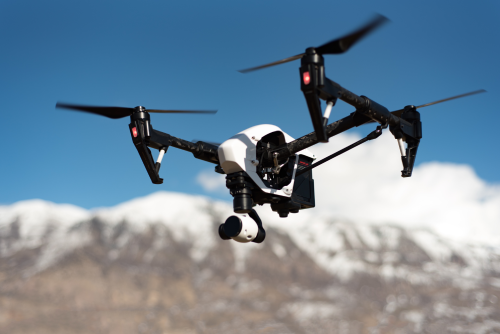
Foldable drone vs fixed drone is one of the most practical buying decisions today, especially in India where portability, support, repairs, and compliance matter just as much as flight performance. For most casual buyers and creators, a foldable drone is the easier choice. But if you value toughness, easier repairs, training, payload work, or DIY flexibility, a fixed-frame drone can be the better long-term buy.
Quick Take
- Best for most buyers: Foldable drones.
- Best for learning, rough use, and repairs: Fixed-frame drones.
- Best for travel and creators: Foldable drones.
- Best for custom builds, FPV, training fleets, and some industrial/agri use: Fixed-frame drones.
- Camera quality is not decided by folding arms alone. Sensor size, gimbal quality, stabilization, software, and pilot skill matter more.
- Do not buy on shape alone. In India, after-sales support, spare parts, battery availability, and legal/compliance fit can matter more than the frame style.
First, what “fixed drone” means here
The term “fixed drone” can confuse buyers.
In this article, fixed drone means a non-folding multirotor drone, also called a fixed-frame drone. Its arms stay in place and do not fold inward for storage.
That is different from a fixed-wing drone, which flies like a small airplane. Fixed-wing drones are a separate category and are not what most buyers mean when comparing foldable drones with regular camera drones.
So the real comparison here is:
- Foldable drone: Arms or landing legs fold for transport.
- Fixed-frame drone: Rigid body, arms do not fold.
Foldable drone vs fixed drone at a glance
| Factor | Foldable drone | Fixed-frame drone |
|---|---|---|
| Portability | Excellent; easy to carry in a small bag | Bulkier; takes more space |
| Setup time | Usually quick, but arms must be fully opened correctly | Usually quicker once batteries and props are ready |
| Travel convenience | Better for train, car, and flight travel | Less convenient for frequent movement |
| Durability in repeated handling | Hinges and arm joints need care | Usually simpler and tougher physically |
| Crash repair | Can be costlier and more proprietary | Often easier and cheaper to repair |
| DIY upgrades | Limited on most consumer models | Better for custom parts and tuning |
| Camera integration | Often excellent on modern camera drones | Depends on build; can be basic or advanced |
| Beginner friendliness | Great for ready-to-fly users | Great for training if chosen as a rugged trainer |
| Payload work | Limited on many compact models | Often better for carrying accessories or specialized gear |
| Long-term maintenance | Depends heavily on brand service | Usually easier if parts are standard |
Where foldable drones are better
Portability is the biggest advantage
This is the main reason foldable drones dominate the consumer market.
If you are a creator, traveller, real-estate shooter, student, or hobbyist who carries the drone often, a foldable model is simply easier to live with. It fits better in:
- backpacks
- camera bags
- bike luggage
- car glove compartments or small storage cases
- public transport travel kits
In India, where many people travel by car, train, or domestic flight to reach shooting locations, portability is not a luxury. It directly affects how often you will actually use the drone.
A drone that is easy to carry gets flown more often.
Better for creators who want low friction
Most foldable camera drones are built for convenience.
They usually offer:
- compact body design
- integrated gimbal camera
- GPS-based stabilization
- automated return-to-home features
- simple app workflows
- smart flight modes
- easier takeoff for solo operators
For a wedding teaser, resort showcase, travel reel, property video, or YouTube B-roll, this matters a lot. You can arrive, unfold, check props and battery, fly, pack, and move on.
That makes foldable drones a strong choice for:
- travel creators
- real-estate videographers
- social media shooters
- small production teams
- survey beginners who want a simple field setup
Premium foldable drones are not automatically weak
A common myth is that foldable drones are “fragile toys.”
That is not always true.
Many modern foldable drones are engineered very well. Their flight controllers, GPS hold, obstacle sensing on some models, motors, and gimbal stabilization can outperform many cheaper fixed-frame drones.
So if you are comparing a well-made foldable drone with a low-quality fixed drone, the foldable one may actually be the better and safer aircraft overall.
The key point is this: folding arms do not automatically mean poor performance.
Better for buyers who want a finished product
A foldable drone is usually a more complete consumer package.
You often get:
- drone
- matching app ecosystem
- intelligent battery system
- integrated camera
- storage case options
- firmware updates
- beginner-friendly interface
That makes foldables ideal for people who do not want to build, solder, tune, or troubleshoot frame-level issues.
If your question is simply, “I want a drone that works and packs easily,” a foldable drone is usually the right answer.
Where fixed-frame drones are better
Toughness and structural simplicity
A fixed-frame drone has fewer moving structural parts. That sounds basic, but it matters.
No folding mechanism means:
- fewer hinge points
- fewer alignment issues from repeated folding
- lower chance of play or looseness developing over time
- better physical confidence in rough handling
If a drone is going to be used regularly in dusty fields, training environments, repeated setup sessions, or tougher day-to-day conditions, fixed-frame designs often age better physically.
This is one reason why many training drones, FPV drones, and utility drones use fixed frames.
Easier repairs and lower pain after minor crashes
For many Indian buyers, this is the most underrated point.
A fixed-frame drone is often easier to repair because:
- arms are simpler
- components are easier to access
- parts may be modular
- props, motors, ESCs, and frames may be easier to source
- local technicians may be more familiar with common layouts
By contrast, foldable drones often use:
- proprietary arms
- compact internal routing
- more integrated body design
- brand-specific batteries and cables
- harder-to-access components
That does not make foldables bad. It just means a small repair can become more expensive, slower, or service-centre dependent.
If you expect training crashes, hard landings, or field wear, a fixed-frame platform often makes more sense.
Better for DIY, FPV, and student projects
If you enjoy understanding how drones work, fixed-frame drones are usually more rewarding.
They are better for:
- engineering students
- robotics clubs
- DIY builders
- FPV practice
- pilot training
- frame swaps and component upgrades
You can change components more freely, learn how each part affects flight, and repair the aircraft without always depending on a specific brand ecosystem.
For a student who wants to learn drone systems, a rugged fixed-frame trainer can be more educational than a polished foldable camera drone.
Better for payload and utility-oriented use
When a drone needs to carry more than just its own camera, fixed-frame designs often have an advantage.
Examples include:
- spray systems
- loudspeakers
- release mechanisms
- research sensors
- thermal payloads
- custom mapping rigs
- training accessories
That is why many agri and industrial drones use rigid frames instead of compact foldable consumer-style bodies.
If your drone is part of work rather than casual flying, fixed-frame options deserve serious attention.
What actually matters more than folding arms
Many buyers focus on the wrong thing. The foldable vs fixed-frame choice matters, but these factors often matter more.
Flight stability
Stability depends on:
- flight controller tuning
- GPS performance
- sensor quality
- motor and propeller efficiency
- frame balance
- total weight
- software quality
A well-engineered foldable drone can be more stable than a poorly built fixed-frame drone.
Wind handling
Do not assume fixed-frame always wins.
Wind performance depends on:
- aircraft weight
- thrust-to-weight ratio
- prop size
- control tuning
- positioning system quality
In real life, a premium foldable camera drone can handle moderate wind far better than a cheap fixed toy drone.
If you fly in open coastal areas, hill stations, large farms, or rooftops, look at real-world performance reviews instead of just frame type.
Camera quality
Camera quality is mostly about:
- sensor size
- lens quality
- gimbal stabilization
- bitrate and codec
- low-light performance
- dynamic range
- color handling
A fixed-frame drone does not automatically produce better footage.
For most creators, foldable camera drones usually offer the most polished out-of-the-box imaging experience.
Battery and running cost
This is an important Indian buying factor.
Foldable drones often use proprietary smart batteries. They are convenient but can be expensive and brand-dependent.
Fixed-frame drones may use more standard battery types, especially DIY or FPV-style platforms, but they may require more user knowledge and battery care.
Before buying either type, check:
- spare battery availability
- charger compatibility
- service turnaround time
- propeller availability
- local repair options
Which one is better for you?
Here is the practical answer by buyer type.
Choose a foldable drone if you are…
A traveller or content creator
You want:
- compact packing
- fast deployment
- stable aerial shots
- easy app-based operation
- less technical setup
A foldable drone is usually the best choice.
A real-estate, wedding, or social media shooter
You need mobility and speed. You may travel to multiple locations in a day. You probably care more about smooth footage than custom hardware.
Again, a foldable drone usually wins.
A beginner who wants a polished experience
If you want less tinkering and a more complete product, start with a foldable ready-to-fly model from a brand with decent support.
Choose a fixed-frame drone if you are…
A student or DIY learner
You want to understand the machine, replace parts, and learn practical drone engineering. A fixed-frame drone is often better for learning.
A trainer or frequent practice flyer
If the drone will face repeated practice sessions, minor crashes, and routine prop changes, fixed-frame designs are usually easier to maintain.
An FPV or freestyle pilot
Most serious FPV drones are fixed-frame for good reason: strength, repairability, and customization.
A utility or agriculture operator
If the aircraft must carry equipment or work in tougher field conditions, fixed-frame designs are often more suitable than compact foldables.
The best simple rule
If your first priority is carry convenience, choose foldable.
If your first priority is repairability and ruggedness, choose fixed-frame.
India-specific buying checklist
Before you buy either type, check these points carefully.
1. After-sales support matters more than online hype
A drone with poor parts support can become useless after one bad landing.
Ask:
- Are props, batteries, and chargers easy to get in India?
- Is there an authorized service channel?
- Are third-party repairs realistic?
- How long do batteries and spares usually take to arrive?
2. Verify compliance before purchase
Do not assume that because a drone is sold online, it is automatically suitable for your intended use.
Before buying, verify the latest official position on:
- whether the drone is compliant for use in India
- where you are allowed to fly
- whether your intended use needs extra permissions or registrations
- whether commercial use changes your obligations
DGCA and Digital Sky guidance can change. Always verify the latest official rules before purchase and before flight.
3. Think about your local flying environment
A compact foldable drone is great for a travel creator in cities and tourist areas.
A fixed-frame drone may be better for:
- rural training grounds
- engineering campuses
- farm operations
- custom research use
- repetitive field practice
4. Check airline and battery handling rules
If you travel often, battery transport matters. Airline policies can differ and may change. Verify current airline rules for carrying drone batteries, and pack them safely.
Safety and legal points you should not ignore
No matter which type you buy, safe and legal flying comes first.
- Fly only in places where drone operations are allowed.
- Avoid airports, defence-sensitive areas, crowded gatherings, and restricted zones.
- Respect privacy. Do not record people or property irresponsibly.
- Do not fly beyond your skill level or in poor weather.
- Inspect props, arms, batteries, and firmware status before every flight.
- On a foldable drone, make sure every arm is fully locked in position before takeoff.
- On a fixed-frame drone, check for loose screws, cracked arms, motor mounts, and vibration issues.
- If you plan to use the drone for business, mapping, inspection, or any specialized operation, verify the latest official compliance requirements first.
Common mistakes buyers make
Buying a foldable drone only because it looks premium
Compact design is useful, but it should not distract you from service, batteries, spares, and legal fit.
Assuming fixed-frame means outdated
Many of the most practical training, FPV, and utility drones are fixed-frame because that design works.
Ignoring repair cost
A cheaper purchase price does not always mean lower ownership cost. One arm replacement, battery replacement, or service delay can change the real value equation.
Confusing “camera drone” with “all-purpose drone”
A foldable camera drone may be excellent for aerial video and still be the wrong choice for payload work, training crashes, or custom sensing tasks.
Not checking the intended use before purchase
A hobby flyer, wedding creator, agri operator, and engineering student should not be shopping with the same checklist.
FAQ
Is a foldable drone more fragile than a fixed drone?
Not always. A well-made foldable drone can be very durable in normal use. But fixed-frame drones usually handle repeated rough handling and easier repairs better.
Which is better for beginners?
If you want a smooth, ready-to-fly experience, foldable is usually better. If you want to learn hardware, repairs, and flying discipline, a fixed-frame trainer can be better.
Do foldable drones have better cameras?
Often, yes in the consumer market, because many foldable drones are designed as camera-first products. But the real reason is the camera system, not the folding mechanism itself.
Which type is better for travel in India?
Foldable drones are clearly better for travel because they are easier to pack and carry. Just verify current airline battery rules before flying with them.
Are fixed-frame drones cheaper to maintain?
They often can be, especially if parts are standard and locally available. This depends on the exact brand, component ecosystem, and how often you crash or repair.
Which type is better for commercial work?
It depends on the job. For content creation and mobile field work, foldable drones are often better. For payload, training, custom sensing, FPV, or rugged operations, fixed-frame may be better.
Can a foldable drone handle wind well?
Yes, many can. Wind handling depends more on the drone’s design, weight, power, and control system than on whether the arms fold.
Is a fixed drone the same as a fixed-wing drone?
No. In this article, fixed drone means a non-folding multirotor. A fixed-wing drone is an airplane-style drone and is a completely different class.
Should students choose foldable or fixed-frame?
If the goal is aerial photography, foldable makes sense. If the goal is learning electronics, assembly, tuning, and repair, fixed-frame is usually more educational.
Final takeaway
For most Indian buyers, the better choice is a foldable drone because it is easier to carry, simpler to use, and better suited to travel and content creation. But if your priority is repairability, learning, rugged use, FPV, or utility work, a fixed-frame drone is often the smarter buy.
Before spending money, decide what matters more to you: portability or practicality after wear and tear. Then verify support, spare parts, and the latest legal fit in India before you place the order.
