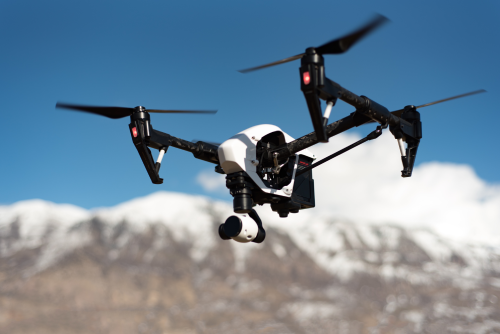
A solid drone safety checklist before every flight is the easiest way to prevent crashes, flyaways, damaged footage, and unnecessary legal trouble. Whether you fly for fun, YouTube, surveying, weddings, or inspections, a short pre-flight routine can save your drone and protect people around you.
Quick Take
- Most drone incidents start with something simple: bad takeoff spot, low battery, rushed setup, ignored wind, or the wrong Return to Home setting.
- Check three things before every flight: legal airspace, safe weather, and aircraft health.
- In India, always verify the latest official DGCA guidance and the Digital Sky airspace status before flying. Do not rely only on memory or old advice.
- Inspect propellers, battery condition, motor movement, GPS lock, home point, and failsafe settings every time.
- Never launch just because the sky looks clear. Wind, wires, birds, crowds, and radio interference matter more than the view.
- If your controller, phone, app, or drone shows any critical warning, stop and resolve it before takeoff.
- A safe first hover tells you more than a fast dramatic takeoff.
- If one critical item does not pass, the correct decision is simple: do not fly.
Why a pre-flight checklist matters
Most crashes are not caused by advanced flying. They happen because a basic check was skipped.
Typical examples include:
- A propeller was chipped or fitted on the wrong motor.
- The drone battery was full, but the controller or phone was almost dead.
- The pilot took off before the home point was recorded properly.
- The site looked open, but hidden wires or strong gusts made it unsafe.
- The app had a warning that was ignored.
- The location was not legally suitable for flight.
A checklist turns flying into a repeatable process instead of a guess. That matters even more in India, where many flights happen in mixed environments: terraces, fields, construction sites, farms, beaches, wedding venues, and crowded urban neighborhoods.
The goal is not to make flying slow. The goal is to catch problems while the drone is still on the ground.
India-specific legal and compliance checks
Before you worry about camera settings or cinematic moves, make sure the flight is allowed.
Rules, permissions, and operating conditions can change, so verify the latest official information before acting. If your flight touches DGCA requirements, Digital Sky permissions, NPNT-related compliance, professional work, or restricted airspace, check the current rule for your exact drone and use case.
Before takeoff in India, verify:
- Airspace status: Use the official airspace information available for your location. Do not assume that an open field or rooftop is automatically fine.
- Applicable permissions: Depending on your drone, location, and purpose, additional approvals or workflows may apply.
- Temporary restrictions: Public events, law-and-order situations, disaster response, VIP movement, local security arrangements, and sensitive facilities can create temporary no-fly or limited-access conditions.
- Property and site access: Even if the airspace is permissible, you may still need permission to take off or land from private property.
- Privacy and public comfort: Avoid hovering near homes, balconies, schools, hospitals, or ceremonies in a way that feels intrusive or unsafe.
A useful rule: if you are not fully clear on whether the flight is lawful and appropriate, postpone it until you verify the details.
Drone safety checklist before every flight
1. Check the pilot first
A drone is only as safe as the person flying it.
Ask yourself:
- Am I rested and focused?
- Am I rushing because of a client, sunset, or battery anxiety?
- Do I know what shot or mission I am trying to complete?
- Am I fit to fly and free from anything that affects judgment?
If you feel pressure to “just get one quick shot,” slow down. Rushed decisions cause poor launches, bad framing, and missed warnings.
For beginners, keep the plan simple:
- One launch point
- One flying area
- One clear subject
- One safe landing plan
2. Define the mission before powering up
A checklist works better when you know what kind of flight you are about to do.
Decide in advance:
- Maximum planned distance
- Maximum planned height
- Direction of first movement after takeoff
- Expected flight time
- Main obstacles in the area
- Where you will land if something goes wrong
Examples:
- Wedding venue: Stay well clear of guests, decorators, wires, and lighting rigs. Confirm who will control the crowd around takeoff.
- Farm survey: Note trees, power lines, irrigation equipment, and birds.
- Rooftop content shoot: Check for antennas, water tanks, cables, and wind acceleration around buildings.
A clear mission reduces random flying, and random flying is where most mistakes begin.
3. Verify the location is legal and appropriate
This is where many people skip steps.
Before every flight, confirm:
- The airspace is suitable for your operation.
- There are no nearby sensitive or restricted areas relevant to your location.
- The launch point itself is permitted.
- You are not flying directly over uninvolved people.
- You can maintain visual awareness of the drone throughout the flight.
Also think beyond law:
- Will the drone disturb residents?
- Is this near a school, temple, hospital, traffic corridor, or a public gathering?
- Is there enough open space to recover the drone safely?
A place can be technically convenient but still be a poor choice.
4. Check weather properly, not casually
Many unsafe flights begin with “weather looks fine.”
What to check:
- Wind: Surface wind and gusts can be very different from wind a little higher up.
- Rain or moisture: Even light drizzle, mist, or sea spray can be risky for many consumer drones.
- Heat: In many parts of India, hot afternoons can stress batteries and overheat your phone or tablet.
- Dust and sand: Common on construction sites, open grounds, beaches, and dry fields.
- Visibility: Haze, glare, and evening light can make orientation harder than expected.
Watch for these no-go signs:
- Trees, flags, or loose plastic moving unpredictably
- Strong rooftop gusts
- Dust blowing across the launch area
- Incoming rain clouds
- Poor visibility against the sun
If you are unsure whether the wind is manageable, the safer answer is to wait.
5. Walk the site before the drone leaves the ground
A two-minute site walk is often more useful than five minutes of staring at the sky.
Look for:
- Power lines and cables
- Trees, poles, towers, cranes, and antennas
- Metal structures that may affect compass readings
- Moving vehicles and pedestrian paths
- Animals and birds
- Dust, loose gravel, or tall grass at the takeoff point
In India, also be alert for:
- Rooftop wires and dish antennas
- Festival-season kite strings or manja
- Curious onlookers gathering around takeoff
- Stray dogs reacting to the drone sound
- Crows, pigeons, kites, and other territorial birds
Pick three spots before flying:
- Primary takeoff point
- Primary landing point
- Emergency landing area
If you cannot identify a safe emergency landing area, rethink the flight.
6. Inspect the drone physically
Now check the aircraft itself.
Airframe
- Arms fully unfolded and locked
- No cracks, bends, or loose parts
- Landing gear or feet stable and clean
Propellers
- Correct propellers on correct motors
- No chips, warping, cracks, or looseness
- Screws tight if your model uses screw-mounted props
- Nothing rubbing when motors spin freely by hand
Motors
- No grit, sand, or hair in the motor area
- No unusual stiffness or scraping feel
- No visible damage from a previous hard landing
Camera and gimbal
- Gimbal clamp or cover removed
- Lens clean
- Filter or accessory mounted securely
- Gimbal moves freely during startup
If the drone had even a minor bump in the previous flight, inspect it more carefully than usual. Small damage often appears first as vibration, drifting, or unstable footage.
7. Check battery health, charge, and temperature
A full battery is not the same as a healthy battery.
Check:
- Flight battery is sufficiently charged for the mission
- Battery is properly seated and latched
- No swelling, cracks, leakage, or deformation
- Battery is not abnormally hot or cold
- Controller battery is also adequately charged
- Phone or tablet has enough power for the entire session
Do not ignore the support devices. A perfectly healthy drone can still be forced into a bad situation by:
- A controller dying first
- A loose phone cable
- A tablet overheating in direct sun
- A storage device failing mid-flight
Practical habit:
- Start with your best battery first, not the oldest one.
- Label batteries and rotate them.
- If one battery behaves differently from the others, retire it from important work until checked.
8. Power on and read the app carefully
Follow your manufacturer’s recommended startup order.
Once everything powers up, do not rush to launch. Read what the app is telling you.
Confirm:
- No critical warnings
- Battery levels are normal
- Camera feed is stable
- Storage is available
- Date and time settings are normal if relevant to your workflow
- Map orientation makes sense
- Control sticks respond correctly
Avoid a common mistake: updating firmware at the field, under time pressure, with weak signal and no test flight margin. If an update is needed, it is usually better to handle it earlier and test properly.
9. Wait for good GPS lock and the correct home point
For most beginners, this is a must-check.
GPS or GNSS is the drone’s satellite positioning system. It helps the aircraft hold position and return safely if the signal drops. The home point is the location the drone will use for Return to Home.
Before takeoff, confirm:
- The drone has solid satellite lock
- The home point is recorded
- The recorded home point is actually correct
If the home point is wrong, Return to Home can become dangerous.
Also remember:
- Rooftops, narrow spaces, and areas near tall buildings can affect signal quality
- Taking off near cars, steel structures, or large metal surfaces can confuse sensors
- Compass calibration is not something you should do blindly before every flight
Calibrate only when the app or manufacturer guidance indicates it is needed, or after major changes such as repair or long-distance travel. Random calibration in a bad location can make things worse.
10. Set Return to Home and failsafe behavior properly
This step is often skipped, and it causes expensive mistakes.
Return to Home (RTH) is the automatic action the drone may take during signal loss or low battery.
Failsafe means what the drone is configured to do if something goes wrong.
Before launch, check:
- RTH altitude is high enough to clear nearby obstacles
- It is not so unnecessarily high that it wastes battery climbing
- Signal-loss behavior is what you want for this site
- Low-battery warnings are understood
- Beginner mode or lower speed mode is enabled if appropriate
Example:
- In an open farm, a sensible RTH altitude may be easy to set.
- In a city with wires, terraces, and towers, a careless RTH setting can be more dangerous than manual recovery.
Do not assume yesterday’s RTH settings suit today’s site.
11. Secure the camera, payload, and recording setup
This matters for creators and professionals, but it also affects safety.
Check:
- SD card inserted
- Enough free storage
- Lens cap removed
- Camera settings appropriate for the job
- Filters attached properly
- Any third-party payload mounted securely and within safe limits
If you are carrying anything extra, think about balance and stability. Even small accessories can affect flight time and handling.
A safety rule worth remembering: if the payload is not properly secured, the flight is not ready.
12. Clear the takeoff zone and do a short hover test
Your final check happens after the props spin up, not before.
Before liftoff:
- Make sure the takeoff and landing area is clear
- Warn nearby people that you are about to launch
- Keep children, bystanders, and curious helpers away from the propellers
- Use a pad or clean flat area if the ground is dusty, sandy, or uneven
After takeoff:
- Climb to a safe low hover.
- Check whether the drone holds position steadily.
- Listen for unusual motor noise or vibration.
- Watch for warning messages.
- Confirm stick response and video feed are normal.
If the drone drifts strangely, shakes, yaws unexpectedly, or throws warnings, land immediately. The first hover is a test, not just the beginning of the flight.
Fast go/no-go guide
Use this simple table when you need a quick decision.
| Check | Good to fly | Pause and reassess | Do not fly |
|---|---|---|---|
| Airspace and permissions | Verified and suitable | Some doubt remains | Unclear, restricted, or not verified |
| Weather | Light and stable conditions | Gusts or changing light | Strong wind, rain, poor visibility |
| Drone condition | Clean, intact, no warnings | Minor issue needs recheck | Damage, unusual vibration, critical warning |
| Power | Drone, controller, and device all ready | One device lower than expected | Battery issue, swelling, overheating, low controller power |
| GPS and home point | Stable lock, correct home point | Lock is slow or weak | No reliable positioning where needed |
| Takeoff area | Clear, controlled, safe landing options | Bystanders nearby | Crowded, obstructed, or no safe recovery zone |
If any row lands in the last column, stop the flight.
Common mistakes before takeoff
Even experienced pilots make these errors when they are distracted.
Ignoring the controller or phone battery
People often check only the flight battery. Then the controller dies first, or the screen goes dark in sunlight.
Calibrating the compass next to a car or metal railing
This can create bad sensor data instead of solving a problem.
Using damaged props “for one more flight”
Small chips can become vibration, poor stability, or complete failure.
Forgetting to update the home point after changing launch location
Especially risky when moving between rooftops, fields, or multiple client sites in one day.
Taking off in gusty rooftop wind
Wind between buildings can be much worse than it feels at standing height.
Flying over people for a quick cinematic shot
This is unsafe, difficult to recover from if something goes wrong, and often not worth the risk.
Rushing because a client is waiting
Pressure makes people skip checks. A delayed safe flight is better than a fast bad decision.
Launching without a hover test
The first few seconds can reveal bad props, weak GPS, sensor issues, or vibration.
FAQ
How long should a pre-flight checklist take?
For a simple hobby flight, usually 2 to 5 minutes once the habit is built. For paid work, complex locations, or unfamiliar sites, take longer. Speed is not the goal; consistency is.
Do I need to calibrate the compass before every flight?
No. Only do it when your app or manufacturer guidance indicates it is needed, or after major changes such as repair or significant travel. Unnecessary calibration in a poor location can create problems.
Can I fly from a rooftop or balcony?
A rooftop can be useful, but it is not automatically safe. Check wind, GPS quality, nearby antennas, cables, metal railings, and the lack of emergency landing space. Beginners should be especially cautious in tight urban environments.
Is light wind okay for beginners?
Sometimes, but “light” can be misleading. Gusts matter more than steady wind, and wind higher up is usually stronger than wind at your feet. If the drone will have to fight the wind to return, wait for better conditions.
What should I verify in India before flying?
At minimum, verify the latest official airspace status, any applicable permissions or restrictions for your drone and use case, the suitability of your launch site, and local practical issues such as privacy, crowding, and security sensitivity. If there is doubt, do not fly until you verify.
Is GPS lock always necessary before takeoff?
For most beginner flights, yes, it is the safer approach. Some advanced pilots intentionally fly in modes or environments where satellite lock is limited, but that requires training and a different risk assessment. Beginners should not treat that as normal.
What should I do if birds start chasing the drone?
Do not climb aggressively into them or try to “win.” Move away smoothly, descend if safe, and land as soon as practical. Avoid known bird nesting areas and be extra cautious in open grounds, coastlines, and during breeding seasons.
What if a client asks for “just one quick shot” over a crowd?
Say no. A shot that requires unsafe flight over people is not a professional shortcut; it is poor judgment. Offer a safer angle, a higher offset position, or a ground-based alternative.
Should I update firmware right before a shoot?
Usually no. Updates can change behavior, require rechecks, or create delays. Update earlier, test the drone, and arrive at the site with a known working setup.
Final takeaway
The best drone safety checklist before every flight is the one you actually use every time. Save a simple version on your phone, follow it in the same order, and treat any critical warning, unclear airspace status, or unsafe launch site as a hard stop. Safe pilots are not the ones who never face problems; they are the ones who catch problems before takeoff.
