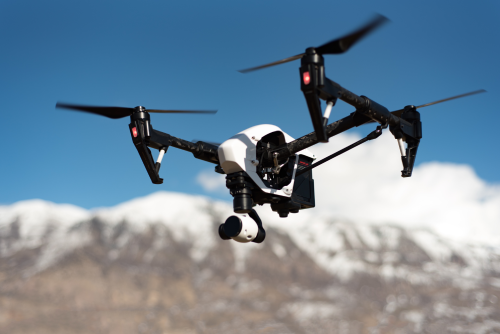
Travel content looks better when your drone footage adds context, scale, and mood instead of just a high-angle view. These drone photography tips for travel bloggers will help you come back with images and clips that actually support your story, whether you are shooting beaches in Goa, forts in Rajasthan, tea estates in Munnar, or cityscapes on the edge of a hill station.
A good travel drone shot is not only pretty. It is planned, safe, legal, easy to edit, and useful across your blog, reels, and client work.
Quick Take
- Plan a story before you fly: place, scale, mood, and movement.
- Check the latest Indian drone rules, official airspace guidance, and local restrictions before every location.
- Shoot during early morning or late afternoon whenever possible.
- Use slow, simple movements instead of flashy flying.
- Keep camera settings consistent for easier editing.
- Respect privacy, crowds, wildlife, and sensitive places.
- Back up files every day when travelling.
- A short, usable sequence beats 20 random clips.
Start with the story, not the drone
Many travel bloggers make the same mistake: they launch the drone first and think later. That usually leads to generic footage.
Before takeoff, ask four questions:
- What is special about this place?
- What should the viewer feel?
- What is the main subject?
- How will this shot fit into the rest of the blog or video?
For example:
- A beach destination needs scale, texture, and movement.
- A mountain town needs layers, roads, mist, and altitude.
- A heritage property needs symmetry, details, and respectful distance.
- A food-and-culture blog needs the location shown without invading people’s privacy.
A simple travel storytelling shot list usually includes:
- An establishing shot to show the full location
- A closer contextual shot to show roads, water, buildings, or terrain
- A top-down shot for patterns
- A human-scale shot that shows size
- A moving reveal shot for drama
- A clean exit shot for transitions
If you only have one battery, this approach matters even more. Do not waste your best light experimenting aimlessly.
Plan before you reach the location
Good drone photography is mostly planning.
Check these before travel
- Weather and wind
- Sunrise and sunset timing
- Crowd levels
- Nearby obstructions like wires, trees, towers, cliffs, and flags
- Possible takeoff and landing spots
- Signal conditions
- Local access restrictions
- Whether the location is culturally or environmentally sensitive
In India, conditions can change quickly:
- Coastal areas can have strong winds, salt spray, and haze.
- Mountain areas can have sudden cloud cover, turbulence, and poor GPS lock near steep terrain.
- Desert locations can have dust and heat.
- Old city areas can be crowded, narrow, and full of wires.
A practical pre-flight checklist
Before every flight, run through this quick process:
- Confirm the location is legal and appropriate to fly.
- Walk the takeoff area once.
- Look up for wires, birds, poles, and tree branches.
- Check wind direction and gusts.
- Clean the lens.
- Ensure batteries, controller, and phone are adequately charged.
- Lock exposure and white balance if needed.
- Decide your first three shots before takeoff.
- Set a conservative return and landing plan.
- Keep enough battery to land early, not at the last moment.
That one-minute checklist prevents many avoidable mistakes.
Know the rules before you fly in India
For travel bloggers in India, legal and responsible flying is just as important as camera skill.
Drone rules, airspace procedures, and platform requirements can change. Always verify the latest official guidance from DGCA and the Digital Sky system before a trip. Do not rely only on social media posts, old videos, or a friend’s experience from another state.
What to verify before every location
- Whether the airspace is permitted for drone operations
- Whether your drone and your intended use require any registration, permission, or documentation under current rules
- Whether there are local restrictions from district authorities, police, property owners, or event organisers
- Whether the area is close to an airport, defence installation, government building, border zone, or other sensitive site
- Whether the place is a protected monument, wildlife area, forest zone, temple complex, or coastal stretch with separate restrictions
- Whether you have permission from the landowner if you are taking off from private property
Special caution areas for travel bloggers
Be extra careful around:
- Popular tourist landmarks
- Religious places
- Festivals and crowded public events
- Beaches with dense tourist traffic
- Wildlife zones and bird habitats
- Luxury resorts and private properties
- Urban rooftops near dense neighbourhoods
Privacy and respect matter too
Even when a flight seems technically possible, it may still be a bad idea.
Do not hover low over strangers, private homes, wedding functions, pools, or people at prayer. If people are clearly identifiable and your drone is close enough to feel intrusive, reconsider the shot or ask permission.
If you create paid content for a resort, tourism board, real-estate project, or brand campaign, verify whether any additional permissions, insurance, or documentation apply to your work.
When in doubt, skip the shot and verify first.
Use light like a travel photographer
Light changes everything. A modest drone in beautiful light often beats an expensive drone in bad light.
Best times for travel drone photography
Golden hour
This is the hour after sunrise and the hour before sunset.
Why it works:
- Softer shadows
- Better colours
- More texture in landscapes
- Less harsh contrast
- More cinematic travel footage
This is ideal for:
- Beaches
- Forts
- Hill roads
- Lakes
- Heritage buildings
- Villages and fields
Midday
Most people avoid midday, but it is not always useless.
Midday works best for:
- Top-down shots
- Bright blue water
- Geometric patterns
- Dry landscapes
- Architecture with strong symmetry
The problem is harsh light. Faces, walls, and ground textures can look flat or too contrasty.
Blue hour
The short period before sunrise or after sunset can look beautiful, but it is harder for beginners.
Low light can create:
- More image noise
- Soft footage
- Reduced detail
- Unstable exposure
If your drone camera is small, do not push it too far after sunset.
India-specific light issues
- North Indian winter often brings haze, which reduces contrast.
- Coastal states can have strong glare and humidity.
- Hill stations can look dramatic at sunrise but cloud over quickly.
- Monsoon landscapes look lush, but flying conditions may be poor and unsafe.
A useful travel habit is to visit a location once on foot first. You may discover that the best drone angle is not where tourists usually stand.
Camera settings that actually matter
You do not need complicated settings to get good results. You do need consistency.
Photo settings for travel bloggers
Shoot RAW if your drone supports it
RAW files keep more image information than JPEG. That gives you more flexibility when editing shadows, highlights, and colour.
If you are just starting, you can shoot RAW plus JPEG if available. JPEG is fast to preview, and RAW helps when the light is tricky.
Keep ISO low
ISO controls how sensitive the camera sensor is to light. Higher ISO usually means more grain or noise.
For cleaner images:
- Keep ISO as low as possible
- Prefer better light over pushing ISO
- Avoid dark, muddy shots that need heavy rescue later
Watch your shutter speed
Shutter speed controls how long the camera records light.
For photos, a faster shutter speed helps when:
- It is windy
- The drone is moving
- You are shooting water, traffic, or trees
If your photos look soft, motion blur may be the problem, not focus.
Set white balance manually when possible
White balance controls the colour temperature of the image.
If you leave it on auto, the colour may shift from shot to shot. That makes editing harder.
For travel series work, a fixed white balance gives more consistency across clips and stills.
Use exposure bracketing for difficult scenes
If your drone offers it, exposure bracketing captures multiple versions of the same image at different brightness levels. This helps with scenes that have bright skies and dark land.
It is useful for:
- Sunrises
- Sunset coastlines
- Forts against bright sky
- Backwaters with reflective light
Video settings for travel bloggers
Pick a frame rate and stick to it
Frame rate means how many frames are recorded each second.
Common choices:
- 24 or 25 fps for a more cinematic look
- 30 fps for general travel content and easier social delivery
Consistency matters more than chasing every possible setting.
Understand the shutter rule simply
For natural-looking motion in video, shutter speed should usually be about double your frame rate. That is why many creators use ND filters.
An ND filter is like sunglasses for your camera. It reduces the amount of light entering the lens so you can keep a motion-friendly shutter speed in bright daylight.
You do not always need ND filters for casual shooting, but they help a lot in strong Indian sun.
Use a flatter colour profile only if you can edit it
Some drones offer a flat or log-like profile that preserves more highlight and shadow detail. This is useful for colour grading, but it looks dull straight out of camera.
If you do not enjoy editing, standard colour may be the better choice.
Avoid maximum settings just because they exist
Higher resolution and heavier codecs can be great, but they also mean:
- Larger file sizes
- Slower editing
- Hotter devices
- Faster card usage
For many travel bloggers, a manageable format you can edit quickly is better than oversized files you never finish.
Composition tips that make travel shots look premium
A drone gives you altitude. Composition gives you quality.
Show scale clearly
Travel content becomes more powerful when the viewer understands size.
Ways to show scale:
- A road with a small vehicle
- A boat in a wide river
- A person standing safely at a distance
- A fort wall against the surrounding landscape
Do not make the subject so tiny that it loses meaning.
Use layers
The best travel frames often have:
- Foreground
- Middle ground
- Background
In a mountain scene, that could mean trees in front, a road in the middle, and distant ridges behind.
In a beach scene, it could be waves, shoreline, and buildings or cliffs.
Layers make aerial images feel deep instead of flat.
Look for patterns from above
Top-down shots work especially well for:
- Boats and jetties
- Stepwells
- Farms and paddy fields
- Salt pans
- Fishing nets
- Market geometry
- Temple courtyards, where permitted
This is where midday light can sometimes help.
Leave space for text and cropping
Travel bloggers often reuse the same drone shot for:
- Blog banners
- Thumbnails
- Reels
- YouTube intros
- Instagram carousels
If you frame too tightly, you lose flexibility later.
Try shooting:
- One safe wide version
- One medium version
- One vertical-friendly version if your drone supports it or if you plan to crop
Use leading lines
Leading lines guide the eye through the frame.
Good drone examples include:
- Roads
- River bends
- Beach edges
- Railway curves, from a safe and legal distance
- Rows of trees
- Ghats and steps
These make simple locations look more intentional.
Smooth movement beats flashy movement
Travel blogging is usually about atmosphere, not drone stunts.
A slow, controlled move feels more premium and is easier to edit into a story.
The five most useful travel drone moves
1. Slow reveal
Start behind trees, rocks, or a building edge and rise gently to reveal the location.
Best for: – Beaches – Valleys – Resorts – Fort entrances
2. Rising pull-back
Move backward while climbing slowly.
Best for: – Showing scale – Opening a travel sequence – Revealing the landscape around a subject
3. Gentle push-in
Fly slowly toward the subject.
Best for: – A lighthouse – A temple exterior, where permitted – A boat jetty – A hilltop property
4. Top-down drift
Hold a 90-degree downward angle and move slowly across patterns.
Best for: – Water texture – Farms – Roads – Sand patterns – Architectural symmetry
5. Partial orbit
Circle around the subject, but only if the space is open and safe.
This looks great when done slowly. It looks amateurish when rushed.
How to make any movement look better
- Fly slower than you think you need to
- Avoid combining too many stick inputs at once
- Pause for 2 to 3 seconds before and after the move
- Keep yaw, which is the drone’s left-right rotation, smooth and minimal
- Repeat a good move twice if battery allows
A simple move with stable framing is more useful than an aggressive move you cannot cut into your edit.
A one-battery shot plan for travel bloggers
If you have limited flight time, this simple sequence gives you a usable mini-story.
- Establishing wide shot
- Slow reveal shot
- Push-in toward the main subject
- Top-down pattern shot
- Sideways parallax shot with foreground and background
- Human-scale wide shot from a safe distance
- Exit pull-back shot
This gives you coverage.
If the light is changing quickly, shoot video first. Stills can often wait a few minutes. A lost sunset cannot.
Travel workflow: packing, power, and file safety
Travel drone photography is not only about shooting. It is also about surviving trains, flights, road trips, dust, humidity, and rushed hotel checkouts.
Pack like you expect rough handling
Carry these essentials:
- Extra batteries
- Spare propellers
- Charging setup
- Fast, reliable memory cards
- Lens cloth
- Gimbal protector
- Compact landing pad if you often launch from dusty ground
- A small pouch for used cards and adapters
Be careful with batteries
Lithium battery rules vary by airline and airport. Check your airline’s latest policy before you travel.
Good battery habits:
- Label batteries
- Rotate usage evenly
- Do not leave batteries inside a parked car in summer
- Let batteries cool before recharging
- Keep some reserve for a safe landing
- If you are flying in cold hill conditions, manage battery temperature carefully before takeoff
Back up every day
This matters more than many creators realise.
A simple travel backup workflow:
- Copy files from card to laptop or phone storage
- Duplicate them to an SSD or second device
- Keep cards organised and do not format until you confirm the backup
Losing a memory card after a multi-city trip is far more painful than carrying one extra storage device.
Edit for consistency, not drama
Great travel blogs do not need overcooked colours. They need a consistent visual identity.
A practical editing workflow
- Select only your strongest shots
- Straighten the horizon
- Fix exposure first
- Correct white balance
- Reduce highlights if skies are too bright
- Add moderate contrast and clarity
- Adjust colour gently
- Crop for the final platform
Keep these editing habits in mind
- Do not oversaturate greens and blues
- Avoid making every sunset orange
- Keep skin tones believable if people appear in frame
- Match clips from the same location so they feel like one sequence
- Export separate versions for horizontal blog use and vertical social media use if needed
Travel blogging works best when viewers trust what they see. If every location looks unnaturally intense, the footage stops feeling real.
Capture people and culture respectfully
Drone photography can make places look stunning, but it can also feel intrusive.
Good practice around people
- Avoid flying low over crowds
- Do not hover near balconies, rooftops, or private homes
- Ask before filming people in smaller communities or quiet local areas
- Stay away from ceremonies, funerals, and sensitive religious moments
- Keep distance from children and do not treat them as easy “content”
Good practice around wildlife
Do not chase birds, monkeys, deer, or any animal for a dramatic shot. Wildlife disturbance is not worth the clip.
If birds react to your drone, move away or land.
This is especially important near wetlands, coastlines, forest edges, and migratory zones.
Common mistakes travel bloggers make with drone photography
1. Flying without a shot list
Result: random footage that does not fit the story.
Fix: decide your first three shots before takeoff.
2. Shooting only super-wide angles
Result: everything looks far away and similar.
Fix: vary altitude, distance, and camera angle.
3. Using fast, jerky movements
Result: footage looks amateur and hard to edit.
Fix: slow down and keep movements simple.
4. Ignoring light direction
Result: flat images or ugly shadows.
Fix: plan around morning or evening light.
5. Leaving white balance on auto
Result: colour shifts between clips.
Fix: use a fixed setting when conditions are stable.
6. Forgetting the lens
Result: soft or hazy footage from fingerprints, dust, or sea spray.
Fix: clean the lens before every flight.
7. Flying too long on one battery
Result: rushed landing and poor decision-making.
Fix: land early and leave margin.
8. Not checking local sensitivity
Result: conflict with locals, security staff, or property owners.
Fix: ask, observe, and choose respectful angles.
9. Overediting
Result: footage looks fake and inconsistent.
Fix: edit for clarity and mood, not shock value.
10. Backing up too late
Result: lost trip content.
Fix: back up files the same day.
FAQ
Do travel bloggers need permission to fly a drone in India?
It depends on the drone, the location, the purpose of the flight, and the latest DGCA rules. Always verify the current official guidance, airspace status, and any local restrictions before flying.
What is the best time of day for travel drone photography?
Early morning and late afternoon are usually best. The light is softer, shadows are more attractive, and landscapes look more dimensional.
Should beginners shoot photos or video first?
If the light is changing quickly, shoot video first because it is harder to recreate. If the light is stable and the location is mainly about patterns or architecture, stills first can also work.
Do I really need ND filters?
Not always, but they are very useful for video in bright daylight. They help you keep more natural-looking motion instead of very choppy movement caused by extremely fast shutter speeds.
Is it safe to fly over water?
Only if conditions are suitable, the location is legal, and you are confident in your skills. Water adds glare, wind, signal risk, and stressful recovery decisions. Beginners should be extra cautious.
How many batteries should I carry for a trip?
Carry enough for your shooting plan, but also check airline and transport rules for lithium batteries. For many travel bloggers, extra batteries matter more than chasing the highest camera spec.
Can I fly over people, roads, or traffic for a better city shot?
Do not treat crowds and traffic as cinematic backgrounds. It is unsafe, potentially unlawful, and creates privacy concerns. Look for legal, open, low-risk alternatives.
How do I make drone shots fit both my blog and social media?
Shoot a safe wide master shot, then add a medium shot and a top-down or vertical-friendly option if possible. That gives you flexibility for banners, thumbnails, reels, and posts.
What is the easiest way to improve drone footage quickly?
Work on three things first: better light, slower movement, and a clear shot sequence. Those changes usually improve results more than buying new gear.
Do I need to colour grade every clip heavily?
No. A simple, consistent edit often looks more professional than heavy grading. Correct exposure and white balance first, then make small colour adjustments.
Final takeaway
On your next trip, do not aim for “epic” drone footage everywhere. Pick one legal location, go in good light, plan seven simple shots, fly slowly, and come back with a complete visual story. That is what makes drone photography useful for travel blogging, and that is what viewers remember.
