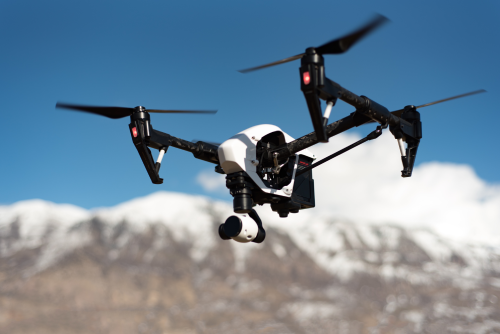
DJI vs Autel is one of the most common drone buying questions, but the better brand depends less on brand loyalty and more on how you plan to fly. For most buyers in India, the real decision comes down to software reliability, after-sales support, camera needs, spare battery availability, and how confidently you can stay compliant.
Quick Take
- If you want the safest default choice, DJI is still the easier recommendation for most buyers.
- DJI usually wins on software polish, ecosystem depth, tutorial support, accessories, resale value, and overall ease of ownership.
- Autel is not a bad choice. It can be a smart alternative if a specific Autel model suits your camera or work needs and you have trustworthy local dealer support.
- For beginners, creators, and small businesses in India, after-sales support often matters more than a small spec advantage on paper.
- If you fly for work, do not choose only by camera resolution or advertised range. Check repair turnaround, app stability, mission-planning compatibility, battery cost, and current Indian compliance requirements first.
- If you are confused between two similarly priced models, compare the full ownership experience for the next two years, not just the drone body.
DJI vs Autel at a glance
| Buying factor | DJI | Autel | What it means in India |
|---|---|---|---|
| Overall ecosystem | Broader consumer and professional ecosystem | Smaller but still relevant in select segments | DJI is usually easier to support over time |
| App and software maturity | Generally more polished and beginner-friendly | Often solid, but more dependent on model and updates | Software stability matters every single flight |
| Camera performance | Consistently strong across classes | Can be very competitive on image quality in some models | Compare real footage, not only spec sheets |
| Flight assistance | Usually strong safety features and automation | Core flying is often good; advanced features vary more by model | Important for beginners and solo operators |
| Accessories and spare parts | Easier to find batteries, props, filters, cases, tutorials | Availability may depend more on dealer and region | Downtime can become expensive fast |
| Geofencing and unlocking | Historically more structured built-in airspace restrictions | Often perceived as less restrictive, but behavior can vary by model and firmware | Verify before buying if you work near restricted areas |
| Enterprise workflow | Broad ecosystem for inspection, mapping, thermal, training, accessories, and third-party tools | Useful options exist, but integrations may be narrower | Businesses should check software compatibility before purchase |
| Resale value | Usually stronger | Often weaker than DJI | Matters if you plan to upgrade later |
| Best fit | Most buyers, especially first-timers | Informed buyers who know why they want a specific model | Don’t buy Autel just to “be different” |
What really separates DJI and Autel
A lot of comparisons stop at camera specs, top speed, or battery time. That is not how most people end up happy with a drone.
In real ownership, the important differences are:
- How easy the drone is to set up and update
- How reliable the app feels on your phone or tablet
- How trustworthy the return-to-home and obstacle alerts feel
- How easy it is to buy extra batteries and props
- How long repairs take if something goes wrong
- How well the drone fits your actual workflow
That is where DJI and Autel start to feel different.
Ecosystem and ease of ownership
DJI’s biggest advantage is not one feature. It is the complete ecosystem.
For many buyers, DJI feels more “finished”:
- More people use it, so there are more tutorials and troubleshooting guides
- More accessory makers build for DJI platforms
- More buyers and sellers understand the product when you want to resell
- More professionals already know the workflow
That does not automatically make DJI perfect. It just lowers friction.
Autel’s appeal is different. It often attracts buyers who:
- Want a serious alternative to DJI
- Prefer a particular camera or feature set on a specific model
- Already know the exact use case they are buying for
- Want to compare platforms instead of blindly following the biggest brand
If you enjoy researching, testing, and choosing a platform more deliberately, Autel can be rewarding. If you want a smoother “buy it, learn it, and get to work” experience, DJI is usually easier.
Camera quality and creator features
For creators, the question is not “Which brand has the best camera?” It is “Which camera setup helps me get usable footage faster?”
DJI’s strength is consistency. Across its mainstream drones, you usually get:
- Predictable stabilization
- Reliable exposure behavior
- Good color options for editing
- Usable intelligent shooting modes
- A large community sharing settings and workflow tips
Autel can absolutely be competitive here. Some Autel drones have attracted attention because they offer strong imaging for the class. But when you compare camera quality, do not get trapped by headline numbers.
Look at:
- Dynamic range, or how well the camera handles bright skies and dark ground in the same shot
- Low-light cleanliness
- Gimbal smoothness
- Color flexibility for editing
- How natural the footage looks after stabilization
- Whether the drone remains stable in mild wind
A simple example:
- A travel creator who wants quick, dependable footage for Instagram, YouTube, or client reels will usually value smooth workflow and easy color handling more than a small paper advantage.
- A more technical user may be happy with Autel if the chosen model’s footage style and control options fit their editing preferences.
In short: DJI often wins on consistency. Autel can win if a specific model matches your creative priorities.
Flight confidence and automation
This is where first-time buyers often underestimate the difference between brands.
Most modern drones from both brands can hover well, capture stable footage, and handle ordinary flying conditions if used properly. The gap appears when things get slightly stressful:
- Wind picks up
- GPS quality changes
- A return-to-home event starts
- You fly near obstacles
- You rely on tracking or automated shots
- The app asks for a firmware change before a job
DJI generally has the stronger reputation for beginner-friendly flight behavior and confidence-building safety systems. That matters if you are:
- Learning to fly
- Shooting solo
- Flying in unfamiliar locations
- Working under time pressure
Autel’s core flight experience can still be good, but feature behavior may feel more model-dependent. That is why you should not compare “DJI vs Autel” only as brands. You should compare exact model vs exact model.
For example, if subject tracking is important for cycling shots, travel self-shooting, or event coverage, test or research that specific model deeply. Tracking quality can vary a lot.
Software, accessories, and long-term value
The app is not a side issue. It is the product.
A drone with impressive hardware but frustrating app behavior can quickly become annoying to own.
DJI usually scores well on:
- Cleaner user experience
- Better-known setup process
- Broader compatibility discussions online
- Easier learning curve for new pilots
Autel buyers should pay extra attention to:
- Current app support
- Phone or tablet compatibility
- Firmware update experience
- Accessory availability from reliable sellers
- Battery stock over the next 12 to 24 months
Then there is resale.
DJI usually holds value better because:
- The used market is bigger
- More people trust the brand
- Buyers understand the lineup more easily
- Accessories are easier to sell with the drone
If you upgrade often, that matters.
India-specific buying factors
For Indian buyers, the DJI vs Autel choice is not just about flight performance. It is also about practical ownership.
Before you buy either brand, check these points carefully.
1. Dealer credibility
Buy from a seller who can clearly answer:
- Who handles warranty or service
- Where repairs are done
- How long common repairs usually take
- Whether batteries, props, and chargers are readily available
- Whether you will get a proper tax invoice if needed for business use
A drone is not like buying a phone case online. Seller quality matters.
2. Spare parts and batteries
Many buyers focus on the drone body and forget the real ownership cost.
Ask:
- Can you buy at least one or two extra batteries easily?
- Are original props and chargers available?
- If the gimbal or arm is damaged, is repair practical or painful?
A cheaper drone with poor parts support can become more expensive than a better-supported drone.
3. Service in your city or state
If you live in a metro, your options may be better. If you live in a smaller city, you need to think harder about downtime.
For business users especially, ask yourself:
- If the drone stops working before a paid project, what is my backup plan?
- Can my dealer provide temporary replacement support?
- How many days can I afford to lose?
This usually pushes many professionals toward the brand with stronger support and availability.
4. App installation and device compatibility
Do not assume every app experience is smooth across every phone.
Before buying:
- Confirm your phone or tablet is officially or practically compatible
- Check how the app is installed and updated
- Ask existing users in India about stability on Android or iPhone
A drone that works beautifully in a review may feel different on your device.
5. Used market and future upgrade path
If you plan to upgrade in a year or two, think ahead.
DJI generally offers:
- Better resale liquidity
- Easier buyer trust
- More people searching for used units
Autel may still make sense if the value proposition is strong at purchase, but resale is usually a weaker safety net.
Which brand should you choose?
Here is the practical answer.
Choose DJI if you are any of these buyers
- A beginner buying your first serious camera drone
- A hobbyist who wants the easiest ownership experience
- A creator who values dependable footage over experimentation
- A small business that cannot afford long downtime
- A buyer who wants strong resale value
- A professional who needs a broader ecosystem of accessories, software, training, and support
DJI is usually the better fit if your question is: “I just want the option that is least likely to create headaches.”
Mini scenario:
A wedding filmmaker in Pune wants dependable aerial clips, fast setup, extra batteries, and easy replacement parts. DJI is usually the safer call.
Mini scenario:
A student creator in Bengaluru wants to learn aerial video, edit quickly, and find lots of tutorials online. DJI usually makes the learning path easier.
Choose Autel if you are this kind of buyer
- You have researched a specific Autel model thoroughly
- You trust the local dealer and support chain
- You prefer that model’s camera behavior or feature mix
- You are comfortable being a more hands-on buyer
- You are comparing based on workflow, not logo
Autel is usually the better fit if your question is: “I know exactly why I want this model, and I am comfortable verifying support and software before spending.”
Mini scenario:
An inspection team already tested a specific Autel setup, likes the image output and controls, and has a dealer who can support maintenance. Autel can be a sensible choice.
Mini scenario:
A technically experienced buyer wants to evaluate alternatives to DJI and is comfortable checking firmware behavior, app support, and spare-part sourcing before purchase. Autel can work well.
How to compare two models properly
If you are deciding between one DJI drone and one Autel drone, use this 7-step test.
1. Match the class first
Do not compare a small travel drone from one brand to a bigger prosumer model from the other.
Compare like with like:
- Compact travel vs compact travel
- Mid-range creator drone vs mid-range creator drone
- Enterprise inspection drone vs enterprise inspection drone
2. Compare the full kit, not just the drone
Look at:
- Number of batteries
- Charging hub
- Storage case
- ND filters if you shoot video outdoors
- Propeller availability
- Controller type
- Warranty or care plan options
Sometimes the better deal is the kit with fewer surprises later.
3. Watch real sample footage
Do not rely only on brand ads or resolution claims.
Look for real-world footage in:
- Harsh daylight
- Sunset
- Slight wind
- High-contrast scenes
- Fast pans
That tells you far more than a spec sheet.
4. Check software and workflow
If you are a creator, ask:
- How easy is footage transfer?
- Does the color profile fit my editing style?
- Are quick shots and intelligent modes useful to me?
If you are a business user, ask:
- Does it work with my mapping or inspection software?
- Can I export the data I need?
- Will my team need retraining?
5. Confirm service and battery supply
This is especially important in India.
A drone with slow repair turnaround can hurt paid work, travel plans, or training schedules.
6. Verify legal fit for your use
A good drone is still a bad purchase if it does not fit your intended operation under current rules.
More on that below.
7. Think about exit value
If you may upgrade later, stronger resale is a real financial advantage.
Safety, legal, and compliance checks in India
This part matters whether you choose DJI or Autel.
Drone rules in India can depend on factors such as:
- The drone’s weight class
- Where you plan to fly
- Whether the use is recreational, educational, or commercial
- Whether your operation needs additional permissions or training
- Whether your specific model and workflow fit current compliance expectations
Before buying, verify the latest official guidance from DGCA and the Digital Sky platform for your use case.
Check these points specifically:
- Whether your intended operation requires registration, permissions, or a remote pilot qualification
- Whether your drone and planned use need to meet NPNT requirements
- Whether the area you plan to fly in is restricted, controlled, or otherwise sensitive
- Whether your client, employer, campus, or industrial site has additional internal permissions or insurance requirements
- How your chosen drone handles built-in airspace restrictions, unlocking steps, and firmware updates
A few practical reminders:
- Do not assume a drone sold online is automatically suitable for legal flying in your planned use case.
- Do not rely on social media claims about “no permission needed” without checking the latest official rules.
- Respect privacy, crowds, local restrictions, and sensitive locations.
- Built-in software restrictions do not replace legal compliance, and fewer restrictions do not mean more legal freedom.
If you fly commercially, it is worth speaking to your dealer, trainer, insurer, and client before finalizing the purchase.
Common mistakes when comparing DJI and Autel
Buying on specs alone
A drone with better paper specs can still be the worse purchase if the app, service, or battery availability is weak.
Ignoring the total ownership cost
Extra batteries, safe storage, props, filters, and repairs matter. The purchase price is only the start.
Assuming all “smart features” work equally well
Tracking, obstacle sensing, automated shots, and return-to-home performance can vary significantly by model.
Overlooking service and spares
This is one of the biggest mistakes in India. A drone grounded for weeks is not a bargain.
Not checking phone or tablet compatibility
The best drone in the world can become frustrating if the app runs poorly on your device.
Confusing less geofencing with more freedom
Even if one brand feels less restrictive in software, you still must follow actual airspace and operating rules.
Buying for the wrong use case
A travel drone is not automatically the right tool for surveying. A cinema-style feature list is not always useful for beginner learning.
Thinking brand alone decides quality
Within both DJI and Autel, model-to-model differences matter. Always compare exact models.
FAQ
Is DJI better than Autel for beginners?
Usually, yes. DJI is generally easier for beginners because of its polished software, larger tutorial ecosystem, better resale, and simpler ownership experience. That does not mean every DJI model is perfect, but it is often the safer first purchase.
Is Autel less restrictive than DJI?
Historically, many users have seen DJI as more structured around built-in geofencing and unlocking workflows, while Autel has often been viewed as less restrictive. But this can vary by model, firmware, and region, so verify current behavior before buying. In any case, software restrictions do not replace Indian law.
Which brand has better camera quality?
There is no universal winner across every model. DJI often delivers very consistent results and workflow-friendly footage. Autel can be highly competitive on image quality in certain models. Compare actual footage, low-light performance, color flexibility, and gimbal smoothness for the specific two drones you are considering.
Which brand is better for travel creators in India?
For most travel creators, DJI is usually the easier choice because of portability options, widespread user knowledge, accessory support, and resale strength. Still, check current flying restrictions for the places you plan to visit and verify battery and charger convenience before buying.
Which brand is better for professional inspection or mapping?
For many teams, DJI remains the more established ecosystem choice because of broader software, training, and accessory support. Autel can still be a valid option if a specific enterprise model matches your workflow and you have reliable dealer support. Never buy an enterprise drone without checking software compatibility first.
Should I buy used DJI or new Autel?
If the used DJI unit is genuine, well-maintained, properly tested, and supported with available batteries and spares, it can be a better buy than a new drone with uncertain support. But inspect battery health, flight logs if available, gimbal condition, controller function, and repair history before deciding.
Does DJI hold resale value better?
In most cases, yes. DJI generally has a bigger used market and stronger buyer confidence, which helps resale. If you expect to upgrade later, this is a real advantage.
What should Indian buyers check before purchasing either brand?
At minimum, check:
- Seller credibility
- Service and repair process
- Extra battery availability
- App compatibility with your phone or tablet
- Invoice and warranty details
- Current DGCA and Digital Sky requirements for your intended use
- Whether your sites of operation create geofencing or permission issues
Final takeaway
If you want the simplest answer to the DJI vs Autel question, choose DJI unless you have a clear, model-specific reason to choose Autel.
Autel can be a good buy for informed users, but for most beginners, creators, and small businesses in India, DJI remains the safer all-round choice because it is usually easier to own, easier to support, and easier to resell. Before paying for either brand, verify local service, spare batteries, app compatibility, and the latest Indian compliance requirements for your exact use case.
