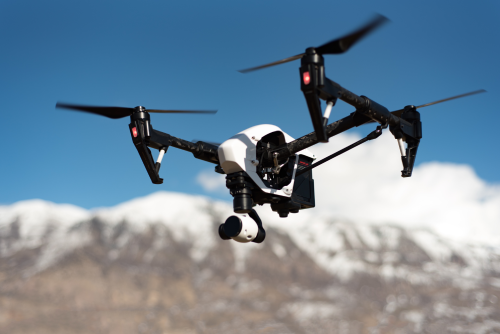
Choosing the best drones for survey companies is not about buying the most expensive aircraft. It is about matching the drone to your jobs: small construction sites, large land parcels, corridor surveys, mines, agriculture, or LiDAR work under vegetation. For Indian buyers, local support, compliance, batteries, payload options, and workflow software matter just as much as flight performance.
Quick Take
- For most survey companies, a compact RTK-capable mapping drone is the best first buy.
- If your work includes larger projects, stricter deliverables, or future LiDAR jobs, a heavier enterprise platform is usually the smarter long-term investment.
- Fixed-wing or VTOL fixed-wing drones make more sense for large open land, mining, roads, canals, and transmission corridors.
- Multispectral drones are worth it only if agriculture or plantation analytics is a real revenue stream.
- In India, always verify current DGCA and Digital Sky compliance, pilot requirements, airspace permissions, insurance, and local service support before purchase.
What survey companies should look for before buying
A survey drone is part of a workflow, not a standalone gadget. Before shortlisting any platform, decide what you need to deliver to clients.
Start with the output, not the drone
Different jobs need different outputs:
- Orthomosaic maps: stitched top-view maps made from overlapping images
- 3D models: useful for construction, mining, stockpiles, and visual documentation
- Contours and surface data: for planning and earthwork analysis
- Digital terrain models: more demanding when vegetation is present
- Corridor maps: roads, rail, pipelines, canals, transmission lines
- Crop or plantation analytics: often needs multispectral sensors
- LiDAR point clouds: useful where photogrammetry struggles, especially under vegetation or in uneven terrain
If your clients mostly want site progress maps, stockpile volumes, and top views, you do not need to jump straight to LiDAR.
RTK and PPK matter, but they are not magic
RTK stands for real-time kinematic. PPK stands for post-processed kinematic. Both are positioning methods that improve geotag accuracy for drone images.
In simple terms:
- RTK helps the drone know its position more accurately during flight
- PPK improves position data after the flight during processing
- Both can reduce the amount of ground control needed in some jobs
- Neither automatically guarantees survey-grade results
Final accuracy still depends on:
- Ground control points or checkpoints when needed
- Flight planning
- Camera quality
- Overlap settings
- Terrain and vegetation
- Lighting
- Processing quality
A common mistake is assuming “RTK drone” means every map will be survey-ready without field checks. It does not.
Mechanical shutter is a big deal for mapping
Survey companies should strongly prefer a mapping camera with a mechanical shutter. This reduces image distortion during flight, especially on larger sites or in windier conditions.
Why it matters:
- Cleaner images for photogrammetry
- Better consistency on repeated missions
- Fewer headaches in processing
A drone that is excellent for videography is not automatically good for surveying.
Multirotor vs fixed-wing
This is one of the biggest buying decisions.
Multirotor drones
Best for:
- Small to medium sites
- Construction projects
- Stockpiles
- Dense or obstacle-heavy environments
- Quick deployment teams
Advantages:
- Easier to train on
- Easier takeoff and landing
- Better for tight spaces
- Better for inspection plus mapping combination work
Trade-offs:
- Cover less area per flight than fixed-wing
- Less efficient for very large sites
Fixed-wing or VTOL fixed-wing drones
Best for:
- Large land parcels
- Mining areas
- Long corridors
- Open rural projects
- Repetitive area mapping at scale
Advantages:
- More efficient over larger areas
- Better economics for large survey jobs
- Strong fit for corridor and land record work
Trade-offs:
- More planning
- More training
- More recovery and landing considerations
- Often less flexible for close inspection work
After-sales support in India can make or break your business
Two drones can look similar on paper, but the one with better support often wins in real work.
Check these before buying:
- Is there a real service partner in India?
- Are batteries and props easy to get?
- What is payload repair turnaround like?
- Will the dealer train your pilots and data team?
- Can they show sample outputs, not just flight demos?
- Is the software workflow stable and easy to hand over between staff?
For survey companies, downtime is expensive. A cheaper drone with poor support can cost more than a premium drone with reliable service.
Best drones for survey companies: the top options to shortlist
The models below are the most sensible categories and platforms to evaluate for survey work. Availability, import status, warranty path, and official support can vary in India, so verify current purchase channels before you commit.
| Drone/platform | Best for | Why it stands out | Watch-outs |
|---|---|---|---|
| DJI Mavic 3 Enterprise | Small to medium survey jobs, construction, stockpiles | Compact, fast deployment, RTK-capable workflow, mechanical shutter | Limited payload flexibility, not the right tool for LiDAR-heavy work |
| DJI Matrice 350 RTK + Zenmuse P1 | Serious photogrammetry, larger projects, repeatable enterprise work | Strong enterprise ecosystem, better site productivity, better wind tolerance | Higher cost, larger kit, more training and battery management |
| DJI Matrice 350 RTK + Zenmuse L2 | LiDAR, vegetation, terrain, corridor and utility work | Adds LiDAR capability where photogrammetry struggles | Expensive, heavier data processing and workflow complexity |
| WingtraOne GEN II | Large-area mapping, mining, land parcels, corridor surveys | VTOL fixed-wing efficiency with mapping focus | Needs open site planning, training, and strong post-processing workflow |
| senseFly eBee X | Large open-area mapping where fixed-wing makes sense | Efficient for broad coverage and established survey use cases | Landing area and site conditions matter more than with multirotors |
| DJI Mavic 3 Multispectral | Agriculture, plantations, crop health mapping | Practical entry point for multispectral survey workflows | Not a replacement for a main RGB surveying platform in most firms |
| ideaForge SWITCH or similar Indian VTOL mapping platform | Buyers who want Indian procurement and enterprise support options | Worth evaluating for local support, tender alignment, and domestic sourcing | Demand a live survey demo and output validation before purchase |
The best options, explained
DJI Mavic 3 Enterprise
For many survey companies, this is the most practical starting point.
It suits:
- Civil survey startups
- Construction progress teams
- Stockpile measurement workflows
- Small infrastructure consultants
- Real estate and industrial campus mapping
Why it works so well:
- Compact and easy to travel with
- Faster to deploy than heavier enterprise systems
- Strong fit for regular day-to-day mapping
- Easier for smaller teams to manage
- Good balance of output quality and field convenience
Where it struggles:
- Very large projects where a fixed-wing platform is more efficient
- Jobs that need LiDAR
- Teams that want many payload options on one aircraft
- Harsh or windy sites where a larger enterprise platform is preferable
If your company is doing repeated construction, solar, warehouse, industrial, and small land survey jobs, this is often the smartest first drone to evaluate.
DJI Matrice 350 RTK with Zenmuse P1
This is the step up from compact mapping drones into serious enterprise photogrammetry.
It suits:
- Survey firms with larger commercial workloads
- Mining and infrastructure consultants
- Teams handling repeatable, professional mapping at scale
- Businesses that want room to grow into multiple payloads
Why it stands out:
- More robust enterprise platform
- Better suited to larger operations and structured workflows
- Handles professional survey payloads well
- Strong choice when mapping quality and repeatability matter more than portability
Why companies choose it over a compact drone:
- Better future expansion path
- Better fit for tougher sites
- Better fit for teams with standard operating procedures
- Can support more advanced workflows than a foldable compact drone
Main drawback:
- It is not a casual field kit
- You need better battery planning, transport discipline, and operator training
- Total system cost is much higher once payloads, batteries, software, and support are included
For a survey company that wants one serious enterprise platform for core mapping work, this is one of the best options to shortlist.
DJI Matrice 350 RTK with Zenmuse L2
If your clients ask for data in vegetated areas, difficult terrain, utility corridors, or tree-covered sites, LiDAR becomes relevant.
LiDAR uses laser pulses to measure distance and build a 3D point cloud. In many terrain conditions, it performs better than image-based photogrammetry.
This setup suits:
- Utility and corridor mapping
- Powerline work
- Forestry and plantation terrain work
- Terrain modelling in vegetation
- High-value engineering surveys where photogrammetry alone is not enough
Why it is important:
- Can capture terrain where standard imagery struggles
- Useful in complex surfaces and partial canopy conditions
- Helps companies move into higher-value contracts
But do not buy LiDAR just because it sounds advanced.
LiDAR brings:
- Much higher upfront cost
- Heavier post-processing requirements
- More training needs
- More demanding QA workflows
For many survey companies, LiDAR should be the second or third major investment, not the first.
WingtraOne GEN II
This is one of the best-known VTOL fixed-wing mapping platforms for large-area survey work.
VTOL means vertical takeoff and landing. So you get fixed-wing efficiency without needing a conventional runway.
It suits:
- Large open land surveys
- Mines and quarries
- Long corridor projects
- Rural parcel mapping
- Teams that need to cover broad areas efficiently
Why survey companies like this class of drone:
- Better area coverage than multirotors
- Strong fit for repeated wide-area mapping
- Efficient for large jobs where multirotor battery swaps become a bottleneck
Things to check carefully in India:
- Local support and spare availability
- Operator training
- Workflow compatibility with your processing software
- Wind and site planning needs
- Whether your clients really have enough large projects to justify it
If your workload is mostly single construction sites in cities, this is probably too much drone. If you regularly map large open areas, it can be exactly the right tool.
senseFly eBee X
The eBee X has long been a serious name in fixed-wing mapping. It is a strong option for companies that mainly care about efficient broad-area survey work.
It suits:
- Open-area land mapping
- Agriculture at scale
- Environmental and rural planning surveys
- Corridor and utility support work in suitable terrain
Strengths:
- Efficient coverage
- Survey-oriented heritage
- Strong fit where open space makes fixed-wing practical
Limitations:
- Less convenient in tight or obstacle-heavy sites
- Recovery and landing environment matters
- Less flexible than a multirotor for mixed mapping plus inspection jobs
This kind of platform makes sense when mapping is your core service, not just one part of a general drone business.
DJI Mavic 3 Multispectral
This is not the best first drone for most survey companies, but it is a smart specialist tool.
It suits:
- Agriculture consultants
- Plantation and crop health service providers
- Agri-input companies
- Precision farming teams
Why it matters:
- Multispectral imaging helps analyse crop health beyond what standard RGB images show
- Useful for identifying stress patterns, irrigation issues, and field variability when paired with the right agronomy workflow
Why it should not be your default survey drone:
- Most land and engineering survey clients do not need multispectral data
- It does not replace your main RGB mapping workflow
- You need a clear business case for agriculture services
Buy this only if agriculture is a defined part of your revenue plan.
ideaForge SWITCH or a similar Indian VTOL mapping platform
For Indian buyers, a domestic enterprise option can be worth serious evaluation, especially in government-facing, infrastructure, or procurement-sensitive environments.
Why it deserves a place on your shortlist:
- Potential local support advantages
- Better fit for buyers who prefer Indian sourcing
- Relevant for organisations that want a domestic ecosystem or tender alignment
Why you should still evaluate carefully:
- Ask for a real project demo, not just a flight demo
- Review actual deliverables: orthomosaics, contours, stockpile results, checkpoints
- Understand the full software chain
- Check training, service contracts, and spare turnaround
For some organisations, especially those that value local procurement, this can be the right strategic choice. But the decision must be based on output quality and workflow maturity, not only on origin.
Which drone type fits your survey business?
If you are a new or small survey company
Start with a compact RTK-capable mapping drone.
Best fit: – DJI Mavic 3 Enterprise class
Why: – Lower complexity – Faster return on investment – Easier training – Good for common commercial jobs
If you mainly handle construction, solar, and industrial sites
Stay with a compact mapping platform unless your sites are consistently large or demanding.
Best fit: – DJI Mavic 3 Enterprise – Matrice 350 RTK if your jobs are bigger and more repetitive
If you map mines, large land parcels, or corridors
Move toward a fixed-wing or enterprise heavy platform.
Best fit: – WingtraOne GEN II – eBee X – Matrice 350 RTK, depending on site shape and payload needs
If you want to offer LiDAR
Buy only when real client demand exists.
Best fit: – Matrice 350 RTK with LiDAR payload
If you serve agriculture or plantations
Use a multispectral platform as a specialist tool, not your only drone.
Best fit: – Mavic 3 Multispectral, alongside a standard RGB mapping platform if needed
What else you need besides the drone
Many buyers underbudget the complete survey stack. The aircraft is only one part.
Plan for:
- GNSS rover or reliable control workflow
- Ground control points and checkpoints
- Extra batteries and chargers
- A rugged field tablet or controller workflow
- Photogrammetry or LiDAR processing software
- Strong laptop or workstation
- External storage and backup
- Standard operating procedures
- Pilot and processing team training
- Insurance and maintenance budget
If your budget only covers the drone body, you are not budgeting for a survey business.
Compliance and safety for survey companies in India
Drone survey work in India is not just a technical issue. It is also a compliance issue.
Before buying or operating, verify the latest official position on:
- Drone eligibility and required approvals for the exact model you want to buy
- Airspace restrictions and mission authorisation through the currently applicable system
- Pilot training or certification requirements for your category of operation
- NPNT and any platform-specific compliance needs
- Insurance expectations from clients, especially infrastructure and industrial clients
- Local permissions when working near industrial plants, government land, urban assets, or sensitive areas
- Data handling requirements for client sites, especially critical infrastructure
A few practical rules always help:
- Do a site risk assessment before every mission
- Avoid flying over people unless the operation is properly planned and permitted
- Maintain visual line of sight unless specifically authorised otherwise
- Do not promise deliverables before checking weather, access, and ground control needs
- Keep mission logs, battery logs, and maintenance records
Rules can change, so verify current DGCA and related guidance before acting.
Common mistakes survey companies make
Buying a camera drone instead of a survey drone
A drone that shoots attractive video may still be a poor mapping tool. Survey work needs the right camera, positioning workflow, and repeatability.
Ignoring software and data processing
Raw drone images are not the final product. The client is paying for usable outputs, not just flying.
Believing RTK removes the need for field control
You still need checkpoints, quality control, and a defensible workflow.
Choosing fixed-wing too early
Fixed-wing is powerful, but many new firms do not have enough large-area work to justify the complexity.
Buying LiDAR before proving demand
LiDAR can unlock premium projects, but it can also sit idle if your client base is not ready.
Overlooking service support
Spare batteries, repairs, and turnaround times matter more in business than minor spec differences.
Not validating outputs before purchase
Always ask the seller for a real survey demonstration with processed results, accuracy checks, and deliverables you can inspect.
FAQ
1. Can a drone replace conventional land surveying completely?
No. Drones are excellent for rapid data capture, surface models, progress mapping, stockpiles, and broad-area surveys. But many projects still need conventional ground survey methods for control, boundary work, legal accuracy, or verification.
2. Is RTK enough, or do I still need ground control points?
RTK helps a lot, but it is not a complete substitute for quality control. Many professional workflows still use checkpoints, and some jobs still need ground control points for stronger confidence and documentation.
3. Which is better for surveying: fixed-wing or quadcopter?
Neither is always better. Quadcopters are better for smaller, tighter, mixed-use sites. Fixed-wing platforms are better for large open areas and long corridor jobs.
4. Do I need LiDAR for survey work?
Not always. If most of your work is open terrain, construction, stockpiles, and surface mapping, photogrammetry is often enough. LiDAR becomes more valuable in vegetation, complex terrain, and certain engineering or utility projects.
5. What is the best first drone for a small survey company?
For most small firms, a compact RTK-capable mapping drone is the best first buy. It is easier to deploy, easier to learn, and suitable for many common commercial jobs.
6. Is multispectral useful for a regular survey company?
Only if agriculture, plantation, or crop analytics is a real part of your service line. For general civil and land survey work, a standard RGB mapping setup is usually more important.
7. How important is after-sales support in India?
Extremely important. Battery replacement, service turnaround, local training, and spare availability directly affect your uptime and client delivery schedule.
8. Should I buy one drone that does everything?
Usually no. Most companies grow more efficiently by starting with one strong core mapping platform and adding specialist tools later, such as LiDAR or multispectral.
9. What should I ask for in a vendor demo?
Ask for: – A real mission plan – Actual processed outputs – Checkpoint comparison or accuracy report – Sample stockpile or contour deliverables – Full software workflow – Support and repair commitments in writing
Final takeaway
If you run a survey company and want the safest all-round starting point, shortlist a compact RTK-capable mapping drone first, especially the DJI Mavic 3 Enterprise class. If your business is moving into larger projects, repeat enterprise workflows, or LiDAR, step up to a Matrice 350 RTK-based system. If large land and corridor mapping is your core business, evaluate a fixed-wing or VTOL mapping platform before anything else. Buy the drone that fits your actual jobs, verify compliance and support in India, and insist on a live output-based demo before you spend.
