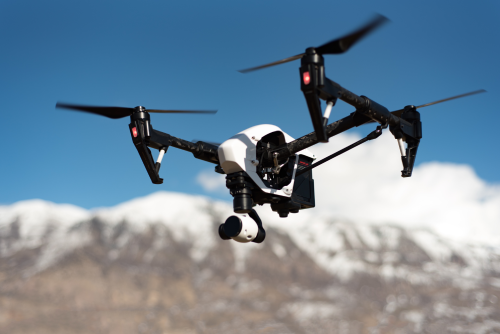
The best drones for industrial use in India are not necessarily the biggest or most expensive ones. The right platform is the one that gives reliable data, survives real field conditions, fits Indian compliance requirements, and comes with support you can actually access when a project is delayed or a battery fails. If you are buying for surveying, inspections, solar, utilities, mining, construction, or agriculture, the smartest choice depends on the job, not just the brochure.
Quick Take
- For most serious industrial teams, the strongest all-round shortlist starts with the DJI Matrice 350 RTK class.
- For small and mid-sized businesses doing mapping, roof checks, solar inspections, and construction progress, the DJI Mavic 3 Enterprise class is often the most practical first buy.
- If thermal imaging is central to your work, a compact thermal enterprise drone like the DJI Mavic 3 Thermal class makes more sense than a standard camera drone.
- For large-area land surveys and corridor mapping, a fixed-wing or VTOL platform such as the ideaForge SWITCH class deserves attention.
- For LiDAR, advanced utility inspection, or highly specialized survey work, buy the payload ecosystem and software workflow first, then the airframe.
- For agriculture spraying, choose a purpose-built spray drone, not a general mapping drone.
- In India, after-sales support, spare batteries, repair turnaround, pilot training, Digital Sky compliance, and vendor credibility matter as much as camera quality.
What “industrial use” means in the Indian market
In India, industrial drone work usually falls into a few clear buckets:
- Surveying and mapping
- Construction progress monitoring
- Solar plant inspection
- Utility and power infrastructure checks
- Mining and stockpile measurement
- Roof, façade, and chimney inspections
- Oil, gas, refinery, and pipeline monitoring
- Agriculture spraying and crop assessment
- Security and perimeter observation for industrial sites
These jobs need more than good video. They need usable outputs such as:
- Orthomosaics, which are stitched top-down maps
- 3D models
- Stockpile volume calculations
- Thermal anomaly reports
- Geotagged inspection photos
- GIS or CAD-compatible data
- Audit-friendly flight records
That is why industrial buying is very different from buying a hobby drone.
How to choose the best industrial drone in India
Before looking at models, decide what your team needs to deliver.
1. Start with the mission, not the brand
Ask one simple question: what will clients pay you for?
Examples:
- A solar O&M company needs thermal detection and repeatable panel inspections.
- A survey firm needs accurate map outputs and clean data processing.
- A mining contractor needs stockpile volumes, pit monitoring, and wind-tolerant flights.
- A construction company may only need weekly site maps and progress photos.
A drone that is excellent for thermal inspection may be a poor fit for corridor mapping. A long-endurance mapping drone may be overkill for rooftop checks.
2. Choose the right sensor
Industrial buyers often focus on flight time first. In reality, the sensor decides the value.
Common industrial sensor choices include:
- Standard RGB camera for mapping, progress tracking, and general inspection
- Thermal camera for solar, electrical, heat-loss, and hotspot inspection
- Zoom camera for towers, façades, and hard-to-reach assets
- LiDAR for terrain capture, vegetation penetration advantages, and advanced 3D work
- Multispectral for crop and vegetation analysis
- Spray system for agriculture input application
If the deliverable is wrong, flight performance will not save the project.
3. Think about accuracy, not just image sharpness
If you do survey work, ask whether you need RTK, or real-time kinematic positioning, for better positional accuracy. Also ask whether your workflow needs ground control points, post-processing, or both.
Do not assume a “high-resolution camera” automatically means survey-grade results. Accuracy depends on the complete workflow:
- GNSS quality
- RTK or PPK setup
- Flight planning
- Ground control
- Processing software
- Operator skill
4. Consider Indian site conditions
Industrial drones in India must deal with:
- High heat
- Dusty mines and construction sites
- Coastal humidity
- Wind on open land and hill regions
- Monsoon interruptions
- Long travel distances and patchy field charging options
A drone that looks great on paper can become a headache if batteries overheat, repair parts are slow to arrive, or the airframe is too delicate for rough field use.
5. Do not ignore software and reporting
A drone is only half the system. The rest is:
- Flight planning software
- Mapping or photogrammetry processing
- Thermal analysis tools
- Cloud or local storage
- CAD/GIS export
- Team reporting workflow
Many businesses buy a capable airframe and then discover they still cannot produce client-ready reports quickly.
6. After-sales support in India matters more than most buyers expect
Industrial work is time-bound. A drone grounded for ten days can cost more than the price difference between two models.
Before buying, ask:
- Is there service support in India?
- What is the expected repair turnaround time?
- Are batteries and propellers easily available?
- Can the vendor provide on-site training?
- Is there a realistic annual maintenance plan?
- Who supports the software stack?
7. Buy for total cost of ownership, not just upfront cost
Your real cost includes:
- Drone and controller
- Batteries and charging setup
- Carry case and transport
- Sensors or payloads
- Software subscriptions or licenses
- Training
- Insurance, if required
- Spare parts
- Downtime risk
For industrial buyers, the cheapest drone is often the most expensive system in practice.
Best drones for industrial use in India
The models and classes below are practical options to shortlist in India as of 2026. Availability, warranty channel, compliance paperwork, and service support should be verified before purchase.
| Use case | Strong option to shortlist | Why it works | Main trade-off |
|---|---|---|---|
| Multi-sensor industrial inspection, utilities, mining, advanced enterprise work | DJI Matrice 350 RTK class | Flexible payload ecosystem, strong enterprise workflow, suitable for serious teams | Higher cost and more training needed |
| Small-site mapping, construction progress, rooftop and visual inspection | DJI Mavic 3 Enterprise class | Portable, fast deployment, practical first industrial buy | Less payload flexibility |
| Compact thermal inspection for solar, electrical, facility checks | DJI Mavic 3 Thermal class | Easy deployment with thermal capability | Not a substitute for larger modular systems |
| Large-area survey and corridor mapping | ideaForge SWITCH or similar VTOL fixed-wing class | Better coverage efficiency on bigger jobs | More complex mission planning and workflow |
| LiDAR and advanced 3D capture | Matrice-class platform with LiDAR payload | Built for specialist outputs and higher-value survey work | Expensive hardware and processing ecosystem |
| Agriculture spraying | Dedicated spray drone platform | Purpose-built for application work | Separate maintenance, training, and compliance needs |
DJI Matrice 350 RTK class
If you need one serious industrial platform for India, this is the class many professional teams end up evaluating first.
It suits:
- Utility inspections
- Refineries and industrial plants
- Mining operations
- Large solar plants
- Rail, road, and infrastructure contractors
- Advanced survey teams
- Buyers who may later add thermal, zoom, or LiDAR capability
Why it stands out:
- It is built around a professional payload ecosystem rather than a single fixed camera.
- It suits teams that need to grow from basic inspection into more advanced work.
- It is widely recognised in enterprise discussions, which helps when clients ask what platform you use.
- It is easier to justify when uptime, safety features, and data quality matter more than portability.
Who should buy it:
- Established service providers
- EPC and O&M teams
- Survey firms with repeat industrial work
- In-house drone departments serving multiple sites
Who should skip it:
- Teams that only need monthly roof checks
- Small businesses with no trained crew
- Buyers whose work is mostly basic visual inspection on compact sites
The catch:
This class only makes sense if you will actually use its flexibility. Buying a heavy enterprise platform and flying it like a basic camera drone is a waste of money.
DJI Mavic 3 Enterprise class
For many Indian businesses, this is the smartest first industrial drone.
It suits:
- Construction progress monitoring
- Small to medium site mapping
- Real estate and facility documentation
- Roof and façade inspection
- Solar site visual inspection
- Asset checks where quick deployment matters
Why it works so well:
- It is compact enough for one or two people to transport easily.
- It is fast to deploy on busy sites.
- It can cover a lot of everyday industrial jobs without the complexity of a heavy enterprise platform.
- Training and field handling are usually easier than with larger systems.
This is often the right answer for:
- Small businesses starting commercial drone work
- Civil contractors building an in-house inspection team
- Site engineers who need repeatable maps and visual records
- Buyers who want practical output, not an overly complex drone program
Its limitation is clear: once your work expands into specialist thermal, zoom-heavy inspection, or LiDAR, you may outgrow it.
DJI Mavic 3 Thermal class
If your revenue depends on finding heat patterns, hotspots, electrical faults, or thermal anomalies, a thermal-capable compact enterprise drone deserves separate consideration.
It suits:
- Solar plant inspection
- Substation and electrical checks
- Rooftop thermal checks
- Factory facility audits
- Basic emergency or night observation at industrial sites
- Maintenance teams that need visual and thermal evidence quickly
Why it is valuable:
- It brings thermal capability to a portable format.
- It is easier to field at short notice than a larger modular setup.
- It makes sense for maintenance teams that need regular inspections rather than occasional specialist surveys.
What to watch:
- Thermal interpretation is a skill, not just a camera feature.
- You still need correct workflow, reporting, and safe operating procedures.
- For larger sites or more complex inspection tasks, a bigger payload ecosystem may still be better.
If thermal is only an occasional add-on for your business, renting or outsourcing may be smarter than buying.
ideaForge SWITCH UAV or similar VTOL fixed-wing class
For large-area survey work in India, especially corridors and land parcels, a fixed-wing or VTOL platform can be far more efficient than a multirotor.
VTOL means vertical take-off and landing, so the drone can rise and land like a multirotor but cruise more like a fixed-wing aircraft.
This class suits:
- Large land surveys
- Mining lease and topographic mapping
- Corridor surveys
- Road and pipeline projects
- Government and infrastructure mapping contracts
- Teams that want an Indian-made option on the shortlist
Why this class matters in India:
- Large infrastructure projects often reward coverage efficiency.
- Buyers working with government, PSU, defence-linked, or local-procurement-sensitive projects may need to evaluate Indian manufacturers seriously.
- A platform like ideaForge SWITCH is worth looking at when endurance and area coverage are central to the business case.
Strengths:
- Better efficiency on large jobs than many multirotors
- Strong fit for repeated mapping missions
- Potential procurement and local-support advantages, depending on your buyer environment
Trade-offs:
- More operational planning
- More specialised training
- Less convenient for tight-space inspection work
- You need to confirm exactly how the data workflow fits your survey deliverables
A simple rule: if most of your paid jobs are large-area mapping, a VTOL/fixed-wing shortlist is mandatory. If most jobs are inspections, it may not be.
Matrice-class platform with LiDAR payload
Some industrial buyers do not really need a “drone”; they need a LiDAR workflow.
LiDAR can be valuable for:
- Terrain mapping in difficult vegetation
- Advanced corridor work
- Quarry and mining analysis
- Utility corridor documentation
- Digital twin and asset modelling projects
- Survey work where photogrammetry alone struggles
This is best for:
- Specialist survey firms
- Engineering consultants
- High-value industrial mapping teams
- Businesses that already know how to sell LiDAR deliverables
Why it can be a great investment:
- It can unlock higher-value service offerings
- It helps on sites where visual mapping alone is not enough
- It can differentiate a drone business from low-cost commodity mapping
Why many buyers should not start here:
- The processing workflow is more demanding
- Hardware cost is only part of the investment
- Staff skill, QA process, and reporting matter heavily
- If you do not already have clients asking for LiDAR, the payback may be slow
For most small Indian businesses, LiDAR is usually a second-stage purchase, not the first.
Dedicated agriculture spray drone platform
If your industrial use includes plantations, large farms, input application, or agri-service work, use a dedicated spray platform.
Do not try to force a mapping or inspection drone into spraying work.
This class suits:
- Crop spraying service providers
- Plantation management
- Large-farm operations
- Input application businesses
Why purpose-built spray drones make sense:
- Tank, pump, nozzle, and field workflow are built for the job
- They are designed around application efficiency rather than imaging
- Their economics are entirely different from mapping drones
What buyers often miss:
- Agriculture spraying brings separate training, maintenance, and operational discipline
- Battery logistics can be intense
- State-level practical requirements and local operating conditions matter a lot
- You should verify the latest DGCA and sector-specific requirements before investing
If your business is mostly surveying or inspections, do not buy a spray drone just because the market sounds exciting.
Which type should you buy?
Buy a compact enterprise drone if you are:
- A small business starting industrial services
- A contractor doing site progress and inspection
- A solar or facilities team needing quick deployment
- A buyer who values portability and simplicity
Buy a modular heavy enterprise drone if you are:
- A serious service provider
- An in-house industrial team with multiple use cases
- A utility, mining, or infrastructure operator
- A buyer who needs thermal, zoom, mapping, and future upgrade flexibility
Buy a VTOL fixed-wing mapping drone if you are:
- Focused on large-area survey work
- Working on corridors, land parcels, or repeated mapping contracts
- Ready for more advanced mission planning and workflow management
Buy a specialist system if you are:
- Selling LiDAR deliverables
- Running agriculture spraying operations
- Building a niche service where the payload defines the business
Buy or outsource first?
Not every company should buy immediately.
Outsource first if:
- You only need occasional drone work
- Your first projects are irregular
- You are not sure which deliverables clients will actually pay for
- You need LiDAR or thermal only once in a while
- Your team has no trained operators or SOPs
Buy in-house if:
- You will fly every week
- Fast response matters
- You have repeat sites
- You need tighter control over data, safety, and reporting
- Drone output is becoming part of your normal operations
A smart path for many Indian firms is:
- Outsource the first few projects.
- Learn what reports and outputs clients actually need.
- Decide whether a compact enterprise drone is enough.
- Upgrade later only when the workload proves it.
Compliance, safety, and legal checks in India
Industrial drone operations in India should never be planned on assumptions.
Before you buy or fly, verify the latest official requirements on the DGCA and Digital Sky side for your exact use case. Requirements can vary based on the drone class, type of operation, location, and payload.
At minimum, check:
- Registration and documentation requirements applicable to your platform
- Pilot training or certification requirements applicable to your operations
- Airspace permissions and current map status for every mission
- NPNT-related or platform compliance requirements, where applicable
- Site-owner permissions for industrial campuses and sensitive assets
- Insurance requirements if demanded by clients, tenders, or internal policy
- Maintenance logs, battery handling SOPs, and operator checklists
- Any extra restrictions near airports, ports, rail assets, refineries, power plants, defence areas, or border-sensitive locations
Also remember:
- A site being “private property” does not automatically make drone flying unrestricted.
- Client approval is not the same as regulatory approval.
- Beyond visual line of sight or unusually complex operations may involve stricter restrictions or special approvals.
- Survey and inspection work can raise privacy and security concerns, especially around critical infrastructure.
If a vendor claims a drone is “fully compliant” for every industrial use case, ask for the exact paperwork and verify independently.
Common mistakes buyers make
Buying by camera megapixels alone
Industrial value comes from deliverables, not marketing numbers.
Choosing a heavy drone for light work
A larger platform is not automatically better. It may add cost, transport hassle, and training burden without improving your output.
Ignoring software costs
Many buyers budget for the drone but forget mapping, thermal analysis, report generation, and storage.
Underestimating battery planning
One or two batteries are rarely enough for a productive industrial field day.
Skipping field demos
Always ask for a live demo using a site or scenario close to your real work.
Not checking repair and support
If service is weak, even a good drone becomes a risky investment.
Assuming one drone can do everything perfectly
A general-purpose platform can do many jobs well, but specialized work often needs specialized systems.
Missing the procurement reality
If you sell to government, PSUs, or security-sensitive clients, local sourcing, documentation, and vendor credibility may matter as much as performance.
Questions to ask a vendor before paying
- Can you show sample deliverables from Indian projects similar to mine?
- What software is needed beyond the drone?
- What is the service turnaround time in India?
- Which spare parts and batteries are stocked locally?
- What operator training is included?
- Can the workflow run offline if site connectivity is poor?
- What compliance documents should I verify for my use case?
- How does the system handle thermal reporting, survey export, or GIS integration?
- What is the realistic field productivity per day?
- Which clients should not buy this drone?
That last question is useful. A trustworthy vendor will tell you when a model is the wrong fit.
FAQ
What is the best industrial drone for a small business in India?
For many small businesses, a compact enterprise platform such as the DJI Mavic 3 Enterprise class is the most practical starting point. It covers mapping, inspection, and progress monitoring without the complexity of a larger system.
Which is better for surveying: multirotor or fixed-wing?
For small to medium sites, a multirotor is often simpler and more flexible. For large land parcels and corridor work, a fixed-wing or VTOL platform is usually more efficient.
Do I really need RTK?
If your work involves survey accuracy, repeatability, or professional mapping deliverables, RTK is often worth evaluating. If your use is mainly visual inspection and documentation, it may be less critical.
Is a thermal drone worth it for industrial work?
Yes, if thermal data is core to your service, such as solar, electrical, or facility inspections. If thermal is only occasional, renting or outsourcing may be more cost-effective.
Should I buy an Indian-made industrial drone or an imported one?
It depends on your use case, client type, and procurement environment. Imported platforms may offer mature ecosystems, while Indian-made platforms may have advantages in local support, documentation, or procurement suitability. Evaluate both on actual deliverables and support quality.
Can one drone handle mapping and inspection?
Yes, to a point. Many compact and modular enterprise drones can do both. But once your work becomes specialized, such as LiDAR, heavy thermal inspection, or spraying, dedicated systems make more sense.
How many batteries do I need for industrial operations?
Enough to complete a productive field cycle without rushing or compromising battery health. The exact number depends on mission length, charging access, travel time, and weather. Ask the vendor to map a full-day field plan, not just a single-flight plan.
What software should I budget for?
Usually more than one tool: flight planning, mapping or photogrammetry processing, thermal analysis if needed, storage, and report export. Make the vendor show the full workflow before you buy.
Should I buy or outsource my first industrial drone project?
If demand is still uncertain, outsource first. If you already have repeat jobs and an internal team ready to learn the workflow, buying can make sense sooner.
Final takeaway
If you want one dependable shortlist for industrial work in India, start here:
- Choose a DJI Matrice 350 RTK class platform if you need a serious, multi-role enterprise system.
- Choose a DJI Mavic 3 Enterprise or Thermal class platform if you want the most practical first industrial drone.
- Choose an ideaForge SWITCH or similar VTOL mapping platform if large-area survey work is your main business.
- Choose a specialist LiDAR or spray system only when your revenue model clearly demands it.
Before you spend, insist on a real field demo, sample deliverables, clear support terms in India, and verified compliance for your exact use case. That will save you far more money than chasing the most impressive spec sheet.
