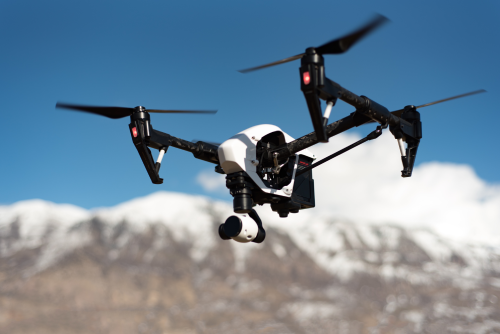
Choosing the best drones for agriculture service providers is not about buying the biggest machine on the brochure. In India, success usually comes from matching the drone to local crop patterns, field sizes, refill and battery logistics, and the quality of after-sales support. If you earn from spraying, scouting, or crop reporting, the right platform is the one that stays working during peak season and fits your business model.
Quick Take
- For most new agriculture service providers in India, a 10-litre to 16-litre spraying drone is the safest first buy.
- A larger-capacity spray drone makes sense only if you already have bigger contracts, trained crew, strong charging logistics, and reliable transport.
- If you want to move beyond spraying and sell premium services, add an RGB mapping drone first, then consider multispectral only if you can interpret the data well.
- Local service support, spare parts, training, and software workflow matter more than headline tank size.
- Treat vendor claims about acres per hour as ideal figures. Ask for a live field demo in your crop and field conditions.
- Budget for the full system: batteries, chargers, power source, nozzles, spare props, transport cases, PPE, service kit, and insurance.
- Before flying for commercial farm work, verify the latest DGCA and Digital Sky requirements, plus any rules related to agricultural spraying, chemical handling, and local permissions.
What “best” means for an agriculture service provider
A farmer buying one drone for his own land and a service provider running jobs across a district need different things.
As a service provider, you need:
- Uptime, because a missed spray window can lose revenue fast
- Fast turnaround, including refill, battery swap, and job restart
- Predictable coverage, not just raw speed
- Easy transport, especially if you move between villages in one day
- Simple reporting, so farmers, FPOs, estates, or agri-input partners can see what was done
- Repairability, because peak-season downtime is more expensive than small differences in specifications
That is why the best drones for agriculture service providers are usually best by service type, not by a single universal ranking.
Best drones for agriculture service providers by service type
1. 10-litre to 16-litre spraying drone
This is the best starting point for most new and growing service providers.
Best for:
- Village-level spraying businesses
- Input dealers adding drone services
- Operators working on fragmented land parcels
- Teams serving paddy, cotton, soybean, pulses, and mixed-crop belts
Why it works:
- Easier to transport in a pickup, small commercial vehicle, or utility vehicle
- Lower battery and charging burden than very large platforms
- Faster to learn and manage operationally
- Better suited to smaller fields, narrow access roads, and frequent plot changes
What to look for:
- Stable terrain-following performance
- Reliable pump and nozzle system
- Easy battery swapping
- Rugged landing gear and foldable arms
- A vendor with local spare inventory and field technicians
Watch-outs:
- On large continuous acreage, refill frequency can slow you down
- Some operators outgrow this size quickly if they win large cluster contracts
For many Indian districts, this class offers the best balance of capacity, field practicality, and business risk.
2. High-capacity spraying drone for large contracts
If your business already handles bigger acreages per day, a larger spraying drone can make sense.
Best for:
- FPO or cooperative contracts
- Estate and plantation work
- Seed production farms
- Service providers with multiple operators and a proper field crew
Why it works:
- Higher payload reduces refill interruptions
- Better fit for large, contiguous fields
- Can improve revenue per day when the rest of your workflow is strong
What to look for:
- Proven battery ecosystem and fast charging setup
- Good job-planning software with pause-and-resume reliability
- Strong frame durability
- Consistent spray output across the pass
- Clear service commitments from the vendor
Watch-outs:
- Bigger drones need better charging, handling, transport, and crew discipline
- A larger drone is not automatically more profitable on fragmented farms
- Heavy platforms can become inefficient if your fields are small and scattered
This class is best when your business problem is throughput, not just technology.
3. Compact spraying platform for orchards and uneven terrain
Flat-field performance and orchard performance are not the same thing.
Best for:
- Mango, pomegranate, citrus, grape, and plantation spraying
- Hilly or uneven terrain
- Farms with bunds, slopes, tree rows, or awkward turns
Why it works:
- More manageable around irregular plot shapes
- Easier to position precisely
- Usually better for slow, controlled operations where coverage quality matters more than raw area per hour
What to look for:
- Accurate hover and stable low-speed flight
- Dependable terrain sensing
- Good path repeatability
- A spray system supported by the OEM for orchard-style use
Watch-outs:
- Obstacle sensing is not magic; wires, branches, and trellis systems remain risky
- Not every field-crop spray drone performs well in orchards
If orchards are a major part of your business, do not assume a standard broad-acre drone will automatically do the job well.
4. RGB mapping drone for scouting, surveys, and customer trust
An RGB drone uses a standard visible-light camera. It will not spray, but it can become a valuable second service line.
Best for:
- Pre-spray field assessment
- Acreage estimation
- Boundary mapping
- Before-and-after documentation
- Basic crop scouting and visual reporting
Why it works:
- Helps you sell a more professional service
- Useful for agronomists, dealers, and input companies
- Easier to explain to customers than multispectral analytics
- Can support spray planning and post-job proof of work
What to look for:
- Reliable automated mission planning
- Good overlap control for mapping
- Geotagged images and easy report export
- Simple software that your team can actually use
Watch-outs:
- A camera drone is not a substitute for a proper ag spraying drone
- Image collection is easy; clean processing and reporting is where time gets lost
For many service providers, an RGB mapping drone is the smartest second purchase after a spray platform.
5. Multispectral or large-area mapping drone for premium advisory work
Multispectral imaging captures crop information beyond normal visible light. Some providers also use larger-area mapping platforms, including VTOL systems, for big estates or enterprise jobs.
Best for:
- Precision agriculture consultants
- Agronomy advisory teams
- Enterprise farms and plantation clients
- Large-area crop monitoring contracts
Why it works:
- Can reveal stress patterns that are harder to spot in standard images
- Useful for premium reporting, crop health tracking, and repeat surveys
- Better suited for businesses that sell decisions, not just flying hours
What to look for:
- A clear data-to-action workflow
- Software that produces usable outputs, not just colourful maps
- A team member who understands agronomy and interpretation
- Strong training and calibration support from the vendor
Watch-outs:
- Multispectral is often oversold
- Farmers do not pay for maps alone; they pay for useful advice
- If you cannot interpret the data correctly, the investment becomes hard to recover
This is not the best first buy for most operators. It becomes valuable when you already have a solid customer base and a premium service model.
Which type suits your business?
| Your service model | Best first drone | Add next when scaling |
|---|---|---|
| New district-level spray startup | 10L-16L spray drone | RGB mapping drone |
| Existing agri-input dealer offering farm service | 10L-16L spray drone | Second spray drone or mapping drone |
| Large-acreage contractor | High-capacity spray drone | Backup spray drone and reporting tool |
| Orchard or plantation specialist | Compact orchard-capable spray platform | RGB or multispectral scouting drone |
| Precision advisory or enterprise service provider | RGB mapping drone or spray drone, depending on revenue model | Multispectral or large-area mapping platform |
How to choose the right drone before you buy
Match tank size to your actual field pattern
A bigger tank looks attractive, but your output depends on:
- Field size
- Distance from refill point
- Time spent turning
- Battery swap time
- Road access between plots
If you mostly serve fragmented farms, a mid-size spray drone often beats a giant platform in real daily productivity.
Judge the battery ecosystem, not just the aircraft
Agriculture drone businesses often succeed or fail on battery management.
Check:
- Battery turnaround time
- Charger quality
- Field power options
- Battery cooling needs
- Replacement cost and local availability
A good aircraft with weak battery planning becomes an expensive headache.
Prioritise local service and parts support
This is one of the biggest buying factors in India.
Ask the vendor:
- Where is the nearest service centre?
- Which parts are stocked locally?
- What is the typical repair turnaround?
- Is peak-season support available in your state or district?
- Will they train your technician for basic field repairs?
Downtime during a spray window can cost more than the price difference between brands.
Check software workflow and reporting
Good software saves time for both spraying and mapping.
Look for:
- Simple mission planning
- Reliable pause-and-resume
- Job logs
- Area covered records
- Easy export of reports for customers
This matters even more if you work with FPOs, estates, or corporate clients who expect documentation.
Understand positioning and terrain features
Some platforms offer better path accuracy and terrain-following than others. You may also see RTK, short for real-time kinematic, which is a higher-accuracy positioning method.
You do not always need the most advanced positioning package, but it helps if you:
- Work on irregular boundaries
- Need repeatable routes
- Operate on uneven terrain
- Offer mapping and analytics
Ask how the drone performs near bunds, slopes, and patchy field edges.
Buy for repairability and ruggedness
Agriculture work is rough on equipment.
Pay attention to:
- Arm and frame durability
- Landing gear strength
- Pump accessibility
- Nozzle replacement ease
- Propeller availability
- Dust and field-condition tolerance
A platform that is quick to clean and maintain will usually earn more over a season.
What to ask for during a live field demo
Do not decide after seeing only a takeoff and landing. Ask the vendor to demonstrate a realistic job.
- Show full workflow: setup, mission creation, takeoff, spray run, refill, battery swap, resume.
- Use your crop type if possible: performance changes between open fields, orchards, and uneven ground.
- Ask for real job throughput: not just best-case acres per hour.
- Check spray consistency: especially at turns, edges, and headlands.
- Watch the restart process: can it resume accurately after interruption?
- Ask about part failures: pumps, nozzles, motors, landing gear, batteries.
- Request software output: what record can you give the customer after the job?
- Ask who supports you locally: the brand, a dealer, or a third-party technician.
India-specific legal, safety, and compliance checks
Agriculture drone operations combine aviation, chemical handling, and field safety. Rules and implementation details can change, so verify the latest official guidance before purchase and before commercial flying.
At minimum, confirm the current requirements related to:
- DGCA and Digital Sky registration and operating workflow
- The drone’s compliance status, including any platform-specific approvals applicable to your use case
- Remote pilot training or certification requirements for your team
- NPNT, or No Permission, No Takeoff, where applicable to your platform and operation
- Insurance for equipment and third-party liability
- State or local rules that may affect farm operations or spraying activities
For spraying work, also check:
- The pesticide label and approved usage instructions
- OEM guidance on supported chemicals, nozzles, and application methods
- Wind and drift precautions
- Safe distance from people, homes, roads, water bodies, livestock, and neighbouring fields
- Personal protective equipment for mixing, loading, and handling
Never mount a homemade spray kit on a consumer camera drone. Use only a platform designed, supported, and legally suitable for agricultural work.
Common mistakes agriculture service providers make
Buying on tank size alone
A bigger tank does not automatically mean more profit. In real field conditions, logistics decide output.
Under-budgeting the full system
The aircraft is only part of the purchase. Many first-time buyers forget batteries, chargers, transport, power backup, PPE, spare nozzles, and service tools.
Ignoring service support
A slightly cheaper drone with weak local support can become the costliest option in season.
Choosing multispectral too early
If you cannot turn data into an understandable recommendation, the customer will not value the result.
Believing brochure productivity claims without a field demo
Actual coverage depends on crop, wind, plot shape, refill routine, and operator skill.
Running without a standard operating process
Good service businesses use checklists for:
- Battery health
- Spray-system cleaning
- Pre-flight and post-flight inspection
- Chemical handling
- Job logging
- Customer handover
That is how you reduce downtime and build trust.
FAQ
How big should the first agriculture drone be for a new service provider?
For most new operators, a 10-litre to 16-litre spraying drone is the most practical first purchase. It balances capacity, transport ease, crew requirements, and business risk.
Is one big drone better than two smaller drones?
Not always. Two smaller drones can reduce downtime, give you a backup during repairs, and fit fragmented farm work better. One bigger drone makes more sense when you already have large, continuous contracts and strong field logistics.
Do I need a separate mapping drone if I already have a spray drone?
If you want to offer scouting, acreage checks, documentation, or premium advisory, yes. A dedicated mapping drone is usually more efficient and easier to use for those jobs than trying to make one platform do everything.
Is multispectral worth it for an agriculture service business?
Only if you can interpret the data and sell a useful advisory outcome. For most early-stage providers, RGB mapping delivers faster business value.
How important is RTK for agriculture drones?
RTK is helpful for repeatable, higher-accuracy operations, especially in mapping and some precision workflows. It is useful, but not every first-time buyer needs to pay a premium for it.
Should I prefer an Indian-supported drone over a grey-market import?
In most cases, yes. Local compliance help, spare parts, training, and faster repairs usually matter more than chasing an imported spec sheet.
What kind of insurance should I check?
Ask about equipment cover, third-party liability, and whether agricultural spraying operations are included. Read the exclusions carefully.
Can one spray drone handle every crop?
Not perfectly. Field crops, orchards, plantations, and uneven terrain often need different spray patterns, workflow, and operating style. Match the platform to your main revenue crops.
Final takeaway
For most agriculture service providers in India, the best drone is not the biggest one. It is a reliable, support-backed 10L-16L agricultural spray drone that fits your district’s field conditions, followed by an RGB mapping drone if you want to grow into higher-value services. Before spending, insist on a real field demo, verify current compliance requirements, and choose the vendor that will keep you flying when the season gets busy.
