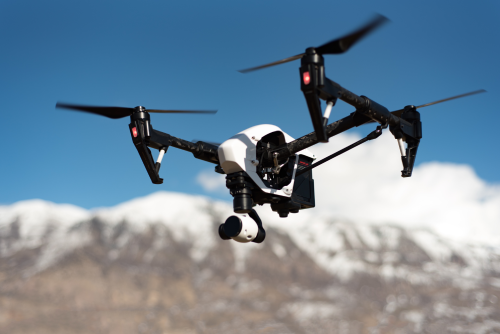
The best drones for aerial survey projects are the ones that match your site size, accuracy target, and workflow, not just the ones with the biggest camera. For Indian buyers, the real decision usually comes down to three things: survey accuracy, coverage per day, and whether you can actually get reliable support, batteries, and compliance help after the purchase.
If you are choosing your first survey drone or upgrading from a basic camera drone, this guide will help you shortlist the right platform without overspending.
Quick Take
- For most small to medium aerial survey jobs, an RTK-enabled multirotor with a mechanical shutter is the safest first choice.
- For large farms, mines, highways, and corridor mapping, fixed-wing or VTOL fixed-wing platforms cover far more ground in a day.
- LiDAR is powerful, but it is not necessary for every project. It makes the most sense in vegetation-heavy areas, utility corridors, and complex terrain.
- In India, after-sales support, spare parts, pilot training, and compliance checks matter almost as much as the drone itself.
- Before buying, define your output first: orthomosaic, contour map, stockpile volume, 3D model, corridor map, or LiDAR point cloud.
- A survey drone is a system, not just an aircraft. You also need software, batteries, field workflow, and sometimes a GNSS rover or ground control setup.
What makes a drone good for aerial survey projects
A drone that is excellent for photography is not automatically a good survey drone. Survey work depends on consistency, accurate positioning, and clean image capture.
The features that matter most
1. Mechanical shutter or global shutter
This is one of the biggest differences between a mapping drone and a casual camera drone.
A mechanical shutter reduces image distortion when the drone is moving quickly during mapping runs. That means cleaner orthomosaics and better measurement quality. A global shutter does the same job even more effectively on some advanced sensors.
If a drone only has a rolling shutter camera, it can still work for some basic mapping, but it is usually not the first choice for professional survey deliverables.
2. RTK or PPK positioning
RTK stands for Real-Time Kinematic. PPK stands for Post-Processed Kinematic.
Both methods improve the accuracy of the drone’s image geotags. In practical terms, that can reduce the number of ground control points you need and make your workflow faster. For many Indian survey teams working on construction, mining, solar, and land development sites, RTK is the sweet spot.
You may still need checkpoints or ground control depending on the client requirement and the final accuracy needed.
3. Stable mapping workflow
A good survey drone should offer:
- automated grid missions
- repeatable flight paths
- reliable waypoint execution
- easy overlap settings
- mission planning that does not feel fragile in the field
If your team is doing weekly progress surveys, repeatability matters as much as raw image quality.
4. Area coverage per battery
Coverage matters more than many first-time buyers expect.
A small multirotor is easy to deploy, but it may become inefficient on very large sites. A fixed-wing or VTOL fixed-wing drone can save hours on open-area jobs such as mining leases, transmission corridors, highway stretches, or large agricultural blocks.
5. Software ecosystem
Before buying the drone, check:
- what mission planning app it uses
- what photogrammetry software it supports
- whether it exports clean image data and logs
- whether your clients need CAD, GIS, or point cloud outputs
- whether your team can process the data in-house
A drone with a great camera but weak software support can become a headache very quickly.
6. Service, batteries, and field support
For Indian buyers, this is where many decisions are won or lost.
Ask:
- Can you get batteries quickly?
- Are props, chargers, and repair parts available?
- Is there a local service partner?
- How long is the repair turnaround?
- Will the vendor train your team?
- Can they demonstrate survey accuracy on a real site?
A drone that sits in the service centre during your busy season is not a good buy, even if its specs look impressive on paper.
Best drones for aerial survey projects
The models below are the most relevant benchmark choices for buyers comparing serious survey platforms. Availability, procurement channels, and support in India can change, so always verify current supply and compliance before buying.
| Drone or platform | Best for | Why it stands out | Main watch-outs |
|---|---|---|---|
| DJI Mavic 3 Enterprise with RTK module | Small to medium mapping jobs | Portable, fast deployment, mechanical shutter, strong entry point into professional photogrammetry | Not ideal for very large corridors or vegetation-heavy terrain |
| DJI Matrice 350 RTK with Zenmuse P1 or L2 | Advanced enterprise photogrammetry and LiDAR | Flexible payloads, higher-end outputs, strong enterprise workflow | Expensive, heavier logistics, more training needed |
| WingtraOne GEN II | Large-area mapping without runway operations | VTOL convenience with fixed-wing coverage | Premium ecosystem, needs disciplined planning and field process |
| senseFly eBee X | Open-area fixed-wing surveying | Efficient coverage, long-established mapping reputation | Best suited to open sites; support and sourcing must be checked carefully |
| DJI Phantom 4 RTK | Teams already invested in older mapping workflows | Proven mapping results, widely understood by many professionals | Aging platform, future support risk, not the best fresh buy unless support is solid |
| Indian enterprise survey platform from a local OEM or integrator | Buyers prioritising domestic support and service | Local training, procurement comfort, possible tender alignment | Must be judged through real mapping results, not brochure claims |
DJI Mavic 3 Enterprise with RTK module
For many users, this is the best overall starting point for aerial survey work.
It hits a practical balance between portability, mapping quality, and operational simplicity. If you are mapping land parcels, construction sites, stockpiles, industrial roofs, campuses, or solar sites, this class of drone is often the easiest to justify.
Why it works well
- fast to deploy
- compact enough for one-person field teams
- mechanical shutter is a major advantage for photogrammetry
- RTK support improves efficiency
- easier learning curve than heavy enterprise platforms
Best fit
- survey startups
- civil contractors
- architects and planners
- colleges and training institutes
- small engineering consultancies
- real estate development teams doing frequent progress mapping
Where it falls short
- very large sites where fixed-wing saves time
- dense vegetation where photogrammetry struggles
- highly specialised LiDAR or corridor work
- windy open terrain where larger platforms may perform better
If your projects are mostly under a few hundred acres at a time and you want a practical, repeatable mapping setup, this is usually the first platform to shortlist.
DJI Matrice 350 RTK with Zenmuse P1 or L2
This is the serious enterprise option.
The drone itself is a platform. What matters most is the payload you attach. With a P1-class photogrammetry camera, it becomes a high-end mapping tool. With an L2-class LiDAR payload, it becomes relevant for vegetation, utility corridors, and terrain that is difficult to map cleanly with RGB images alone.
Why it stands out
- enterprise-grade reliability
- advanced payload flexibility
- suitable for both high-quality photogrammetry and LiDAR workflows
- better fit for complex industrial jobs
- useful when clients expect premium deliverables
Best fit
- established survey firms
- EPC and infrastructure companies
- mining operations
- utility and corridor mapping teams
- engineering consultancies handling difficult terrain
- teams that need one platform for multiple sensor types
Main trade-offs
- higher purchase and operating cost
- more batteries, transport planning, and crew discipline
- heavier training burden
- overkill for simple weekly site progress mapping
If your work includes transmission lines, forest-edge corridors, elevation-sensitive projects, or premium survey deliverables, this class of platform is often worth the extra investment.
WingtraOne GEN II
This is one of the most compelling choices for buyers who need large-area coverage but do not want the compromises of a traditional runway-dependent fixed-wing aircraft.
It uses vertical take-off and landing, then transitions into efficient fixed-wing flight. That makes it especially attractive for big open sites where multirotors become too slow.
Why it stands out
- covers large areas efficiently
- VTOL operation removes many fixed-wing launch and landing hassles
- built with mapping use in mind
- strong fit for serious photogrammetry over large sites
Best fit
- mining leases
- large agricultural estates
- environmental and land management work
- corridor and infrastructure projects
- teams with recurring open-area survey demand
Main trade-offs
- premium ecosystem
- mission planning and field processes need to be tighter than with a small multirotor
- may be less convenient for cramped urban or highly obstructed sites
For buyers who already know that site size is their main bottleneck, a VTOL fixed-wing platform can transform productivity.
senseFly eBee X
The eBee line has long been associated with professional mapping, especially for open-area survey work.
If your jobs are mainly large and open, fixed-wing efficiency is hard to ignore. The eBee X is not the kind of drone most beginners should buy as a first-ever UAV, but for the right workflow it can be extremely effective.
Why it stands out
- efficient coverage over broad sites
- mature mapping reputation
- suited to recurring large-area data capture
Best fit
- agriculture and land management
- mining and quarry sites
- environmental mapping
- wide open survey areas where endurance matters more than hovering
Main trade-offs
- best in open terrain, not cluttered sites
- fixed-wing operations require more operational discipline
- sourcing, service, and local support should be checked carefully before purchase
This is a specialist’s choice rather than an all-rounder. If your sites are large and open, it deserves consideration.
DJI Phantom 4 RTK
This is a legacy recommendation, not the first fresh buy for most people in 2026.
That said, it remains a reference point because so many professionals built reliable mapping workflows around it. If you already own batteries, accessories, and established processing templates, it can still make sense to keep one running.
Why it still matters
- proven survey performance
- familiar to many mapping professionals
- straightforward photogrammetry workflow
Best fit
- teams already invested in this ecosystem
- buyers finding well-supported stock through trusted enterprise channels
- organisations that need compatibility with older established workflows
Main trade-offs
- aging platform
- long-term support risk
- battery and parts future is a concern
- less future-proof than newer alternatives
For a new buyer starting from zero, a newer platform is usually the better bet. For an existing operator, this may still be useful if support is available.
Indian enterprise survey platforms from local OEMs and integrators
If you want local procurement, local service, and a stronger India-based support structure, you should absolutely evaluate Indian enterprise drone vendors and integrators. But do not buy only on the strength of a “Made in India” label.
The test is simple: can the platform consistently deliver the map accuracy, workflow reliability, and software compatibility your jobs require?
What to verify in a demo
- shutter type of the camera
- RTK or PPK workflow quality
- actual ground sample distance and map output
- compatibility with your processing software
- spare parts availability
- battery performance in Indian field conditions
- repair turnaround and training support
- field success on a site similar to yours
For government, infrastructure, or procurement-sensitive buyers, local support can be a major advantage. Just insist on deliverable-based evaluation, not marketing claims.
Which drone should you buy for your type of survey work?
Choose a compact RTK multirotor if you handle:
- small to medium plots
- construction progress surveys
- stockpile calculations
- rooftops and solar plants
- frequent one-person field operations
- clients who need fast turnaround more than massive daily coverage
In most cases, this means a Mavic 3 Enterprise-class platform.
Choose a fixed-wing or VTOL fixed-wing if you handle:
- large agricultural areas
- mining leases
- highways and linear projects
- canal, pipeline, or corridor mapping
- repeated surveys over large open land
This is where WingtraOne or eBee-class platforms start making more sense.
Choose an enterprise heavy-lift platform if you handle:
- LiDAR jobs
- utility corridors
- dense vegetation
- complex topography
- high-value infrastructure
- multi-sensor workflows
This is where a Matrice 350 RTK with the right payload becomes the logical choice.
What to budget for beyond the drone
A survey drone purchase is rarely complete with the aircraft alone. Budget for the full workflow.
Typical extras buyers forget
- extra batteries
- charging hub or field charging setup
- spare propellers
- rugged tablet or controller protection
- mapping software licence
- data storage and backup
- GNSS rover or ground control kit
- training and standard operating procedures
- carrying case and transport protection
- maintenance and repair reserve
- insurance if your contract or organisation requires it
Many buyers overspend on the aircraft and underspend on the workflow. That usually leads to slow deliveries and inconsistent results.
India-specific legal, safety, and compliance checks
If you are buying a survey drone in India, do not assume the vendor’s sales pitch is the final word on legality or permissions.
Before you fly, verify the latest official position on:
- DGCA rules that apply to your drone class and operation
- Digital Sky requirements
- whether the aircraft needs registration or other compliance steps
- Remote Pilot Certificate or other pilot qualification requirements, where applicable
- NPNT requirements for the platform, where applicable
- airspace permissions for the specific site
- local site permissions from landowners, industrial operators, mining lease holders, or authorities
- data handling requirements for sensitive or government-linked projects
Practical safety habits that matter in survey work
- conduct a pre-flight risk check for power lines, masts, birds, and cranes
- do not rush battery decisions on hot days
- keep a visual observer if the site is busy or obstructed
- maintain safe separation from people and vehicles
- avoid flying over non-involved workers unless your operation is specifically planned and authorised for it
- record flights, batteries, and maintenance events
Survey jobs often happen near active construction, roads, industrial sites, or rural settlements. Safe planning is part of being a professional operator.
Common mistakes buyers make
1. Buying a cinema drone for survey work
A great-looking camera does not guarantee survey-grade output. Mechanical shutter, positioning accuracy, and mission repeatability matter more.
2. Ignoring software compatibility
The drone, mission app, and processing software must work together cleanly. Always test the full workflow.
3. Choosing only by brochure specs
A field demo on your actual site is more valuable than a long spec sheet.
4. Underestimating battery needs
Survey teams lose time not because the drone is bad, but because they did not buy enough batteries and charging capability.
5. Thinking RTK removes all ground checks
RTK helps a lot, but checkpoints and quality control still matter. Do not promise survey accuracy without a proper workflow.
6. Buying fixed-wing when your sites are too tight
If most of your jobs are cramped urban, industrial, or obstructed locations, a compact multirotor may be more practical even if it covers less area.
7. Assuming LiDAR is always better
LiDAR is powerful, but for many ordinary mapping jobs it is unnecessary and expensive. Buy it only when the use case truly demands it.
FAQ
Can I use a regular camera drone for aerial survey projects?
For basic visual mapping, sometimes yes. For professional survey deliverables, it is better to use a platform designed for mapping, especially one with a mechanical shutter and accurate positioning support.
Do I need RTK for every survey job?
No. But RTK is very useful for improving efficiency and consistency. It becomes especially valuable when clients need better positional accuracy or when you want to reduce field time spent on ground control.
Is a fixed-wing drone better than a multirotor?
Not always. Fixed-wing is usually better for large open areas. Multirotors are usually better for smaller sites, tighter spaces, and quick deployment.
Is LiDAR necessary for land surveys?
Only for certain jobs. LiDAR is most useful in vegetation-heavy areas, utility corridors, and terrain where RGB photogrammetry struggles. For many construction and site-mapping jobs, a good photogrammetry setup is enough.
How many batteries should I plan for?
Enough to complete a realistic field session without stress. The exact number depends on your drone, site size, travel time, and charging setup. Most professional teams buy more batteries than they first expected.
Are Indian-made drones good for survey work?
Some can be, especially when local support and procurement matter. But you should judge them by actual mapping results, software workflow, and service quality, not only by branding.
What accuracy can I expect from a drone survey?
That depends on the drone, sensor, RTK or PPK workflow, flight planning, site conditions, and ground control process. Never promise a specific accuracy figure without validating the full workflow.
Should I buy or rent my first survey drone?
If you have steady recurring work, buying usually makes sense. If your jobs are occasional or you are still learning what deliverables clients want, renting or outsourcing a few projects first can save money.
What should I ask the vendor before paying?
Ask for a real field demo, sample outputs, software workflow details, battery and spare part availability, training plan, service turnaround time, and compliance support relevant to India.
Final takeaway
If you want the safest all-round choice for most aerial survey projects, start with a Mavic 3 Enterprise-class RTK multirotor. If your work is mainly large open areas, move up to a VTOL or fixed-wing mapping platform. If you need vegetation penetration, corridor work, or premium enterprise outputs, look at a Matrice 350 RTK-class system with the right payload.
Before you spend, ask one question: what deliverable am I actually selling? Then insist on a live demo, verify current Indian compliance requirements, and buy the platform that fits your workflow, not the one with the loudest marketing.
