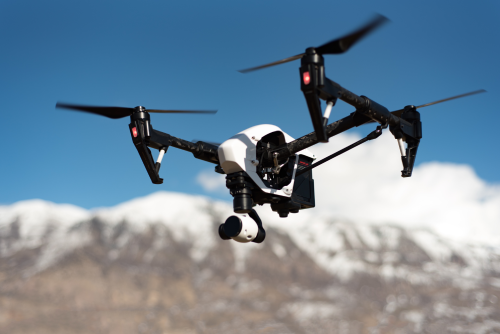
The best drone angles for stunning cinematic videos are usually not the most complicated ones. What makes footage feel cinematic is a smart angle, smooth movement, good light, and a clear idea of what the shot is trying to say. This guide breaks down the most useful drone angles for beginners and working creators in India, with practical tips on framing, camera settings, and safe flying.
Quick Take
- Start with simple angles: high-wide establishing, reveal, top-down, orbit, and slow follow shots.
- Fly slower than you think. Most cinematic drone footage looks calm, not rushed.
- Use one clear movement at a time. Combining climb, yaw, tilt, and forward motion all at once usually looks messy.
- Shoot in soft light when possible. Early morning and late afternoon are easier than harsh Indian midday sun.
- If your drone allows manual settings, 25 fps is often practical in India, especially around artificial lights, because it matches the local 50 Hz power frequency better.
- Use neutral density (ND) filters if available. They act like sunglasses for the camera and help motion look smoother in bright sunlight.
- Always verify the latest Indian drone rules, airspace restrictions, and local permissions before flying, especially near cities, heritage sites, beaches, events, and private property.
Why drone angle matters more than expensive gear
A cinematic drone video is not just a “nice aerial view.” It gives the viewer a feeling of scale, direction, mood, or drama.
A good angle can make a small hill look epic, a wedding venue feel elegant, or a real estate property look spacious and premium. A poor angle can make even a high-end drone clip look flat.
The secret is to think in terms of purpose:
- Do you want to reveal a location?
- Show the size of a landscape?
- Follow a subject smoothly?
- Add depth through foreground and background movement?
- Make the viewer feel like they are entering the scene?
Once you know that, choosing the right drone angle becomes much easier.
Best drone angles for stunning cinematic videos at a glance
| Angle | Best for | Main movement | Why it works |
|---|---|---|---|
| High-wide establishing | Travel, landscapes, resorts | Slow forward or hover | Sets the scene and scale |
| Low-to-high reveal | Hills, forts, beaches, venues | Rise up from behind an object | Creates drama and surprise |
| Top-down bird’s-eye | Fields, roads, boats, patterns | Hover or slow drift | Strong geometry and symmetry |
| Orbit | Lone subject, buildings, statues, trees | Circle around subject | Adds depth and energy |
| Push-in | Properties, monuments, entrances | Slow forward move | Feels intentional and immersive |
| Pull-back reveal | Cliffs, lakes, large venues | Fly backward and/or upward | Reveals scale beautifully |
| Side slide parallax | Trees, buildings, people, vehicles | Fly sideways | Adds depth through layered motion |
| Leading-line follow | Roads, rivers, coastlines, canals | Follow the line smoothly | Gives direction and flow |
| Over-the-shoulder follow | Walks, trekking, couples, riders | Follow from behind and above | Feels personal and cinematic |
| Rise and tilt | Waterfalls, skylines, properties | Climb while tilting gimbal | Opens up the frame elegantly |
| Diagonal track | Action, sports, movement | Track across frame diagonally | More dynamic than straight follow |
| Static hover with subject motion | Ceremonies, boats, people, traffic patterns | Hold frame | Lets the scene create the drama |
12 drone angles that consistently look cinematic
1) High-wide establishing shot
This is the classic opening shot. You place the drone high enough to show the full scene, then either hold a steady frame or move slowly forward.
It works best when the location itself is interesting: a lake, coastline, tea estate, desert road, wedding venue, or hill town. In India, this shot works especially well in places with strong natural patterns, such as Kerala backwaters, farm plots, salt pans, or winding ghats.
How to do it well:
- Keep the horizon level.
- Avoid flying too high just because you can. Show enough detail to keep the shot interesting.
- Use soft light if possible. Harsh noon light can flatten the landscape.
If the scene is already beautiful, this is often your safest and strongest first shot.
2) Low-to-high reveal
A reveal shot starts with the main subject hidden, then gradually uncovers it. You can begin behind a tree line, wall, roofline, small hill, or even a foreground structure, then rise smoothly.
This creates instant drama because the viewer discovers the scene instead of seeing everything at once.
Good uses:
- Revealing a beach or valley from behind rocks or trees
- Showing a fort or property entrance from behind a gate or wall
- Revealing a wedding venue from behind décor or a nearby structure
Be careful with obstacles. This shot looks simple, but low-altitude flying near wires, branches, poles, and rooftops needs extra caution.
3) Straight-down bird’s-eye shot
This is the top-down angle, where the camera points straight at the ground. It looks great when the scene has patterns, symmetry, or contrast.
Think of:
- Paddy fields and farmland grids
- Boats in clear water
- Stepwells, courtyards, and geometric architecture, where permitted
- Roads cutting through desert, forest, or fields
- Beach umbrellas, markets, or parking layouts, where flying is allowed and safe
This angle works because it removes the normal eye-level perspective and turns the scene into shapes and design.
To make it cinematic, do not always move forward. Sometimes a slow vertical climb, gentle sideways drift, or even a locked hover is stronger.
4) Orbit around the subject
An orbit means circling around a subject while keeping it framed. It is one of the most cinematic drone shots because it creates depth and movement at the same time.
Best subjects for orbits:
- A lone tree
- A person standing safely in an open area
- A resort building or villa
- A watchtower or scenic viewpoint
- A car or bike parked on private land, not moving in traffic
Tips for a cleaner orbit:
- Pick a clear subject with space around it.
- Keep your distance. Tight orbits are harder and riskier.
- Move slowly and keep the circle radius consistent.
A wide orbit around a subject often looks more premium than a very close orbit.
5) Slow push-in
A push-in is simply a slow forward move toward the subject. It sounds basic, but it is one of the most useful cinematic shots for real estate, hospitality, weddings, and travel content.
This shot works because it draws the viewer into the scene. It feels deliberate and focused.
Use it for:
- Approaching a homestay or resort
- Moving toward a temple tank, ghat, or garden, if flying is allowed
- Entering a wedding venue before guests arrive
- Approaching a cliff edge, lake, or viewpoint from a safe distance
Keep the speed gentle. If the drone rushes in, the shot feels more like a casual fly-through than a cinematic move.
6) Pull-back reveal
This is the opposite of the push-in. You begin with the subject filling more of the frame, then slowly move backward to reveal the bigger environment.
It is perfect when the surroundings are more impressive than the subject alone.
Examples:
- Start close on a couple, then reveal the full hill backdrop
- Start with a villa or farmhouse, then show the land around it
- Start with a boat, then reveal the entire river bend or backwater setting
The key here is obstacle awareness. Flying backward is one of the easiest ways to make mistakes. If your drone has sensors, that helps, but do not depend only on them. A visual observer is useful when possible.
7) Side slide parallax
Parallax is when closer objects move faster across the frame than distant objects. That difference creates a strong sense of depth.
A side slide shot does exactly that. The drone moves left or right while your subject stays framed against a changing background.
This is excellent for:
- Trees in the foreground with mountains behind
- Buildings with open land beyond
- A person or vehicle moving through a large landscape, in a safe controlled area
- Coastal scenes with rocks, waves, and distant horizon
Parallax is one of the easiest ways to make footage look expensive. Even a simple location becomes more cinematic when there are layers in the frame.
8) Leading-line follow
Leading lines are visual lines that guide the eye through the frame. Roads, rivers, canals, coastlines, railway-adjacent landscapes, long paths, bridges, and rows of trees can all work.
With a drone, you can follow these lines smoothly and make the viewer feel pulled into the scene.
Try this with:
- A winding road in the hills
- A river bend
- A long boundary path on a property
- A coastline from an angle, not only from directly above
Be careful with public roads. Avoid unsafe flying over moving traffic or crowded areas. A road can look cinematic, but safety and legality come first.
9) Over-the-shoulder follow shot
This angle places the drone behind and slightly above the subject, as if the viewer is following them into the scene.
It works beautifully for:
- A person walking toward a viewpoint
- A trekking clip
- A couple entering an open venue
- A cyclist or rider in a safe, controlled location
This shot feels personal. Instead of showing only the place, it shows the person experiencing it.
Do not fly too close. Give enough space so the shot feels elegant, not intimidating. It is usually better to be a little wider and safer.
10) Rise and tilt shot
In this move, the drone climbs while the gimbal tilts to reveal more of the scene. It is a classic way to transition from detail to scale.
Use it when:
- A foreground area looks ordinary, but the full view is impressive
- You want to reveal a skyline, lake, waterfall, or valley
- You are filming a resort, campus, or large property
This shot looks polished when both the climb and the gimbal movement are smooth and slow. If one is too fast, it feels mechanical.
In practice, this is one of the best shots for creators filming architecture, hospitality, and scenic locations.
11) Diagonal tracking shot
Many beginners only fly straight forward. A diagonal track is more dynamic. The drone moves across the scene at an angle while following the subject or landscape.
This works especially well for:
- Adventure clips
- Moving subjects in open areas
- Hillside roads seen from the side
- Boats or kayaks in open water, where allowed and safe
Diagonal movement makes the shot feel less predictable. It can show both the subject and the environment in one move.
The trick is restraint. Too much speed ruins the cinematic feel.
12) Static hover with subject movement
Not every cinematic drone shot needs drone movement. Sometimes the best angle is to lock the frame and let the scene move inside it.
This is useful for:
- Boats passing through the frame
- A wedding procession approaching from a distance in an open venue
- Waves, clouds, or moving shadows
- People walking across a geometric top-down frame
A stable hover can look surprisingly premium because it gives the viewer time to absorb the scene.
If your drone is steady in light wind, use this to collect clean editorial shots you can easily cut into any video.
How to choose the right angle for the scene
For landscapes and travel
Use:
- High-wide establishing
- Low reveal
- Pull-back reveal
- Top-down
- Leading-line follow
These angles show scale and location best.
For weddings and events
Use:
- Over-the-shoulder follow
- Slow push-in
- Wide orbit
- Static hover
- Rise and tilt
Avoid flying over guests or densely crowded areas. Plan safe, open flight paths with the organizer.
For real estate and hospitality
Use:
- Push-in
- Pull-back reveal
- Rise and tilt
- High-wide establishing
- Side slide parallax
These show both the property and its surroundings.
For adventure and sports content
Use:
- Diagonal track
- Over-the-shoulder follow
- Side slide parallax
- Leading-line follow
Keep extra margin for safety, especially in windy or uneven locations.
Camera and flight settings that make these angles look cinematic
A great angle can still look average if the footage is shaky, too sharp, or too fast.
1) Use slower flight modes
If your drone has Cine or Tripod mode, use it. Smooth movement instantly looks more cinematic.
2) Match frame rate to the job
For cinematic delivery, 24 fps or 25 fps is common. In India, 25 fps is often practical, especially around artificial lighting, because it can help reduce flicker under 50 Hz electrical systems.
For action you plan to slow down, 50 fps or higher can help, if your drone supports it.
3) Control shutter speed if possible
A common guideline is to keep shutter speed near double your frame rate for natural-looking motion blur. In bright Indian sunlight, that often means using an ND filter.
If your drone does not offer manual controls, focus on flying smoothly and choosing good light.
4) Keep the horizon straight
A tilted horizon makes footage look careless unless it is a deliberate creative choice.
5) Move one axis at a time
Instead of combining:
- forward flight
- climb
- yaw, which means rotating left or right
- gimbal tilt
try one main movement with maybe one supporting movement. Simple usually looks better.
6) Shoot during better light
Golden hour is ideal, but even a slightly overcast morning can be better than hard noon light. In Indian summers, harsh sunlight and heat haze can reduce detail and make landscapes look dull.
A simple 5-step workflow for better cinematic shots
1) Decide the story of the shot
Ask: am I revealing, following, or establishing?
If you cannot answer that, the angle will usually feel random.
2) Pick only 2 or 3 shot types for that location
Do not try every move on every flight. A small, planned shot list is better.
Example:
- High-wide establishing
- Slow push-in
- Top-down detail shot
3) Check wind, light, and obstacles
Indian coastal areas, hill stations, and monsoon conditions can change quickly. Trees, wires, poles, and masts are common hazards.
4) Fly one clean take, then repeat with a small improvement
Maybe slower. Maybe wider. Maybe with a better subject position.
Good drone videography is usually iteration, not luck.
5) Review before leaving
Check:
- exposure
- horizon
- subject position
- smoothness
- focus, if your drone supports tap-to-focus or focus modes
It is much easier to reshoot on location than to fix a bad angle later.
Safety, legal, and compliance checks in India
Cinematic shots are only useful if they are safe and lawful.
Before flying in India, verify the latest official guidance for your drone type, location, and use case. Rules can change, and requirements may differ depending on the drone category, airspace, and whether the work is recreational or commercial.
As a practical baseline:
- Check the latest DGCA and Digital Sky guidance before the shoot.
- Confirm that the area is legal to fly in and not restricted.
- Do not assume tourist spots, beaches, forts, campuses, or open grounds are automatically allowed.
- Take permission from the property owner, event organizer, or venue manager where needed.
- Be extra cautious near airports, helipads, military zones, government-sensitive areas, and crowded urban locations.
- Do not fly over people, traffic, or dense gatherings just for a dramatic shot.
- Respect privacy. A cinematic angle should never become an intrusive one.
- If you are filming for a client, also check whether location permission, local administration approval, or insurance is appropriate for that project.
A good filmmaker plans the shot. A professional also plans the permissions.
Common mistakes that ruin cinematic drone videos
Flying too fast
Most beginners move the drone like they are in a hurry. Slow footage feels more premium and gives the viewer time to read the frame.
Shooting at the wrong time of day
Midday light can work in some cases, but it is not forgiving. Early morning and late afternoon usually give better texture and colour.
Choosing a weak subject
A drone angle cannot save a boring subject. Pick scenes with shape, light, texture, or scale.
Overusing orbits
Orbits look great, but not every scene needs one. If every shot circles, the video starts feeling repetitive.
No foreground in the frame
Foreground adds depth. Trees, rocks, walls, roofs, or landscape layers can make a huge difference.
Trying advanced moves in obstacle-heavy areas
Reveals and low-altitude tracks look cinematic, but only if the airspace around you is actually clear.
Ignoring wind
What looks like a “smooth slow shot” on the controller can become jittery footage in gusty conditions, especially near coasts, cliffs, and open fields.
Not editing with intention
Even the best angles need a sensible sequence. A video becomes cinematic when the shots flow: wide, medium, detail, reveal, exit.
FAQ
What is the easiest cinematic drone angle for beginners?
Start with a high-wide establishing shot and a slow push-in. They are simple, safe in open areas, and useful in almost every kind of video.
Which drone angle looks the most dramatic?
The low-to-high reveal usually feels the most dramatic because it hides the scene first and then uncovers it. Use it only where obstacle clearance is excellent.
Is top-down footage always cinematic?
Not always. It works best when the scene has strong patterns, symmetry, shadows, or colour contrast. A random top-down shot can feel flat.
How low should I fly for cinematic videos?
Low shots can look great, but there is no “best” universal height. Fly only as low as you can safely maintain clear separation from wires, trees, poles, roofs, and people. In many cases, slightly higher is both safer and more elegant.
Do I need an FPV drone for cinematic angles?
No. A regular camera drone is enough for most cinematic travel, wedding, real estate, and landscape shots. FPV is useful for fast, immersive moves, but it is not necessary for the angles covered here.
What frame rate should I use in India?
For a cinematic look, 24 fps or 25 fps are common choices. In India, 25 fps is often convenient, especially around indoor or mixed lighting, because it can reduce flicker issues tied to 50 Hz electricity.
How do I make real estate drone videos look more premium?
Use a mix of high-wide establishing shots, push-ins, rise-and-tilt reveals, and side slides with foreground elements. Film during softer light and keep motion slow.
Can I film drone videos at forts, beaches, or tourist places in India?
Do not assume yes. Many locations may have local restrictions, heritage protection rules, airspace limits, or property-level permission requirements. Always verify the latest official and local permissions before flying.
How many drone angles should I use in one video?
Usually 4 to 8 strong shots are enough for a short cinematic edit. Too many similar angles can make the video feel repetitive.
What is better: moving the drone or moving the subject?
Both can work, but static drone shots with subject movement are often underrated. They are easier to cut, look clean, and can feel very cinematic when composed well.
Final takeaway
For your next shoot, do not chase every flashy move. Pick three angles only: one establishing shot, one reveal, and one follow or parallax shot. Fly them slowly, in good light, with proper permissions and a clear safety margin, and your drone videos will start looking cinematic much faster than if you rely on random flying.
