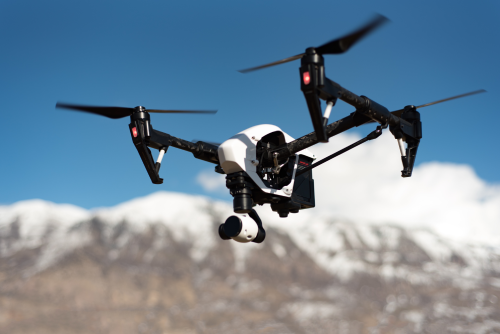
Industrial sites are full of places that are difficult, risky, or expensive to inspect by ladder, rope, scaffold, or shutdown. That is exactly where drones are becoming useful.
How drones are used in industrial safety inspections is simple in principle: they help safety teams see hazards faster, from safer stand-off distances, and with better documentation than a quick visual check from the ground.
Quick Take
- Drones help inspect roofs, tanks, stacks, pipelines, power equipment, solar plants, towers, and other hard-to-reach assets.
- Their biggest safety benefit is reducing the need to send people into risky areas for the first look.
- Regular camera drones are useful for cracks, corrosion, loose fittings, blocked gutters, damaged panels, and general condition checks.
- Thermal drones use heat patterns to spot issues such as overheating electrical parts, hot solar modules, insulation problems, and abnormal temperature zones.
- Drones are best for screening, documenting, and prioritising defects. They do not replace every close-up engineering inspection.
- In India, companies should verify the latest DGCA and Digital Sky requirements before any outdoor operation, even when flying on private industrial premises.
- The best results come when drone inspection data is tied to maintenance action, not just stored as photos and videos.
Why drones fit industrial safety inspections so well
Traditional industrial inspections often involve one or more of these risks:
- Working at height
- Entering unstable or restricted zones
- Getting close to heat, steam, chemicals, or electrical systems
- Shutting down equipment just to check a small area
- Spending hours on access setup before the inspection even begins
A drone changes that first stage of inspection.
Instead of sending a person straight onto a roof, flare stack, tower, or tank, the team can first use a drone to understand the condition from a safer distance. That initial scan helps answer practical questions:
- Is there visible damage?
- Is access really needed?
- Which exact area needs closer attention?
- Can maintenance be planned without an emergency shutdown?
- Is the issue urgent, routine, or possibly a false alarm?
This matters because many industrial safety incidents happen around access, not just around the asset itself. Ladders, scaffolding, confined spaces, slippery roofs, and exposed edges all create risk. If a drone reduces the number of times workers must physically enter those situations, it already has value.
For Indian industrial sites, this is especially relevant in large plants, solar parks, mining zones, ports, warehouses, power infrastructure, and manufacturing campuses where assets are spread out and ambient conditions can be harsh.
What drones inspect in industrial environments
Industrial safety inspection is not one single task. It includes visual condition checks, thermal anomaly detection, hazard identification, and progress or compliance documentation.
Elevated and hard-to-reach structures
Drones are commonly used to inspect:
- Factory roofs
- Chimneys and stacks
- Cooling towers
- Storage tanks
- Telecom towers
- Warehouses
- Bridges inside industrial campuses
- Cranes and elevated gantries
- Conveyor structures
- Solar plant mounting structures
A drone with a good zoom camera can look for:
- Rust and corrosion
- Missing bolts or fasteners
- Cracks
- Bent members
- Loose cladding or sheet metal
- Water pooling on roofs
- Blocked drainage points
- Damaged insulation or outer covering
- Bird nesting or debris near critical areas
Heat, electrical, and insulation issues
A thermal camera sees temperature differences rather than normal colour images. This makes it useful for spotting issues that may not be obvious to the eye.
Common thermal inspection uses include:
- Overheating switchgear or electrical connections
- Hot spots in solar panels
- Uneven heating in process equipment
- Insulation failures
- Steam or heat leakage patterns
- Bearing or motor overheating in some accessible scenarios
Thermal data is valuable, but it must be interpreted carefully. Not every hot area is a fault, and not every fault appears clearly in thermal imagery. Load conditions, time of day, weather, and surface material all affect results.
Confined, unstable, or recently affected areas
In some situations, the main value of a drone is not detail but safe access.
Examples:
- An area after a small fire
- A roof after a storm
- A structure after impact or vibration concerns
- A mining edge or slope with instability risk
- Areas near suspected leaks or fumes
- Zones where debris may fall
The drone can provide a quick visual picture before the safety team decides whether human entry is appropriate.
Large-area hazard scanning
Industrial sites often need routine checks over wide areas, not just one asset.
Drones can support:
- Perimeter and fencing condition checks
- Open yard housekeeping observations
- Drainage blockage checks
- Material storage compliance reviews
- Vehicle route conflict points
- Emergency access path visibility
- Temporary structure monitoring during projects
This is especially useful on large campuses where walking the entire site is slow and easy to postpone.
Which drone sensors are used for safety inspections
Not every industrial inspection needs a high-end drone. The useful tool depends on the task.
| Sensor or setup | Best for | What it helps detect | Main caution |
|---|---|---|---|
| Standard RGB camera | General visual inspection | Cracks, corrosion, loose parts, damage, debris | May miss heat-related faults |
| Zoom camera | Stand-off inspection from a safer distance | Fasteners, labels, small defects on high structures | Image quality depends on stability and lighting |
| Thermal camera | Heat-related anomaly detection | Overheating parts, solar hot spots, insulation issues | Needs correct interpretation and proper conditions |
| Low-light camera | Dim indoor or evening environments | Visibility in warehouses or enclosed spaces | Not a replacement for thermal analysis |
| LiDAR | Detailed 3D mapping in some advanced projects | Structural geometry, terrain, stockpile shape | Usually more expensive and not needed for routine inspections |
| Collision-avoidance sensors | Indoor or obstacle-heavy flying | Safer movement around structures | Not foolproof; pilot skill still matters |
For many businesses, a good visual camera and a competent inspection workflow deliver more value than buying an expensive sensor suite without a clear use case.
A typical industrial drone inspection workflow
The best industrial drone inspections are not random flights. They follow a planned process.
1. Define the inspection objective
Start with a clear question.
Examples:
- Check for roof damage after rain
- Screen a tank exterior for corrosion points
- Identify hot spots on solar strings
- Inspect elevated cable trays for loose fittings
- Review tower condition before maintenance access
If the objective is vague, the drone may capture a lot of footage but little useful evidence.
2. Do a site risk assessment
Before flying, the team should identify:
- Nearby workers and vehicle movement
- Power lines and metallic structures
- Wind conditions and turbulence
- Heat plumes or steam
- Crane operations
- Radio interference
- Restricted or sensitive zones
- Safe take-off and landing area
- Emergency procedures for loss of control or battery issues
This step should fit into the site’s existing EHS process. EHS means environment, health, and safety.
3. Confirm permissions and compliance
For outdoor industrial flights in India, the operator should verify the latest official requirements on:
- Allowed airspace
- Platform compliance
- Pilot eligibility or training requirements
- Site security restrictions
- Any needed approvals before flight
If the site is near an airport, defence area, port, refinery, or other sensitive installation, additional restrictions may apply. Private property ownership alone does not automatically make every outdoor flight compliant. Always verify the current rule before operating.
4. Choose the right drone and payload
Match the drone to the task.
- Use a regular camera for visible damage
- Use thermal for heat-related anomalies
- Use zoom if the site requires more stand-off distance
- Use a compact obstacle-aware drone for indoor or cluttered spaces, if suitable
Do not use a thermal camera just because it sounds more advanced. If the question is about missing bolts or cracked paint, thermal may not help.
5. Prepare the flight plan
A good plan includes:
- Inspection route
- Required image angles
- Safe standoff distance
- Altitude bands
- Battery swaps
- Lighting window
- Repeatable viewpoints for future comparison
Repeatability matters. If you inspect the same asset every month from similar angles, you can track change over time.
6. Capture data carefully
During the flight, the pilot and observer should watch for:
- Stable framing
- Enough overlap between images if mapping is needed
- Clear labels or asset references
- Environmental factors affecting image quality
- Unexpected hazards
The goal is not cinematic footage. It is evidence.
7. Review, analyse, and report
After the flight, the data should be turned into decisions.
Useful reporting usually includes:
- Asset name and location
- Date and inspection purpose
- Images of the issue
- Severity or priority level
- Recommended follow-up action
- Whether shutdown, rope access, or manual verification is needed
This is where many drone programs fail. They capture images but do not connect them to maintenance planning.
Practical industrial use cases
Roof inspections in factories and warehouses
Large roofs are difficult to inspect manually, especially in heat or after rain. A drone can quickly identify:
- Water pooling
- Cracked sheets
- Damaged flashing
- Open joints
- Blocked roof drains
- Loose roof-mounted equipment
This helps the facility team decide whether a small repair team is enough or a larger intervention is needed.
Solar plant safety inspections
India has many large solar sites where manual panel-by-panel inspection is too slow. Thermal drones are often used to screen for:
- Hot modules
- String-level anomalies
- Damaged connectors
- Dirt or shading patterns that create abnormal heat
The drone does not replace electrical testing, but it helps narrow the problem area quickly.
Power and electrical asset checks
At industrial campuses, drones may be used for overhead cable routes, yard equipment, and visible condition checks of elevated electrical assets. Thermal imagery can also help identify overheating points in appropriate conditions.
For critical findings, a qualified electrical team should still confirm the issue before maintenance action.
Tanks, stacks, and chimneys
These structures are classic drone inspection candidates because access is difficult and often expensive.
Drones can help identify:
- Exterior corrosion
- Coating damage
- Missing guards or fixtures
- Deformation
- Build-up near outlets
- General condition changes over time
They are especially useful for initial screening before rope access or shutdown planning.
Mining and quarry environments
In mines and quarries, drones are used not only for mapping but also for safety observations such as:
- Edge condition checks
- Unstable slope indicators
- Water accumulation
- Haul road visibility issues
- Stockpile shape changes
- Restricted access monitoring
In these settings, dust, wind, and terrain can make drone operations more difficult, so operator experience matters.
Construction-linked industrial projects
For industrial construction, turnaround work, or expansion projects, drones can support safety inspections by documenting:
- Temporary access structure conditions
- Work-at-height risk areas
- Material storage compliance
- Progress around hazardous zones
- Separation between ongoing operations and project activity
This creates a record that is often more useful than scattered mobile phone photos.
Why companies use drones instead of only manual inspection
The biggest benefits are practical, not flashy.
Better safety for the first look
A drone can inspect the area before people climb, enter, or approach. That reduces exposure to avoidable risk.
Faster checks over large areas
A large roof or solar block that takes hours to walk can be screened much faster from the air.
Less downtime
Some inspections can be done with less access setup and less disruption to operations.
Better documentation
Drone images are time-stamped, location-based, and easier to compare over time than memory-based observations.
Smarter maintenance planning
When defects are visible and documented, teams can prioritise work instead of sending crews to inspect “just in case.”
Limits of drones in industrial safety inspections
Drones are useful, but they are not magic.
They may struggle with:
- Strong wind or turbulence around structures
- Indoor areas with poor navigation cues
- Very tight confined spaces
- Thick dust, steam, smoke, or rain
- Highly reflective surfaces affecting thermal readings
- Micro-cracks that require specialised close-contact methods
- Internal corrosion or defects hidden below surfaces
A drone is often a screening and documentation tool, not the final diagnostic method. In many cases, it tells you where to send the specialist next.
Safety, legal, and compliance checks in India
This is one area where companies should be careful and current.
Verify the latest DGCA requirements before outdoor flights
Indian drone rules can involve factors such as:
- Where you are flying
- Which drone platform is used
- Whether the operation is in controlled or restricted airspace
- Who is piloting the drone
- What approvals or permissions are currently required
Do not assume that because a flight is short, low, or on private land, it is automatically allowed. Verify the current official position before operating.
Check Digital Sky and site-specific restrictions
For outdoor operations, the operator should review the latest airspace and operational requirements through the official system in force at the time. Sites such as ports, refineries, power infrastructure, and other critical facilities may also have separate security procedures.
Integrate with the site EHS system
Drone work at an industrial site should be treated as a controlled activity, not an informal camera job.
The team should have:
- A site permit process, if applicable
- Pre-flight briefing
- Worker exclusion zones where needed
- Emergency response steps
- Battery handling and fire precautions
- Clear communication between pilot, observer, and site safety staff
Protect privacy and sensitive information
Industrial flights can capture more than just the asset being inspected. That may include workers, process layouts, inventory, or security arrangements.
Companies should define:
- Who can access the footage
- How long data is stored
- Whether footage can be shared externally
- What should be blurred or restricted in reports
Use trained operators and documented maintenance
Industrial environments are less forgiving than open fields. The drone should be maintained properly, batteries tracked, and flights logged. For outsourced work, ask the provider about inspection experience, safety process, reporting format, and insurance cover where relevant.
Common mistakes companies make
Treating the drone as a gadget, not an inspection tool
A nice video is not the same as an inspection result. The mission must answer a maintenance or safety question.
Choosing the wrong sensor
Teams sometimes order a thermal survey when a high-resolution visual inspection would have been more useful, or vice versa.
Flying at the wrong time
Thermal results can be misleading if conditions are poor. Visual inspections can also fail in harsh glare, shadows, or wind.
Skipping repeatable inspection angles
If each inspection is done from random positions, trend analysis becomes difficult.
Collecting too much data without a reporting structure
Hundreds of photos are not helpful unless findings are tagged, prioritised, and assigned for action.
Ignoring the limits of indoor flight
GPS or GNSS, which stands for satellite-based positioning, may not work well indoors. Metal structures, narrow passages, and low light can increase risk.
Assuming a drone replaces expert verification
A drone can flag a suspect issue. It should not be used to make high-risk engineering decisions without proper technical review.
Should you build an in-house drone team or hire a service provider?
For many Indian businesses, this is the real question.
Hire a specialist provider if:
- Inspections are occasional
- The site is sensitive or highly regulated
- You need thermal interpretation and formal reporting
- Your team lacks trained pilots and analysis workflow
- You want to start with a pilot project before investing
Build in-house capability if:
- Inspections are frequent and repetitive
- You have multiple sites or large campuses
- Your safety or maintenance team can own the process
- You are ready to invest in training, compliance, maintenance, and data management
A sensible approach is to begin with outsourced inspections, learn what deliverables are actually useful, and then decide whether in-house operations make financial and operational sense.
FAQ
Can drones replace human inspectors completely?
No. They reduce exposure to risk and improve early detection, but many issues still need hands-on verification, testing, or repair by qualified personnel.
Are thermal drones enough to confirm a fault?
Usually no. Thermal imaging is excellent for screening and prioritising, but important findings should be confirmed using the appropriate technical method.
Can drones be used inside factories or warehouses?
Yes, in some cases. But indoor flying is more challenging because satellite positioning may not work well, lighting may be poor, and obstacles are closer.
Do I need permission to fly a drone inside my industrial site in India?
Do not assume the answer is automatically no or yes. For any outdoor operation, verify the latest official DGCA and airspace requirements. Even on private premises, site security and compliance rules still matter.
Which industries benefit the most from drone safety inspections?
Power, solar, oil and gas, manufacturing, warehousing, mining, telecom, ports, infrastructure, and large construction-linked industrial projects are among the strongest use cases.
What is the most useful camera for industrial inspections?
A high-quality visual camera is the starting point for most inspections. Thermal becomes valuable when the inspection question involves temperature, electrical heat, insulation, or solar performance.
Are drones useful during shutdowns and maintenance turnarounds?
Yes. They can help document pre-work conditions, inspect elevated assets faster, and support planning. But they must be coordinated carefully around cranes, crews, and temporary structures.
What should a good drone inspection report include?
It should include the asset inspected, date, images of findings, exact location of concern, severity, and clear recommendations for follow-up action.
Is buying a drone cheaper than hiring a service provider?
Not always. Ownership also means training, batteries, maintenance, compliance checks, reporting workflow, and pilot availability. For infrequent inspections, outsourcing may be more practical.
Final takeaway
If your site has recurring work-at-height checks, wide-area hazard surveys, or assets that are difficult to access safely, drones are often worth using for the first layer of inspection. Start with one clearly scoped inspection by a competent operator, define the safety question you need answered, verify the latest compliance requirements, and make sure the output feeds directly into maintenance action.
