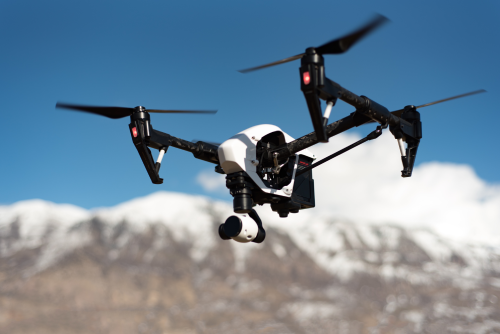
Drone mapping for villages is one of the most practical uses of drones in India. Instead of relying only on old satellite images or slow ground surveys, drones can create current, detailed maps that help panchayats, planners, survey teams, NGOs, and local businesses make better decisions.
When people ask how drones are used in drone mapping for villages, the answer is simple: drones collect sharp aerial images, and those images are turned into maps that support land records, roads, drainage, water bodies, agriculture, public assets, and disaster assessment.
Quick Take
- Drone mapping helps villages get up-to-date visual and measurement-based data quickly.
- Common outputs include orthomosaic maps, 3D models, elevation maps, contour lines, and asset inventories.
- In India, village drone surveys are especially useful for abadi mapping, rural infrastructure planning, ponds and drainage, crop planning, and damage assessment after floods or storms.
- Drones do not automatically replace official land records or legal boundary procedures.
- For any official, commercial, or compliance-sensitive work, verify the latest DGCA, Digital Sky, state land records, and local administration requirements before flying or using the data.
What drone mapping for villages actually means
Drone mapping is more than taking photos from the air.
A drone flies a planned route and captures many overlapping images of the same area. Special software then combines those images to create accurate maps and models.
This process is often called photogrammetry, which means extracting measurements and 3D information from photographs.
For villages, the final output may be used for planning, measurement, comparison over time, or field verification.
Common map products used in villages
| Map product | What it shows | Typical village use |
|---|---|---|
| Orthomosaic map | A high-resolution, top-down stitched image | Houses, roads, fields, drains, ponds, public land |
| 3D model | Buildings, terrain, and structures in three dimensions | Construction planning, slope understanding, visual presentations |
| Digital surface model | Elevation including trees and buildings | Drainage, flood flow, line-of-sight checks |
| Digital terrain model | Ground elevation with surface objects reduced or removed | Water flow studies, rural road planning, contour analysis |
| Contour map | Lines joining equal elevation | Watershed work, bunding, drainage design |
| Asset layer in GIS | Tagged map points, lines, and polygons | Streetlights, hand pumps, schools, anganwadis, roads, canals |
A GIS or Geographic Information System is a software-based map system used to organize and analyze this data.
Why villages benefit from drone mapping
Many villages change faster than their maps.
New houses appear. Roads are widened. Drains are added or blocked. Farm plots shift use. Ponds shrink, fill up, or get encroached. In such situations, old maps and rough field sketches are often not enough.
Drone mapping helps because it offers:
- A current view of the village
- Better detail than standard satellite imagery in many cases
- Faster coverage than manual measurement alone
- Easier visual communication with local officials and residents
- Repeatable surveys for before-and-after comparison
In India, this matters because village-level planning often depends on accurate ground reality, especially when multiple departments, panchayats, and land records teams are involved.
How drones are used in drone mapping for villages
1. Mapping abadi areas and property parcels
One of the biggest uses of drone mapping in villages is documenting the abadi area, meaning the inhabited part of the village.
This is where houses, lanes, small shops, courtyards, and community buildings are concentrated.
A drone can create a current orthomosaic of the settlement, which helps teams:
- Identify building footprints
- See lane widths and access paths
- Mark house clusters
- Cross-check visible occupation patterns
- Support property documentation exercises
In India, many readers may know this from large-scale village mapping efforts such as SVAMITVA, where drone surveys have been used for property-related mapping in rural inhabited areas.
Important point: a drone map can support property documentation, but whether it becomes an official legal record depends on the relevant government process, verification, and state-level land administration rules.
2. Planning village roads, streets, and access routes
Rural roads often evolve gradually. A path becomes a lane, a lane becomes a motorable road, and roadside drainage is added later.
Drone maps help planners and contractors see:
- Current road alignment
- Missing links between hamlets
- Road width variations
- Encroachments near roads
- Junction points and bottlenecks
- Access to schools, health centres, and farms
This is especially useful before:
- Road widening
- New internal village roads
- Culvert planning
- Last-mile connectivity work
- Material estimation for rural construction
A top-down orthomosaic is often much clearer than relying on memory, paper sketches, or scattered site visits.
3. Drainage planning and waterlogging analysis
Poor drainage is a common village problem, especially during the monsoon.
A drone map can help identify:
- Low-lying pockets
- Blocked drains
- Natural water flow direction
- Overflow points near roads and homes
- Pond connection channels
- Areas where wastewater collects
When drone imagery is combined with elevation data, planners can design more effective drainage lines.
This is one of the strongest real-world uses of village mapping because even small height differences matter. A lane that looks flat on the ground may actually slope the wrong way, causing water to collect near homes.
Mini example
A gram panchayat wants to reduce waterlogging near a school.
A drone survey shows:
- The road shoulder is higher than the school entrance
- A drain ends before a natural runoff channel
- A nearby pond has silted up and no longer receives overflow
With that information, the panchayat can redesign the drain route instead of repeatedly clearing the same blockage every monsoon.
4. Mapping ponds, tanks, canals, and village water assets
Water bodies are central to village life, and drone mapping makes them easier to monitor.
Drones can help measure:
- Pond area
- Canal alignment
- Embankment condition
- Siltation patterns visible from above
- Encroachment around water bodies
- Seasonal changes in water spread
This is useful for:
- Desilting plans
- Watershed work
- Irrigation management
- Fisheries planning
- Rainwater harvesting projects
- Community water asset records
In some cases, repeated drone surveys taken months apart can show whether a restoration project actually increased the water spread or improved catchment flow.
5. Agriculture and common land monitoring
Village mapping is not only about houses. It also supports agriculture and shared rural land.
With standard RGB cameras, drones can map:
- Field boundaries as visible on the ground
- Access paths between farms
- Irrigation channels
- Farm ponds
- Damage after storms or hail
- Crop lodging, meaning crops flattened by wind or rain
With more advanced sensors such as multispectral cameras, teams may also assess crop health patterns. But for many village applications, a good RGB map already provides strong value.
Common agricultural and land uses include:
- Crop area estimation
- Planning field roads
- Checking bund conditions
- Mapping common grazing land
- Monitoring encroachments on commons
- Planning farm mechanization paths
For village-level planning, even simple area measurement can help local bodies prioritize resources.
6. Mapping public assets and village infrastructure
Many rural projects fail not because work was not done, but because asset records are incomplete or outdated.
Drone mapping can support an inventory of:
- Schools
- Anganwadis
- Panchayat buildings
- Health sub-centres
- Hand pumps and water tanks
- Electric poles and streetlights
- Community halls
- Internal roads
- Drain networks
- Solid waste collection points
Once visible assets are mapped, they can be added into a GIS layer with field verification.
This creates a more usable village infrastructure base map for planning and maintenance.
7. Supporting construction and development work
Whenever a village has new works under progress, drone mapping helps create a clear before-and-after record.
Common examples:
- Road construction monitoring
- Pond restoration progress
- Layout checks for public buildings
- Earthwork measurement
- Tracking embankment work
- Monitoring community infrastructure in remote areas
Drone maps can reduce disputes about whether work covered the intended area. They also help engineers and local administrators review site progress without depending only on ground photos.
8. Disaster assessment after floods, storms, or landslides
After a flood or severe storm, drone mapping becomes extremely valuable.
It can quickly document:
- Damaged houses
- Breached roads
- Washed-out culverts
- Flood spread marks
- Erosion near riverbanks
- Fallen trees blocking access
- Crop damage zones
In many rural areas, ground access becomes difficult after a disaster. A drone can safely document the situation faster than teams walking through mud, debris, or unstable ground.
The key benefit here is speed. Relief planning improves when decision-makers can see exactly which hamlets, roads, and assets are affected.
9. Encroachment and land-use change monitoring
Village common land, roadsides, ponds, and open areas often change gradually.
Drone maps help compare one survey with another to see:
- Fresh construction
- Filling of water bodies
- Extension of structures into public paths
- New fencing on common land
- Changes in waste dumping areas
- Loss of tree cover
This does not mean a drone alone settles disputes. But it creates a clear visual record that supports inspection, field checks, and official action where allowed by law.
10. Better communication between villagers, officials, and planners
One underrated benefit of drone mapping is that it makes planning easier to explain.
A high-resolution village map is far easier for most people to understand than a technical drawing or coordinate list.
This helps in meetings when discussing:
- Which road should be widened first
- Where drainage must pass
- Which pond boundary needs protection
- Whether a school has safe access
- How a scheme will affect nearby homes
Good maps reduce confusion.
A typical village drone mapping workflow
The success of a village survey depends less on the drone itself and more on the workflow.
1. Define the exact purpose
Start with the real question.
Examples:
- Do you need a base map for the entire village?
- Are you measuring a pond?
- Are you documenting houses in the abadi area?
- Are you planning drainage?
- Are you comparing pre- and post-flood conditions?
The purpose determines the accuracy, flight pattern, and output format.
2. Check permissions and compliance
Before any flight:
- Verify whether the area is legally flyable
- Check the latest DGCA and Digital Sky requirements
- Confirm any local administration permissions needed
- Avoid restricted or sensitive locations
- Clarify whether the work has any official survey status requirements
If the output will be used for land records, property documentation, or government decisions, the legal and administrative side becomes even more important.
3. Visit the site and inform stakeholders
A short ground visit helps identify:
- Trees and wires
- Take-off and landing spots
- Mobile signal or GNSS quality issues
- Crowd risks
- Sensitive locations such as schools or gatherings
For village work, communication matters. Residents should not feel a drone appeared without explanation.
4. Plan the accuracy level
Not every map needs survey-grade accuracy.
Broad planning maps may be fine with standard GPS-based capture. But boundary-sensitive or engineering work may need:
- Ground control points
- Check points
- RTK or PPK-enabled drones
- Ground validation with survey equipment
RTK means Real-Time Kinematic, a method that improves positioning accuracy during data capture.
5. Fly a structured mission
For mapping, the drone usually flies an automated grid pattern with overlap between images.
Good practice includes:
- Consistent altitude
- High image overlap
- Safe battery planning
- Avoiding strong wind or rain
- Keeping visual awareness of people and obstacles
6. Process the imagery
Software turns the photos into:
- Orthomosaic maps
- Point clouds
- Elevation models
- Contours
- 3D outputs
This is where errors can appear if overlap was poor or GPS data was weak.
7. Verify on the ground
A map should be checked against reality.
This step, often called ground truthing, confirms:
- Asset names
- Path connections
- Boundary interpretation issues
- Whether a shadow was mistaken for a structure
- Whether seasonal vegetation changed visibility
8. Deliver the map in usable form
The final output should match the user’s need.
For example:
- A panchayat may want a printable village map
- An engineer may need contour data
- An NGO may want a GIS layer for assets
- A land administration team may need specific formats and verification steps
What kind of drone is used for village mapping?
Not every village survey needs the same class of drone.
Basic RGB mapping drone
Good for:
- Small village areas
- Visual base maps
- Pond and road documentation
- Construction progress
- Asset inventory
Best when the need is mostly visual and moderate in accuracy.
RTK-enabled mapping drone
Good for:
- Higher-accuracy surveys
- Engineering planning
- Boundary-sensitive work
- Repeated monitoring where consistency matters
Best when accuracy is a serious requirement.
Multispectral drone
Good for:
- Crop health analysis
- Vegetation mapping
- Land-use studies
Usually not the first choice for basic village base mapping, but useful in agricultural projects.
Benefits of drone mapping compared with only ground surveys
Drone mapping is not a total replacement for survey teams on the ground. But it adds strong advantages.
Where drones do better
- Faster visual coverage
- Better context across the whole village
- Easier before-and-after comparison
- Useful records for meetings and planning
- Access to difficult areas after floods or during poor road conditions
Where ground surveys still matter
- Legal boundary verification
- Under-tree or obscured areas
- Naming and ownership details
- Fine engineering measurements in some cases
- Community validation and dispute resolution
The best results usually come from combining drone data with field checks.
Limits you should understand
Drone mapping is powerful, but not magical.
It cannot see through everything
Dense tree cover, tin roofs with glare, narrow alleys, and overlapping structures can reduce clarity.
A drone map is not automatically a legal boundary map
Visible edges on an image do not always match official cadastral or ownership records.
Accuracy depends on method
A rushed drone flight with weak planning may create a pretty picture but poor measurements.
Weather matters
Wind, low light, rain, and haze can affect image quality and flight safety.
Data handling matters
If images, coordinates, and outputs are not organized properly, the project becomes hard to verify later.
Safety, legal, and compliance points in India
Village drone mapping may look harmless, but it still needs discipline.
- Verify the latest DGCA and Digital Sky rules before any operation.
- Do not assume a drone can be flown just because the area is rural.
- Check for nearby airports, helipads, defense areas, and other sensitive zones.
- Use trained operators for professional mapping work.
- Do not fly over crowds, public events, or in unsafe weather.
- Respect privacy. Avoid unnecessary capture of people in private spaces.
- Inform local authorities or village leaders when the nature of work requires coordination.
- If the survey is for official records, confirm whether only authorized agencies, licensed professionals, or specific workflows are acceptable.
- Secure the collected data, especially if it includes homes, public assets, or sensitive locations.
Rules can change. Always verify the current official position before planning an operation.
Common mistakes in village drone mapping
Starting without a clear purpose
A “map the whole village” instruction is too vague. First decide what decisions the map needs to support.
Assuming any drone image is accurate enough
A high-resolution image is not the same as a reliable measurement product.
Ignoring ground control and validation
For important work, especially where area or position matters, ground checks are essential.
Treating visible boundaries as legal boundaries
A wall, hedge, or path seen in the image may not match the official record.
Poor overlap and inconsistent flying
Bad flight planning causes holes, distortions, and weak 3D reconstruction.
Skipping community communication
Unannounced drone activity can create fear, complaints, or unnecessary resistance.
Using the wrong output
A panchayat may need a simple annotated map, not a giant technical dataset nobody can use.
Practical tips for better village mapping projects
- Start with one clear use case such as drainage, abadi mapping, or pond measurement.
- Decide accuracy before choosing the drone or survey method.
- Capture enough overlap in imagery for reliable processing.
- Use check points to verify accuracy wherever possible.
- Combine aerial mapping with a small field validation team.
- Label assets clearly in local administrative terms.
- Archive raw images, processed files, and final maps properly.
- If the project will be repeated, fly similar routes and altitudes each time for better comparison.
FAQ
Can a small consumer drone map a village?
For small areas and basic visual mapping, yes, it can help. But if the work needs higher positional accuracy, engineering use, or official acceptance, a more structured survey setup may be required.
How accurate is drone mapping for villages?
It depends on the drone, GPS quality, flight planning, use of RTK or ground control points, and the processing workflow. Accuracy should be tested, not assumed.
Is a drone map enough for legal property boundaries?
Usually, no. A drone map can support documentation and analysis, but legal boundary determination or official land records often require specific government procedures, validation, and authorized survey processes.
What is the difference between a drone orthomosaic and a satellite image?
A drone orthomosaic is usually newer and can offer much higher detail for a local area. It is especially useful when you need close-up visibility of houses, lanes, drains, or small village assets.
How long does it take to map a village with a drone?
That depends on the village size, terrain, tree cover, required accuracy, weather, and processing workload. The flight may be quick, but processing and validation can take much longer.
Can drones map ponds and drains accurately?
They can map the visible shape and surrounding context very well. For high-accuracy engineering or volume analysis, better control points and careful survey design may be needed.
Do villagers need to be informed before mapping?
For professional and community-facing work, informing local stakeholders is a smart and often necessary practice. It improves trust and reduces confusion. Depending on the project, local administrative coordination may also be needed.
Can drone mapping work under dense tree cover?
Not very well with standard optical cameras. If the ground is hidden by dense canopy, the map may show the tree tops rather than the land below.
Is internet required during the survey?
Not always for the actual flying and image capture, depending on the system and workflow. But planning, compliance checks, syncing data, and cloud processing may require connectivity.
Final takeaway
Drone mapping for villages works best when it is treated as a problem-solving tool, not just a flying exercise. If you want useful results, start with one practical goal, match the survey method to the needed accuracy, and make sure the data is legally, technically, and socially usable in the local Indian context.
