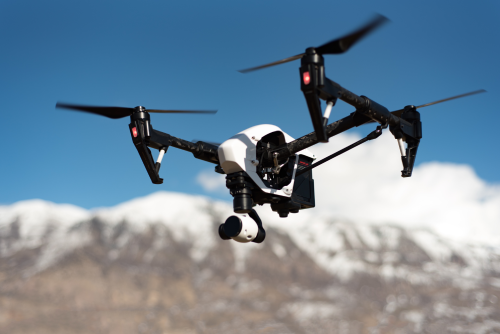
How drones are used in large-scale farm operations is less about flashy flying and more about better farm management. On big farms, plantations, and contract-growing blocks, drones help teams map land, inspect crops faster, spray inputs at the right time, and catch problems before they spread. In India, where labour, timing, and field access can all become bottlenecks, that makes drones genuinely useful when they are used for the right job.
Quick Take
- Large-scale farms use drones mainly for mapping, crop scouting, spraying, irrigation checks, orchard monitoring, and harvest planning.
- The biggest benefit is speed: one flight can show issues across a large area that ground teams may miss or find too late.
- Spraying drones are popular in India, but mapping and monitoring often deliver value even before spraying does.
- RGB cameras show visible crop problems; multispectral cameras can help detect stress patterns earlier, but they still need field verification.
- Drones do not replace agronomists, field staff, or good farm records. They make those teams faster and more targeted.
- For many farms, hiring a service provider for seasonal work is more practical than buying a drone outright.
- Before any operation, verify the latest DGCA, Digital Sky, airspace, pilot, and pesticide-use requirements. Rules and local conditions matter.
Why large-scale farms are adopting drones
On a small plot, the farmer can usually walk the field often enough to understand what is happening. On a very large farm, estate, plantation, or scattered contract-farming block, that becomes much harder.
The challenge is not just area. It is timing.
A field issue that looks minor on day one can become expensive by day five. That could be:
- waterlogging after rain
- pest pressure starting on one edge
- uneven germination
- nutrient deficiency in specific patches
- missed spray coverage
- a blocked irrigation line
- lodging risk before harvest
Drones help because they give managers a fast aerial view of the whole operation. Instead of walking every row, the team can identify the exact zones that need attention and send people there first.
That is why drone use in agriculture is moving from “nice to have” to “operational tool” on larger farms.
Where drones are used in large-scale farm operations
| Farm task | What the drone does | Best output | Main value |
|---|---|---|---|
| Field mapping | Captures overlapping images to create a stitched top-down map | Orthomosaic map, area estimate, field boundaries | Better planning, recordkeeping, route and irrigation design |
| Crop establishment checks | Flies soon after sowing or transplanting | Emergence pattern, missing patches, waterlogging zones | Faster re-sowing or correction decisions |
| Crop health scouting | Surveys crop canopy using RGB or multispectral sensors | Stress maps, canopy variation, hotspot locations | Early detection and targeted field visits |
| Precision spraying | Applies pesticides, micronutrients, or liquid fertilisers from the air | Faster coverage and more uniform application when well-calibrated | Better timing, less trampling, lower operator exposure |
| Irrigation and drainage monitoring | Spots dry patches, standing water, leaks, blocked channels | Visual or heat-pattern clues | Faster correction of water-related losses |
| Orchard and plantation monitoring | Surveys tree crops from above | Tree counts, canopy gaps, uneven vigour | Easier block-wise management |
| Harvest planning | Tracks maturity patterns and field condition | Block readiness view, access planning | Better labour and machine scheduling |
| Documentation | Creates time-stamped visual records | Before/after images and maps | Useful for management review, vendors, and internal reporting |
The main use cases in detail
Field mapping and land planning
One of the most practical uses of drones on large farms is making a current field map.
A mapping drone captures many overlapping images and software stitches them into an orthomosaic, which is a top-down map that looks more accurate and consistent than a single photo. On some projects, the same flight can also help create elevation or contour information.
This is useful for:
- marking field boundaries
- dividing large land parcels into management blocks
- planning access routes for workers and vehicles
- identifying low-lying areas that collect water
- improving irrigation and drainage layout
- estimating cultivated versus uncultivated area
- documenting seasonal changes
In India, this is especially valuable where land blocks are irregular, recently consolidated, or managed under lease or contract arrangements. A clean field map reduces confusion for supervisors, machine operators, and spray teams.
Crop establishment checks after sowing or transplanting
The first few weeks after sowing are critical. On large farms, missing plants or weak establishment may not be obvious from the bund or farm road.
A drone flight soon after sowing, emergence, or transplanting can reveal:
- uneven germination
- missing rows or skipped sections
- transplanting gaps
- seedling damage
- early water stress
- waterlogging after rain
- machinery-related errors in the field pattern
This matters because corrections are only useful when they are still timely. A large farm manager can review the mapped output, mark problem patches, and send a field crew to verify and fix the issue.
For crops like maize, cotton, soybean, paddy, and vegetables grown on bigger commercial blocks, early drone checks can save a lot of avoidable rework later.
Crop health scouting and stress detection
This is where drones often become most valuable over an entire season.
A normal RGB camera records what the eye can see: colour changes, gaps, lodging, weed patches, and visible canopy damage. A multispectral camera goes further by capturing extra light bands beyond normal visible light. That can help highlight vegetation differences that suggest stress before the problem becomes obvious from the ground.
In practice, drone scouting is used to identify:
- areas with weak plant vigour
- nutrient deficiency patterns
- pest or disease hotspots
- uneven crop growth
- lodging or storm damage
- weed pressure in specific zones
- poor spray response after treatment
A useful point to remember: drone maps show patterns, not final diagnosis.
If a map shows a weak zone, the next step is ground-truthing, which simply means visiting that spot in the field to confirm the real cause. The issue might be nitrogen deficiency, root damage, standing water, salinity, or disease. The drone helps the team find the zone quickly, but it does not magically know the exact cause on its own.
Precision spraying
Spraying is the use case many Indian readers know first, and for good reason.
In large-scale operations, spraying drones can apply crop protection products, micronutrients, and some liquid formulations faster than manual teams in certain conditions. They are especially useful where:
- fields are too wet for easy entry
- crop height makes manual spraying difficult
- quick turnaround is needed during a narrow pest window
- labour is short during peak demand
- field trampling must be reduced
- worker exposure to spray needs to be lowered
Common situations include paddy after rain, tall crops, difficult patches, orchards, and fields where repeated manual walking causes crop damage.
But this is also the area where farms make the most mistakes if they focus only on speed.
Good spray results depend on:
- correct nozzle choice
- droplet size
- spray volume
- flight height
- flight speed
- weather conditions
- refill workflow
- chemical suitability for drone application
If wind is strong, drift becomes a problem. If settings are wrong, coverage may look fast but perform poorly. If the wrong formulation is used, efficacy can drop. That is why drone spraying should be treated as a calibrated farm operation, not just a faster version of backpack spraying.
Irrigation, drainage, and water management
Water problems are often patchy. A pump may be running, but one zone still stays dry. Another may be flooded because of a blocked channel or a low-lying section.
Drones help large farms inspect water issues faster by spotting:
- dry zones in irrigated fields
- standing water after heavy rain
- drainage bottlenecks
- irrigation pipe or channel issues
- uneven wetting patterns
- bund breaches
- erosion-prone patches
Some farms also use thermal cameras, which detect heat differences, to look for moisture-related patterns. These can be useful, but they are not essential for every operation. A good RGB survey done at the right time can already reveal plenty.
For large paddy, sugarcane, vegetable, and plantation systems, fast water monitoring can prevent both yield loss and input waste.
Orchard and plantation monitoring
Tree crops are a strong use case for drones because the top canopy is hard to inspect well from the ground.
On orchards and plantations, drones are used for:
- counting trees or identifying missing plants
- checking canopy size and uniformity
- locating stressed or weak trees
- spotting irrigation issues row by row
- surveying storm damage
- checking flowering or canopy progression in blocks
- planning targeted nutrition or crop protection
This can be useful in mango, citrus, pomegranate, grape, banana, tea, coffee, coconut, and other plantation-style systems, depending on terrain and management method.
For managers handling several blocks across a large estate, aerial block comparisons can quickly show which section needs the next visit.
Yield estimation and harvest planning
Drones do not provide a perfect harvest number on their own, but they can improve planning.
Large farms use drone data to support:
- crop stage monitoring
- identifying uneven maturity across blocks
- estimating canopy coverage
- checking lodging before harvest
- planning harvester or labour movement
- prioritising harvest order
- tracking pre-harvest damage after weather events
In orchards, canopy and block health patterns may help forecast relative output. In broadacre crops, aerial data can highlight which blocks are likely to mature sooner or need separate treatment.
The key is to combine drone observations with field sampling, past records, and crop-specific knowledge.
Documentation and management reporting
Large-scale operations often involve more coordination than people realize.
Drones can help create visual records for:
- internal management review
- contractor supervision
- before-and-after treatment checks
- seasonal progress tracking
- damage assessment after weather events
- communication with owners, buyers, or partners
This is not the most glamorous use case, but it can be one of the most practical, especially when multiple teams are working across a wide area.
What a practical drone workflow looks like on a big farm
The best large-farm drone programs are not built around random flights. They follow a repeatable workflow.
1. Define the problem first
Do not begin with “let us fly the whole farm.”
Begin with a specific question, such as:
- Which paddy blocks have waterlogging after last night’s rain?
- Did the spray cover all cotton plots properly?
- Which orchard rows show weak canopy growth?
- Where do we need re-sowing?
This tells you what sensor, flight pattern, and output actually matter.
2. Capture a baseline map
Fly the relevant block and create a clean record of its condition. This becomes your reference point for later comparison.
3. Mark hotspots
Use the imagery or map to identify weak zones, gaps, and unusual patterns.
4. Verify on the ground
Send a field scout or agronomy team to those exact points. This step is essential. A patch that looks nutrient-deficient from above may actually be caused by compaction, root disease, or drainage issues.
5. Take targeted action
Based on the confirmed field condition, the farm can:
- re-sow small patches
- adjust irrigation
- spray a specific block
- inspect equipment or channels
- correct nutrient application
- isolate a pest outbreak early
6. Re-fly after action
A second flight helps confirm whether the intervention worked. This is where drones become part of management, not just observation.
Which drone setup suits which job
Not every farm needs the same equipment.
Mapping and scouting drones
These usually carry an RGB camera and are used for surveys, inspections, and crop monitoring. They are often multirotor drones because they are easier to deploy and work well on individual blocks.
For very large coverage areas, some operations use fixed-wing or VTOL systems. These can cover more land per flight but require more planning, more space, and usually more specialised operations.
Spraying drones
These are typically multirotor drones designed to carry liquid tanks and spray systems. They need careful calibration, battery planning, refill logistics, and trained operators.
A large farm using spray drones seriously also needs:
- a safe mixing and refill area
- water supply near the work zone
- spare batteries and charging plan
- nozzle and pump maintenance
- clear worker coordination
- weather monitoring
Sensor choice
- RGB camera: Best starting point for mapping, visible crop checks, and routine monitoring.
- Multispectral camera: Useful when the farm wants more advanced plant-health pattern analysis.
- Thermal camera: Helpful for some irrigation and stress assessments, but not necessary for every farm.
Software and support
The drone is only part of the system. Large operations also need:
- reliable map processing
- farm-level recordkeeping
- trained interpretation
- maintenance support
- spare parts availability
- operator discipline
That is why many farms prefer to begin with a service provider rather than immediate ownership.
India-specific realities that matter
Drone use in Indian agriculture is growing, but farm conditions here shape what works in practice.
Labour and timing matter more than gadget value
During peak spray windows, large farms can struggle to mobilise enough skilled labour quickly. Drones become valuable when they help the farm act on time, not just when they create good-looking maps.
Weather and terrain affect performance
Indian farm operations often deal with:
- high summer temperatures
- humidity
- dusty conditions
- sudden wind changes
- monsoon interruptions
- patchy access roads
All of these affect batteries, electronics, visibility, and spray quality.
Service models can make more sense than ownership
If a farm only needs occasional mapping or a few seasonal spray cycles, hiring a trained operator or agri-drone service company may be more practical than buying, storing, maintaining, and staffing the system internally.
Plantations and larger blocks benefit early
Tea estates, coffee estates, orchards, seed production blocks, corporate farms, large vegetable clusters, and contract-farming networks often see earlier value because the same drone workflow can be repeated across many acres or hectares.
Safety, legal, and compliance checks
Agricultural drone use is not just a farm decision. It also involves aviation, operational, and chemical-handling rules.
Before flying or spraying, verify the latest official requirements that apply to your operation. Do not rely on old social media posts or seller claims.
Key checks include:
- DGCA rules currently applicable to your drone category and operation
- Digital Sky and airspace permission requirements, where relevant
- whether the drone model and system meet current compliance requirements such as NPNT, where applicable
- remote pilot training or certification requirements for the exact operation you plan
- any state agriculture department guidance related to agri-drone use
- pesticide label instructions and whether the product is suitable for aerial application
- worker safety procedures for mixing, refilling, handling, and cleanup
- insurance needs for equipment, liability, and operations
- local no-fly or sensitive locations near the farm, such as airports, power infrastructure, or restricted areas
For spray operations, safety should also include:
- no flying over people or public roads
- no spraying in strong wind
- careful buffer management near homes, water bodies, and livestock areas
- proper personal protective equipment for the ground crew
- safe battery charging and transport
- maintenance logs and pre-flight checks
A drone can reduce worker exposure during application, but only if the full operation is planned safely.
Limits large farms should understand
Drones are useful, but they are not magic.
Here are the main limits:
- They do not diagnose every crop problem automatically.
- They cannot replace field scouting entirely.
- Battery logistics become a real issue on very large sites.
- Spray tank capacity means frequent refilling.
- Dense canopy can hide lower-level disease or soil issues.
- Data is only useful if someone acts on it quickly.
- Wind and weather can make good operations impossible on some days.
The right expectation is this: drones improve visibility, timing, and targeting. They do not fix weak agronomy or poor farm management on their own.
Common mistakes in large-farm drone use
Buying the drone before defining the job
A farm may buy a spray drone because it is popular, then realize its bigger problem was actually scouting, irrigation monitoring, or contractor supervision.
Trusting maps without field verification
A stress map is a clue, not a diagnosis. If the team skips the field check, treatments may be wrong.
Ignoring refill and battery logistics
On large properties, flying time is only one part of the day. Transport, charging, mixing, refilling, and shifting between blocks often decide real productivity.
Spraying in poor weather
Wind, heat, and humidity affect drift, coverage, and evaporation. Fast operation is not useful if the application quality is poor.
Using one spray setting for every crop
Crop height, canopy density, formulation, and target pest all matter. A one-size-fits-all approach can waste chemical and reduce efficacy.
Treating drone data as a separate system
Drone outputs become much more useful when linked with field notes, input records, irrigation history, and harvest data.
Underestimating maintenance and training
Nozzles clog. Pumps wear out. Batteries age. Pilots and field crews need discipline. A poorly maintained drone program becomes unreliable very quickly.
FAQ
Can one drone handle a very large farm by itself?
Usually not efficiently. A single drone can be useful, but very large operations often need a mix of equipment, support staff, charging or battery-swapping systems, and a planned workflow. The real limit is not just flight time, but daily operational throughput.
Are spraying drones better than manual spraying in every case?
No. They are often better when speed, field access, crop height, or operator exposure are major concerns. But if calibration is poor or wind conditions are bad, results can be worse than a good ground-based application.
Do drones reduce pesticide use?
They can reduce overspray, repeated passes, and treatment of unnecessary areas when used with good scouting and calibration. But savings are not automatic. Bad planning can still waste input.
Which Indian crops benefit most from farm drones?
Large paddy blocks, cotton, sugarcane, maize, soybean, vegetables, seed production plots, orchards, and plantations can all benefit. The strongest use cases depend on farm size, labour constraints, and whether the main need is scouting, spraying, or monitoring.
Is a multispectral camera necessary?
Not always. Many farms can get useful results from a standard RGB camera first. Multispectral sensors become more valuable when the farm has a clear need for advanced crop-health mapping and the ability to interpret the data properly.
Can drones replace agronomists or field scouts?
No. They make agronomists and field teams more efficient by showing where to look first. Diagnosis and treatment decisions still need field knowledge.
Should a farm buy a drone or hire a service provider?
If the need is seasonal or occasional, hiring is often the smarter first step. If the farm has frequent, repeated needs across large acreage and can support training, maintenance, and operations, ownership may make sense later.
What should I verify before using an agricultural drone in India?
Verify the latest DGCA and Digital Sky requirements, airspace permissions, compliance status of the drone, current pilot requirements, and any pesticide-use rules that apply to your operation. Also confirm local safety and insurance needs before flying.
How useful are drones during monsoon conditions?
They can be very useful for checking waterlogging and crop condition, but actual flight windows may be limited by rain, low visibility, and wind. Weather planning becomes more important, not less.
Final takeaway
For large-scale farm operations, drones are most useful when they solve one clear problem well: faster scouting, better spray timing, quicker water checks, or cleaner block-level planning. If you are considering drone use, start with a single repeatable workflow on one crop block, measure the time and decision quality it improves, and then scale only after the results are clear.
