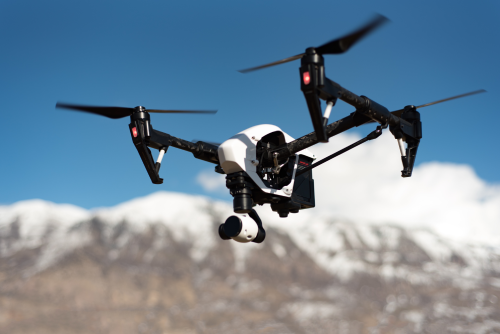
Drones are used in documentary filmmaking to do far more than capture pretty aerial views. In a good documentary, a drone shot explains place, scale, movement, and context in seconds, whether the story is about a village, a river, a road project, wildlife habitat, or life inside a crowded city.
For filmmakers in India, drones can be especially useful because landscapes, settlements, and infrastructure often play a big role in the story. The key is to use them as a storytelling tool, not as decoration.
Quick Take
- In documentary filmmaking, drones are most useful when they answer a story question: Where are we? How big is this place? How are people moving through it? What has changed over time?
- The best drone footage is usually simple: slow, steady, readable, and connected to the subject.
- Drones are great for geography, scale, access, transitions, and showing patterns that are invisible from the ground.
- They are poor tools for live dialogue and interviews because they are noisy.
- In India, always verify the latest DGCA, Digital Sky, and location-specific rules before flying. Extra permissions may be needed around sensitive, restricted, forest, heritage, industrial, border, or event locations.
- Do not fly over crowds, disturb wildlife, invade privacy, or chase people for dramatic footage.
Why drones matter in documentary filmmaking
A documentary often has to explain real life clearly and quickly. Ground cameras can show faces, emotion, and detail. A drone can show the larger system around those details.
For example:
- A farmer speaking about water shortage becomes more understandable when viewers also see the dried canal network from above.
- A story about coastal erosion becomes clearer when an aerial view shows how close homes are to the shoreline.
- A film on migration or commuting gains weight when a drone shows the distance people travel every day.
That is why drones are so effective in documentaries. They connect personal stories to physical reality.
The main ways drones are used in documentary filmmaking
1. Establishing the location
This is the most common use. A drone can introduce a place in one shot.
Typical documentary uses include:
- Showing a village surrounded by fields
- Revealing a town beside a river or highway
- Introducing a factory zone, mining area, forest edge, or coastline
- Showing how close homes are to railway lines, flood zones, or construction areas
A well-planned establishing shot helps the viewer understand where the story is happening before the interviews begin.
2. Showing scale
Many documentary subjects are about size, distance, or contrast. From the ground, it is hard to show how big a landfill is, how long a road is, or how small one person looks inside a vast landscape.
Drones help show:
- Human scale versus nature
- The size of farms, quarries, housing clusters, wetlands, or industrial sites
- Long distances covered by workers, students, or vehicles
- The contrast between old neighbourhoods and new development
This is especially useful in social, environmental, travel, historical, and issue-based documentaries.
3. Explaining movement and routine
A documentary is often about process. Drones can show how things move through space.
Examples:
- Fishing boats leaving shore at dawn
- Pilgrims or workers moving along a road
- Traffic patterns at a junction
- Irrigation water flowing through channels
- Herd movement in open terrain
- People climbing a mountain trail or crossing a valley
This kind of shot gives viewers a sense of direction, rhythm, and routine.
4. Revealing patterns that the ground camera cannot see
Some subjects only make visual sense from above.
A drone can reveal:
- Crop patterns and field divisions
- Encroachment along water bodies
- Lines of vehicles or people
- Settlement density
- River shape, flood spread, or shoreline change
- Urban growth and land-use patterns
In investigative or environmental documentaries, these overhead visuals can make a complex issue easy to understand.
5. Reaching difficult or unsafe viewpoints
Documentary crews often work in remote or uneven terrain. A drone may safely capture a view that would otherwise require a risky climb, a crane, or a helicopter.
Useful examples include:
- Hill villages and winding roads
- Marshland or riverbanks
- Cliff edges or rough coastlines
- Large construction or industrial areas where ground access is limited
- Flood-affected or damaged landscapes, where safe distance matters
That said, “hard to reach” does not mean “legal to fly.” Access and airspace are different issues, and both must be checked.
6. Showing change over time
One of the strongest documentary uses of a drone is repetition. If you return to the same location and capture a similar frame over days, months, or seasons, you can show real change.
This works well for stories about:
- River or lake levels
- Coastal erosion
- Crop growth or drought
- Construction progress
- Festival setup and dispersal
- Deforestation or land-use change
- Seasonal migration or tourism
Repeatability is what makes drone footage more than a one-time visual flourish.
7. Creating transitions and breathing space
Documentaries can feel dense, especially when they include heavy interviews or complex information. Drone shots can help reset the viewer without breaking the tone.
They are often used to:
- Move from one location to another
- Mark a new chapter in the film
- Transition from personal interview to wider context
- Slow the pace after a high-information section
But this only works if the shot still relates to the story. Random aerials look beautiful for a moment and then feel empty.
A quick comparison of documentary drone uses
| Documentary need | What the drone adds | Best style of shot | Main caution |
|---|---|---|---|
| Introduce a place | Geography and orientation | High wide or slow reveal | Avoid generic “tourism” look if story is serious |
| Show scale | Size and contrast | Pull-back, rise, top-down | Keep a visible subject in frame |
| Follow routine or journey | Direction and movement | Side track or trailing shot | Do not fly too close to people or vehicles |
| Explain a system | Layout and pattern | Overhead or static high shot | Make sure viewers can read the image clearly |
| Show environmental change | Before/after perspective | Matched repeat shot | Requires careful planning and consistency |
| Bridge scenes | Pace and transition | Short, simple movement | Don’t overuse drone shots between every scene |
Choosing the right drone approach for a documentary
Not every documentary needs a large or expensive drone. In fact, many documentaries benefit from a small, reliable, quick-to-deploy model that does not attract too much attention.
What most documentary teams need
For most solo creators, students, and small crews, the ideal drone setup is:
- Compact and easy to carry
- Fast to launch
- Stable in moderate wind
- Good enough image quality to match a main camera
- Predictable battery performance
- Simple control, not highly complex aerobatics
Different drone styles and where they fit
| Drone type | Best for | Strengths | Limitations |
|---|---|---|---|
| Lightweight compact camera drone | Travel docs, student films, solo crews | Portable, quick, less intimidating | Less capable in strong wind, lower creative flexibility |
| Standard folding camera drone | General documentary production | Good balance of image quality, stability, and ease of use | Still limited by battery and weather |
| Larger prosumer drone | Bigger productions, dual-operator shoots | Stronger camera options, more control | More setup, more attention, more logistical complexity |
| FPV drone | Dynamic motion sequences | High energy and immersive movement | Harder to fly well, less natural for serious observational docs |
For most documentary storytelling, a gimbal-stabilised camera drone is a better fit than FPV. FPV can be useful in special cases, but it can easily feel too aggressive or stylised for a factual film.
How to plan drone shots so they support the story
A documentary drone shoot works best when it is planned like reporting, not like sightseeing.
1. Start with the editorial question
Before you even think about takeoff, ask:
- What exactly should this shot explain?
- What will the audience understand after seeing it?
- Is this scene about place, scale, movement, contrast, or change?
If the answer is “it just looks nice,” the shot may not be necessary.
2. Turn the story into a shot list
Instead of writing “get drone shots,” write specific tasks such as:
- Show how far the school is from the main road
- Reveal the factory beside the residential colony
- Track the fishing boats leaving shore
- Capture the river bend where erosion has reached homes
This makes your aerial footage useful in the edit.
3. Scout both on maps and on the ground
A map may show the shape of a location, but only a physical visit reveals:
- Power lines
- Trees and cables
- Crowd flow
- Bird activity
- Wind direction
- Safe takeoff and landing spots
- Whether the location is too sensitive for a drone
In Indian cities and towns, visible and invisible obstacles are common. Ground scouting is essential.
4. Plan for light, weather, and activity
A documentary drone shot depends on more than airspace.
Check:
- When the subject is active
- When the light is soft and readable
- Whether dust, haze, mist, or sea breeze will reduce visibility
- Whether strong afternoon wind will make the shot unusable
For many documentaries, early morning and late afternoon work better than harsh midday light. But if the story is about a crowded market at noon, the “best” time is when the real action happens.
5. Separate aerials from interviews
This is one of the biggest practical lessons in documentary work: do not plan to fly a drone near a live interview and expect clean sound.
Drones create:
- Rotor noise
- Subject distraction
- Crew communication problems
- Public attention
A better workflow is:
- Record the interview on the ground.
- Capture cutaways and ambient sound separately.
- Fly the drone before or after the interview.
- Record natural sound again once the drone is landed.
6. Decide who is watching what
Even on a small shoot, someone should be thinking only about safety and surroundings. If the pilot is also worrying about interview questions, traffic, and framing, mistakes become more likely.
For complex shoots, try to separate roles:
- Pilot
- Visual observer
- Director or producer
- Ground camera operator
- Sound recordist
Small crews may combine roles, but safety should not be diluted.
7. Shoot with editing in mind
A drone clip that looks impressive on location may be too long, too shaky, or too repetitive in the edit.
Capture:
- A clean start and end
- A few versions of the same idea
- One static option
- One moving option
- Wide and medium heights if possible
Editors usually prefer a simple, readable 5 to 10 second usable segment over a 40-second complicated move.
Drone shot ideas that work well in documentaries
Slow rise reveal
Start low behind a wall, tree line, roof, or ridge and gently rise to reveal the wider scene.
Best for: – Introducing a settlement – Revealing environmental damage – Showing location in relation to terrain
Why it works: – It creates information, not just spectacle.
Static high wide
Hover steadily and let the scene play out below.
Best for: – Traffic flow – Agricultural work – Crowd movement from a safe distance – Fishing, transport, or work routines
Why it works: – The audience has time to read the image.
Slow side track
Move parallel to a subject or landscape.
Best for: – Boats, roads, walking routes, train-side geography, coastlines
Why it works: – It shows distance and direction without calling too much attention to the drone.
Straight pull-back
Start near the subject, then slowly move away.
Best for: – Showing isolation – Revealing surrounding context – Ending a scene with emotional distance
Why it works: – It expands the story frame.
Top-down shot
Shoot directly downward.
Best for: – Field patterns – Water channels – Labour formations – Geometry of settlements or structures
Why it works: – It makes patterns instantly legible.
Matched return shot
Shoot the same frame later in the day, season, or production schedule.
Best for: – Documenting change – Comparing conditions – Showing time passing
Why it works: – It gives the film structural evidence, not just mood.
The biggest limitations of drones in documentaries
Drones are powerful, but they do not solve everything.
They are noisy
This is the biggest limitation. A drone cannot replace careful sound recording. If your film depends on dialogue, ambient reality, or subtle emotion, the ground camera and sound team still carry the story.
They can distance the viewer
Aerials show context, but they rarely show intimacy. You still need close observation: hands working, faces reacting, textures, rooms, conversations, silence.
They are weather dependent
Wind, dust, rain, fog, heat, and mountain conditions can ruin a planned aerial sequence. Always have a ground-based backup plan.
They can become visually repetitive
Many new filmmakers collect too many high, wide, slow shots. After a while, they all feel the same. Variety comes from purpose, not altitude.
They may be restricted by law or location
Even if a shot would help the story, you may not be allowed to fly there. In documentary work, legal and ethical restraint is part of professionalism.
Safety, legal, and compliance checks in India
If you are using drones in documentary filmmaking in India, do not assume that a location is fine just because it is outdoors.
Before any shoot, verify the latest official guidance and requirements related to:
- DGCA drone rules
- Digital Sky processes, where applicable
- Airspace restrictions for the area
- Drone category and operating requirements
- Site-specific permissions from landowners or authorities
- Insurance or client requirements, if relevant
Also check whether the location involves extra sensitivity, such as:
- Airports and approach paths
- Military or strategic areas
- Government or critical infrastructure
- International border regions
- Crowded public events
- Forest land, wildlife habitats, or bird nesting areas
- Protected monuments or heritage sites
- Industrial campuses, ports, dams, and energy facilities
A simple rule for documentary crews: if the location is politically sensitive, culturally sensitive, ecologically sensitive, or security sensitive, verify first and fly later.
Ethical documentary use matters too
Legal permission does not automatically make a shot ethical.
Be careful with:
- Privacy in homes, courtyards, and private land
- Vulnerable communities
- Disaster or accident scenes
- Religious gatherings and sacred spaces
- Children
- Wildlife disturbance
A documentary is supposed to observe reality responsibly, not force reality into a dramatic aerial scene.
Common mistakes documentary teams make with drones
Using the drone as a visual default
Not every location needs an aerial. If every chapter begins with one, the effect weakens.
Chasing beauty instead of meaning
A sunrise shot may look stunning and still add nothing to the story.
Flying too high with no clear subject
If viewers cannot quickly understand what they are looking at, the shot is less useful than the filmmaker thinks.
Trying to record dialogue during flight
The sound will usually be compromised. Plan audio separately.
Ignoring local sensitivity
Even when legal, flying over a dense neighbourhood, protest, village event, or sacred site may be the wrong call.
Not matching the main camera
If the drone footage has a very different frame rate, colour look, or exposure style, it may feel disconnected in the edit.
Underestimating battery and travel logistics
Remote documentary shoots in India may involve long drives, weak charging options, heat, dust, or delays. Power management matters.
Flying fancy moves without enough practice
Fast or complex movements often look less professional than a simple, smooth pass.
Editing drone footage into a documentary
The best drone footage is often used briefly.
A few good practices:
- Label clips by story function, not just location
- Use aerials to introduce, connect, or conclude scenes
- Keep shots shorter than you think
- Avoid stacking too many drone shots back to back
- Let ground sound or narration carry meaning
- Use repeat aerial frames to show change or structure
If the viewer remembers the drone more than the documentary, you probably overused it.
FAQ
Do documentaries really need drone footage?
No. A documentary can be excellent without any drone shots. Use a drone only when it improves clarity, context, scale, or access.
What type of documentary benefits most from drones?
Environmental, travel, social issue, infrastructure, agriculture, geography, and observational documentaries often benefit the most. Character-driven films can also use drones, but usually more sparingly.
Can a beginner make useful documentary drone shots?
Yes. In fact, beginners often do better when they keep things simple: slow movements, steady framing, clear subjects, and safe flying. You do not need aggressive cinematic tricks to make useful documentary visuals.
Can drones capture good interview audio?
No, not during flight. Drones are noisy and distracting. Record interviews and sync sound separately.
Is FPV a good choice for documentary filmmaking?
Sometimes, but only in specific cases. FPV is useful when the film needs dynamic movement through space, but for most documentaries it can feel too stylised and can be harder to fly safely and consistently.
What should I verify before flying in India?
Verify the latest DGCA and Digital Sky requirements, airspace status, location-specific permissions, and any local restrictions. Also check whether the place is sensitive due to security, ecology, crowds, or heritage rules.
Is a small drone enough for documentary work?
Often, yes. For many student films, indie docs, and small production teams, a compact, reliable drone is more practical than a larger system. Ease of deployment matters a lot in real-world documentary schedules.
How many drone shots should a documentary include?
There is no fixed number. Some films need only three or four aerials. Others need many repeated shots over time. Judge by story function, not by screen-time goals.
When should I avoid using a drone completely?
Avoid it when the shot adds no real information, when the area is restricted or sensitive, when weather is unsafe, when wildlife may be disturbed, when crowds are present, or when the subject’s privacy and dignity would be compromised.
Final takeaway
Drones are used in documentary filmmaking best when they explain reality, not just decorate it. If you are planning a documentary in India, start by writing a short aerial shot list tied to your story, verify every legal and local condition before flying, and choose simple, readable shots that make the audience understand the world of the film faster.
