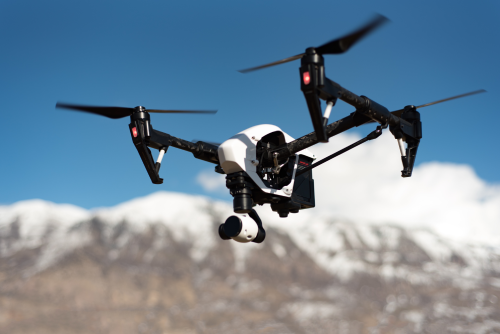
Drones have changed how journalists show a story, not just how they tell it. For Indian newsrooms, creators, and freelance reporters, drone footage can reveal the scale of floods, traffic, rallies, construction delays, or environmental damage in a way ground cameras often cannot. But the value is not just dramatic visuals. Used properly, drones make reporting safer, clearer, and more informative.
Quick Take
- Drones are used in news reporting mainly for aerial context, not just cinematic shots.
- They are especially useful for covering floods, traffic congestion, large public events, civic issues, damaged infrastructure, and environmental stories.
- In many cases, drones help journalists work from a safer distance, especially near unstable structures, waterlogged areas, or fire-affected zones.
- A good news drone workflow includes editorial planning, airspace and permission checks, on-site safety, and clear verification of when and where the footage was captured.
- In India, drone journalism must be handled carefully. Airspace, local restrictions, sensitive zones, and DGCA-related compliance can apply. Always verify the latest official rules before flying.
- Drones are powerful, but they are not always the right tool. They can miss emotion, interviews, and close human detail, which still require strong ground reporting.
- The best drone journalism is useful, accurate, ethical, and restrained. Aerial footage should add facts, not just visual drama.
Why drones matter in journalism
Traditional reporting gives you ground truth: voices, faces, reactions, and detail. Drone reporting adds a second layer: scale, layout, movement, and geography.
That matters because many stories are spatial. In simple terms, the story makes more sense when the audience can see how things are spread out.
For example:
- A flooded colony looks serious from the street, but an aerial view can show how many homes are cut off.
- A road accident report becomes clearer when viewers can see diversion routes, traffic buildup, and nearby bottlenecks.
- A civic issue like illegal dumping or lake encroachment becomes more understandable when seen in relation to homes, roads, and water bodies.
- A political rally can be shown with context instead of only tight, ground-level shots.
This is why drones are now used in news reporting by TV channels, digital publishers, documentary teams, local stringers, and independent visual journalists. They help answer a basic newsroom question: what does the audience need to see to understand the story quickly and accurately?
The main ways drones are used in news reporting
1. Breaking news and incident coverage
When a major incident happens, the first challenge is often visibility. Ground crews may be blocked by police lines, debris, traffic, or safety risks.
A drone can help capture:
- The size of the affected area
- Access roads and blockages
- Damage patterns
- Movement of emergency vehicles
- Changes over time
This is especially useful in:
- Building collapses
- Industrial fire aftermath
- Train or road accident scenes
- Large traffic pileups
- Riverbank breaches
The key point is safety. A drone should not interfere with rescue work or emergency aircraft. It should never be flown just to get the most dramatic close-up.
2. Floods, cyclones, landslides, and weather impact
India’s monsoon season creates many stories where aerial reporting becomes genuinely useful.
A drone can show:
- Water spread across villages or urban pockets
- Breached embankments
- Cut-off roads and isolated settlements
- Landslide impact on hill roads
- Damage to crops or coastal areas after strong weather events
In such cases, a drone often gives the public the clearest visual explanation of what has happened. It can also help compare before-and-after conditions if the newsroom has archived footage from earlier coverage.
But this is also one of the riskiest uses. Weather, wind, rain, low visibility, and emergency operations make drone flying more complicated. Disaster coverage requires extra caution and coordination.
3. Traffic, crowd movement, and public events
Some stories are hard to explain from ground level because movement patterns matter more than individual detail.
Drones are often used to cover:
- Major traffic jams
- Festival crowd management
- Processions and public gatherings
- Marathon or sports route coverage
- Commuter bottlenecks after heavy rain or transport disruption
For a newsroom, this kind of coverage is not only visual. It helps answer service-journalism questions such as:
- Which routes are blocked?
- How far back does congestion extend?
- Are diversions working?
- Are crowds packed into unsafe areas?
That said, flying over or very near dense crowds creates serious safety and legal concerns. A better approach is often to capture from a safe offset position and use altitude and lens choice to preserve context without operating directly overhead.
4. Civic, infrastructure, and accountability stories
This is one of the most underappreciated uses of drone journalism.
Many local stories become stronger when reporters can show the physical layout of the issue. Examples include:
- Incomplete bridges or flyovers
- Roadwork delays
- Garbage dumping grounds
- Encroachment around lakes, drains, or public land
- River pollution and foam spread
- Construction near sensitive zones
- Erosion around roads or village access routes
These stories often benefit from a simple visual comparison:
- What officials claimed
- What is visible on the ground
- How the site connects to surrounding communities
A drone does not replace document-based reporting or field interviews, but it makes accountability stories easier for audiences to understand.
5. Environmental and agricultural reporting
Environmental stories are often slow-moving and hard to visualize. Drones help show patterns that are invisible from eye level.
Useful applications include:
- Tree cover loss in a small area
- Sand mining impact along river stretches
- Wetland shrinkage
- Crop damage after hail, pests, or flooding
- Dry reservoirs or shrinking water bodies
- Coastal erosion
- Waste dumping into canals or lakes
For Indian local newsrooms, this is a practical area where drones can add real public value. A small district publication may not have access to satellite analysis or large graphics teams, but a well-planned drone sortie can still provide strong visual evidence.
6. Election and rally coverage
During elections, drone footage is often used to show venue setup, crowd arrival, traffic arrangements, and the broader scale of campaign activity.
It can help with:
- Explaining event logistics
- Showing crowd movement over time
- Comparing venue occupancy at different points
- Capturing the relationship between the rally site and nearby roads or settlements
But political events are sensitive. Security restrictions, temporary controls, crowd risk, and local administration instructions can all apply. This is an area where a newsroom should be especially careful and should not assume that a visually open area is legally flyable.
7. Features, documentaries, and location explainers
Not every news drone shot is about crisis coverage. Drones are also used in softer or long-form reporting to create orientation.
Examples:
- A heritage town profile
- A report on urban sprawl
- A river journey story
- A piece on tourism pressure in hill regions
- A documentary on changing coastlines
- A real-estate growth explainer with a civic angle
In these stories, drone footage often works best as an establishing shot. An establishing shot is a wide visual that tells viewers where they are before the detailed reporting begins.
What drones do well, and what they do not
Drone footage is powerful, but it is easy to overrate it.
What drones do well
- Show scale
- Show layout and geography
- Reveal movement and patterns
- Improve story clarity
- Add safe stand-off distance in some situations
- Help compare change over time
What drones do not do well
- Capture emotion like a close human interview
- Replace reporting on the ground
- Explain cause by themselves
- Work reliably in bad weather
- Solve legal or access restrictions
- Justify risky or intrusive newsgathering
A smart editor treats drone footage as one layer of reporting, not the whole report.
A practical drone workflow for news teams
A good newsroom drone operation is less about flying skill alone and more about process.
1. Decide whether the drone adds editorial value
Before sending a drone, ask:
- What will the aerial view reveal that ground cameras cannot?
- Does the story need scale, route visibility, or site layout?
- Is the drone being used to inform, or just to look dramatic?
If the answer is only “it will look good,” that is usually not enough.
2. Verify airspace, restrictions, and local feasibility
Before travel or launch, check:
- Whether the area is flyable under current rules
- Whether the location is near an airport, military zone, government-sensitive area, or other restricted space
- Whether local administration or police instructions affect operations
- Whether the site is too crowded or unsafe for takeoff and landing
In India, this step is critical. Rules, platform requirements, and approvals may vary by drone category, use case, and airspace status. Always verify the latest official DGCA and Digital Sky guidance before acting.
3. Do a risk assessment
This can be simple but must be real.
Check:
- Wind and weather
- Obstacles such as wires, cranes, trees, and towers
- Crowd density
- Emergency activity nearby
- Safe takeoff and landing points
- Battery condition and return plan
If the area is chaotic, wet, unstable, or full of people, the correct editorial decision may be not to fly.
4. Build a shot list
News drone footage works best when it is planned.
A useful shot list may include:
- Wide establishing shot
- Slow reveal of the site
- Top-down or high-angle view for layout
- Side profile showing damage line, water spread, or crowd flow
- Safe pullback shot for context
Avoid random orbiting just because the drone can do it.
5. Capture supporting ground footage
Drone journalism is strongest when aerial shots are paired with:
- Ground interviews
- Walkthrough footage
- Reporter stand-ups
- Signboards, landmarks, and local detail
- Official statements or documents
Aerial footage without reporting context can feel empty or misleading.
6. Log what you recorded
For credibility, note:
- Date and approximate time
- Location
- Event context
- Weather conditions if relevant
- Whether the footage shows the immediate incident scene or a nearby overview
This helps avoid future misuse, especially when file footage gets reused.
7. Edit with restraint
News editing should preserve truth.
Do not:
- Use old drone footage without labeling it clearly
- Crop or cut in a way that exaggerates crowd size or damage
- Add overly dramatic music if the format is a factual news explainer
- Mix footage from different times as if it were one continuous scene
Which drone setup suits news reporting?
Not every newsroom needs the same type of drone.
| Drone type | Best for | Main strengths | Main limits |
|---|---|---|---|
| Small foldable camera drone | Local reporting, civic stories, general features | Portable, quick to deploy, good for basic aerial context | Limited in strong wind, less flexible lens options |
| Camera drone with zoom capability | Traffic, event perimeters, infrastructure, stand-off reporting | Can capture detail from farther away | More expensive, can tempt operators to overreach |
| Larger professional platform | Broadcasters, documentary teams, bigger productions | Better image quality, more control, sometimes better low-light performance | Heavier, more complex, may need tighter operational planning |
| FPV drone | Special documentary sequences, dynamic motion shots | Fast, immersive movement | Usually not ideal for routine news coverage due to higher skill and risk considerations |
For most local publishers, the best drone is not the most advanced one. It is the one the team can operate safely, legally, and consistently.
Safety, legal, and compliance points in India
Drone journalism in India is not just a camera question. It is an operations question.
Keep these principles in mind:
Verify the latest official rules before every serious assignment
Do not rely on old social posts, outdated videos, or WhatsApp advice. Drone compliance can involve:
- DGCA-related rules
- Digital Sky processes
- Airspace status
- NPNT-related requirements where applicable
- Local administrative instructions
- Site-specific restrictions
Because these can change, verify current official guidance before flying.
Avoid sensitive and restricted areas
Even if a story is important, that does not make the airspace automatically available. Extra caution is needed near:
- Airports and approach paths
- Defence or strategic locations
- Government-sensitive sites
- Security-heavy political events
- Emergency and rescue operations
Do not endanger people
For journalism, crowd footage is common, but dense crowds are one of the worst environments for careless drone use. The risk is not theoretical. A battery failure, propeller issue, or pilot error can harm people.
Respect privacy and dignity
Just because a drone can see into a space does not mean a journalist should film it. Be careful around:
- Homes and terraces
- Hospitals
- Schools
- Accident victims
- Funeral or grief scenes
- Private property without clear public-interest justification
Coordinate during disaster coverage
If police, district authorities, fire services, or rescue teams are operating, their instructions come first. A drone must not interfere with helicopters, emergency access, or line-of-sight operations.
Build a newsroom SOP
An SOP is a standard operating procedure. Even a small team should define:
- Who approves drone deployment
- Who checks compliance
- Who is responsible for flight safety
- How footage is logged and archived
- When the answer must be “do not fly”
Ethics: the difference between useful and sensational drone footage
Drone journalism can easily slip into spectacle. That is where editorial judgment matters most.
Good ethical practice includes:
- Using aerials to explain, not exaggerate
- Avoiding intrusive views of private suffering
- Clearly labeling archive footage
- Not using camera angle alone to suggest a larger crowd or greater damage than the facts support
- Pairing visuals with reporting, not replacing reporting with visuals
A useful test is this: if the drone shot were removed, would the story lose factual clarity or only visual excitement? If it only loses excitement, the footage may not be essential.
Common mistakes in drone news reporting
Flying for drama instead of information
News footage should answer a question. If the shot adds no clarity, it is just decoration.
Ignoring the airspace check
One of the biggest mistakes is assuming an open area is automatically flyable. In India, always verify official status and local restrictions.
Operating too close to crowds or emergency zones
This is unsafe and can also damage the newsroom’s credibility.
Shooting only very wide footage
Wide shots are useful, but a whole package of only wide aerials can feel repetitive and vague. Combine wide context with medium detail and ground reporting.
Forgetting weather and battery margins
High winds, heat, rain, and poor visibility can turn a routine flight into a bad decision.
Using old footage without clear labeling
This causes confusion and can seriously weaken trust.
Invading privacy in the name of public interest
Public interest is not the same as public curiosity. Journalists should know the difference.
Sending an unprepared pilot to a high-pressure story
Breaking news creates urgency. Urgency is exactly when operators skip checks. That is when mistakes happen.
FAQ
Is drone journalism legal in India?
It can be, but it depends on the drone, location, airspace, and purpose of use. Always verify the latest official DGCA and Digital Sky guidance, along with any local restrictions, before flying.
Do journalists need special permission to fly drones for news coverage?
In some cases, approvals, platform compliance, or pilot-related requirements may apply depending on the operation. Do not assume that a press assignment gives automatic permission. Verify the current rules for your exact use case.
Can a drone be flown over a protest or large public crowd?
This is generally a high-risk idea and may also raise legal and security issues. Dense crowds are one of the most sensitive environments for drone operations. A safer, compliant stand-off approach is usually better, and in many cases the answer may be not to fly.
What kind of drone is best for a local newsroom?
For most local teams, a compact camera drone with reliable stabilization, decent battery life, and strong safety features is more practical than a large complex platform. Ease of safe use matters more than headline specs.
Are FPV drones good for news reporting?
Usually not for routine reporting. FPV drones are excellent for fast, immersive motion, but standard journalism usually benefits more from stable, readable, controlled aerial footage.
Can drone footage replace on-ground reporting?
No. Drone footage adds context, but it cannot replace interviews, verification, local voices, and detailed field reporting.
How should newsrooms handle disaster coverage with drones?
Very carefully. Weather, rescue activity, and unstable conditions make these assignments sensitive. Coordinate with authorities, do not interfere with emergency operations, and be prepared to skip the flight if safety or compliance is uncertain.
Is drone reporting too expensive for small publishers?
Not necessarily. A small publisher does not need a broadcast-scale setup to produce useful aerial reporting. What matters more is training, planning, compliance, and disciplined use.
How can a newsroom avoid misleading viewers with drone shots?
Label archive footage, record when and where clips were shot, avoid edits that exaggerate scale, and pair aerial visuals with reported facts and ground context.
What is the biggest advantage of drones in journalism?
Clarity. A good drone shot helps the audience understand the size, layout, and impact of a story quickly.
Final takeaway
Drones are most valuable in news reporting when they make a story clearer, safer to cover, and harder to misunderstand. If you are a journalist, creator, or small newsroom in India, the smart next step is not to chase flashy aerials. It is to build a simple reporting workflow: verify the rules, assess the risk, plan the shots, and use the drone only when it adds real editorial value.
