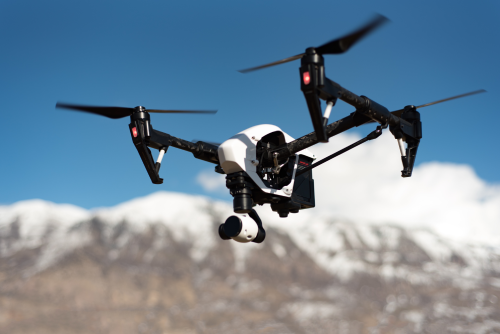
Industrial plant monitoring used to mean scaffolding, shutdowns, and risky manual checks in hard-to-reach areas. Today, drones are used in industrial plant monitoring to inspect roofs, tanks, pipe racks, chimneys, yards, and heat patterns faster and with less worker exposure. For Indian factories, utilities, warehouses, cement plants, steel plants, and process industries, the real value is not just aerial footage but better maintenance decisions.
Quick Take
- Drones help plants inspect elevated, spread-out, or risky areas without sending people everywhere physically.
- The most common uses are visual inspection, thermal inspection, mapping, maintenance planning, stockyard monitoring, and post-incident assessment.
- A drone is only one part of the job. The real output should be a defect list, thermal anomaly report, map, or 3D model that maintenance teams can act on.
- Consumer drones can help with basic roof and facade checks, but industrial work often needs zoom cameras, thermal cameras, better safety procedures, and trained operators.
- In India, always verify the latest DGCA and Digital Sky requirements before outdoor flights, and also check plant security, EHS, and site-specific permissions.
- Standard drones may be unsuitable in hazardous or explosive atmospheres. Plant safety approval is essential.
What industrial plant monitoring actually means
Industrial plant monitoring is the routine observation of a plant’s physical condition, operations, and environment so problems are caught early.
In practice, that can include:
- Checking roofs for damage or water pooling
- Inspecting tanks, stacks, chimneys, and elevated structures
- Looking for corrosion, loose fittings, cracks, and coating failure
- Identifying abnormal heat patterns on equipment
- Measuring stockpiles or yard layout changes
- Documenting shutdowns, repairs, and construction progress
- Capturing evidence after storms, fire incidents, or equipment failure
Traditionally, many of these tasks required ladders, rope access, scaffolding, cranes, or long walkdowns. Drones reduce the need for those methods in some situations, though they do not replace all hands-on inspection.
Why drones fit plant monitoring so well
Industrial plants are full of areas that are high, hot, repetitive, dusty, spread out, or difficult to access safely.
A drone gives the team three major advantages:
Speed
A roof, pipe rack, tank farm, or yard that may take hours to inspect on foot can often be surveyed much faster from the air.
Reduced exposure
Instead of sending a person near edges, unstable roofs, or high structures for a first look, a drone can capture images from a safer standoff distance.
Better records
Drone data is easier to compare over time. A maintenance manager can review images from this month against last quarter and see whether corrosion, deformation, or thermal anomalies are getting worse.
That repeatability is what turns drone flying from “nice footage” into a real monitoring tool.
Main ways drones are used in industrial plant monitoring
Visual inspection of structures and equipment
This is the most common use case.
A drone with a normal camera can inspect:
- Roof sheets and roof joints
- Water ingress points
- Tank exteriors
- Chimneys and stacks
- Pipe bridges and pipe racks
- Conveyor structures
- Cooling towers
- Facades and elevated steelwork
- Solar panels within industrial campuses
- Boundary walls and lighting poles
The drone does not “repair” anything, of course. It helps the team find where attention is needed.
Practical example
In a large manufacturing facility, a periodic roof inspection after the monsoon can quickly reveal:
- Ponding water
- Damaged cladding
- Rust patches
- Open seams
- Loose fasteners
- Blocked roof drains
Instead of a full manual roof walk first, the maintenance team gets a defect map and only visits the sections that need close inspection.
Thermal inspection for heat-related issues
A thermal camera detects infrared radiation, which helps show temperature differences on surfaces.
In plants, thermal drones are often used to look for:
- Hotspots on electrical equipment
- Uneven heat patterns on process components
- Heat loss from insulation damage
- Overheating motors or bearings
- Roof moisture indications in some cases
- Abnormal panel temperatures in captive solar installations
Thermal imaging is useful because many failures show up as heat before they become major breakdowns.
Important limitation
A thermal image is not the same as a diagnosis.
A hotspot can suggest a problem, but the maintenance team still needs to confirm the cause. Surface material, reflections, weather, camera angle, and emissivity can affect readings. Emissivity is simply how efficiently a surface emits thermal radiation.
So the correct workflow is usually:
- Drone identifies a suspicious thermal pattern.
- Maintenance team verifies it with ground inspection or instruments.
- Action is planned based on confirmed findings.
Zoom inspection of hard-to-reach details
Some industrial jobs need more than a wide aerial view. A drone with a zoom camera can inspect from a safer distance while still capturing close detail.
This helps with:
- Bolted joints
- Corrosion at supports
- Cracks in concrete or masonry
- Damaged coatings
- Loose cable trays
- Valve and flange visibility
- High-level signage or safety fixtures
Zoom cameras are especially useful when the team does not want the drone too close to a structure, moving equipment, or sensitive area.
Mapping and 3D modeling of plant areas
Drones are also used to create maps and 3D models.
This usually relies on photogrammetry, which means using many overlapping photos to generate:
- Orthomosaics, or top-down stitched maps
- 3D surface models
- Volume calculations
- Site layout documentation
- Progress records for expansions or shutdown work
Plant teams can use these outputs for:
- Planning equipment movement
- Tracking construction progress
- Monitoring stockyards
- Reviewing drainage and access routes
- Creating visual references for maintenance planning
In larger facilities, a 3D model can be a useful communication tool between operations, maintenance, contractors, and management.
Stockpile, yard, and logistics monitoring
Plants that handle raw materials often need regular yard visibility.
Common examples include:
- Coal yards
- Limestone stockpiles
- Aggregate piles
- Scrap yards
- Fly ash or material storage zones
- Container or pallet yards
Drone-based monitoring can help estimate volume, document space usage, and identify congestion or unsafe layout patterns.
For plants dealing with bulk materials, this can be more efficient than relying only on ground photos and rough estimates.
Turnaround and shutdown monitoring
During a planned shutdown or turnaround, plants need rapid situational awareness.
A drone can help supervisors:
- Document work progress day by day
- Check material staging areas
- Monitor crane access routes
- Capture before-and-after condition records
- Review housekeeping across large zones
- Communicate progress to management and contractors
The key advantage here is visibility. Instead of waiting for verbal updates from many teams, managers can review actual aerial records.
Emergency and post-incident assessment
After heavy rain, wind damage, a local fire event, partial structural failure, or another incident, a drone can provide a safer first look before people enter certain areas.
This can support:
- Roof damage assessment
- Flooded yard mapping
- Wall or chimney visual review
- Access route checks
- Preliminary documentation for internal investigation or insurance support
This use case must be handled carefully. A post-incident zone may contain unstable structures, live electrical hazards, toxic release concerns, or security restrictions. Drone deployment should happen only under the site’s emergency and safety command process.
Confined space or indoor inspection
Some advanced teams use small protected drones for indoor or GPS-denied areas such as:
- Warehouses
- Boiler spaces
- Large tanks
- Ducts
- Utility buildings
- High-bay storage areas
This is more specialized than normal outdoor flying. Indoor navigation, obstacle avoidance, lighting, and safety control become much more important.
For many beginners, this is not the starting point. It is a higher-skill use case.
Which drone setup is used for which job
Not every plant task needs the same drone.
| Drone setup or sensor | Best used for | What to keep in mind |
|---|---|---|
| Standard RGB camera | Roofs, facades, structures, documentation | Good for general inspection, but may miss fine detail without zoom |
| Zoom camera | High structures, bolts, corrosion points, hard-to-reach details | Useful when you need close visual detail from a safe distance |
| Thermal camera | Hotspots, insulation issues, electrical and heat pattern checks | Best for anomaly detection, not final diagnosis |
| Mapping-focused drone | Large sites, stockyards, expansion projects, top-down surveys | Needs planned overlap and consistent flight method |
| LiDAR payload | Complex 3D capture in certain advanced projects | More specialized and costly; usually justified only for specific needs |
| Specialized gas-detection setup | Selected leak detection or environmental monitoring tasks | Suitability depends heavily on site conditions, sensor type, and validation |
For many plants, the practical starting combination is:
- A reliable camera drone for visual work
- A thermal-capable platform if heat-related inspection is a regular need
A simple drone monitoring workflow that actually works
Plants get better results when they treat drones as part of maintenance workflow, not just as flying cameras.
Step 1: Define the inspection question
Before any flight, ask:
- What exactly are we trying to find?
- What asset is involved?
- What decision will this data support?
For example:
- “Check whether roof leaks after monsoon are linked to panel damage.”
- “Find any abnormal heat pattern on the substation roof equipment.”
- “Measure stockpile volume before dispatch planning.”
- “Document coating condition on the external tank shell.”
A vague request like “do a drone survey” often leads to unusable footage.
Step 2: Assess risk and site conditions
Review:
- Wind
- Dust
- Steam
- Heat
- Electromagnetic interference
- Nearby workers and vehicles
- Birds
- Wires, cranes, and tall structures
- Hazardous atmosphere concerns
- GPS quality
- Security restrictions
This is especially important in active industrial environments where the sky may not be as “open” as it looks.
Step 3: Choose the right drone and sensor
Use the smallest effective tool for the task.
A basic visual inspection may only need a camera drone. A thermal survey needs the right payload and method. A large stockyard map needs a planned mapping platform and data processing workflow.
Step 4: Plan repeatable flight paths
If the plant wants true monitoring over time, the flight should be repeatable.
That means keeping records of:
- Takeoff point
- Flight height
- Camera angle
- Time of day
- Sensor used
- Weather conditions
- Asset naming convention
Repeatability makes month-on-month comparison much more reliable.
Step 5: Capture actionable data, not random clips
The pilot should collect data with purpose:
- Wide shots for context
- Medium shots for location clarity
- Close detail where defects are suspected
- Thermal frames from suitable angles
- Overlapping imagery for mapping if needed
Good industrial drone work is organized. It should not look like casual cinematic flying.
Step 6: Process and label the outputs
Useful outputs may include:
- Marked-up defect photos
- Thermal anomaly report
- Orthomosaic map
- 3D model
- Stockpile volume estimate
- Asset-wise inspection folder
- Comparison report against previous survey
If files are not labeled properly, the plant team may never use them effectively.
Step 7: Connect the results to maintenance action
This is the most important step.
The drone team should help answer:
- What needs urgent attention?
- What can be monitored over time?
- Which findings need manual verification?
- Which department should act?
Without this handover, drone work becomes only documentation, not monitoring.
The biggest benefits plants actually get
Faster first inspection
A drone can provide an initial condition check without waiting for access equipment in every case.
Less unnecessary scaffolding or access setup
If the drone shows a structure is largely fine except for one section, the team can target access only where needed.
Better preventive maintenance
Repeated flights create a visual history, which helps spot slow deterioration before it becomes expensive.
Improved planning during shutdowns
Managers get a clear view of what is changing across the plant.
Safer review of elevated or difficult areas
Drones reduce exposure for routine visual checks, though not all risk disappears.
Stronger documentation
Images and maps help with internal reporting, contractor coordination, and post-event records.
Where drones are limited
Drone articles sometimes make the technology sound like a complete solution. It is not.
Drones do not replace all manual inspection
If a pipe support is corroded, a drone may show the visual condition. It may not tell you remaining wall thickness, exact material integrity, or whether a hidden internal defect exists.
Thermal imaging can be misunderstood
Hotspots are clues, not final answers.
Dust, steam, glare, and weather can reduce quality
Industrial environments are often visually messy. A perfect demo flight in a clean field is very different from a live plant.
Hazardous areas may restrict drone use
Standard drones are often unsuitable near flammable vapours or other hazardous conditions unless the site approves a safe method.
Data overload is real
If the team captures hundreds of images but no asset tagging, no defect categorization, and no summary report, the data becomes difficult to use.
Safety, legal, and compliance points in India
Any outdoor industrial drone operation in India should be planned conservatively.
Verify the latest DGCA and Digital Sky requirements
Do not assume yesterday’s rule still applies.
Before flying, verify the latest official guidance on:
- Airspace permissions
- Drone category and platform compliance
- Pilot or operator requirements
- Site restrictions
- Any approvals relevant to the operation
This matters even more if the plant is near controlled airspace, an airport, a port, a defence-sensitive area, or critical infrastructure.
Get plant-level approvals too
DGCA-related compliance is only one side of the picture.
Industrial sites may also require:
- Entry permits
- Security clearance
- Vendor onboarding
- EHS induction
- Method statement approval
- Job safety analysis
- Insurance documentation
- Confidentiality agreements
Coordinate with operations and maintenance
A drone team should never appear on site and “just start flying.”
Coordinate with:
- Plant operations
- Safety or EHS
- Security
- Maintenance
- Electrical team if relevant
- Fire and emergency response team if required
This avoids conflicts with live work, shutdown activity, crane lifts, or restricted zones.
Be extra careful in hazardous atmospheres
Many process plants contain areas with:
- Flammable vapours
- Dust explosion risk
- High heat
- Corrosive gases
- Dense metal structures
- RF or electromagnetic interference
A normal consumer drone may not be suitable there. Site safety approval is essential, and in some cases the answer may simply be: do not fly.
Protect data and privacy
Industrial drone data may include:
- Layout of sensitive assets
- Production areas
- Security systems
- Contractor activity
- Proprietary process equipment
Decide in advance:
- Who owns the data
- Where it will be stored
- Who can access it
- How long it will be retained
- Whether cloud processing is acceptable under site policy
Common mistakes plants and drone operators make
Flying without a clear objective
If the task is unclear, the output will usually be unusable.
Treating industrial inspection like cinematic flying
Slow, dramatic footage may look good but fail to capture the exact defect.
Using the wrong sensor
A standard camera cannot do the job of a thermal camera, and a wide lens may miss tiny corrosion points.
Ignoring repeatability
If every inspection is flown at a different height, angle, and time of day, comparison becomes weak.
Assuming thermal equals certainty
Thermal anomalies need interpretation and often confirmation.
Flying too close to structures unnecessarily
Closer is not always better. It can reduce safety margins and increase collision risk.
Skipping ground truth
A drone may indicate where a problem is, but site teams still need confirmation when repair decisions are critical.
Poor file management
If defect photos are not tagged by asset and date, they quickly lose value.
Not integrating drone findings into maintenance systems
The best drone program is connected to inspection logs, maintenance planning, and follow-up action.
FAQ
Can a regular camera drone be used for industrial plant monitoring?
For basic visual tasks like roof surveys, facade checks, and general documentation, yes, sometimes. But for serious industrial work, teams often need zoom capability, thermal imaging, stronger safety processes, and more reliable reporting.
Do drones replace scaffolding and rope access completely?
No. Drones can reduce how often those methods are needed for first inspection and routine checks, but many defects still require hands-on verification, testing, or repair access.
Are thermal drones useful in factories and plants?
Yes, especially for finding heat anomalies. They are commonly used for electrical checks, insulation issues, equipment hotspots, and some roof-related investigations. But thermal images must be interpreted carefully.
Can drones detect gas leaks?
Some specialized payloads can support gas detection or environmental monitoring, but this is not a standard feature on most drones. Suitability depends on the sensor, gas type, airflow, altitude, and site conditions. Validation is essential.
Are drones allowed inside private industrial plants in India?
Site owner permission is still necessary, and outdoor operations may also need compliance with current DGCA and airspace rules. Indoor flights may not involve the same airspace process, but they still require strict site safety approval and SOPs.
What industries benefit most from plant monitoring drones?
Common users include manufacturing plants, cement plants, steel plants, warehouses, logistics parks, utility facilities, solar-heavy campuses, chemical and process industries, and large industrial estates.
How often should a plant run drone inspections?
That depends on asset criticality and the problem being monitored. Some sites use monthly roof checks, quarterly thermal inspections, seasonal monsoon reviews, or pre- and post-shutdown surveys.
What outputs should a plant ask from a drone service provider?
Ask for actionable outputs, not just raw footage. Good deliverables may include defect photos, thermal anomaly reports, labeled asset folders, maps, stockpile calculations, and comparison reports against earlier inspections.
Is a drone enough for preventive maintenance?
A drone is a very useful input, not the full maintenance system. Its real value comes when findings are verified, prioritized, and linked to repair or monitoring actions.
Final takeaway
The best answer to how drones are used in industrial plant monitoring is simple: they help plants see more, faster, and with less unnecessary exposure of people to risky areas. If you are evaluating drones for a plant in India, do not start by asking which drone to buy. Start by asking which assets you need to monitor, what output your maintenance team needs, and what safety and compliance conditions the site will allow.
