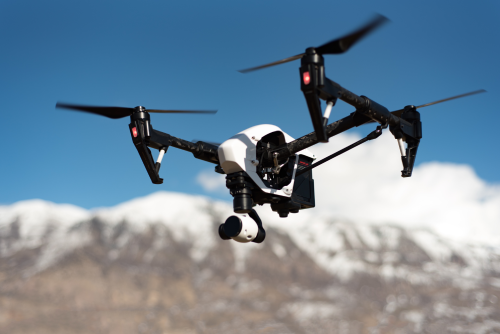
Fertilizer application by drone is no longer limited to experimental farms. In India, drones are increasingly used to apply foliar nutrients, micronutrients, and some top-dressing inputs when labour is short, the field is hard to enter, or the crop is already standing. The key point is simple: drones are very useful for some fertilizer jobs, but they are not a replacement for every traditional fertilizer method.
Quick Take
- Drones are used in fertilizer application mainly for foliar feeding and targeted nutrient spraying on standing crops.
- They can also handle some granular or broadcast spreading tasks, but this is more limited than liquid spraying.
- Drone fertilizer application works best when:
- the crop is already growing
- the field is waterlogged, muddy, steep, or difficult to enter
- a quick micronutrient correction is needed
- farmers want more even coverage with less trampling
- Drones are usually not ideal for heavy basal fertilizer doses such as large quantities of DAP, urea, or potash before sowing.
- The biggest advantages are:
- speed
- lower labour dependence
- reduced operator exposure
- less crop damage from walking or tractor movement
- better repeatability when properly calibrated
- The biggest risks are:
- drift in windy weather
- wrong product mixing
- poor calibration
- expecting a drone to replace all fertilizer operations
- In India, commercial agri-drone work should be done with proper training, compliant equipment, and the latest verified DGCA and airspace checks before flying.
What fertilizer application by drone actually means
When people hear “fertilizer application,” they often imagine bags of urea or DAP being spread across a field. That is only one part of crop nutrition.
In practice, drones are used in fertilizer application in three main ways:
Foliar nutrient spraying
This is the most common use. A drone sprays a diluted nutrient solution directly onto plant leaves. The leaf absorbs part of the nutrient quickly, which is useful for correcting deficiencies or supporting growth at specific crop stages.
Examples include:
- water-soluble NPK formulations
- micronutrient mixes
- zinc, boron, iron, calcium, magnesium, or sulphur-based foliar products
- certain bio-based nutritional inputs, where approved and compatible
Spot treatment for nutrient deficiency
A field may not need the same nutrient dose everywhere. A drone can be sent only to problem areas where crops show deficiency symptoms, uneven growth, or stress.
This matters because one part of a field may need attention while the rest does not.
Granular or broadcast spreading in selected cases
Some agriculture drones can be fitted with a spreader instead of a liquid spray tank. These setups may be used for:
- certain granular fertilizers
- seed broadcasting
- limited top dressing
- some soil amendment materials, depending on granule size and equipment compatibility
But this is where many readers need a reality check: bulk fertilizer spreading is still not the strongest use case for drones. Heavy application rates quickly run into payload, battery, and refill limits.
Why drones are becoming useful in Indian farming
India’s farming conditions make drone use especially attractive in certain situations.
Labour is expensive or unavailable at the right time
Fertilizer timing matters. A nutrient spray that is late by several days can reduce the intended benefit. When farm labour is not available, drones help cover land quickly.
Many fields are hard to enter
This is common in:
- paddy fields
- recently irrigated plots
- fields after rain
- hilly or uneven land
- tall standing crops
A person with a knapsack sprayer may walk slowly, tire quickly, and miss spots. A tractor may not enter at all. A drone can fly above the crop without touching the soil.
Crop trampling is reduced
When people walk through the field, some crop damage is almost unavoidable. Tractor-mounted methods can also cause wheel-track losses. Drones reduce this physical disturbance.
Taller crops are difficult to cover manually
Think of crops like:
- sugarcane
- maize at a later stage
- cotton once canopy closes
- orchards and plantation crops
Manual spraying in such crops can be uneven and tiring. Drone downwash, the air pushed downward by the rotors, can help carry droplets into the canopy when the mission is properly planned.
Service models are growing
Not every farmer needs to buy a drone. In many areas, custom operators, FPOs, agri-startups, and village-level service providers offer drone application as a service. That makes adoption easier for smaller landholders.
Where drones fit best in fertilizer application
The most practical way to understand this topic is to separate good-fit jobs from poor-fit jobs.
| Fertilizer task | Drone fit | Why |
|---|---|---|
| Foliar micronutrient spray on a standing crop | Excellent | Fast, low crop disturbance, useful for quick correction |
| Water-soluble nutrient spray during crop growth | Good to excellent | Works well when formulation is compatible and timing matters |
| Nutrient spray on waterlogged paddy | Excellent | No need to walk into muddy field |
| Foliar feeding in cotton, maize, sugarcane | Good | Useful when crop is tall or dense |
| Orchard nutritional spray | Good | Helpful in hard-to-reach canopies, but calibration matters |
| Spot treatment of weak zones | Very good | Avoids treating the whole field unnecessarily |
| Heavy basal fertilizer before sowing | Poor | Application quantity is too high for efficient drone operation |
| Large-scale broadcast urea or DAP at high dose | Limited | Payload and refill cycles make it inefficient in many cases |
That table explains the core truth: drone fertilizer application is strongest when the input rate is moderate, the crop is standing, and field access is difficult.
Main ways drones are used for fertilizer application
Foliar feeding during crop growth
Foliar feeding means applying nutrients to the leaves rather than only through the soil.
This is often done when:
- a crop shows visible deficiency
- the soil is not supplying nutrients quickly enough
- the farmer wants support during flowering, vegetative growth, or stress recovery
- root-zone uptake is reduced due to waterlogging or other conditions
In this role, drones are especially valuable because they can cover a field quickly and evenly.
Example: paddy
In paddy, entering the field manually is inconvenient and slow. A drone can apply foliar nutrients without workers standing in water. This is one of the clearest use cases in India.
Example: cotton
In cotton, once the canopy develops, uniform manual spraying becomes harder. A drone can help deliver nutritional sprays with less walking damage.
Example: sugarcane
Sugarcane is physically difficult to enter at later stages. Drone use can make foliar nutrient application more practical where field access is poor.
Micronutrient correction
Micronutrients are needed in smaller quantities than primary nutrients like nitrogen, phosphorus, and potassium, but they still matter a lot.
Common deficiency corrections may involve:
- zinc
- boron
- iron
- calcium
- magnesium
These are well suited to drone work because the required application volume is usually lower than bulk fertilizer spreading.
A farmer may notice yellowing, poor leaf development, weak flowering, or uneven crop growth. After confirming the deficiency with an agronomist or local expert, a drone can be used for a timely foliar spray.
Nutritional support in horticulture and orchards
Fruits and horticultural crops often need repeated sprays during critical stages. Drones can help in:
- orchards where movement is difficult
- vegetable blocks where quick response matters
- plantation crops where terrain is uneven
That said, orchards need careful planning. Tree height, canopy shape, row spacing, and drift risk all affect performance. Drone spraying in orchards can work well, but only when the operator understands the canopy and adjusts the flight plan accordingly.
Spreading granules or prills in special cases
Some drones can spread dry material using a centrifugal spreader or similar attachment.
Possible uses include:
- selected top-dressing jobs
- small granule application
- broadcasting in small or difficult plots
- inputs where rate per acre is manageable for the drone system
However, farmers should not assume that every granular fertilizer is a good drone candidate. Granule size, flow characteristics, moisture content, clogging risk, and required dose per acre all matter.
If the material is too heavy, too sticky, or required in very large volume, the drone may become slow and uneconomical.
Precision application based on field variability
This is one of the most promising future uses.
In precision farming, drone imagery or other field data may reveal that one section of the farm is healthier than another. Instead of treating the whole plot equally, the operator can focus nutrient application on weaker zones.
This kind of variable-rate or zone-based work is still developing in many Indian farm contexts, but the concept is important:
- not every square metre needs the same dose
- drones can potentially apply inputs more selectively
- record-keeping becomes easier
For large, progressive farms or service providers, this is where drones move from being just a spraying machine to a farm management tool.
How the workflow works in the field
A good drone fertilizer job is not just “fill the tank and fly.” The real value comes from planning and calibration.
1. Identify the crop need
Before any flying starts, the farmer or agronomist should be clear about:
- what deficiency or nutritional need exists
- whether a foliar product is appropriate
- the crop stage
- the urgency of treatment
A drone cannot fix a wrong agronomy decision. If the nutrient plan is wrong, better technology will only spread the mistake faster.
2. Choose a compatible fertilizer formulation
Not every fertilizer can go into a drone tank.
The product should be:
- suitable for foliar use
- fully soluble if being sprayed
- compatible with the drone’s pump, nozzles, and filters
- mixed exactly as recommended
- legally permitted and properly labeled
This is critical. Poorly dissolved material can clog nozzles, give uneven coverage, or damage equipment.
3. Inspect the field and plan the mission
The operator should check:
- field boundaries
- power lines
- trees
- nearby roads or houses
- water bodies
- take-off and landing area
- wind direction
A mission plan is then created so the drone flies in a consistent pattern.
4. Calibrate the application rate
Calibration means matching the drone’s speed, height, swath width, nozzle or spreader setting, and flow rate to the target dose.
Without calibration, a farmer may get:
- over-application
- under-application
- missed strips
- wasted product
This is one of the biggest differences between a professional operation and a casual one.
5. Mix and load safely
The spray mix or granules should be prepared carefully.
Important basics:
- use clean water if required by the product
- dissolve the material completely
- strain if the formulation needs it
- avoid random tank mixes
- use personal protective equipment during mixing and loading
Even “fertilizer” products are not automatically harmless. Concentrates can irritate skin, eyes, or breathing.
6. Fly in suitable weather
Weather strongly affects results.
The best time is usually when:
- wind is low
- rain is not expected immediately
- temperature is not excessively high
- evaporation is not extreme
Strong wind increases drift. Unexpected rain can wash the nutrient off before it is absorbed.
7. Monitor coverage during the job
The operator should watch for:
- nozzle blockage
- uneven spray pattern
- missed rows
- too much drift
- low battery behaviour
- poor spread pattern in dry material application
Good operators also maintain records of area covered, batch used, and mission settings.
8. Review crop response
After application, the farm team should check:
- visual improvement in deficient areas
- uniformity of treatment
- whether a repeat application is needed
- whether the underlying soil fertility issue still needs correction
This is another important reality: foliar spraying can help quickly, but it does not always replace soil-based nutrition.
Benefits of using drones for fertilizer application
Faster coverage when timing matters
This is often the biggest operational benefit. A field that takes many workers a full day can be treated much faster by an organized drone team.
That matters during tight agronomy windows.
Less dependence on field entry
In muddy, wet, or dense crop conditions, drones save time and effort because people do not need to walk through the field.
Reduced crop damage
No wheel tracks. Less trampling. Less leaf breakage from human movement in dense canopies.
Better repeatability
When a mission is planned properly, drones can provide more consistent passes than tired manual labour.
This does not mean “perfect every time,” but it does improve repeatability.
Lower exposure for workers
The mixing crew still needs protective gear, but direct contact during application can be reduced compared with backpack spraying.
Useful records for progressive farms
Mission logs, treated area, and application history can support better farm management.
The limits: what drones cannot do well
The excitement around agri-drones sometimes leads to exaggerated claims. Here are the main limitations.
They are not a full replacement for conventional fertilizer methods
Primary nutrient demand in many crops is simply too large for drones to handle efficiently through foliar spraying alone.
A crop’s nitrogen, phosphorus, and potassium needs still largely depend on sound soil fertility management.
Payload is limited
Agriculture drones carry far less than a tractor spreader or even manual bulk application at scale. That means more refills, more battery changes, and lower efficiency for heavy-dose work.
Product compatibility matters a lot
Some inputs do not dissolve well, settle quickly, foam, clog, or corrode components. Not every fertilizer product is drone-friendly.
Weather can ruin good planning
Wind and rain can turn a neat application into a poor one very quickly.
Results depend on agronomy, not just technology
If the wrong product is chosen, or the crop stage is missed, the drone does not save the situation.
Safety, legal, and compliance basics in India
Drone agriculture is practical, but it still needs discipline.
Use compliant equipment and trained operators
Commercial field operations should be handled by properly trained operators using compliant agriculture drones and standard operating procedures.
Check the latest DGCA and airspace requirements
Indian drone rules can change, and operational requirements may depend on aircraft class, location, and purpose. Before flying, verify the latest official guidance related to:
- DGCA requirements
- Digital Sky processes
- airspace restrictions
- NPNT requirements where applicable
- local no-fly or sensitive zones
Do not assume that because a farm is rural, flying is automatically unrestricted.
Keep distance from people, roads, and livestock
Fertilizer and nutrient sprays should not drift onto:
- homes
- roads
- workers
- school areas
- livestock
- ponds or sensitive water bodies
Clear the area before take-off.
Follow product directions exactly
Only use formulations that are suitable for the intended method of application. Verify:
- label directions
- dilution guidance
- compatibility
- crop suitability
- waiting period if relevant
If in doubt, confirm with an agronomist, OEM, or authorized product expert before spraying.
Handle batteries carefully
Agri-drones use high-energy batteries. Field teams should follow safe charging, storage, transport, and cooling practices. Battery shortcuts are not worth the fire risk.
Consider insurance and service accountability
For commercial operators and FPOs, insurance, maintenance logs, and incident procedures are worth checking before operations begin.
Practical tips for better results
- Use drone fertilizer application mainly for standing crop nutrition, not for every fertilizer job on the farm.
- Start with crops and tasks where the value is obvious, such as paddy, cotton, sugarcane, or orchard foliar sprays.
- Do a small test pass if the product or crop stage is new.
- Keep the tank, filters, and nozzles clean.
- Avoid random mixing of fertilizers with pesticides unless compatibility is confirmed.
- Match the application to crop stage. A good product at the wrong time may still disappoint.
- Keep refill and battery logistics organized so the field team does not waste the advantage of fast aerial application.
- Record what was applied, where, and why. That data becomes useful after one or two seasons.
Common mistakes farmers and operators make
Assuming drones can replace all fertilizer spreading
This is the most common misunderstanding. Drones are great for certain nutritional tasks, but heavy basal application still usually belongs to conventional methods.
Using the wrong formulation
A fertilizer that works in a ground sprayer is not automatically suitable for a drone. Solubility and flow matter more than many beginners realize.
Skipping calibration
Without proper calibration, even an expensive drone can deliver poor results.
Flying in windy or unstable weather
Drift wastes money and creates safety problems.
Ignoring crop stage
A nutrient correction that is timely can help. The same correction too late may have little value.
Overlooking canopy structure
Dense crops and orchards need different planning than open-field crops. One standard flight setting does not suit every crop.
Poor mixing and tank hygiene
Residue buildup, partial dissolution, and nozzle clogging can make application uneven.
Treating technology as a substitute for agronomy
A drone is a delivery tool. It does not replace soil testing, crop observation, or nutrient planning.
FAQ
Can drones spray urea?
They can spray certain water-soluble nutrient solutions used for foliar feeding, but that is different from replacing bulk urea application in the soil. Large nutrient requirements still usually need conventional methods.
Can drones spread DAP or other granular fertilizers?
Some drones can spread dry material, but heavy broadcast application is often inefficient because payload is limited. It works better in selected cases than as a universal replacement.
Which crops in India benefit most from drone fertilizer application?
Paddy, cotton, sugarcane, maize, and some horticulture and orchard crops are strong candidates, especially when the field is hard to enter or the crop is already tall.
Does drone fertilizer application reduce fertilizer use?
Sometimes it can reduce overlap and improve targeting, but it does not remove the crop’s nutritional requirement. Savings depend on the product, application accuracy, and whether the treatment is truly needed.
Is drone application better than backpack spraying?
Often yes in terms of speed, repeatability, reduced trampling, and worker comfort. But “better” depends on correct calibration, crop type, and field conditions.
Do farmers need to buy a drone to use this method?
No. Many farms are better served by hiring a trained service provider, FPO, or local agri-drone operator instead of owning a drone outright.
What weather is best for fertilizer spraying by drone?
Low wind, no immediate rain, and moderate conditions are best. Strong wind increases drift, and rain can wash off the application before it works.
Can drones be used in organic or residue-conscious farming?
They can be used to apply permitted liquid nutritional inputs or bio-inputs if those inputs are compatible with the equipment and allowed under the farm’s production system. Clean tank practices are important.
Is special permission needed in India?
Commercial agricultural drone operations may involve compliance requirements related to the drone platform, pilot training, and airspace checks. Always verify the latest official DGCA, Digital Sky, and local guidance before flying.
The practical takeaway
If you want the shortest honest answer to how drones are used in fertilizer application, it is this: they are best used for fast, targeted nutrition on standing crops, especially foliar feeding and micronutrient correction in fields that are hard to enter. For Indian farmers, that makes drones a strong tool for paddy, cotton, sugarcane, maize, and some horticulture work, but not a complete substitute for all fertilizer spreading. If you are considering drone use, start with one high-value use case, work with a trained operator, and verify both product compatibility and the latest compliance requirements before the first flight.
