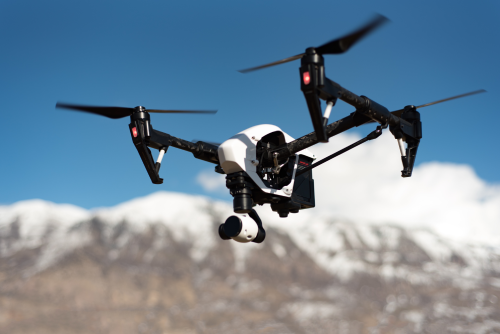
Crop spraying drones are moving from trial plots to real farm work across India. In crop spraying services, drones are used to apply pesticides, fungicides, foliar nutrients, and some other crop inputs faster, with less worker exposure to chemicals and less crop damage from walking through fields. The results can be excellent, but only when the service is planned properly, the spray is calibrated correctly, and the latest legal and chemical-use rules are followed.
Quick Take
- Crop spraying drones are mainly used as a service, not just as owned equipment. Farmers often hire a trained operator for a specific crop stage or pest problem.
- They are especially useful in waterlogged paddy, tall crops, uneven land, and fields where manual spraying is slow or physically difficult.
- A good service is not just “drone plus tank.” It includes field inspection, spray planning, chemical handling, calibration, weather checks, safe flying, and record-keeping.
- Drones can reduce human contact with agrochemicals and avoid crop trampling, but they do not automatically reduce pesticide dose. The product label and agronomy guidance still matter.
- The biggest technical issues are drift, wrong droplet size, poor canopy penetration, and bad weather.
- In India, commercial drone spraying must be handled conservatively. Verify the latest DGCA, Digital Sky, airspace, operator qualification, and product-use guidance before any job.
- Drone spraying works best when fields are planned in clusters. Very small, scattered plots can be less efficient unless several farmers book together.
- If you are hiring a spraying service, ask how they calibrate for your crop and chemical, not just how fast they can cover land.
What crop spraying services actually mean
When people hear “agri drone,” they often imagine a drone flying over a field and spraying liquid. In practice, a crop spraying service is a full workflow.
A service provider usually helps with:
- assessing the crop and field condition
- checking whether the application is suitable for drone spraying
- planning the spray route
- mixing the spray solution correctly
- choosing the nozzle or atomization setup
- flying the application safely
- refilling and repeating passes efficiently
- maintaining records of what was sprayed and where
This matters because crop spraying is not only about covering area. It is about getting the right amount of product onto the target crop, at the right crop stage, with minimum drift and minimum risk.
In India, these services are being used by:
- individual farmers
- Farmer Producer Organisations (FPOs)
- custom hiring centres
- agri-input networks
- cooperatives
- plantation operators
- rural drone entrepreneurs
For many users, hiring a service makes more sense than buying a drone. A spraying drone needs trained operation, batteries, chargers, maintenance, safe chemical handling, and a steady flow of jobs.
Why drone spraying is becoming useful in Indian farming
India has a mix of field sizes, crop types, labour conditions, and weather patterns. That makes drone spraying very useful in some situations and less useful in others.
Here is why demand is growing:
Less human exposure to chemicals
Manual spraying often means a worker walks through the field carrying a knapsack sprayer. Even with protective gear, contact risk can be significant. A drone keeps the operator away from the spray cloud.
Better access in difficult fields
Some fields are hard to walk through:
- paddy fields after irrigation or rain
- muddy or waterlogged plots
- tall crops such as sugarcane
- dense banana plantations
- hilly or uneven terrain
- orchards with limited tractor access
A drone can reach these areas without the operator entering the crop.
Less crop damage from foot traffic
Manual spraying can crush plants or disturb the field, especially in close-spaced crops. Drones avoid trampling.
Faster response during pest or disease outbreaks
If a pest outbreak spreads quickly, timing matters. A drone service can sometimes cover a village cluster or a plantation block much faster than manual crews.
Labour constraints
In some areas, finding enough trained farm labour for timely spraying is getting harder or more expensive. Drones are not a complete replacement for labour, but they can reduce dependence for certain jobs.
How drones are used in crop spraying services
A professional crop spraying service usually follows a step-by-step process. This is where the real value lies.
1. Field assessment
Before spraying, the operator or agronomy team checks:
- crop type and crop stage
- target pest, disease, or nutrition issue
- field size and shape
- trees, wires, poles, and other obstacles
- nearby homes, roads, water bodies, and livestock
- wind and weather conditions
- whether drone spraying is appropriate at all
For example, a paddy field with standing water may be a strong fit for drone spraying. A tiny plot boxed in by power lines and surrounded by sensitive neighboring crops may be a poor fit.
2. Product and dose planning
This is a critical step.
Drone spraying often uses lower spray liquid volume than manual spraying. That does not mean the operator can guess the concentration. The service provider must check the product guidance, dose, dilution method, and whether the product is suitable for drone or aerial application under current guidance.
This is also where agronomy matters. Different targets need different coverage:
- contact fungicides usually need good surface coverage
- systemic products behave differently inside the plant
- herbicides can be especially sensitive because drift can damage nearby fields
- foliar nutrition may need different droplet behavior than insecticides
A bad plan here can ruin the whole job, even if the drone flies perfectly.
3. Mission planning and calibration
The operator sets parameters such as:
- flying height above the crop
- flight speed
- lane spacing
- spray flow rate
- droplet size target
- refill cycle
Calibration means matching the drone’s output to the required application rate. In simple terms, the drone must release the right amount of spray over the right area.
Some better service providers also do a trial pass or coverage check before the full job.
4. Mixing and loading
The chemical mix must be prepared carefully, in a designated safe area, with personal protective equipment (PPE).
A professional setup should avoid:
- spills near drinking water
- inaccurate measuring
- incompatible tank mixes
- open handling near bystanders
- reusing containers carelessly
The operator then loads the spray tank, usually in repeated cycles during the job.
5. Flying the spray operation
Once airborne, the drone flies pre-planned paths over the crop. The aim is even coverage, not dramatic flying.
Good spray flying means:
- steady height over the crop
- controlled overlap between passes
- turning safely at field edges
- avoiding overspray outside the target area
- adjusting or pausing if wind picks up
Some advanced systems can maintain more consistent height over uneven ground. This helps when the field is sloped or has variable crop height.
6. Refill, battery swap, and repeat
Agricultural spray drones work in cycles. After a short spray run, the team usually:
- lands the drone
- swaps or manages batteries
- refills the tank
- checks the system
- resumes the next section
This is why service efficiency depends heavily on logistics, not just drone capability. A poorly planned refill point can waste more time than the spraying itself.
7. Post-spray checks and records
After the job, a good provider should note:
- area covered
- product applied
- date and time
- operator details
- weather notes
- any incomplete or skipped patches
- equipment issues, if any
These records are useful for both farm management and accountability.
Where drone spraying works best
Drone spraying is not equally effective everywhere. It shines in specific use cases.
Paddy and other wet-field crops
This is one of the clearest applications.
In wet fields, walking with a manual sprayer is tiring and slow. Tractors may not be practical. Drones can treat the crop without soil disturbance and without the operator entering standing water.
Tall or dense crops
Crops such as sugarcane or banana can be physically difficult to move through. A drone can apply sprays from above, especially when the goal is broad, timely coverage.
That said, very dense canopy crops may still challenge spray penetration. The service provider must plan for this.
Cotton and field crops with hotspot outbreaks
If scouting shows pest hotspots, drones can be used for targeted treatment instead of blanket spraying the whole area. This is one of the most promising service models because it can save time and focus effort where needed.
Orchards, vineyards, tea, and uneven terrain
In hilly or uneven land, ground equipment may struggle. Drones can be useful where access is difficult and the operator needs to work without entering every row by foot.
But orchards are not automatically easy. Canopy depth, tree spacing, and underside coverage can still be challenging.
Cluster-based village operations
India’s small and fragmented landholdings can reduce drone efficiency if each tiny field is far from the next. But if several nearby farmers book together, the drone service becomes much more practical.
This cluster model is often the smartest way to use spraying drones in rural India.
Benefits and trade-offs compared with manual and tractor spraying
| Factor | Manual knapsack spraying | Tractor or boom spraying | Drone spraying |
|---|---|---|---|
| Operator exposure to chemicals | Higher | Moderate | Lower when handled properly |
| Crop trampling | Higher | Can occur | Very low |
| Wet field access | Poor to moderate | Often poor | Strong |
| Uneven or hilly terrain | Hard | Limited | Often better |
| Speed on clustered jobs | Slower | Good on open fields | Good when logistics are efficient |
| Suitability for tiny fragmented plots | Possible but labour-heavy | Often poor | Mixed; better if village jobs are clustered |
| Drift control | Depends on skill | Depends on setup | Can be a concern if droplet size or weather is wrong |
| Canopy penetration | Can be good at close range | Often good in open crops | Variable; depends on crop, setup, and flying |
| Setup complexity | Low | Moderate | High |
| Record-keeping and repeatability | Often weak | Moderate | Can be strong with digital logs |
The key point is simple: drone spraying is not “better” in every situation. It is better in the right situation.
What a good crop spraying service provider should have
If you are hiring a service, do not judge only by the drone model.
Ask about the full operating system:
- trained operator and support crew
- field inspection before spraying
- clear method for calibration
- safe chemical mixing process
- weather checks before and during the job
- battery handling and charging discipline
- maintenance routine
- backup parts and spare nozzles
- record-keeping after the job
- plan for drift control and bystander safety
You can also ask practical questions such as:
How do you decide spray height and speed?
A serious operator should explain that these depend on crop height, canopy, weather, and target coverage.
How do you confirm the application rate?
They should be able to describe calibration clearly, not just say “the app handles it.”
Have you sprayed this crop and target before?
Experience with paddy is different from experience with cotton, orchards, or vineyards.
What do you do if wind conditions change?
The correct answer is not “we spray anyway.”
What records do you provide after the job?
A professional service should be able to show basic documentation.
Limits of drone spraying that people often ignore
Drone spraying has real advantages, but it also has limits.
Canopy penetration is not always perfect
For deep, dense canopies or underside leaf coverage, spraying from above may not reach all target surfaces well enough. This depends on crop architecture, nozzle setup, droplet size, and flight pattern.
Drift can become a serious problem
If droplets are too fine, wind can carry them away from the target. This is especially risky near:
- neighboring crops
- homes
- schools
- roads
- ponds or canals
- beehives
- organic farms
Refill and battery logistics matter a lot
Coverage speed on paper can look impressive. Actual work speed depends on how close the refill water is, how quickly tanks are mixed, how many batteries are ready, and how efficiently the team turns around each cycle.
Small scattered plots reduce efficiency
If a service provider must keep moving between tiny non-adjacent fields, actual productivity drops.
Not every chemical should be shifted to a drone by default
This is one of the biggest mistakes in the field. Just because a chemical works in a knapsack sprayer does not mean the same approach should be copied into a drone job without checking guidance.
Safety, legal, and compliance in India
This area deserves caution.
Drone spraying in India involves both aviation compliance and agrochemical compliance. Rules, platform requirements, and approved use conditions can change, so always verify the latest official guidance before operating or hiring a service.
Here are the key points to verify:
DGCA and airspace compliance
Before any commercial spraying work, confirm the latest requirements related to:
- compliant drone platform
- operator qualifications or remote pilot requirements, where applicable
- airspace status for the operating location
- Digital Sky procedures
- platform compliance features such as NPNT (No Permission, No Takeoff), where applicable
- any local restrictions near airports, defence areas, or sensitive zones
Do not assume a farm is automatically clear airspace just because it is rural.
Product-use compliance
Also verify:
- whether the crop protection product is approved for the intended crop and target
- whether current label or official guidance allows the method of application being used
- dose, dilution, spray interval, and pre-harvest interval
- any state agriculture department instructions
- any special caution around pollinators, livestock, or water bodies
If anything is unclear, ask the product manufacturer, a qualified agronomist, or the agriculture department instead of guessing.
On-ground safety
A safe spray team should use:
- PPE for mixing and loading
- a clear exclusion zone around the takeoff and landing area
- no bystanders in the immediate work area
- careful handling of leftover chemical and wash water
- clean refill procedures
- controlled storage and transport of batteries and chemicals
Insurance is also worth checking. For commercial services, equipment cover and third-party liability arrangements can be important.
Common mistakes in crop spraying services
These are the errors that most often cause poor outcomes.
1. Treating drone spraying as just “fast spraying”
Speed helps, but the real job is precise application. Rushing without planning usually reduces quality.
2. Guessing the chemical concentration
Drone spraying often uses low-volume application. If the operator simply “adjusts by feel,” coverage and crop safety can suffer.
3. Flying too high
Higher flight may feel safer, but it can increase drift and reduce deposition on the crop.
4. Spraying in poor weather
Wind, rain, and very hot dry conditions can ruin the application. Early planning matters.
5. Ignoring field obstacles
Power lines, trees, poles, irrigation structures, and neighboring houses must be identified before takeoff.
6. Choosing a drone for a job better done another way
Open, accessible, tractor-friendly fields may still be handled well by ground equipment. The drone should solve a problem, not just add novelty.
7. Skipping records
If a farmer later wants to compare results or trace a spray issue, no records means no accountability.
8. Forgetting worker and bystander safety
Even if the drone reduces direct exposure, mixing, loading, cleaning, and disposal still carry risk.
Frequently Asked Questions
FAQ
Can crop spraying drones apply only pesticides?
No. They may also be used for fungicides, some herbicides, foliar nutrients, micronutrients, and certain bio-inputs, depending on product guidance and crop suitability. Always verify label and official use recommendations first.
Do drones always reduce chemical use?
Not automatically. They may reduce wastage and reduce total spray liquid volume in some situations, but that does not mean you should reduce the actual pesticide dose on your own. Follow the approved recommendation for the product and application method.
Are drones good for all crops?
No. They are especially helpful in wet fields, tall crops, difficult terrain, and time-sensitive applications. In some dense canopies or highly sensitive spray situations, other methods may still be better.
Can small farmers use drone spraying without buying a drone?
Yes. In fact, that is often the most practical route. Farmers can hire a service provider directly or access a service through an FPO, cooperative, or local custom-hiring model.
How do I know whether a service provider is serious?
Ask how they handle calibration, weather decisions, operator training, records, and safety. If the answer is only about speed or “acres per day,” be cautious.
Is special permission needed in India for agricultural drone spraying?
Commercial use can involve compliance requirements related to the drone platform, airspace, operator status, and Digital Sky procedures. Because rules can change, verify the latest official DGCA and related guidance before any job.
What weather is bad for drone spraying?
Strong or changing wind, rain, and very hot dry conditions are all risky. They can increase drift, evaporation, uneven coverage, or wash-off. A responsible operator should postpone when conditions are not suitable.
Can drones spray herbicides safely?
They can, but herbicides demand extra caution because drift can damage nearby crops. This is not the place for shortcuts. Product guidance, weather discipline, field buffers, and application planning matter even more.
How should a farmer test a new drone spraying service?
Start with a limited job on one crop block or one application stage. Inspect coverage, observe crop response, compare with your existing method, and review the service records before scaling up.
Final takeaway
Drone crop spraying services are most useful when they solve a real field problem: wet land, difficult access, labour shortage, urgent spray timing, or the need to reduce human exposure to chemicals. If you are considering one, do not start by asking which drone is fastest. Start by asking whether the provider can spray your crop safely, legally, and accurately under Indian conditions.
