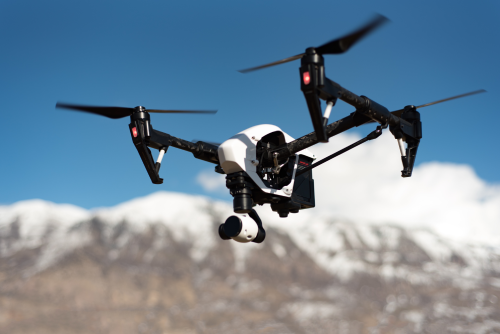
How drones are used in pollution monitoring is no longer a futuristic question. Across Indian cities, industrial zones, mines, rivers, and landfill sites, drones are helping teams spot pollution hotspots faster, inspect risky locations more safely, and collect location-specific data that is hard to gather from the ground alone.
For India, where pollution often varies sharply from one street, drain, factory edge, or dumping site to the next, drones are especially useful as a practical field tool. They do not replace laboratory testing or reference-grade monitoring stations, but they can make pollution checks quicker, smarter, and more targeted.
Quick Take
- Drones are used in pollution monitoring to detect, map, and inspect air, water, dust, smoke, waste, and leak-related problems.
- They are most useful for hotspot detection, site inspection, plume tracking, repeat surveys, and hard-to-reach locations.
- Common drone payloads include RGB cameras, thermal cameras, gas sensors, particulate matter sensors, multispectral cameras, and sampling systems.
- In India, drones are helpful for monitoring construction dust, landfill fires, sewage discharge, mining dust, industrial leaks, and urban air-quality hotspots.
- Drones are not a replacement for fixed monitoring stations, certified lab analysis, or proper environmental compliance.
- Data quality depends heavily on sensor choice, calibration, weather conditions, flight planning, and safe operations.
- Before any commercial or sensitive-site operation, verify the latest DGCA rules, local airspace restrictions, site permissions, and any industry-specific compliance needs.
Why drones are becoming important for pollution monitoring
Traditional pollution monitoring usually relies on a mix of:
- Fixed air-quality stations
- Manual field inspection
- Water sample collection
- Satellite imagery
- Ground sensors and handheld meters
- Lab testing
Each of these is useful, but each also has a limitation.
A fixed station may tell you the air quality in one area, but not exactly where a dust plume started. Satellite data can show a large trend, but not always a street-level or plant-level problem. Ground teams can collect excellent samples, but they may struggle to safely reach drains, marshes, chimneys, unstable landfill slopes, or emission-heavy industrial corners.
This is where drones fit in.
A drone can quickly fly over a site, carry a sensor to the right location, and create a map of what is happening over space, not just at one fixed point. That is the real advantage: mobility and spatial detail.
In practical terms, drones help answer questions like:
- Where exactly is the dust escaping from?
- Which part of a landfill is heating up or smoking?
- Is polluted water entering a river from one drain or several?
- Is an industrial leak localised or spreading downwind?
- Which section of a mining road is generating the most airborne dust?
- Has a mitigation measure actually reduced emissions after a week or a month?
What kinds of pollution can drones monitor?
Drones can support several types of pollution work, but the method changes depending on what you are trying to measure.
| Pollution type | What drones can do | Common payloads | Important limitation |
|---|---|---|---|
| Air pollution | Detect and map gases, particulates, smoke, plume movement, and vertical concentration differences | Gas sensors, particulate sensors, thermal cameras, RGB cameras | Sensor accuracy can be lower than reference stations |
| Dust pollution | Identify dust sources, spread patterns, and problem zones around roads, mines, and construction sites | RGB cameras, particulate sensors, thermal cameras | Wind can change readings quickly |
| Water pollution | Spot discharge points, algal blooms, sediment plumes, surface oil, thermal anomalies | RGB, multispectral, thermal, specialised water sampling tools | Many pollutants still need lab testing |
| Solid waste pollution | Detect illegal dumping, open burning, leachate pathways, and landfill hotspots | RGB, thermal cameras | Some pollutants are not visible from the air |
| Industrial emission issues | Inspect leak zones, flare performance, stack-adjacent conditions, and unsafe access points | Gas sensors, thermal cameras, zoom cameras | Heat, turbulence, and corrosive gases can affect operations |
A key point: drones can measure pollution in two different ways.
Direct measurement
This is when the drone carries a sensor that actually measures a pollutant, such as:
- PM2.5 or PM10 particulate matter
- Carbon monoxide
- Sulphur dioxide
- Nitrogen oxides
- Methane
- Volatile organic compounds, or VOCs, which are gases that evaporate easily from fuels, chemicals, and solvents
Indirect detection
This is when the drone does not directly “sniff” the pollutant, but helps identify signs of pollution through imagery, such as:
- Discoloured water
- Surface temperature anomalies
- Smoke spread
- Sediment movement
- Burn zones
- Oil sheen on water
- Dumping activity
- Dust escape from roads, conveyors, or stockpiles
In the real world, many projects use both.
How a typical drone pollution-monitoring workflow works
A good pollution-monitoring mission is more than just flying and taking pictures. The workflow usually looks like this:
1. Define the problem clearly
Start with the exact question.
Examples:
- Are we trying to find a sewage discharge point?
- Measure dust near a construction site boundary?
- Check whether a landfill has hidden fire pockets?
- Compare air quality upwind and downwind of a plant?
If the objective is vague, the data will not be useful.
2. Choose the right sensor and drone
Different jobs need different payloads.
- A camera drone may be enough for mapping visible smoke, dumping, or dirty-water outflows.
- A thermal drone helps find heat signatures in landfill fires or warm-water discharge.
- A gas-sensing drone is better for leak detection or local concentration mapping.
- A larger platform may be needed if the payload is heavy.
3. Check airspace, permissions, and site safety
Before flying:
- Verify the latest DGCA and Digital Sky requirements
- Confirm site owner approval
- Check whether the location is near sensitive airspace or restricted zones
- Review industrial safety rules if flying near plants, tanks, stacks, mines, or ports
- Plan for emergency landing areas
- Assess weather, wind, smoke, and visibility
4. Calibrate and validate the sensor
This step is often skipped, and that creates bad data.
Low-cost air sensors can drift. Thermal readings can be affected by sun angle and surface reflectivity. Optical pollution readings can change with humidity. Good teams cross-check drone data with:
- Ground instruments
- Reference stations
- Handheld meters
- Water samples
- Known control points
5. Fly a repeatable mission
For comparison over time, the route should be consistent.
That means controlling:
- Flight height
- Speed
- Time of day
- Sensor settings
- Survey pattern
- Upwind and downwind positions
Repeatability matters if the goal is to compare before and after conditions.
6. Process the data into maps or actionable findings
The final output may include:
- Heat maps
- Plume maps
- Geotagged photos
- Orthomosaics
- 3D site models
- Vertical pollution profiles
- Source-point marking
- Time-series comparisons
7. Verify findings on the ground
Drone data is strongest when it guides field action.
For example:
- A drone spots an unusually warm outflow entering a lake
- The ground team collects a sample from that exact point
- Lab results confirm contamination
- The operator can now prove both location and severity more effectively
Real ways drones are used in pollution monitoring
Urban air pollution and local hotspots
In many Indian cities, air quality can vary a lot over short distances. One busy junction, one burning garbage patch, one uncovered construction site, or one industrial pocket can affect nearby residents differently from the rest of the city.
Drones can help by:
- Mapping pollution distribution across a neighbourhood
- Checking localised dust buildup
- Comparing upwind and downwind conditions
- Measuring pollution at different heights
- Investigating smoke from informal burning
This is especially useful when fixed stations are too far apart to show micro-level variation.
Example
A municipal team wants to understand why one housing cluster reports heavier dust than nearby areas. A drone survey over adjacent roads, stockpiles, and construction plots reveals that dust is escaping from a specific haul road and an uncovered material yard. Ground action can then focus on those points instead of treating the whole area as equally problematic.
Construction, roadwork, and demolition dust
This is one of the most practical uses of drones in Indian conditions.
Large construction and infrastructure projects often struggle with:
- Dust from excavation
- Truck movement
- Demolition debris
- Aggregate handling
- Open stockpiles
- Unpaved approach roads
A drone can help teams:
- Monitor boundary-level dust escape
- Identify where dust suppression is failing
- Check whether water spraying is effective
- Document compliance over time
- Create visual evidence for reporting
For builders and contractors, this is useful not just for compliance but for internal site management.
Mining, quarrying, and crusher zones
Mining areas generate dust from blasting, loading, crushing, and transport roads. These sites are large, and ground-only inspections can miss patterns.
Drones can support monitoring by:
- Mapping haul-road dust intensity
- Inspecting stockpile and crusher areas
- Detecting dust transport toward villages or agricultural land
- Monitoring settling ponds and runoff paths
- Comparing dry-season and post-mitigation conditions
In such environments, repeated flights can show whether operational changes are actually working.
Industrial emissions and gas leaks
Industrial pollution monitoring is one of the most valuable but also one of the most specialised drone applications.
Possible use cases include:
- Inspecting around stacks and ducts
- Checking for fugitive emissions, meaning emissions that escape from valves, joints, tanks, or equipment instead of controlled outlets
- Monitoring chemical storage areas
- Detecting methane or hydrocarbon leaks with suitable sensors
- Inspecting flare and heat signatures
- Tracking local plume movement under controlled conditions
This work is highly site-specific and should be handled by trained teams. Industrial environments can create severe turbulence, electromagnetic interference, heat stress, and corrosive exposure for both drone and sensor.
Example
An industrial facility suspects intermittent gas escape near a transfer area but cannot easily inspect the upper structure safely. A drone with the right gas sensor and thermal camera can scan the area, identify the likely leak zone, and help maintenance teams target the repair faster.
River, lake, and drain pollution
Water pollution is not always easy to inspect from the ground, especially when shore access is poor, drains are hidden, or the contaminated patch is spread across a wide water body.
Drones can help detect:
- Unauthorised discharge points
- Dark or discoloured plumes entering a river
- Foam patches
- Sediment spread
- Surface oil sheen
- Algal bloom patterns
- Thermal anomalies from warm-water discharge
- Encroachment or dumping along banks
In India, this is especially relevant around:
- Urban lakes
- Drains feeding into rivers
- Industrial clusters near water bodies
- Sewage-fed channels
- Reservoir edges and wetlands
A drone does not replace water testing, but it can make that testing much more targeted.
Example
Instead of collecting random water samples across an entire lake, a drone first maps visible inflow points, warmer patches, and unusual surface textures. The field team then samples only the most suspicious points, saving time and improving the chances of finding the real source.
Landfills, waste dumps, and open burning
Municipal waste sites are a major use case for thermal and visual drone surveys.
Problems drones can detect include:
- Smouldering fire pockets below the surface
- Open burning at the edges
- Smoke movement toward residential areas
- Leachate flow paths after rain
- New dumping zones
- Unstable waste slopes
- Nearby water contamination signs
Thermal imaging is especially valuable because hidden heat can appear before a fire becomes obvious from the ground. That can help reduce larger smoke events.
For cities that regularly face garbage fire episodes, this is one of the clearest ways drones can provide practical value.
Coastal and port-area pollution
Along coasts, ports, estuaries, and industrial shorelines, drones can support checks for:
- Surface oil or sheen
- Suspended sediment spread
- Waste discharge trails
- Thermal outfall spread
- Shoreline dumping
- Mangrove-edge disturbance
These missions need extra caution because of wind, salt exposure, and local flight restrictions.
What sensors are commonly used?
RGB cameras
These are normal visual cameras.
Best for:
- Smoke visibility
- Dust source identification
- Dumping detection
- Water discoloration
- Site documentation
- Change tracking over time
They are often the cheapest starting point, but they only show what is visible.
Thermal cameras
Thermal sensors detect heat differences.
Best for:
- Landfill hotspots
- Hidden fires
- Warm-water discharge
- Heat leaks in industrial areas
- Smoke-source identification at night or low visibility
Thermal data is useful, but interpretation requires care. A hot surface is not always a pollution event.
Gas sensors
These measure the concentration of specific gases.
Best for:
- Methane checks
- VOC screening
- Industrial leak detection
- Local gas hotspot mapping
Accuracy can vary widely depending on the sensor class, calibration, humidity, airflow, and mounting position.
Particulate matter sensors
These are used to estimate tiny airborne particles such as PM2.5 and PM10.
Best for:
- Dust surveys
- Construction monitoring
- Mining and road dust mapping
- Smoke pattern tracking
One practical issue is propeller wash. The airflow from the drone itself can disturb the air sample, so good payload design matters.
Multispectral cameras
These capture more than normal visible colours and can help reveal subtle surface differences.
Best for:
- Water quality screening indicators
- Algal bloom mapping
- Vegetation stress near polluted areas
- Surface anomaly identification
They are powerful, but they do not directly replace chemical testing.
Specialized sampling systems
Some advanced drone setups can collect air or water samples or lower a probe to a target area.
These are more niche and usually used by specialist teams, research groups, or industrial service providers.
The biggest advantages of drones in pollution work
Faster coverage
A drone can inspect a large site in minutes rather than hours.
Better access to difficult areas
Useful over:
- Drains
- Marshy ground
- Landfills
- River edges
- Roofs
- Tanks
- High structures
- Unsafe slopes
Lower risk for field teams
Instead of sending people close to smoke, unstable waste, or high structures, a drone can do the first inspection.
Better visual evidence
Maps, images, and repeat surveys are easier to communicate than text-only reports.
More targeted ground action
A drone helps narrow down where human teams should sample, inspect, or repair.
What drones cannot do well
This is just as important as the benefits.
Drones are not magic pollution detectors.
Their main limits are:
- Short flight time, especially with heavy sensors
- Lower accuracy than certified reference instruments in many cases
- Sensitivity to weather and wind
- Difficulty in highly turbulent industrial environments
- Limited ability to identify invisible pollutants without the right sensor
- Need for careful calibration and validation
- Risk of false conclusions from imagery alone
Think of drones as a high-speed field layer between fixed sensors and ground teams, not as a standalone answer.
Safety, legal, and compliance points in India
Pollution-monitoring missions often happen in exactly the kind of places that require extra caution: cities, industrial zones, infrastructure corridors, and sensitive sites.
Keep these points in mind:
Verify the latest drone rules before any operation
Indian drone requirements can change, and permissions depend on factors such as location, drone category, mission type, and airspace. Before flying, verify the latest official DGCA guidance, Digital Sky process, and any local restrictions.
Sensitive locations need extra care
Industrial facilities, ports, power sites, transport corridors, and urban areas may have site-specific approval requirements. Always get written permission from the site owner or project authority where needed.
Do not fly over crowds or active emergency scenes casually
Pollution incidents may attract onlookers or occur in dense areas. Avoid unsafe flights over people, roads, or emergency responders.
Hazardous gases and heat can damage the drone
Near chimneys, flares, landfill fires, or chemical zones, drones may face:
- Strong turbulence
- Extreme heat
- Reduced visibility
- Corrosive exposure
- GPS interference
- Magnetic disturbance
Those missions need trained operators, proper risk assessment, and site coordination.
Privacy and data handling matter
A pollution survey can accidentally capture homes, workers, vehicles, or sensitive infrastructure. Handle image data responsibly and avoid unnecessary invasion of privacy.
Common mistakes people make
Treating a camera as a pollution sensor
A visible image may suggest pollution, but it does not prove chemical concentration.
Flying without a baseline
If you do not know what “normal” looks like, it is hard to prove a site has improved or worsened.
Ignoring weather
Wind direction, temperature, humidity, and sunlight can change the reading or the visual appearance of a pollution event.
Skipping calibration
Uncalibrated sensors can produce impressive-looking but unreliable maps.
Flying too close to hazardous sources
Getting near stacks, smoke columns, or fire zones without proper planning is risky and often unnecessary.
Not validating with ground truth
Drone data should usually be supported by field measurements, lab samples, or reference instruments.
Using one flight to make a big claim
Pollution can change by hour, day, and season. One survey is often only a snapshot.
FAQ
Can a normal consumer drone monitor pollution?
A basic camera drone can help identify visible signs such as smoke, dumping, discoloured water, or dust sources. But direct pollution measurement usually requires specialised sensors.
Are drones more accurate than fixed air-quality stations?
Usually no. Fixed reference-grade stations are better for long-term, high-quality measurements. Drones are better for mobile inspection, hotspot detection, and spatial mapping.
Can drones detect PM2.5 and PM10?
Yes, with suitable particulate sensors. But data quality depends on sensor quality, calibration, humidity, airflow, and payload design.
Can drones monitor river pollution?
Yes, especially for locating discharge points, sediment plumes, algal blooms, foam, and temperature anomalies. However, chemical contamination often still needs water sampling and lab analysis.
What is the biggest technical challenge in drone pollution monitoring?
Data reliability. Weather, sensor drift, drone airflow, and poor calibration can all reduce accuracy.
Who uses pollution-monitoring drones in India?
Typical users include environmental consultants, municipal bodies, industrial operators, mining companies, infrastructure firms, research institutions, and inspection service providers.
Do I need special permission to fly a drone for pollution surveys in India?
You may need approvals depending on the drone, location, and mission. Always verify the latest DGCA, airspace, Digital Sky, and site-permission requirements before flying.
Can thermal cameras prove pollution?
Not by themselves. Thermal imaging can reveal hotspots or abnormal discharge patterns, but it usually needs ground verification to confirm the cause.
Are drones useful for landfill fire monitoring?
Yes. Thermal drones are one of the best tools for finding hidden heat pockets, checking smoke zones, and tracking spread across a dump site.
Is drone pollution monitoring a good business opportunity?
It can be, especially if paired with environmental consulting, industrial inspection, mapping, or compliance support. But success depends on technical skill, sensor quality, data interpretation, safety processes, and legal compliance.
Final takeaway
Drones are most valuable in pollution monitoring when the job is specific: find the source, map the spread, inspect a risky area, or track change over time. If you are planning to use drones for this work in India, start with the right question, the right sensor, and a clear validation plan, then build the operation around safety, compliance, and ground-truth data.
