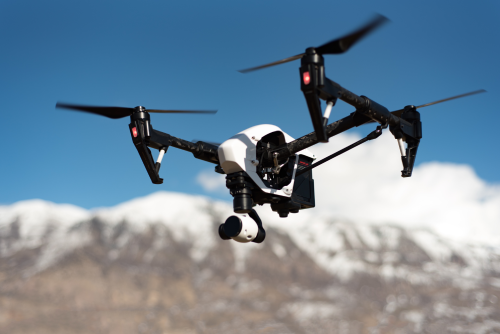
Marine surveys are no longer limited to boats, handheld instruments, and crewed aircraft. Today, drones are used in marine surveys to map coastlines, inspect ports, monitor coastal damage, and collect visual data faster and more safely than many traditional methods.
For Indian users, this matters because marine survey work is growing around ports, fisheries, beach management, coastal construction, disaster response, and environmental monitoring. The key is knowing where drones help most, where they do not, and how to operate legally and safely near the coast.
Quick Take
- Drones are used in marine surveys mainly for coastal mapping, structure inspection, environmental monitoring, and progress tracking.
- They are especially useful in beaches, ports, jetties, breakwaters, mangroves, estuaries, fish farms, and shallow nearshore zones.
- A drone can quickly produce maps, 3D models, inspection images, and condition reports.
- Standard camera drones are strong for above-water surveys, but they do not replace sonar for deeper underwater measurement.
- Water glare, wind, salt spray, and changing tides make marine surveys harder than normal land surveys.
- In India, coastal drone work may involve DGCA compliance, airspace checks, and separate local permissions around ports, defence areas, wildlife zones, or sensitive infrastructure. Always verify the latest official rules before flying.
- For serious survey work, RTK or PPK positioning, ground control, and good mission planning matter more than buying the most expensive drone.
What counts as a marine survey?
A marine survey is any systematic inspection, mapping, measurement, or condition assessment related to the sea or coastal environment. That can include:
- Shoreline mapping
- Beach erosion studies
- Port and harbour inspections
- Coastal structure assessment
- Mangrove and wetland monitoring
- Fish farm and aquaculture site review
- Nearshore construction tracking
- Oil spill or marine pollution observation
- Shallow-water mapping support
In practice, many “marine” drone surveys happen not far offshore, but along the coast and in the intertidal zone. Intertidal means the area that appears and disappears as the tide moves.
Why drones make sense in marine work
Marine environments are expensive and difficult to survey. Boats cost money to deploy. Crewed aircraft are expensive. Walking a shoreline with conventional tools can be slow, especially where access is poor.
Drones help because they can:
- Cover large coastal stretches quickly
- Reach unsafe or slippery areas without sending people there
- Capture repeatable data for before-and-after comparison
- Produce high-resolution maps and inspection imagery
- Reduce the need for scaffolding, ladders, or boats in some jobs
- Document rapidly changing sites after storms or erosion events
That said, drones are not magic. Over water, they also face real limits:
- Wind is usually stronger and less predictable near the coast
- Reflections on water make mapping harder
- Salt spray can damage equipment
- Offshore range and battery planning are more demanding
- Underwater depth measurement usually needs sonar or specialist systems
- Some coastal zones are legally sensitive or operationally restricted
The best marine surveys often combine drones with GNSS, total station, echo sounders, or survey boats rather than trying to replace everything with one aircraft.
How drones are used in marine surveys
Shoreline and coastal erosion mapping
One of the most common uses is shoreline mapping. A drone flies a planned route and captures overlapping images. These images are processed with photogrammetry, which means software turns many photos into a measurable map or 3D model.
This is useful for:
- Beach width monitoring
- Dune change detection
- Cliff or embankment edge mapping
- Post-storm erosion studies
- Coastal protection planning
In India, this can be important in states such as Kerala, Odisha, Tamil Nadu, Andhra Pradesh, Gujarat, and West Bengal, where coastal erosion and storm damage are recurring concerns.
A typical output may include:
- Orthomosaic map: a stitched, survey-style overhead image
- Digital surface model: a height model of terrain and objects
- Contours and cross-sections
- Change-detection maps comparing one survey to another
Drones are especially valuable here because the same flight plan can be repeated monthly or seasonally, helping authorities or consultants track change over time.
Beach, tidal flat, and intertidal surveys
The intertidal zone is tricky to survey on foot because the surface is soft, wet, and time-sensitive. Drones let teams map the area during a specific tidal window.
These surveys support:
- Sediment movement studies
- Mudflat and sandbar mapping
- Habitat assessments
- Coastal engineering design
- Flood and inundation studies
Timing is critical. A survey flown at the wrong tide may give a completely different result from one flown at low tide. For this reason, marine survey teams often plan flights around tide tables, sun angle, and local weather.
Port, harbour, and jetty inspections
Ports and harbours need regular visual inspection. Drones can inspect:
- Jetties
- Wharves
- Cranes and loading areas
- Fender systems
- Storage yards near the waterfront
- Access roads and drainage around marine facilities
For a port operator or contractor, a drone can quickly document:
- Cracks
- Corrosion signs
- Surface wear
- Settlement
- Storm damage
- Construction progress
A zoom camera can help inspect from a safer distance. A standard RGB camera captures normal visible-light photos. In some cases, thermal cameras can help identify abnormal heat patterns, water ingress trends, or electrical issues, though thermal data must be interpreted carefully.
Port operations are sensitive, so this is an area where permission and coordination are essential. Many ports are operationally restricted and may also be close to airports, defence facilities, or security zones.
Breakwaters, seawalls, bridges, and coastal structures
Marine infrastructure is difficult to access. Drones are now used to inspect:
- Breakwaters
- Seawalls
- Revetments
- Coastal bridges
- Pipeline corridors near the shore
- Outfalls and intake structures
- Navigation support structures
For example, instead of walking unstable rocks or hiring access equipment, a drone can capture oblique imagery. Oblique means the camera looks at an angle rather than straight down. This is better for vertical faces and side surfaces.
This use is particularly useful after cyclones, heavy swell, or monsoon damage, when operators need a quick first look before sending teams in.
Environmental monitoring
Marine surveys are not just about structures. Drones are increasingly used for environmental work such as:
- Mangrove boundary monitoring
- Coastal wetland mapping
- Beach litter and waste assessment
- Algal bloom observation
- Oil sheen or surface pollution documentation
- Coral or seagrass observation in suitable clear-water conditions
- Turtle nesting beach monitoring, where permitted
In India, mangrove zones such as the Sundarbans, Gulf of Kutch, and parts of the west coast may benefit from drone-based habitat documentation. But these areas may also be ecologically sensitive, so wildlife and protected-area permissions may be required.
Multispectral cameras can help detect vegetation stress better than a standard RGB camera. They capture specific light bands beyond what the eye can see. For environmental consultants, this can improve habitat classification and vegetation health assessment.
Shallow-water mapping and bathymetry support
This is where expectations need to be realistic.
A normal camera drone cannot reliably map underwater depth in all conditions. However, drones can support shallow-water and nearshore surveys in some cases by:
- Mapping visible seabed features in clear, calm water
- Supporting shallow bathymetry workflows in limited conditions
- Identifying sandbars, channels, and reef edges where the bottom is visible
- Assisting boat-based bathymetric teams with route planning and visual context
Water clarity, surface reflection, wave action, and sun angle all affect results. If the water is turbid, rough, or deep, drone imagery becomes far less useful for bottom measurement.
Bathymetric LiDAR exists, but it is expensive and not common in standard small-drone operations. For most Indian survey firms and project teams, the realistic setup is usually a drone for above-water mapping plus a boat with sonar or echo sounder for underwater depth.
Vessel and offshore asset inspection
Drones are also used to inspect:
- Ship hull areas above the waterline
- Deck structures
- Masts and communication equipment
- Offshore platforms and support structures
- Buoys and navigation markers
These jobs reduce climbing risk and speed up visual inspection. However, they are more demanding than basic land mapping.
Challenges include:
- Launching and recovering near moving vessels
- Magnetic interference from metal structures
- Gusting sea wind
- Limited safe landing options
- Security and safety restrictions
For beginners, this is not the place to experiment. Vessel-based or offshore drone work should be handled by trained operators with proper procedures and permissions.
Coastal construction progress and dredging support
Marine construction projects need frequent progress updates. Drones help track:
- Port expansion projects
- Coastal roads and bridges
- Jetty and berth construction
- Reclamation works
- Breakwater extension
- Stockpile measurement in waterfront yards
- Dredge spoil and material movement areas
A weekly or monthly drone survey can show site development clearly to contractors, project managers, consultants, and government agencies.
For dredging support, drones do not replace hydrographic measurement, but they can document:
- Shoreline changes
- Material storage
- Access routes
- Turbidity patterns on the surface
- Construction activity around the dredging zone
Where each drone setup fits best
| Survey task | Typical drone setup | Best use | Key limitation |
|---|---|---|---|
| Shoreline mapping | Multirotor or fixed-wing with RGB camera | Coastline, beach, and landform mapping | Water surface itself is hard to reconstruct |
| Port inspection | Multirotor with zoom camera | Cracks, corrosion signs, structure condition | Requires tight operational control and permissions |
| Environmental monitoring | RGB or multispectral payload | Mangroves, wetlands, vegetation, pollution mapping | Protected-area rules may apply |
| Shallow-water visual survey | RGB camera in clear conditions | Sandbars, reef edges, visible seabed patterns | Depth accuracy depends heavily on water clarity |
| Thermal inspection | Multirotor with thermal camera | Heat anomalies, drainage, some utility checks | Thermal images need careful interpretation |
| Construction progress | RGB camera with RTK/PPK | Orthomosaics, 3D models, site records | Accuracy depends on setup and control points |
The sensors and features that matter most
Not every marine survey needs a special payload. In many cases, a good RGB camera drone is enough.
RGB camera
This is the default option for:
- Mapping
- Inspection photos
- 3D models
- Progress documentation
For many coastal jobs, this is the most cost-effective starting point.
Zoom camera
Useful when you need to inspect structures from a safe distance, especially:
- Port equipment
- Bridge sections
- Seawalls
- Cracks in hard-to-reach places
Thermal camera
Helpful for selected inspection tasks and some environmental work. Thermal does not “see through water,” but it can detect temperature differences on surfaces or in some discharge patterns.
Multispectral camera
Useful for vegetation and habitat work, including mangroves, salt marshes, and wetland analysis.
RTK or PPK positioning
RTK means Real-Time Kinematic, and PPK means Post-Processed Kinematic. Both improve location accuracy compared with standard GPS.
If the project needs survey-grade output, RTK or PPK can be very important. Even then, many professional workflows still use ground control points and check points for validation.
LiDAR
LiDAR uses laser pulses to measure surfaces. It can be powerful for coastal terrain, vegetation penetration, and some advanced mapping workflows. But it is expensive and usually not the first tool a small business or beginner should consider.
A typical marine survey workflow
A good marine drone survey is mostly about planning. The flying itself is only one part.
1. Define the survey goal
Start by asking:
- Is this an inspection or a map?
- Do we need centimetre-level accuracy or only visual documentation?
- Are we measuring change over time?
- Is underwater depth part of the job?
This determines the drone, sensor, altitude, overlap, and control method.
2. Check legal and site access requirements
Before a mission, verify:
- Airspace status
- Local operating restrictions
- Port or harbour authority approval, if relevant
- Defence or coastal security sensitivity
- Environmental or protected-area permissions
- Land or jetty access permissions
In India, coastal locations can be far more sensitive than ordinary open land.
3. Study the weather and tide window
This is one of the biggest differences from inland survey work.
Check:
- Wind speed and gusts
- Rain chances
- Sea spray exposure
- Visibility
- Sun angle
- Tide level and timing
If your objective is beach mapping, flying at the wrong tide can make the data much less useful.
4. Choose the right aircraft and payload
- Multirotors are best for inspection and smaller areas
- Fixed-wing drones are better for long linear coastline coverage
- RTK helps where map accuracy matters
- Zoom or thermal helps for specialized inspection tasks
5. Set control points if accuracy matters
For engineering or survey-grade output, ground control points and independent check points are often still required. They should be measured properly with survey equipment.
A drone map without validation may look impressive but still be wrong.
6. Fly with strong image overlap
Over water and sand, software struggles because many surfaces look similar or reflective. High overlap improves processing reliability.
If you are mapping structures, include oblique images, not just straight-down shots.
7. Process the data and validate it
The data is usually processed into:
- Orthomosaic
- Point cloud
- Surface model
- 3D mesh
- Inspection photo set
- Measurement report
Always check accuracy against known points when the survey has design or compliance implications.
8. Deliver the output in a usable format
Clients usually do not just want “drone photos.” They want answers.
Good deliverables may include:
- Condition map with marked issues
- Before-and-after comparison
- Area and volume calculations
- Erosion line shift
- Annotated inspection report
- GIS-ready layers for consultants or authorities
What drones cannot do well in marine surveys
This is just as important as their strengths.
Drones are limited when:
- The main requirement is deeper underwater depth measurement
- Water is muddy, rough, or highly reflective
- The area is too large for short-battery aircraft unless a fixed-wing platform is used
- You need all-weather operation
- The site is near highly restricted infrastructure
- Precision claims are made without proper control and validation
In short, drones are excellent above-water survey tools and visual inspection tools. They are not a full replacement for hydrographic systems, marine vessels, or specialist underwater instruments.
Safety, legal, and compliance points in India
Marine survey work often brings extra compliance risk because coastal areas can overlap with security, aviation, and environmental concerns.
Verify the latest official rules before every project
Do not assume a beach or coastal site is automatically open for drone flying.
Depending on the location and mission, you may need to verify:
- DGCA drone rules
- Digital Sky airspace status
- Whether your drone and operation type are compliant for the mission
- NPNT-related requirements where applicable
- Local police or district administration instructions
- Port trust or harbour authority approval
- Permissions around naval, coast guard, or other defence zones
- Rules for protected forests, mangroves, wetlands, sanctuaries, or island territories
Rules and operational restrictions can change, so check current official guidance before acting.
Keep line-of-sight and recovery planning realistic
Flying over water increases the consequence of a failure. A simple battery or compass problem may mean total loss of aircraft.
Be conservative about:
- Distance from shore
- Return path against headwind
- Low-battery reserve
- Emergency landing options
Be extra careful with weather
Coastal weather changes fast. Sea breeze, gust fronts, salt-laden moisture, and rain bands can appear quickly, especially in monsoon periods.
If conditions are marginal, postpone.
Protect people, wildlife, and operations
Do not fly carelessly over:
- Crowded beaches
- Fishing activity
- Port workers
- Moving vessels
- Bird colonies
- Turtle nesting zones
- Sensitive habitats
Noise and low flight over wildlife can disturb animals even if the drone never touches them.
Watch corrosion and contamination
Salt is hard on drones. After marine work, inspection and cleaning matter. A drone used regularly near the sea needs stricter maintenance than one used inland.
Common mistakes in marine drone surveys
Even experienced operators get caught by these.
- Flying at the wrong tide and producing unusable shoreline data
- Ignoring sun glare and getting poor water-surface imagery
- Expecting a normal camera drone to deliver reliable underwater depth data everywhere
- Using low image overlap over water or sand
- Mapping vertical structures with only nadir images
- Claiming high accuracy without RTK, control points, or validation
- Underestimating wind on return flight
- Launching too close to salt spray
- Forgetting how close many coastal sites are to airports or security-sensitive zones
- Delivering attractive images instead of usable survey outputs
FAQ
Can drones be used to map underwater areas?
Only in limited conditions. In clear, calm, shallow water, drones can support visual seabed mapping and some shallow-water analysis. For reliable underwater depth measurement, sonar or other hydrographic tools are usually needed.
Are drones allowed at beaches and ports in India?
Sometimes, but not by default. You must verify current DGCA and Digital Sky requirements, plus any local restrictions. Ports, defence-adjacent areas, and some coastal zones may require separate approvals or may be restricted.
What type of drone is best for marine surveys?
It depends on the job. A multirotor is best for inspection and smaller mapping tasks. A fixed-wing drone is better for long coastline coverage. For many users, a good multirotor with RTK and a quality RGB camera is the most practical starting point.
Do I need RTK for marine survey work?
Not always. If the task is basic visual documentation, maybe not. If the project needs accurate measurements, repeatable change detection, or engineering-grade outputs, RTK or PPK plus ground control is often worth it.
Can a hobby drone be used for marine surveys?
For learning, simple visual documentation, or rough site observation, maybe. For paid professional survey work, accuracy, compliance, reliability, and data workflow matter much more than basic flying. A hobby drone is usually not enough for serious deliverables.
Why is water difficult for drone mapping?
Because water reflects light, moves constantly, and often lacks stable visual features. Photogrammetry software needs consistent detail to match images, and water does not provide that reliably.
Is launching from a boat a good idea?
It is possible, but it is an advanced operation. Movement, wind, metal interference, and limited landing space make it much harder than a shore launch. It should not be treated as a beginner workflow.
What outputs do marine survey clients usually want?
Most clients want more than photos. Common outputs include orthomosaics, 3D models, contour maps, inspection reports, area calculations, progress reports, and change-detection comparisons.
Can drones replace survey boats?
No. They can reduce boat use for some above-water tasks, but they do not replace boats for many hydrographic, offshore, or underwater measurement jobs.
How often should coastal sites be surveyed?
That depends on the site. Construction sites may need weekly or monthly surveys. Erosion-prone beaches may be monitored seasonally or after major weather events. Critical infrastructure may need scheduled inspection intervals.
Final takeaway
If you want to understand how drones are used in marine surveys, think of them as fast, flexible tools for above-water mapping and inspection, not as a complete replacement for marine survey vessels and sensors.
For most Indian users, the smartest starting point is simple: use a reliable multirotor with a good RGB camera for shoreline mapping, structure inspection, and coastal progress tracking; add RTK and proper survey control when accuracy matters; and bring in boat-based or specialist systems when the job moves below the waterline or into high-security offshore environments.
