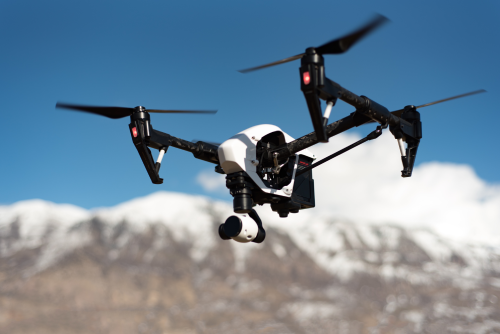
Ports and harbors are large, busy, and full of blind spots that are hard to monitor from the ground alone. That is why drones are increasingly used in port and harbor security: they give security teams a fast aerial view of fence lines, waterfronts, cargo yards, vessels, and incident scenes. For India’s mix of commercial ports, private terminals, fishing harbors, and inland jetties, drones can improve visibility and response time when they are used with proper approvals, trained operators, and clear on-ground procedures.
Quick Take
- Drones are used in port and harbor security mainly for:
- perimeter patrols
- waterfront surveillance
- restricted-zone monitoring
- alarm verification
- night patrols with thermal cameras
- incident assessment
- post-event documentation
- They work best as part of a wider system with CCTV, guards, access control, vessel monitoring, and patrol boats.
- Multirotor drones are usually best for quick response and hovering over an area. Fixed-wing or VTOL drones can help with longer boundary patrols where operations allow.
- Thermal cameras help detect heat at night, but they do not automatically identify a person or prove intent.
- Ports are tough environments for drones because of sea wind, salt spray, rain, birds, cranes, metal structures, and GPS interference.
- In India, port drone operations may involve DGCA compliance, Digital Sky checks, site-specific permissions, and extra caution near airports, defence areas, or other sensitive infrastructure. Always verify the latest official rules before flying.
Why ports and harbors are hard to secure
A port is not just a gate and a fence. It is a moving system with ships, trucks, cranes, warehouses, workers, contractors, visitors, and sometimes fishing or passenger traffic nearby.
That creates security problems that ground teams cannot always solve quickly:
- Long land-side perimeters that take time to patrol
- Water-side access where small boats can approach from angles that are hard to see
- Night operations and low-light areas
- Blind spots behind containers, sheds, cranes, and parked vehicles
- Alarms that need fast verification
- Large open storage yards where suspicious activity can be easy to miss
- Safety risks for guards who may otherwise have to approach an unknown situation
A drone does not replace all that complexity. What it does is shorten the time between “something may be wrong” and “we can see what is actually happening.”
How drones are used in port and harbor security
The best way to understand port security drones is by the task they perform.
| Security task | How the drone is used | Main benefit | Main limit |
|---|---|---|---|
| Perimeter patrol | Flying fence lines and access roads | Covers long stretches faster than foot patrols | Wind, endurance, and legal limits |
| Waterfront surveillance | Watching jetties, berths, seawalls, and approaches | Sees activity that shore cameras may miss | Glare, salt spray, and range |
| Alarm verification | Launching after a sensor or CCTV alert | Reduces false dispatches and speeds decisions | Needs trained crew on standby |
| Night intrusion detection | Using thermal cameras after dark | Spots heat signatures in low light | Thermal images can be misread |
| Yard and warehouse overwatch | Looking over container stacks and open storage | Finds blind spots and unusual movement | Cannot see inside containers or buildings |
| Incident assessment | Checking fire, spill, collision, or suspicious object scenes | Safer stand-off view for responders | Smoke, heat, and weather can reduce visibility |
| Crowd and gate monitoring | Overwatch during peaks or special movements | Improves situational awareness at access points | Privacy and SOPs matter |
| Evidence capture | Recording stabilized video and images | Better review and reporting after an event | Data handling and chain of custody are crucial |
Perimeter and fence-line patrols
This is one of the most common uses.
A drone can fly a defined route along:
- outer fencing
- patrol roads
- boundary walls
- rail sidings
- empty stretches near warehouses
- vulnerable corners near water or public roads
Instead of sending guards to physically check every section after every alert, the control room can launch a drone and get live video within minutes.
A practical example: if a fence vibration sensor triggers on a dark stretch near the back boundary of a terminal, a drone can quickly show whether the cause is a person, an animal, weather damage, or a loose object.
Waterfront and restricted-zone surveillance
Water-side security is harder than land-side security because approach paths are less predictable.
Drones help monitor:
- berths and jetties
- restricted waters near terminals
- moored vessels
- breakwaters and seawalls
- small-boat movement near sensitive areas
- no-entry zones around infrastructure
From the air, it is easier to spot a small craft loitering where it should not be, or to check whether a waterside gate, ladder, or service area has been accessed.
This matters in Indian conditions because many ports sit next to mixed-use coastal areas, fishing activity, or dense urban zones. That can create legitimate traffic close to restricted areas, which means operators must observe carefully and avoid jumping to conclusions.
Vessel approach and anchorage monitoring
Drones can support, not replace, vessel traffic and waterside watch systems.
Used properly, they can help teams:
- visually confirm a vessel’s position near a berth
- inspect unusual movement around anchored or moored craft
- monitor small support boats around a ship
- verify whether an approaching boat is following expected patterns
In more advanced setups, the drone feed can be compared with radar, Automatic Identification System (AIS), or CCTV data in the control room. AIS is a vessel-tracking system that helps identify many commercial ships, but a visual check from a drone can still be useful when the situation on the water is unclear.
Container yards, warehouses, and open storage areas
Cargo areas create many visual blind spots.
A drone can quickly scan:
- container lanes
- yard edges
- rooflines
- truck holding areas
- open material yards
- warehouse perimeters
This is useful when security needs to know whether there is:
- unauthorized movement after hours
- suspicious loading or unloading activity
- a vehicle parked in an unusual zone
- people hiding between rows or behind structures
The key point is that drones help with overhead visibility. They do not see through containers, walls, or roofs. They are a fast confirmation tool, not a magical all-seeing system.
Night surveillance with thermal cameras
Thermal cameras detect heat differences rather than normal visible light. In port security, that makes them valuable for night patrols and low-light response.
They are commonly used to:
- detect people moving near the fence after dark
- spot small boats or engines giving off heat
- check whether a recently occupied vehicle or object is still warm
- see through darkness where regular cameras struggle
But there is an important limit: thermal helps detect, not always identify. A heat signature can show that something is present, but it may not tell you exactly who or what it is. A dog, a worker, and a person crouching behind equipment may all need closer verification with a zoom camera and ground response.
Alarm verification and rapid response
This is often where drones show the fastest return in real operations.
Ports and harbors usually have multiple alarm sources:
- CCTV analytics
- motion sensors
- fence sensors
- access control alerts
- fire or smoke alarms
- guard reports
- public complaints
Sending a ground team to every alert takes time and manpower. A ready-to-launch drone can often reach the scene faster, provide a live aerial view, and help the control room decide whether to:
- stand down
- send guards
- call a supervisor
- isolate the area
- activate emergency response
This reduces false alarms and improves response quality.
Emergency and hazardous incident assessment
A security drone is often useful even when the issue is partly a safety or emergency event rather than a pure intrusion.
Examples include:
- smoke from a warehouse roof
- a container or vehicle fire
- a suspected fuel or chemical leak
- collision damage near a berth
- a suspicious package or unknown object
- a person fallen into a restricted waterside area
Instead of sending personnel directly into uncertainty, the drone can provide a stand-off view. Thermal imaging may show hot spots. Zoom cameras can help responders understand access routes and hazards before they move in.
This is especially valuable around hazardous material zones, but such operations need strict site SOPs and conservative flying decisions.
Crowd, gate, and traffic monitoring
Some ports and harbor facilities face periodic surges in people and vehicle movement:
- shift changes
- truck queues
- passenger embarkation areas
- contractor entry
- VIP or inspection visits
- emergency evacuation drills
A drone can provide short-duration overwatch to help supervisors see bottlenecks, crowd buildup, or access-control problems. The point is not casual surveillance. It is operational visibility so the site can keep movement orderly and safe.
Post-incident documentation
After an incident, drone footage can help with:
- scene documentation
- timeline reconstruction
- identifying access routes
- showing damage spread
- reviewing response performance
This is useful only if the organization treats the footage properly. Files should be stored securely, time-stamped where possible, and handled under a clear evidence and access policy.
What kind of drones and sensors are used
Not every port security mission needs the same aircraft.
Multirotor drones
These are the most practical choice for many port and harbor teams.
Why they work well:
- quick takeoff
- accurate hovering
- easy repositioning
- good for close observation
- useful in tight spaces near structures
Best for:
- alarm verification
- berth checks
- gate and yard monitoring
- night patrol response
- incident assessment
Main trade-off: shorter flight time compared with larger long-endurance systems.
Fixed-wing or VTOL drones
VTOL means vertical take-off and landing. Some aircraft combine fixed-wing cruise efficiency with vertical takeoff.
These can suit:
- very long boundary patrols
- large coastal or riverfront stretches
- persistent area sweeps where site procedures allow
Main trade-offs:
- more complex operations
- more training and planning
- less convenient for close hover inspection
- may face stricter operational limitations depending on the mission profile
Tethered drones
A tethered drone is connected to the ground by a cable that can provide power and sometimes data.
They can make sense for:
- static overwatch near a gate
- temporary event monitoring
- high-visibility monitoring over a known point
Main trade-off: limited mobility. They are not ideal for chasing or inspecting across a large port.
Sensors that matter most
The camera payload often matters more than raw drone size.
Useful options include:
- RGB camera: the normal daylight camera for general video
- Zoom camera: helps inspect a distant object without flying too close
- Thermal camera: detects heat at night or in smoky conditions
- Spotlight: useful for targeted illumination during low-light response
- Loudspeaker: sometimes used for warnings or instructions where policy permits
A stabilized gimbal is also important. It keeps the camera steady in wind and while turning.
A typical port security drone workflow
The most effective operations are repeatable, not improvised.
1. Define the mission
Start by deciding what the drone is actually for:
- fence alarms
- waterside intrusion
- night patrol
- incident response
- yard overwatch
A drone program that tries to do everything from day one usually becomes messy.
2. Map zones and restrictions
Create clear digital and operational boundaries:
- patrol routes
- launch points
- no-fly pockets
- emergency landing areas
- areas with heavy crane activity
- sensitive zones near people, fuel, or equipment
Geofencing, a virtual boundary in software, can help prevent accidental entry into restricted site areas.
3. Prepare the aircraft and crew
Before launch, the team should check:
- weather and wind
- battery health
- camera settings
- compass and GNSS status
- communications link
- observer position
- return-to-home and loss-of-link behavior
Over water, this matters even more because a minor problem can become a lost aircraft quickly.
4. Launch and stream to the control room
The drone should not operate in isolation. Its real value comes when the live feed is visible to the people making decisions.
That allows the control room to:
- direct the drone to areas of interest
- compare the feed with CCTV or other sensors
- guide ground teams
- record the event properly
5. Verify, escalate, or stand down
Once the drone reaches the area, the team should classify what it sees:
- no threat
- suspicious but unclear
- confirmed intrusion or breach
- safety issue
- emergency incident
The response should then follow the site SOP rather than guesswork.
6. Log, review, and maintain
After the mission:
- save relevant footage
- note the incident outcome
- inspect the aircraft
- clean off salt and dust
- recharge and cycle batteries correctly
- review what worked and what did not
This feedback loop is what turns occasional drone flying into a reliable security capability.
India-specific realities ports should plan for
Port drone operations in India face some very practical conditions that are easy to underestimate.
Coastal weather and monsoon conditions
Sea breeze can change quickly. Gusts near cranes, warehouses, and open berths can be stronger than they look from the ground.
Plan for:
- wind shifts
- sudden rain
- poor visibility
- humid air affecting electronics
- rough recovery conditions
If the monsoon is active or the wind margin is poor, postponing the flight is usually the right call.
Salt air and corrosion
Marine environments are harsh on equipment.
Salt can affect:
- motors
- exposed contacts
- gimbals
- battery terminals
- fasteners
- charging gear
Regular cleaning and inspection are not optional in a harbor environment.
Metal structures and GPS issues
Ports are full of cranes, warehouses, container stacks, ships, and steel surfaces. These can create compass problems, magnetic interference, and GNSS signal reflections.
That means operators should be trained to handle:
- poor position hold
- unexpected drift
- conservative manual control
- safe stand-off distances from structures
Sensitive airspace and strategic areas
Some ports may lie near airports, heliports, naval facilities, Coast Guard areas, industrial plants, or other sensitive infrastructure. That makes airspace verification critical.
Never assume that because the flight is “inside a port” it is automatically straightforward.
Safety, legal, and compliance points in India
This is the part that should be handled conservatively.
Rules, permissions, and operating requirements can change. Before any port or harbor drone operation in India, verify the latest official guidance from DGCA and the Digital Sky system rather than relying on old summaries.
Key points to check:
Aircraft compliance
Use drones that meet the current Indian compliance framework where applicable, including No Permission, No Takeoff (NPNT) requirements if they apply to the platform and operation.
Airspace status
Confirm whether the location sits in a permitted, restricted, controlled, or sensitive area. This is especially important near:
- airports and heliports
- defence installations
- coastal security zones
- high-security industrial sites
Site permissions
Even with airspace clearance, a port or terminal operator should have its own written operating approval and SOP. Security, operations, safety, and emergency teams should all know when and how drones may be used.
Pilot competence and crew roles
Security flying is not the same as casual hobby flying. Use trained operators, and for complex missions also use a visual observer and a clear control-room chain of command.
Night and automated operations
Night patrols, repeated scheduled patrols, long-range missions, and any beyond visual line of sight activity need extra caution and may require additional approvals or procedures. Verify the current legal position before planning such missions.
Privacy and data handling
Security does not remove the need for responsible data use.
Best practice includes:
- filming only what is operationally necessary
- restricting who can view recordings
- logging access to critical footage
- retaining footage according to policy
- protecting evidence integrity after incidents
Emergency procedures
Have written actions for:
- loss of signal
- low battery over water
- return-to-home conflicts
- bird strikes
- unexpected people entering the launch zone
- forced landing
A port should never discover its emergency drone procedure during a real emergency.
Benefits and limits of drones in port security
Drones can make security operations better, but only if expectations are realistic.
Main benefits
- Faster response to alarms and suspicious activity
- Better visibility over large and complex areas
- Safer initial assessment of uncertain situations
- Improved night detection with thermal payloads
- Better coordination between field teams and the control room
- Recorded visual evidence for review and reporting
Main limits
- Flight time is still limited
- Weather can ground operations quickly
- Salt, wind, and water increase maintenance risk
- Thermal cameras detect heat, not perfect identity
- Not all areas are legally or operationally easy to fly in
- Drones do not replace guards, boats, CCTV, or access control
The right mindset is simple: a drone is a fast aerial sensor, not a complete security system by itself.
Common mistakes to avoid
Treating the drone as a showpiece, not a workflow tool
Buying a drone is easy. Building a useful patrol and response process is harder. Ports often get more value from one disciplined use case than from many vague ideas.
Expecting one drone to replace guards
Drones are best for seeing first and guiding response. Someone still has to verify, intercept, manage access, and close the incident.
Ignoring thermal camera limits
Thermal is powerful, but it can be misread. Teams need practice interpreting heat signatures at night, over water, and around machinery.
Flying too close to cranes, masts, and vessels
Port environments are cluttered and windy. Keep safe stand-off distances and avoid aggressive flying in complex airspace.
Neglecting maintenance in marine conditions
Salt damage builds quietly. If cleaning and inspection are skipped, reliability drops fast.
Operating without control-room integration
If the live feed is visible only to the pilot, the organization loses much of the value. Security decisions should be made with shared visibility.
Poor data governance
Footage without proper storage, labeling, access control, and retention practices can create legal and operational problems later.
Assuming approvals are someone else’s problem
A security department, contractor, and drone vendor may each assume the other has handled permissions. That is a risky gap. Confirm everything in writing.
FAQ
Are drones only useful for large commercial ports?
No. Small harbors, fishing ports, private terminals, and inland jetties can also benefit, especially for fence patrols, waterfront checks, and alarm verification.
What is the best drone type for port security?
For many sites, a multirotor drone is the most practical starting point because it can launch quickly, hover, and inspect a point closely. Larger sites may also evaluate VTOL or long-endurance systems for boundary patrols.
Can drones detect intruders at night?
Yes, especially when fitted with thermal cameras. But detection is not the same as identification, so ground confirmation is still important.
Do drones replace CCTV and patrol boats?
No. They fill gaps between fixed cameras and ground or water patrols. The strongest setup combines all three.
Can a drone monitor boats approaching a restricted berth?
It can help visually confirm movement and behavior around a berth or channel, but it should be used as part of a wider monitoring setup, not as the only source of awareness.
What permissions are usually needed in India?
At minimum, operators should verify current DGCA and Digital Sky requirements, airspace status, and site-level authorization. Some ports may also involve additional security or local coordination depending on location and sensitivity.
What if GPS is weak near cranes and metal structures?
This is a real risk. Pilots should plan conservative stand-off distances, monitor aircraft behavior closely, and be trained for degraded GNSS conditions.
Are drones useful during monsoon season?
Sometimes, but weather is a major limiter. High winds, rain, and poor visibility can make flights unsafe or ineffective. A ground-based backup plan is essential.
How should security footage from drones be stored?
Store it securely, label it clearly, restrict access, and follow a documented retention and evidence-handling policy, especially after a security incident.
Takeaway
If you want to use drones in port and harbor security, start with one high-value mission such as fence alarm verification, night waterside patrol, or rapid incident assessment. Build the operation around approvals, SOPs, trained crews, and control-room integration. In a port environment, the best drone program is not the one with the fanciest aircraft, but the one that helps the team see sooner and respond better.
