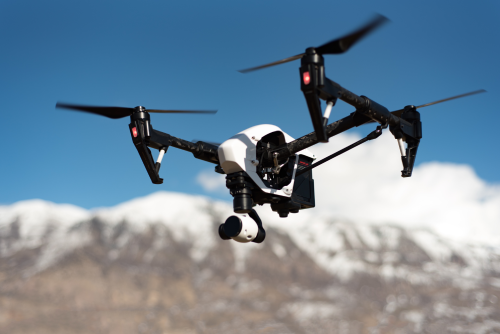
Crowd monitoring is one of the most practical and visible real-world uses of drones. From festivals and political gatherings to sports events, processions, and emergency situations, drones can give authorities and organisers a fast aerial view that is hard to get from the ground alone.
In India, where large public gatherings are common and venues can become congested quickly, understanding how drones are used in crowd monitoring helps event planners, security teams, and drone professionals use the technology more responsibly and effectively.
Quick Take
- Drones are used in crowd monitoring to watch movement, spot congestion, identify unsafe bottlenecks, monitor entry and exit points, and support faster response during incidents.
- They work best as an added layer of situational awareness, not as a complete replacement for ground staff, CCTV, barricading, and public-address systems.
- Common use cases include religious events, concerts, sports matches, public rallies, fairs, parades, traffic overflow near venues, and emergency evacuation support.
- The most useful drone outputs are live video, wider area visibility, zoomed inspection of problem spots, and sometimes thermal imaging in low-visibility conditions.
- Flying near or over crowds is high risk. In India, operators must verify the latest DGCA requirements, airspace permissions, local police conditions, and event-specific approvals before flying.
- Privacy matters. A crowd monitoring drone plan should focus on safety and coordination, not unnecessary close-up surveillance of individuals.
What crowd monitoring means in practice
Crowd monitoring is not just “filming from above.” In practical terms, it means using a drone to answer questions such as:
- Where are people gathering too densely?
- Are entry gates moving smoothly or backing up?
- Is one exit route getting blocked?
- Are vehicles creating dangerous pedestrian conflict points?
- Has a disturbance started in one corner of the venue?
- Are emergency lanes still open?
- Is a queue spilling into a road or public space?
- During evacuation, are people moving in the intended direction?
This bird’s-eye view helps teams react earlier than they could from ground observation alone.
For example, security staff at a large mela may see only their assigned zone. A drone can show that three separate queues are merging into one pressure point 200 metres away. That wider view is where drones become valuable.
Why drones are useful for crowd monitoring
A well-operated drone can cover a large area quickly and provide decision-makers with live information in real time.
1. Wide-area visibility
A camera mounted above the crowd can reveal:
- crowd density in different sections
- movement direction
- empty or underused routes
- blocked pathways
- overflow beyond the planned perimeter
Ground teams often miss these patterns because they are inside the crowd, not above it.
2. Faster incident detection
If a scuffle, stampede risk, fallen barricade, medical emergency, or sudden surge begins, a drone can help locate:
- the exact spot
- the size of the affected area
- the best access route for responders
- nearby crowd pressure points
This can reduce confusion when multiple teams are responding at once.
3. Better coordination
Live aerial footage can help coordinate:
- police and private security
- event operations teams
- medical teams
- fire and disaster-response units
- traffic police outside the venue
Instead of relying only on radio descriptions like “near the second gate,” teams can work from a clearer visual picture.
4. Coverage of hard-to-reach areas
Some locations are difficult to monitor from the ground:
- large open grounds
- riverbanks and ghats
- temporary fairgrounds
- parking overflow zones
- rooftops and adjoining open spaces
- procession routes across multiple streets
A drone can move between these areas much faster than a patrol team.
5. Temporary deployment
Unlike installing many fixed cameras, a drone can be deployed for:
- one-day events
- temporary routes
- pop-up public gatherings
- emergency situations
- changing risk zones
That flexibility makes drones especially useful when crowd patterns are not fully predictable.
Common crowd monitoring use cases in India
Large gatherings in India often happen in dense urban spaces, mixed-traffic areas, and temporary venues. That makes aerial monitoring especially relevant.
Where drones are used for crowd monitoring
| Use case | What the drone helps monitor | Why it matters |
|---|---|---|
| Religious events and pilgrimages | queue build-up, route congestion, crowd density near key points | helps avoid bottlenecks and supports emergency access |
| Concerts and festivals | gate flow, stage-front crowd pressure, parking overflow | improves safety and operational control |
| Sports matches | stadium perimeters, parking, exit dispersal, road congestion | helps prevent crowd crush points after the event |
| Political rallies and public meetings | crowd spread, access roads, stage perimeter, movement patterns | supports security coordination and route management |
| Processions and parades | route continuity, choke points, intersection conflicts | useful when the crowd moves over a long distance |
| Fairs and melas | temporary structures, queue control, crowd spillover | helps organisers watch multiple zones at once |
| Emergency evacuation | exit usage, stalled movement, safe corridors | helps responders guide people faster |
| Disaster relief distribution points | queue order, perimeter safety, access path monitoring | reduces confusion in stressful situations |
How drones are used during an event
The most effective crowd monitoring operations follow a workflow. The drone is only one part of a larger plan.
1. Pre-event planning
Before the event, teams usually identify:
- expected crowd size
- high-risk zones
- entry and exit gates
- emergency routes
- nearby no-fly or restricted areas
- take-off and landing points
- communication channels between pilot and command team
This stage matters more than the drone itself. A drone launched without a plan often creates noise but not useful information.
2. Baseline mapping before crowd build-up
Some operators fly early to capture the venue before it fills up. This helps teams compare later conditions with the original layout.
Useful baseline checks include:
- barricade placement
- tent and stage location
- parking arrangement
- fire lane clearance
- route markings
- lighting conditions for evening operations
3. Live aerial overwatch during peak hours
This is the most common use of drones in crowd monitoring.
The drone may hover or follow a planned route to watch:
- gate inflow
- crowd density around focal points
- movement toward food stalls, rest areas, or transport exits
- road congestion outside the venue
- barriers under pressure
- unusual stops in crowd movement
If the drone has optical zoom, the operator can inspect a specific zone without flying too close.
4. Spot-checking incidents
When ground teams report an issue, the drone can be redirected to confirm:
- the scale of the problem
- whether it is spreading
- which route responders should take
- whether nearby exits are usable
This is where drones are especially useful, because they can turn local confusion into a clearer operational picture.
5. Post-event dispersal monitoring
Many safety issues happen after the main event ends.
A drone can help monitor:
- crowd surge at exits
- parking lot choke points
- foot traffic crossing vehicle routes
- road intersections outside the venue
- public transport boarding areas
For many events, dispersal is riskier than entry because people leave at the same time.
What the drone actually looks for
A drone team does not just “watch the crowd.” It looks for specific patterns.
Density
This means how tightly packed people are in one area. When density rises unevenly, pressure points can form near gates, barriers, stairs, and narrow passages.
Flow
This means how smoothly people are moving. If a moving crowd suddenly slows or stops, there may be:
- a blockage
- confusion about direction
- a physical obstacle
- conflict between opposite-moving groups
Bottlenecks
A bottleneck is a place where a wider crowd is forced into a narrower route. These are common near:
- barricaded lanes
- gates
- vehicle checkpoints
- stairways
- temporary bridges
- food and ticket counters
Perimeter breaches
These happen when people enter through unplanned routes or push beyond barriers.
Access lane obstruction
Emergency vehicles and responders need clear movement corridors. A drone can quickly confirm whether those routes remain usable.
Secondary risks
The drone may also help detect nearby risks such as:
- traffic spillover onto pedestrian routes
- crowding near water edges
- temporary structure stress
- open fire or smoke
- poor lighting in a critical zone
Types of drones and sensors used
Not every drone is suitable for crowd monitoring. The right platform depends on the event size, duration, lighting, and required image quality.
Standard camera drones
These are the most common for event monitoring. They are useful for:
- live overview video
- medium-area patrols
- zoom-based checking of specific spots
- recording for later review
For many organisers, a stable multirotor drone with a good gimbal camera is enough.
Zoom camera drones
A zoom lens helps the operator inspect a problem area from a safer distance. This is important because flying too low or too close to a crowd adds risk.
Thermal camera drones
Thermal cameras detect heat differences rather than normal visible colour. They can be useful in:
- night operations
- smoke or low-visibility conditions
- search for missing persons in low light
- identifying unusual clustering patterns
But thermal is not a magic solution. It is best treated as a specialist tool.
Tethered drones
A tethered drone is connected to the ground by a cable, usually for continuous power and secure positioning. These are more specialised and may be useful for fixed overwatch at major venues, but they require proper setup and approvals.
How crowd monitoring data is used on the ground
A drone is only helpful if someone can act on what it sees.
Typical decisions supported by drone footage
- opening an extra gate
- redirecting queues
- sending marshals to a congested section
- clearing an emergency lane
- stopping vehicles from entering a pedestrian-heavy zone
- changing the route of a procession
- pausing access to an overloaded section
- directing medical staff to the fastest access point
In other words, the drone creates situational awareness. Ground teams create the outcome.
Drones versus CCTV: which is better?
This is the wrong comparison if taken as an either-or choice. In most real situations, drones and CCTV do different jobs.
CCTV is better for:
- constant fixed coverage
- entrances and controlled points
- evidence review
- indoor or semi-covered spaces
- long-duration monitoring without battery limits
Drones are better for:
- temporary events
- wide-area outdoor visibility
- moving crowd routes
- changing risk zones
- quick assessment of incidents
- monitoring beyond the fixed camera network
The strongest setup usually combines both.
A practical workflow for organisers and agencies
If you are planning to use drones for crowd monitoring, this basic sequence is more useful than simply hiring a pilot on the event day.
Step 1: Define the purpose clearly
Decide what the drone is meant to do:
- monitor gate flow
- watch procession movement
- support emergency response
- cover parking and exit dispersal
- observe a large temporary event site
A drone without a defined purpose often produces lots of footage and little value.
Step 2: Identify the zones that matter
Mark the critical areas:
- entry and exit points
- stage or focal zone
- queue lanes
- transport connections
- emergency assembly areas
- VIP movement routes if applicable
- water edges, slopes, or narrow passages
Step 3: Build an operational plan
This should include:
- approved take-off and landing area
- flight path or patrol pattern
- maximum useful operating altitude
- who watches the live feed
- how instructions reach ground teams
- what triggers incident escalation
Step 4: Coordinate with authorities and venue management
For Indian operations, verify:
- current airspace status
- whether the location requires permission through the proper official system
- whether local police or district administration have additional conditions
- any venue-specific restrictions
- whether the aircraft and pilot meet current compliance requirements
Do not assume a permitted event automatically means the drone is permitted too.
Step 5: Conduct a risk assessment
Review:
- crowd density
- wind and weather
- obstacles like poles, cables, towers, and temporary structures
- radio interference
- emergency landing options
- safe separation from uninvolved people
Step 6: Fly conservatively
For crowd monitoring, safe stand-off distance matters. Better zoom from a safer position than flying directly above dense people unless specifically authorised and risk-managed under the applicable rules.
Step 7: Debrief after the event
Review:
- where congestion formed
- whether the drone footage helped decision-making
- battery endurance and coverage gaps
- communications problems
- whether another camera angle or second drone would have helped
This turns one event into learning for the next one.
Benefits for different users
For event organisers
- better visibility across large venues
- quicker response to developing crowd problems
- more confidence in temporary layouts
- better coordination between teams
For police and public safety teams
- improved area overview
- support for route management
- real-time incident confirmation
- easier redeployment of personnel
For drone service providers
- a professional use case beyond wedding cinematography
- recurring work with event management, local bodies, and institutions
- opportunity to offer planning, live feed support, and reporting, not just flying
For municipalities and local administrations
- support during festivals, processions, and public gatherings
- temporary aerial coverage without installing permanent infrastructure
- improved post-event review for planning
Limits of drones in crowd monitoring
Drones are useful, but they are not magic.
Battery life is limited
Most multirotor drones cannot stay in the air indefinitely. For long events, teams may need:
- spare batteries
- multiple drones
- staggered flight schedules
- charging arrangements on site
Weather can stop operations
Strong wind, rain, poor visibility, or dust can reduce safety and image quality.
Video does not solve crowd control by itself
Seeing a problem does not fix it unless:
- ground staff are available
- command structure is clear
- communication is fast
- the route layout allows intervention
Dense structures can create blind spots
Trees, overhead fabric, roofs, high walls, and dense urban layouts can block visibility.
Privacy and public sensitivity matter
An aerial camera over a public crowd can raise valid concerns if used carelessly or intrusively.
Safety, legal, and compliance points in India
This is one of the most important parts of crowd monitoring with drones.
Indian drone operations depend on current rules, airspace restrictions, and the type of operation. Because regulations can change, always verify the latest official guidance before flying.
Key things to check
- whether the airspace is open for the intended operation
- whether permission is required for that location and type of flight
- whether the drone and pilot meet current compliance requirements
- whether local police, district authorities, venue owners, or event organisers require additional approvals
- whether the planned operation is compatible with the latest DGCA framework and Digital Sky process
- whether your drone has the required compliant features, where applicable, including current NPNT-related requirements if relevant to your aircraft class and use case
Special caution around crowds
Flying near crowds is a higher-risk operation than ordinary recreational flying. In many cases, direct flight over dense gatherings may be restricted, discouraged, or require specific authorisation and risk controls. Never assume it is acceptable just because the event is outdoors.
Privacy and data handling
If crowd monitoring footage is captured:
- collect only what is needed for safety and coordination
- avoid unnecessary close-up tracking of individuals
- define who can see the live feed
- define how long footage is retained
- store recordings securely if they are kept
- be careful when using footage for publicity if people were recorded in a security context
Insurance and liability
For commercial or agency-linked operations, verify current insurance needs and liability expectations with the organiser and insurer. Do not assume general event coverage automatically includes drone operations.
Common mistakes in crowd monitoring with drones
These mistakes reduce value and increase risk.
Treating the drone like a flying camera only
If there is no operations plan, the footage may look impressive but fail to support decisions.
Flying too low
Low flight near dense crowds increases risk, causes distraction, and may create panic or annoyance. Safer altitude and zoom are usually better.
No coordination with ground teams
A drone operator who spots a problem but has no direct line to responders is of limited use.
Ignoring take-off and landing safety
Many incidents happen at launch or recovery. The drone needs a controlled zone away from the public.
Using one battery plan for a long event
Crowd monitoring often matters most during peak moments. If all batteries are drained early, the drone is unavailable when needed most.
Overpromising AI analytics
Some systems can estimate density or movement patterns, but automated analytics are not perfect. Human interpretation still matters, especially in complex Indian public settings.
Forgetting sound and public reaction
Drones are visible and audible. In sensitive settings, their presence should be planned so it does not distract people or create concern.
Best practices for drone professionals taking this kind of work
If you want to offer crowd monitoring as a service, build the job around outcomes, not just flying time.
Offer a pre-event planning call
Understand:
- event size
- highest-risk periods
- exact zones of concern
- chain of command
Provide a monitoring plan
This can include:
- proposed patrol areas
- expected battery rotation
- live feed method
- reporting format
- emergency communication path
Use zoom before proximity
A higher-quality zoom camera often adds more practical value than risky low-altitude flying.
Brief the organiser on limits
Tell clients clearly:
- battery duration
- weather limits
- legal restrictions
- privacy considerations
- what the drone can and cannot detect reliably
Keep logs and checklists
For professional operations, checklists help with:
- aircraft status
- battery cycles
- weather
- approvals
- crew assignments
- incident notes
FAQ
Can drones count people in a crowd accurately?
They can help estimate crowd size and density, but exact counting in a dense, moving crowd is difficult. Accuracy depends on altitude, camera quality, angle, lighting, and software. Use drone estimates as operational input, not perfect truth.
Are drones allowed to fly over crowds in India?
Crowd operations are high risk. Whether a particular flight is allowed depends on the latest DGCA rules, airspace status, local permissions, and the exact nature of the operation. Always verify the current official position before planning such a flight.
What type of drone is best for crowd monitoring?
For most outdoor events, a stable multirotor drone with a reliable camera, good transmission, and useful zoom is the most practical option. Thermal cameras are useful for specialised night or low-visibility needs.
Do drones replace CCTV at events?
No. Drones are best used as a mobile aerial layer. CCTV is still better for fixed entrances, constant surveillance, and long-duration monitoring of specific points.
Can a small event benefit from crowd monitoring drones?
Yes, especially if the site layout is awkward, the event spills onto roads, or there are temporary structures and moving queues. But for very small venues, extra ground marshals and fixed cameras may be more cost-effective.
Is thermal imaging necessary for crowd monitoring?
Not always. Most daytime event monitoring works fine with a normal camera. Thermal is helpful mainly at night, in low visibility, or for specific search and safety tasks.
What is the biggest benefit of using drones for crowd monitoring?
The biggest benefit is faster situational awareness. A drone helps teams see developing congestion or incidents before they become harder to manage from the ground.
What is the biggest risk?
The biggest risk is unsafe operation near people. A drone used carelessly around a crowd can create a new hazard instead of improving safety.
Who should watch the live feed during an event?
Ideally, someone who can make or relay decisions quickly: event control, security command, police coordination, or a designated operations officer. A feed with no decision-maker attached is far less useful.
Can hobby drone pilots do crowd monitoring jobs?
Only if they meet the legal, operational, and safety requirements for the job. Crowd monitoring is not casual flying. It should be handled as a professional operation with proper planning, approvals, and risk management.
Final takeaway
Drones are used in crowd monitoring because they give a fast, flexible aerial view of movement, density, bottlenecks, and incidents that ground teams often cannot see in time. But the real value comes from disciplined planning, legal compliance, safe stand-off flying, and strong coordination with the people on the ground.
If you are an organiser, think of the drone as a decision tool, not a showpiece. If you are a drone professional, the next step is simple: build a risk-aware monitoring workflow that helps clients manage crowds better without compromising safety, privacy, or compliance.
