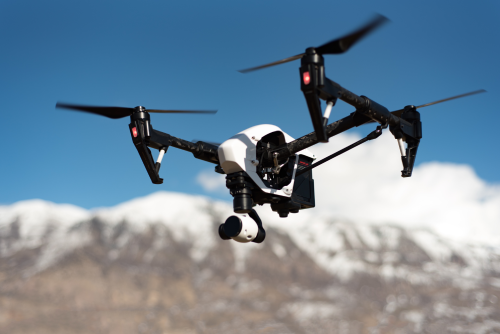
Cities change faster than most maps can keep up. That is why drones are now being used in urban planning to capture current, high-resolution data for roads, drains, buildings, open spaces, utilities, and redevelopment areas.
For Indian planners, consultants, architects, and civic teams, drones are most useful when they solve a clear problem: mapping a site accurately, monitoring change, or visualising a proposal better than old satellite imagery or scattered field notes ever could.
Quick Take
- Drones help urban planners create up-to-date maps, 3D models, elevation data, and progress records.
- Common uses include land-use mapping, drainage planning, traffic studies, redevelopment, utility inventory, and disaster assessment.
- The most valuable drone outputs are usually orthomosaics, 3D models, point clouds, and elevation maps.
- Drones do not replace planners, surveyors, or GIS teams. They make their work faster and more current.
- In Indian cities, urban drone work must be handled carefully because of airspace rules, privacy concerns, dense population, and local permissions.
- Good drone planning work depends as much on data processing and ground verification as on the actual flight.
Why drones matter in urban planning
Urban planning depends on one basic thing: reliable information about the ground.
That sounds simple, but in practice it is difficult. Roads get widened, drains get blocked, informal growth appears, construction changes skylines, parking spills into carriageways, and open land disappears faster than outdated base maps can show. In many Indian towns and cities, planners are often forced to work with a patchwork of old satellite images, paper drawings, cadastral records, field surveys, and contractor updates.
Drones help fill this gap.
A drone can capture very high-resolution imagery of a neighbourhood, redevelopment parcel, junction, industrial cluster, river edge, or public infrastructure corridor in a relatively short time. When processed properly, that imagery becomes a planning dataset, not just a pretty aerial photo.
This matters especially in India because many urban decisions are hyper-local:
- Which streets collect water during monsoon?
- Where are the encroachments affecting road widening?
- How much green cover is actually left in a ward?
- Is a stormwater project being built as designed?
- What is the current built-up pattern around a transport node?
- How can a redevelopment proposal be explained to residents clearly?
For these kinds of questions, drones are often more practical than waiting for a fresh satellite pass and more efficient than measuring everything from the ground alone.
What planners actually get from a drone survey
People often say “drone survey” as if the output is one thing. It is not. Different urban planning tasks need different outputs.
Orthomosaic map
An orthomosaic is a stitched aerial image that has been corrected so it can be used like a map. Distances and positions are much more meaningful than in a normal photo.
Planners use it for:
- current base maps
- land-use interpretation
- road and plot edge reference
- visible encroachment checks
- construction progress comparison
3D model
A 3D model or mesh shows buildings, terrain, and structures in three dimensions.
This helps in:
- redevelopment visualisation
- skyline and massing studies
- communicating proposals to non-technical stakeholders
- checking site conditions around existing structures
Point cloud
A point cloud is a dense set of measured points in 3D space generated from drone images or LiDAR. It is useful for more technical modelling and measurement.
Elevation model
An elevation model shows height variation across the site. Depending on the method, it may represent the ground alone or include surfaces like buildings and trees.
Urban planners use elevation data for:
- drainage planning
- flood-prone low spot identification
- slope analysis
- road and utility corridor design
- earthwork estimation
Inspection imagery and video
Not every mission needs a full map. Sometimes planners need visual evidence:
- flyover condition checks
- rooftop observations
- façade context
- traffic movement patterns
- site progress records
Special sensor outputs
In some cases, urban planning teams may use:
- Thermal sensors to study heat patterns, building heat loss, or utility hot spots
- Multispectral sensors to assess vegetation health in parks, lakeside buffers, or urban forestry projects
- LiDAR to measure terrain and structures more reliably in complex areas, especially where vegetation or irregular surfaces make image-based modelling harder
For many city projects, a standard RGB camera drone is enough. The planning question should decide the sensor, not the other way around.
How drones are used in urban planning
Base mapping and land-use surveys
This is one of the most common uses.
A drone can capture a current, detailed view of how land is being used in a local area: buildings, roads, vacant plots, footpaths, open drains, parking spillover, temporary structures, and green spaces.
This is especially valuable when:
- the existing map is outdated
- the area is changing rapidly
- planners need a local area plan
- a ward-level intervention is being designed
- redevelopment requires a fresh baseline
A drone orthomosaic can help planners distinguish between formal and informal edges, understand setbacks, identify access constraints, and mark features that are not obvious in older maps.
Important limit: a drone image may show occupation and physical boundaries, but it does not by itself prove legal ownership or title. Land records still need separate verification.
Topography, contours, drainage, and flood planning
Many urban problems are really elevation problems.
Waterlogging, poor outfall, reverse slopes, low-lying pockets, and blocked drain alignments often become obvious only when planners have good elevation data. Drone-derived models can reveal subtle changes in terrain over a site, road corridor, lake edge, or developing layout.
A practical example:
A city team studying a flood-prone residential pocket can use drones to produce a high-resolution elevation model. Combined with ground checks of drains, culverts, and discharge points, this can show where water is likely to collect during heavy rain.
This is useful for:
- stormwater redesign
- drain network planning
- lake and canal buffer analysis
- road levels and cross-drainage planning
- filling and grading studies on large plots
In built-up urban areas, though, roofs, trees, parked vehicles, and walls can interfere with pure ground visibility. That is why drone elevation models should be validated with field measurements wherever design accuracy matters.
Roads, junctions, parking, and mobility planning
Drones can help transport planners understand how a space is really being used.
From an aerial view, a junction may reveal:
- vehicle turning patterns
- queue lengths
- illegal parking
- bus stop spillback
- pedestrian crossing behaviour
- median openings and conflict points
For road redesign, complete-street projects, or parking management, this kind of visual record is useful. A planner can compare the planned geometry with actual on-ground behaviour instead of relying only on static drawings.
However, this use case needs extra care in India. Flying over or near busy traffic corridors brings higher safety, privacy, and permission challenges. In many cases, fixed observation points, controlled operations, or non-flight alternatives may be more appropriate depending on the site and legal restrictions.
Construction monitoring and redevelopment planning
Urban planning does not stop once a plan is approved. Drones are widely used to monitor whether a project is being built as intended.
This includes:
- townships
- housing projects
- road and flyover works
- industrial parks
- riverfronts
- public realm upgrades
- transit-oriented development sites
Repeated drone flights from similar positions can create a time series of progress. This helps clients, consultants, and civic agencies compare planned versus actual development.
In redevelopment zones, drones are also useful before construction starts. They capture the site context, adjacent buildings, access roads, shadowing conditions, and demolition stages. A 3D model can make it easier to explain phasing to authorities, residents, or investors.
Utility and public asset inventory
Many urban agencies struggle with incomplete asset records.
Drones can help create or update inventories of visible assets such as:
- streetlights
- poles
- overhead utility corridors
- manholes and drains
- water tanks
- public buildings
- boundary walls
- signage
- open solid waste points
- parking areas
When the imagery is brought into a GIS, each asset can be tagged, measured, and linked to inspection notes. This is particularly useful for municipal corporations, industrial townships, campuses, and gated developments.
The key is consistency. If teams do not define naming, tagging, and update rules at the start, the dataset quickly becomes hard to maintain.
Dense neighbourhoods and informal settlement mapping
In many Indian cities, planning challenges are concentrated in dense, irregular, and fast-changing areas where conventional mapping is slow and difficult.
Drones can help planners understand:
- roof patterns
- lane widths
- access constraints
- public open space shortage
- drainage paths
- service gaps
- expansion along sensitive edges
This can support upgrading plans, fire access studies, sanitation interventions, and public facility siting.
But this use case comes with serious ethical and practical responsibilities. Dense settlements involve privacy, vulnerability, and trust. A drone should not be used as a tool for careless surveillance. Teams need a clear public purpose, careful communication, lawful permissions, and strict data handling.
Green spaces, environment, and urban heat
Urban planning is not only about buildings and roads.
Drones are also used for:
- park mapping
- tree canopy estimation
- lake edge monitoring
- erosion spotting
- open space encroachment checks
- landfill edge observation
- urban heat assessment with thermal sensors
For example, a planner reviewing a neighbourhood park system can use drone imagery to measure actual canopy coverage, path conditions, waterbody shrinkage, and edge encroachment much more accurately than through old drawings alone.
Thermal drone data can also support heat-related analysis in selected cases, such as identifying unusually hot roof surfaces or paved zones. But thermal results depend heavily on time of day, weather, surface materials, and interpretation. They should not be treated as a simple citywide answer by themselves.
Heritage areas and visual impact studies
Older city cores and heritage precincts often need careful planning because scale, street form, rooflines, and visual character matter.
Drones can help create context models for:
- heritage impact studies
- façade relationships
- skyline checks
- view corridor analysis
- tourism zone planning
- streetscape documentation
In such areas, planners often need a way to show both preservation and proposed change in one visual frame. A good 3D model can make consultation easier.
Again, permissions are critical because many heritage and government-linked areas may be sensitive.
Disaster assessment and recovery planning
After floods, storms, fires, landslides, or structural incidents, drones can support rapid urban assessment where access is difficult or unsafe.
Planners and local authorities can use drone data to:
- identify damaged roads and buildings
- assess blocked drains and debris
- understand flood spread
- prioritise response routes
- document recovery progress
In Indian cities that face seasonal flooding, this can be especially valuable if the same area has baseline drone data from before the event. Change detection becomes much easier when there is a comparable “before” map.
Where drones fit best in the planning workflow
A drone is most useful when it is part of a proper workflow, not a one-off flight.
A typical urban planning workflow
-
Define the planning question – Are you mapping land use, checking drainage, monitoring construction, or creating a 3D visual model?
-
Check permissions and site risk – Verify current airspace rules and any needed institutional or local approvals. – Assess crowd risk, traffic, nearby buildings, utilities, and sensitive locations.
-
Choose the right platform and sensor – A basic camera drone may be enough for mapping. – LiDAR, thermal, or multispectral should be used only when the planning need justifies them.
-
Set control and accuracy checks – If measurements matter, use ground control points or checkpoints and verify accuracy on the ground.
-
Capture data consistently – Flight height, overlap, timing, lighting, and repeatability affect output quality.
-
Process the data – Turn raw images into usable maps, models, and measurements.
-
Integrate with GIS, CAD, or BIM – This is where planning value is created. – Drone data should connect with parcel data, utilities, road plans, zoning layers, and field notes.
-
Validate in the field – Always verify unclear features on the ground before making policy or design decisions.
If any of these steps are skipped, the final dataset may look impressive but still be weak for actual planning.
What drones do well, and where they fall short
Strengths
- Fast capture of current site conditions
- Very high visual detail for local areas
- Strong communication tool for non-technical stakeholders
- Repeatable monitoring over time
- Safer observation of difficult or risky sites
- Better local context than many older mapping sources
Limits
- Dense urban canyons can create blind spots and weak image geometry
- Trees, awnings, cables, and narrow lanes can hide the ground
- Weather, wind, shadows, and reflective surfaces can reduce quality
- Urban operations may be restricted or impractical in some areas
- Accuracy is not automatic; it depends on method and ground verification
- Processing and storage can become heavy for large areas
- Privacy concerns are much more serious in residential neighbourhoods
A good rule: drones are excellent for detailed local intelligence, but they are not a magic replacement for every city survey method.
Safety, legal, and compliance points in India
Urban planning drone work in India must be approached conservatively.
Rules and permissions can change, and requirements depend on factors such as drone category, airspace, location, operator credentials, and the nature of the project. Before any mission, verify the latest official guidance from DGCA and the Digital Sky system.
A few practical principles matter almost every time:
- Check whether the area is flyable before planning the mission.
- Use compliant equipment and properly qualified operators where required.
- Do not assume that a civic or consultant project is automatically exempt from permissions.
- Coordinate with the land-owning authority, project client, and local administration when needed.
- Avoid flying over crowds, sensitive installations, emergency scenes, or active traffic unless lawfully authorised and properly risk-managed.
- Treat residential imagery carefully. Faces, terraces, courtyards, and vehicles can create privacy issues.
- Limit data collection to what the project actually needs.
- Store and share imagery securely, especially if it covers public infrastructure or vulnerable communities.
For city projects near airports, metro corridors, rail yards, power infrastructure, ports, government compounds, defence areas, or major public gatherings, extra caution is essential. A technically easy flight may still be legally or operationally unsuitable.
Common mistakes in drone-based urban planning
1. Flying first and deciding the purpose later
A drone mission without a clear planning question usually produces a pile of images, not a useful dataset.
2. Treating every drone map as survey-grade
If design-level accuracy matters, you need proper control, checks, and validation. A map that looks sharp is not automatically accurate enough for engineering decisions.
3. Ignoring occlusion in dense areas
High-rises, trees, cables, and narrow streets can hide important features. Planners should expect some blind spots and plan ground verification.
4. Choosing the wrong time to fly
Low light, harsh noon shadows, monsoon moisture, or peak traffic hours can reduce the value of the data.
5. Using the wrong sensor for the job
A normal camera is often enough. Paying for thermal or LiDAR without a genuine planning need adds cost and complexity.
6. Not integrating the data into GIS or design software
The real value appears when drone outputs are linked to parcel maps, utility layers, zoning, and field observations.
7. Overlooking privacy and public communication
Flying over a neighbourhood without clear purpose, communication, or safeguards can create distrust, even if the technical mission is legal.
8. Relying only on aerial interpretation
Some things still need boots on the ground: drain condition, legal boundaries, utility depth, occupancy details, and local usage patterns.
FAQ
Are drone maps accurate enough for urban planning?
They can be, but accuracy depends on how the survey is planned and processed. For general planning, visualisation, and local mapping, drone outputs can be extremely useful. For engineering design or legal boundary work, ground control and field verification are essential.
Can drones replace total station or GNSS surveys?
No. Drones complement these methods. They are excellent for fast area capture and visual context, while ground survey tools are still important for precise control and detailed measurements.
Which type of drone is best for urban planning?
For many local planning tasks, a stable camera drone that can produce good mapping imagery is enough. More specialised sensors like LiDAR or thermal are useful only for specific needs such as terrain complexity or heat analysis.
Are drones practical in dense Indian neighbourhoods?
Yes, but with limits. Dense buildings, wires, narrow lanes, privacy concerns, and legal restrictions make operations more challenging. In some places, partial drone mapping plus ground survey is a better approach than relying on drones alone.
Can municipal bodies use drones for planning work directly?
They can, but they still need to follow current legal and operational requirements. Whether the work is done in-house or by a contractor, compliance, safety planning, and data governance remain important.
How often should a city area be resurveyed with drones?
It depends on how fast the area changes. Construction zones may need frequent monitoring, while stable areas may only need periodic updates. The right frequency is driven by planning purpose, not by the drone itself.
Do drone images prove encroachment or land ownership?
Not by themselves. Drone imagery can show physical occupation and visible change, but ownership, title, and legal status must be verified through official records and due process.
What software skills are needed after a drone flight?
At minimum, teams need photogrammetry processing and GIS skills. For some projects, CAD, BIM, 3D visualisation, or data management skills are also important. A good pilot alone is not enough for planning work.
Are thermal drones useful for city planning?
Sometimes. They can support studies of heat patterns, rooftops, utilities, or selected environmental issues. But thermal data must be collected and interpreted carefully, or the results can be misleading.
Takeaway
The best way to use drones in urban planning is not to start with the drone. Start with the planning problem.
If you need a current base map, better drainage intelligence, clearer redevelopment context, or repeatable progress records, drones can be a powerful tool. But for Indian urban projects, the winning approach is simple: define the output clearly, verify compliance before flying, combine aerial data with ground truth, and turn the imagery into decisions, not just visuals.
