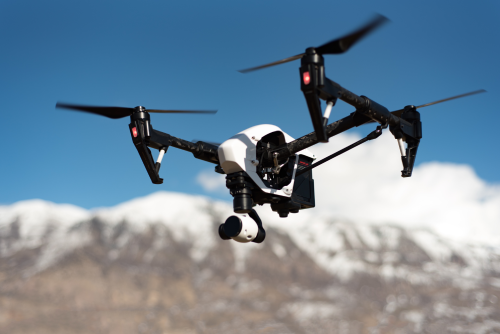
Understanding how drones are used in environmental monitoring helps explain why they matter far beyond photography. In India, drones are now being used to map forests, track shoreline change, inspect wetlands, monitor pollution hotspots, and assess post-disaster damage faster than many traditional field surveys. Their real strength is simple: they can collect repeatable, high-detail data from places that are slow, risky, or expensive to monitor on foot.
Quick Take
- Drones are most useful for high-resolution, repeat surveys of land, water, vegetation, and infrastructure linked to environmental health.
- Common use cases include forest monitoring, riverbank erosion, wetland mapping, mangrove surveys, landfill inspection, mining restoration, and disaster assessment.
- The right sensor matters:
- RGB camera for standard photos and maps
- Multispectral camera for vegetation health
- Thermal camera for heat patterns and hotspots
- LiDAR for terrain and vegetation structure in advanced projects
- Drones do not replace satellites, lab testing, or field teams. They work best as a middle layer between those methods.
- In India, always verify the latest DGCA, Digital Sky, airspace, and local authority requirements before flying, especially near forests, wildlife areas, coasts, borders, or critical infrastructure.
- For beginners, a basic mapping workflow with a standard camera drone is often enough to start useful environmental documentation.
Why drones matter in environmental monitoring
Environmental monitoring is about watching how land, water, vegetation, and habitats change over time. Traditionally, that meant either:
- sending teams on foot,
- using satellite imagery,
- or commissioning manned aircraft surveys.
Each has value, but each also has limits. Ground teams are detailed but slow. Satellites cover huge areas but may lack the resolution or timing needed for local decisions. Manned aircraft can do excellent surveys, but they are usually costlier and less practical for small projects.
Drones sit in a very useful middle space.
They can:
- fly low enough to capture fine detail,
- revisit the same area regularly,
- access difficult terrain,
- and produce maps quickly.
That makes them especially useful in India, where environmental conditions can change fast after monsoon rain, floods, landslides, cyclones, heat waves, or unplanned land-use activity.
Drones vs other monitoring methods
| Method | Best for | Main strength | Main limit |
|---|---|---|---|
| Ground survey | Sampling, field checks, species ID, lab-linked work | Very detailed | Slow and labour-intensive |
| Satellite imagery | Regional coverage, long-term trend tracking | Covers large areas regularly | Lower detail, cloud issues, tasking limits |
| Drone survey | Site-level mapping and repeat monitoring | High detail and flexible deployment | Limited flight time, permissions, weather sensitivity |
The key point is this: drones are not magic, but they are often the fastest way to get reliable site-level visual evidence.
The main ways drones are used in environmental monitoring
Forest health and land-cover change
Forests are one of the clearest examples of how drones are used in environmental monitoring.
A drone can help teams:
- map canopy cover,
- spot gaps or clearing,
- document storm or fire damage,
- track plantation survival,
- monitor invasive plant spread,
- and observe signs of drying or stress in vegetation.
With a normal RGB camera, a team can produce a stitched aerial map called an orthomosaic, which is basically a high-resolution top-down map created from many overlapping drone images.
With a multispectral camera, teams can go further. These cameras capture more than visible colour and can help estimate vegetation stress using vegetation indices, which are calculations based on how plants reflect light. Healthy vegetation reflects light differently from stressed vegetation.
India-specific example
In India, this matters for:
- degraded forest patches,
- social forestry projects,
- plantation monitoring,
- catchment restoration,
- and post-fire or post-storm assessments in hilly or remote areas.
A district team or NGO may not need a highly advanced sensor at first. Even a repeatable RGB survey every month can show whether a restoration area is actually greening up or whether erosion is worsening.
Wetlands, lakes, rivers, and floodplains
Water bodies change shape, colour, and vegetation cover over time. Drones are useful because they can show these changes at a scale that is easy to understand.
Common uses include:
- mapping the spread of a lake or wetland,
- identifying invasive aquatic plants,
- tracking shoreline retreat,
- checking sediment build-up,
- monitoring riverbank erosion,
- documenting floodplain changes,
- and spotting visible signs of pollution or algal bloom.
For example, after the monsoon, a drone survey can show whether a river has eaten into agricultural land, undercut a road embankment, or shifted along a vulnerable stretch. A local body or consultant can compare that map with previous surveys and see the rate of change instead of relying only on field notes.
What drones can and cannot do over water
Drones are excellent for:
- visible surface mapping,
- edge detection,
- vegetation spread,
- debris documentation,
- and post-flood visual assessment.
But they are not a substitute for:
- laboratory water quality testing,
- depth measurement without suitable equipment,
- or chemical analysis unless specialised sensors and sampling workflows are used.
Water surfaces can also cause glare, reflections, and inconsistent results if flight timing is poor.
Coastal and mangrove monitoring
India’s coastline includes beaches, mudflats, estuaries, salt marshes, ports, fishing zones, and mangrove ecosystems. These areas change quickly due to tides, storms, erosion, and human activity.
Drones are used to monitor:
- shoreline movement,
- beach erosion,
- dune damage,
- mangrove extent,
- creek changes,
- cyclone impact,
- and restoration success after planting.
A good drone survey can show where land is being lost, where sediment is building up, and whether planted mangroves are surviving.
Why this is valuable
Coastal monitoring often needs:
- frequent revisits,
- high-detail imagery,
- and quick turnaround after extreme weather.
Drones do that well, especially for site-specific work where satellite imagery may be too coarse or delayed.
That said, coastal areas can also fall under sensitive airspace or security oversight. Always verify permissions before planning operations.
Wildlife habitat mapping and conservation support
Drones can help conservation teams without always needing to fly directly over animals.
A better use in many cases is habitat mapping, not close pursuit.
This can include:
- mapping grassland, wetland, or scrub structure,
- identifying water access points,
- monitoring nesting areas from a safe distance,
- tracking habitat fragmentation,
- and documenting human pressure around habitat edges.
Thermal cameras can sometimes support wildlife surveys, especially in low-light windows when temperature differences are clearer. But this is specialist work. It needs clear protocols, trained operators, and care to avoid disturbing animals.
A critical rule here
If animal behaviour changes because of the drone, the flight is already causing a problem.
Never treat wildlife like a filming subject. Noise, altitude, season, breeding sensitivity, and flight path all matter.
Pollution hotspots and industrial impact
Drones are increasingly used to inspect environmental risk areas that are unpleasant or risky to enter.
Examples include:
- landfill spread,
- waste dumping sites,
- ash ponds,
- industrial discharge channels,
- quarry runoff,
- oil or chemical spill areas,
- and smoke or heat hotspots.
A thermal camera can be especially useful for:
- landfill fire detection,
- persistent heat zones,
- leak-related heating patterns,
- and identifying areas that need closer on-ground inspection.
Some drones can also carry gas or particulate sensors, but this is a more specialised field than people often assume. If the goal is measuring emissions or air quality, sensor calibration, flight interference, sampling method, and validation are extremely important. A drone with a cheap sensor is not enough to make strong pollution claims.
Mining, quarrying, and land restoration
Mining and quarrying have major environmental implications, especially around slope stability, dust, runoff, overburden, and post-extraction restoration.
Drones are commonly used to:
- map excavation progress,
- measure stockpiles,
- monitor drainage and erosion,
- record replanting and restoration progress,
- compare disturbed and reclaimed areas,
- and inspect inaccessible edges or slopes.
This is one of the most practical commercial uses of drones in environmental work because drone-generated maps and 3D models can be compared over time.
A company, regulator, or consultant can answer questions like:
- Is the restored slope holding?
- Is vegetation actually establishing?
- Is runoff cutting channels into the site?
- Has the waste area grown beyond planned boundaries?
Disaster assessment and climate-related monitoring
Environmental monitoring is not only about slow change. It is also about sudden change.
After floods, landslides, cyclones, or forest fires, drones help teams quickly document:
- damaged slopes,
- blocked drainage channels,
- breached embankments,
- inundation extent,
- sediment deposition,
- treefall patterns,
- and affected habitats.
In India, this is especially relevant in:
- Himalayan and hill regions for landslides,
- flood-prone river basins,
- cyclone-prone coastal districts,
- and drought-stressed landscapes.
A drone cannot solve a disaster response on its own, but it can provide clear, timely site intelligence when roads are damaged or field access is difficult.
Urban environmental monitoring
Not all environmental work happens in remote landscapes.
Drones are also used in urban and peri-urban areas for:
- lake and pond mapping,
- stormwater channel inspection,
- urban tree cover surveys,
- landfill monitoring,
- heat hotspot studies,
- and documenting land-use change around sensitive zones.
A thermal survey, for example, may help identify heat-retaining surfaces in built-up areas or hotspots within dump sites. An RGB survey can help compare how much green cover has been lost around a neighbourhood or water body.
The sensors that make drone monitoring useful
The drone itself is only part of the system. The sensor determines what kind of environmental question you can answer.
| Sensor type | What it captures | Best use cases | Main limitation |
|---|---|---|---|
| RGB camera | Standard visible-light photos and video | Mapping, erosion, land-use change, visual inspections | Cannot directly reveal hidden plant stress or temperature |
| Multispectral camera | Selected light bands beyond normal colour | Vegetation health, restoration monitoring, crop and habitat stress studies | More expensive and needs careful calibration |
| Thermal camera | Heat patterns and surface temperature differences | Hotspots, landfill fires, some wildlife workflows, discharge or leak clues | Strongly affected by time of day, weather, and surface conditions |
| LiDAR | Laser-based 3D measurement | Terrain models, vegetation structure, complex topography | High cost and specialist processing |
| Gas or air sensors | Targeted atmospheric measurements | Industrial inspection and research-focused missions | Calibration and data quality are challenging |
Which sensor should most beginners start with?
Usually, an RGB camera.
It is enough for:
- orthomosaic maps,
- change detection,
- basic vegetation cover documentation,
- erosion monitoring,
- and visual reporting.
Move to multispectral or thermal only when the monitoring question truly needs them.
A practical drone workflow for environmental monitoring
Good environmental monitoring is less about impressive flying and more about consistent method.
1. Define the monitoring question
Start with a specific question, such as:
- Is the riverbank retreating?
- Are planted saplings surviving?
- Is landfill heat spreading?
- Has the wetland shrunk since last season?
A vague goal leads to vague data.
2. Choose the right drone and sensor
Match the tool to the task.
- Small, detailed sites: multirotor drone
- Large linear stretches: fixed-wing may be more efficient if your team is trained and permitted
- Vegetation stress: multispectral
- Heat hotspot: thermal
- General mapping: RGB
3. Check permissions and site restrictions
Before every operation, verify:
- airspace status,
- drone compliance requirements,
- landowner or site permissions,
- and any local authority approvals needed.
Protected forests, wildlife-sensitive areas, industrial sites, coastal zones, and disaster locations may involve extra permissions.
4. Plan a repeatable flight
If you want to compare one month with another, keep conditions similar:
- similar altitude,
- similar overlap between images,
- similar time of day,
- similar flight path,
- and similar season or tide condition where relevant.
Repeatability is what turns images into monitoring data.
5. Use ground checks if accuracy matters
For better accuracy, teams may use:
- ground control points, which are known reference markers,
- and ground truthing, meaning checking conditions on site.
If you skip field validation, your map may still look good but be weaker as evidence.
6. Process the data properly
Typical outputs include:
- orthomosaic map,
- 3D model,
- digital elevation model, which is a height map of terrain or surface,
- thermal map,
- or vegetation map.
7. Compare over time and report clearly
Monitoring is about change.
A useful report should answer:
- What changed?
- How much did it change?
- Where is the hotspot?
- What needs field verification?
- What action should follow?
What a small team in India can realistically do
A college, NGO, consultant, or local body does not need a huge setup to begin useful environmental work.
A practical starter approach
- Use a reliable mapping drone with a standard camera
- Pick one manageable site, such as a pond, landfill edge, quarry, plantation block, or riverbank
- Fly the same mission at fixed intervals
- Generate a stitched map
- Compare area, edge movement, vegetation cover, or visible damage over time
- Add field photos and basic observations
This kind of workflow is realistic, affordable compared with advanced sensor programs, and genuinely useful.
Safety, legal, and compliance points in India
Environmental work can make drone flying feel “socially useful,” but rules still apply.
Before operating, verify the latest official guidance on:
- DGCA drone rules,
- Digital Sky procedures,
- airspace restrictions,
- pilot and training requirements where applicable,
- drone category and compliance requirements,
- and any NPNT-related obligations for your aircraft class and operation type.
Extra permissions may also be needed
Depending on the site, you may need approval or coordination from:
- landowners,
- forest or wildlife authorities,
- district administration,
- pollution control or industrial site management,
- coastal or port-related authorities,
- disaster response authorities,
- or law enforcement/security agencies.
Practical safety rules
- Do not fly over people unless the operation is properly assessed and permitted.
- Avoid wildlife disturbance, especially near nesting, breeding, or roosting areas.
- Watch wind, rain, and heat. Environmental sites are often open and exposed.
- Set an emergency landing plan before takeoff.
- Keep batteries shaded and handled safely in the field.
- Protect sensitive location data if sharing maps publicly.
If the area is sensitive, restricted, or unclear, do not assume permission. Verify first.
The biggest limits of drones in environmental work
Drones are powerful, but they are not a complete monitoring solution.
They struggle with:
- very large areas that need regional coverage,
- long-duration missions without the right platform,
- dense canopy where standard cameras cannot see the ground,
- heavy rain, strong winds, and poor visibility,
- direct chemical analysis without specialised equipment,
- and poor-quality conclusions when data is not validated on the ground.
A drone survey can tell you where to look closely. It cannot replace every kind of environmental science.
Common mistakes people make
1. Using the wrong sensor
People often buy or rent a thermal or multispectral drone because it sounds advanced, even when an RGB map would answer the question.
2. Flying once and calling it monitoring
A single survey is documentation. Monitoring means repeat surveys over time.
3. Changing the method every visit
If altitude, angle, timing, or coverage changes each time, comparison becomes weak.
4. Ignoring field validation
Maps need context. Ground checks often reveal whether a “problem” on the image is real, seasonal, or misleading.
5. Flying too close to wildlife
Closer is not better. Disturbance can ruin the mission and harm animals.
6. Underestimating post-processing
Collecting images is only the first step. Stitching, cleaning, analysing, and reporting take time and computing power.
7. Making strong pollution claims from weak data
Visible discoloration, smoke, or hot zones can suggest a problem, but proper testing is still needed to confirm many environmental issues.
FAQ
Are drones better than satellites for environmental monitoring?
Not always. Drones are better for small to medium areas needing high detail. Satellites are better for large-area, repeated regional coverage. In practice, they complement each other.
Can a normal camera drone be used for environmental work?
Yes. A standard RGB camera drone is enough for many tasks such as mapping erosion, documenting land-cover change, monitoring restoration, and creating before-and-after records.
Do I need a multispectral drone to monitor vegetation?
Only if your question requires vegetation stress analysis beyond what normal photos can show. For many beginners, a repeatable RGB survey is the better starting point.
Can drones measure air pollution?
Some drones can carry gas or particulate sensors, but this is specialist work. Data quality depends heavily on sensor quality, calibration, and sampling method. Do not assume any drone can do reliable air pollution monitoring out of the box.
Can I fly a drone for environmental work in a forest or national park?
Do not assume you can. Such areas may involve airspace restrictions and separate permissions from forest or wildlife authorities. Always verify the latest official rules and local approvals first.
How accurate are drone maps?
They can be very useful visually even without survey-grade setup. If you need measurement-grade accuracy, use proper planning, ground control points, and validation.
What is the best time to fly for monitoring?
It depends on the purpose. For visual mapping, stable light and low wind help. For thermal work, timing is even more critical because surface heating changes throughout the day. Consistency matters most.
What is better for environmental work: multirotor or fixed-wing?
Multirotor drones are better for smaller sites, detailed inspections, and easier deployment. Fixed-wing drones can cover larger areas more efficiently but need more space, planning, and operator experience.
How often should a site be monitored?
That depends on how fast the site changes. A riverbank in monsoon season may need more frequent surveys than a plantation block. Match the schedule to the risk and decision need.
Final takeaway
If you want to understand how drones are used in environmental monitoring, think beyond aerial video. Their real value is in repeatable site-level evidence: mapping what changed, where it changed, and how fast it changed. For most Indian beginners and small organisations, the smartest next step is to start with a legal, repeatable RGB mapping workflow on a permitted site, then upgrade to thermal or multispectral only when the monitoring question clearly demands it.
