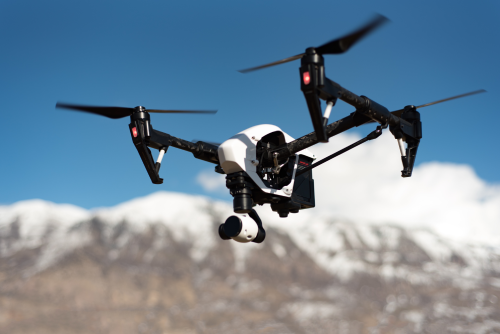
Drones are changing archaeological site mapping by making it faster, safer, and far less disruptive than many traditional survey methods. Instead of relying only on hand sketches, tape measurements, or slow ground photography, teams can now create accurate overhead maps and 3D models in hours rather than days.
In India, this matters for everything from forts and temple precincts to buried mounds, stepwells, rock shelters, and erosion-prone heritage landscapes. But good archaeological mapping is not just about flying a drone and taking pretty pictures. It depends on permissions, planning, accuracy, and careful handling of sensitive heritage data.
Quick Take
- Drones help archaeologists create orthomosaics, 3D models, elevation maps, and site condition records.
- They are especially useful for large, fragile, hard-to-access, or repeatedly monitored sites.
- A normal camera drone can do a lot, but true mapping quality needs proper overlap, planning, and ground control or RTK-based accuracy.
- Drones do not replace excavation, field walking, or expert interpretation. They support them.
- In India, heritage sites may involve extra permissions beyond normal drone rules. Always verify current DGCA and site-specific requirements before flying.
- The biggest mistakes are poor flight planning, weak accuracy control, and ignoring the archaeological sensitivity of the location.
Why archaeology uses drones for mapping
Archaeological sites are often large, uneven, fragile, or difficult to understand from ground level. A drone gives a bird’s-eye view that helps researchers see layout, alignment, damage, drainage, pathways, enclosure walls, mound shape, and relationships between features.
This is useful because archaeology is rarely about one object. It is about context: where structures sit, how spaces connect, how a mound rises, where water once flowed, or how erosion is affecting a site.
Compared with older methods, drones offer a few major advantages:
- Speed: A site that may take a full day to document from the ground can often be captured in a short flight.
- Non-contact recording: Fragile masonry, painted surfaces, or unstable edges can be documented without climbing on them.
- Repeatability: Teams can fly the same mission again after a month, season, or year to compare changes.
- Coverage: Drones can document not just the excavation trench, but the wider landscape around it.
- Better visual understanding: Subtle patterns can become visible from above even when they are hard to spot on foot.
For Indian conditions, this can be especially valuable at:
- hill forts with uneven terrain
- temple complexes with large courtyards and boundary walls
- stepwells and tanks where geometry matters
- earthen mounds and settlement sites
- riverbank or coastal sites affected by erosion
- remote landscapes where access is difficult
What drones actually produce for archaeologists
Not every drone output is the same. Aerial photos are useful, but archaeological mapping usually needs processed data products rather than just raw images.
| Output | What it means | Why it is useful in archaeology |
|---|---|---|
| Orthomosaic | A stitched overhead image corrected for perspective | Lets teams measure distances, trace walls, map trenches, and create site plans |
| 3D model | A digital model of the site surface or structure | Useful for documenting ruins, stepped features, walls, mounds, and conservation condition |
| Point cloud | A large set of measured 3D points | Supports detailed measurement and surface analysis |
| DEM or elevation model | A map of ground or surface height | Helps study slope, mound shape, drainage, embankments, and earthworks |
| Contours and profiles | Lines or slices showing height variation | Useful in reports, conservation planning, and landscape interpretation |
| Thermal or multispectral maps | Special imaging beyond visible light | Sometimes used to detect moisture, material differences, or hidden patterns, though not always reliable |
| LiDAR point cloud | Laser-based 3D capture | Useful in dense vegetation or complex terrain, but usually expensive and specialized |
Orthomosaics
An orthomosaic is one of the most common outputs in drone mapping. It looks like a top-down image of the site, but unlike a casual aerial photo, it is processed so scale is more consistent and measurements are possible.
Archaeologists use orthomosaics to:
- map trenches and excavation units
- trace walls, pathways, and enclosure lines
- measure distances and areas
- compare site condition over time
- prepare base layers for GIS and reports
3D models
A 3D model is created from many overlapping photos using photogrammetry. Photogrammetry is the process where software identifies common points across multiple images and turns them into a measurable 3D surface.
This is valuable for:
- ruined structures
- stepped architecture
- fortifications
- rock-cut features
- standing heritage with surface decay
- documenting before and after conservation work
For example, a stepwell or temple platform is often much easier to understand in 3D than in a flat photo.
Elevation models
Archaeologists often need more than shape. They need to know height differences.
A digital elevation model can reveal:
- mound edges
- terraces
- low embankments
- depressions
- channels
- erosion scars
- drainage direction
At settlement mounds or earthen sites, small changes in elevation can hint at human-made features.
Special sensors
Most archaeological drone work still relies on standard RGB cameras, meaning normal red-green-blue imaging. That is because they are affordable and often good enough.
Special sensors can add value in some cases:
- Thermal: May show moisture variation or subsurface differences under certain conditions
- Multispectral: Can help study vegetation stress patterns over buried remains
- LiDAR: Can sometimes map ground beneath light to moderate vegetation better than regular photography
But these tools are not magic. Their usefulness depends heavily on terrain, season, weather, material type, and expert interpretation.
How drones are used in real archaeological site mapping
1. Site layout documentation
This is the most common use.
A drone can quickly map the full footprint of a site, including:
- structural remains
- walls and courtyards
- pathways
- tanks and water systems
- nearby landscape features
For a large fort or temple precinct, this creates a clean base map for later study.
2. Excavation recording
Excavation changes the site every day. Drone mapping lets archaeologists capture progress regularly without slowing the dig too much.
This helps with:
- daily or weekly trench records
- phase-by-phase comparison
- documenting exposed features before backfilling
- creating visual records for reports and publication
A drone flight over an excavation can show trench relationships much more clearly than many ground photos.
3. Condition assessment and conservation planning
Conservation teams need clear records of cracks, tilts, missing stones, vegetation growth, water damage, and edge erosion.
Drone-generated models can support:
- damage mapping
- monitoring wall deformation
- checking roof or upper-surface condition
- understanding drainage around monuments
- measuring areas needing repair
For tall or awkward structures, drones can reduce the need for risky access.
4. Landscape archaeology
Archaeological sites are rarely isolated. Ancient roads, field systems, water channels, settlement clusters, and defensive lines often extend beyond the main monument.
Drones help map:
- surrounding topography
- relationships between site and water
- embankments and ditches
- possible route alignments
- nearby mounds and features
This is especially useful in open landscapes where small patterns are hard to understand from the ground.
5. Monitoring erosion, encroachment, and disaster impact
Many Indian heritage locations face pressure from:
- seasonal rainfall
- riverbank erosion
- vegetation growth
- informal construction nearby
- visitor wear
- flooding or landslides
Repeated drone surveys can show what changed and how fast. This is useful both for archaeology and for conservation management.
6. Public interpretation and digital archives
A good map or 3D model is not only for specialists. It can also support:
- museum displays
- site interpretation
- student training
- digital archives
- heritage awareness material
However, public outputs must be handled carefully. Some sites are sensitive, and releasing exact locational or structural details can create security or looting risks.
A typical drone mapping workflow at an archaeological site
Good archaeological mapping follows a process. Here is a practical step-by-step workflow.
1. Define the mapping goal
Start with the question, not the drone.
Ask:
- Do you need a full-site orthomosaic?
- A 3D model of one structure?
- A trench progress record?
- A conservation condition survey?
- A landscape study around the monument?
The answer affects flight height, overlap, sensor choice, and accuracy needs.
2. Get permissions and confirm legal compliance
Before any flight, confirm:
- permission from the landowner or site authority
- permission from the archaeological authority if required
- current airspace status and official drone compliance requirements in India
- local site restrictions for visitors, security, or protected monuments
If the site is under the Archaeological Survey of India, a state archaeology department, a university, a museum, a forest area, or local administration, additional approvals may apply.
Do not assume that because a place looks open, flying is allowed.
3. Walk the site first
A pre-flight site walk helps identify:
- power lines
- trees and poles
- birds
- unstable edges
- tourist movement
- takeoff and landing zone
- dust, loose debris, or prop wash risk
This is also the stage to decide whether the flight could disturb fragile remains.
4. Plan for accuracy
If the output must support measurements, survey drawings, or conservation work, plan accuracy properly.
Common methods include:
- Ground control points (GCPs): clearly marked points measured on the ground
- RTK or PPK workflows: methods that improve location accuracy using correction data
For serious mapping, accuracy should be checked, not assumed.
5. Plan the mission
Flight planning usually includes:
- consistent flight height
- enough image overlap
- safe speed
- one or more grid patterns
- extra oblique images for walls and vertical features
For many photogrammetry jobs, operators use high overlap between images so the software can reconstruct the site properly.
6. Capture data in suitable conditions
Ideal conditions are usually:
- low wind
- stable light
- minimal visitor movement
- no rain
- clear visibility
Strong shadows, moving crowds, or changing light can reduce map quality.
7. Process the imagery
After flying, the images are processed in mapping or photogrammetry software.
Typical outputs include:
- orthomosaic
- point cloud
- 3D mesh
- textured model
- elevation map
- contours
8. Validate the results
Check whether:
- measurements match field references
- all important areas were covered
- distortions exist near edges or tall features
- shadows or blur affected interpretation
- metadata and coordinate systems were recorded correctly
9. Archive carefully
Archaeological data should be stored properly with:
- date
- site name
- flight area
- coordinate reference details
- camera and flight notes
- processing version
- final deliverables
Good archiving matters because future teams may need to compare changes over years.
Which drones and sensors are typically used
Not every archaeology project needs a high-end system.
| Drone type | Best for | Strengths | Limits |
|---|---|---|---|
| Standard camera quadcopter | Small sites, visual documentation, basic mapping | Easy to deploy, affordable, good image quality | Limited endurance, accuracy depends on workflow |
| Prosumer mapping quadcopter with RTK | Professional site mapping, repeat surveys | Better positioning, stronger mapping workflow | Higher cost, still limited by battery life |
| Fixed-wing mapping drone | Large landscapes and long corridors | Covers more area efficiently | Needs more space and experience, less suited to tight monument zones |
| LiDAR-equipped drone | Vegetated or complex terrain | Can produce strong terrain data in some conditions | Expensive, specialist workflow, not needed for most sites |
| Thermal or multispectral drone | Research-specific tasks | Can reveal non-visible patterns in some cases | Interpretation can be tricky, not a universal solution |
For many archaeology projects, a reliable quadcopter with a good camera is enough for documentation and smaller mapping jobs. The key is not just the drone model but the workflow, accuracy control, and operator discipline.
What makes drone mapping accurate enough for archaeology
This is where many beginners get confused. A sharp image is not the same as an accurate map.
Accuracy depends on:
- image overlap
- stable flight
- good camera calibration
- correct processing settings
- control points or RTK support
- proper coordinate handling
- quality checks after processing
There are two useful ideas to understand:
Relative accuracy
This means features are in the right place compared with each other within the model.
Good relative accuracy is often enough for visual analysis and internal comparison.
Absolute accuracy
This means the whole map is correctly placed in real-world coordinates.
This matters when data must align with survey records, GIS layers, engineering drawings, or future repeat surveys.
If a project claims “survey-grade” results, ask how that accuracy was measured.
Limits of drones in archaeology
Drones are powerful, but they do not solve every problem.
They cannot see through everything
A standard camera drone cannot see buried walls under dense vegetation, thick soil, or roofing. Sometimes surface clues help, but there is no guarantee.
They do not replace excavation
A drone may reveal patterns, but interpretation still depends on archaeologists, surveyors, historians, and field evidence.
Dense vegetation remains difficult
Photogrammetry works best when the surface is visible. Thick tree cover can hide archaeological ground features.
Vertical and narrow spaces are challenging
Courtyards, narrow passages, caves, and interiors may be unsafe or impractical for regular drone mapping.
Sensitive sites need discretion
Some locations should not be widely published in full detail, especially if they are vulnerable to theft, vandalism, or illegal digging.
Safety, legal, and compliance considerations in India
Archaeological site mapping is not a free-for-all.
Before flying in India, verify the latest official rules on:
- permitted drone operations
- airspace authorization
- Digital Sky requirements where applicable
- aircraft compliance, including current policy around approved platforms and NPNT-related requirements
- operator eligibility and any documentation needed
- local restrictions around protected or security-sensitive areas
For heritage work, also check whether you need approval from:
- the site custodian
- Archaeological Survey of India
- state archaeology department
- local district administration
- police or security staff
- forest or environmental authority, if the site is in a protected landscape
Practical safety rules matter just as much:
- do not fly over crowds of tourists
- keep takeoff and landing away from fragile remains
- avoid low passes that create prop wash over loose debris
- do not fly close to birds or nesting areas
- do not use drones in a way that disturbs rituals, worship, or public movement at living heritage sites
If there is any doubt, stop and verify before the mission.
Common mistakes in archaeological drone mapping
Treating aerial photos as proper maps
Pretty top-down images are useful, but without correct processing and scale control, they may not be suitable for measurement.
Flying too low for the whole site
Very low flights create lots of detail but may miss context and require many more images. Often, a mix of site-wide and detail flights works better.
Ignoring walls and vertical surfaces
A straight grid flight mostly captures roofs and ground. Ruins with standing walls often need oblique shots.
Not planning for repeat surveys
If you want to compare the site over time, keep flight height, path, timing, and processing consistent.
Skipping accuracy checks
Even if software finishes successfully, the final output may still be distorted or poorly aligned.
Flying at the wrong time of day
Harsh shadows can hide detail in one area and exaggerate it in another. On the other hand, low-angle light can sometimes help reveal earthworks. The right timing depends on the job.
Poor data organization
Images, logs, coordinates, notes, and processed files should be stored systematically. Archaeological datasets are valuable long after the flight is over.
Publishing sensitive information casually
Not every map should be posted publicly, especially for vulnerable or unprotected sites.
Practical tips for better results
- Start with a simple goal and one clean deliverable.
- Use consistent overlap and avoid rushing the flight.
- Carry spare batteries, memory cards, and a written checklist.
- Add oblique passes if the site has standing architecture.
- Use ground control or RTK when measurement quality matters.
- Coordinate with archaeologists before flight so key features are not missed.
- Keep raw files and final outputs both backed up.
- Record the weather, date, flight height, and processing method for future comparison.
FAQ
Can a normal consumer drone be used for archaeological site mapping?
Yes, for basic documentation and small-site mapping, a good camera drone can be useful. But if the project needs reliable measurements, repeatable surveys, or integration with professional GIS data, the workflow matters as much as the drone itself.
Do archaeologists need LiDAR for site mapping?
Not always. Most projects start with regular RGB photogrammetry because it is cheaper and often good enough. LiDAR becomes more relevant in vegetated terrain or when ground shape needs to be captured more effectively.
Are drones better than total stations or ground survey tools?
Not better in every way. Drones are faster for area coverage and visual documentation, while ground survey tools can still be critical for precise control points, excavation measurements, and validation. In practice, they work best together.
Can drones find buried ruins?
Sometimes they can suggest patterns through crop marks, soil differences, moisture variation, or small terrain changes. But they cannot reliably “see underground” with a normal camera. Interpretation needs supporting evidence.
How accurate can archaeological drone maps be?
It depends on flight planning, image quality, processing, and control methods such as GCPs or RTK. Never assume accuracy from the drone alone. Measure and verify it.
Is it legal to fly over forts, temples, or heritage sites in India?
Do not assume it is. Protected monuments, living religious sites, tourist areas, and sensitive zones may have special restrictions. Always verify the latest DGCA, airspace, and site authority requirements before flying.
What is the biggest advantage of drones for archaeology?
Speed without physical contact. A drone can document large or delicate areas quickly while reducing the need to climb, walk across, or otherwise disturb fragile remains.
What is the biggest risk?
Poor planning. A badly flown mission can create unusable data, disturb visitors, endanger the site, or lead to compliance problems.
Should archaeologists share full drone maps publicly?
Only after considering site sensitivity, security, ownership, and conservation risks. Some data is fine for education and outreach; some should stay controlled.
Can drones be used during excavation season every day?
They can be, if permissions, site conditions, and workflow allow it. Daily or weekly flights are useful for trench progress, but consistency in flight settings and timing is important for comparison.
Final takeaway
Drones are used in archaeological site mapping because they turn fragile, complex landscapes into usable maps, models, and records that teams can measure, compare, and preserve. If you want good results, focus less on flashy flying and more on permissions, accuracy, repeatability, and respect for the site.
For most Indian users, the smartest next step is simple: pick one real mapping goal, confirm legal and site approvals, and build a disciplined workflow before you ever launch the drone.
