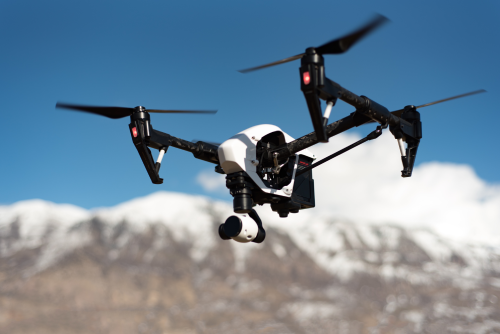
How drones are used in search and rescue missions is one of the clearest examples of drone technology solving a real problem. In floods, landslides, forests, mountains, and urban accidents, drones help teams see more, reach faster, and reduce risk before rescuers enter dangerous areas.
Quick Take
- Drones do not replace rescuers. They help rescue teams find people faster and make better decisions.
- In search and rescue, drones are mainly used for:
- scanning large areas quickly
- checking dangerous locations before people enter
- spotting heat signatures with thermal cameras
- mapping damage and access routes
- sending live video to command teams
- delivering very small emergency items in some cases
- The biggest advantage is speed. A drone can inspect an area in minutes that might take a ground team much longer to cover.
- The biggest limits are battery life, wind, rain, poor visibility, dense tree cover, and false positives from thermal cameras.
- In India, rescue flights should be coordinated with the concerned authorities. Never fly your own drone near an emergency scene unless you are officially tasked and cleared to do so.
- Always verify the latest DGCA, Digital Sky, local police, and disaster-response requirements before planning any rescue-related drone operation.
Why drones matter in search and rescue
Search and rescue, often shortened to SAR, is about finding missing, stranded, or injured people and getting help to them quickly. In many cases, minutes matter.
Traditional search methods still matter most: trained responders, ground teams, local guides, dogs, medical crews, boats, and sometimes helicopters. But drones add a major advantage: an immediate view from above.
That overhead view helps answer urgent questions:
- Where are people likely to be?
- Which routes are blocked?
- Is a building safe to approach?
- Is the flood current too strong?
- Are there signs of movement, heat, clothing, fires, vehicles, or flashlights?
- Can ground teams reach the location safely?
Instead of sending people blindly into unstable terrain, fast water, smoke, or rubble, a drone can provide a safer first look.
For India, this matters even more because rescue conditions vary widely:
- flood-prone river belts
- mountain trails and valleys
- dense forests
- crowded urban neighborhoods
- coastal zones and fishing communities
- landslide-prone hill roads
- remote villages with limited road access
A drone cannot pull someone out of a river or lift a casualty from a cliff. But it can shorten the time between “someone is missing” and “we know exactly where to send help.”
What drones actually do in search and rescue missions
Rapid area assessment after a disaster
One of the first uses of a drone in any rescue mission is a rapid overview of the scene.
After a flood, landslide, bridge collapse, or major road accident, responders need a current picture, not guesswork. A drone can quickly show:
- water spread and current direction
- cut-off roads and damaged bridges
- stranded groups on rooftops or higher ground
- safe landing or staging areas
- debris fields
- power lines, towers, trees, and other hazards
In a flood-affected village, for example, a drone can help teams identify which houses are still occupied, which lanes are underwater, and where boats can enter safely. That saves time and reduces unnecessary movement.
Searching for missing people over difficult terrain
This is the most widely understood rescue use of drones.
When a person is missing, a drone can search open land, trails, fields, dry riverbeds, forest edges, and hill slopes faster than a ground team alone. The drone pilot and spotters usually follow a planned search pattern rather than flying randomly.
Common search methods include:
- grid search over a defined area
- corridor search along roads, trails, rivers, or power lines
- expanding search from the last known point
- targeted passes over likely shelters, rock overhangs, or tree clearings
A missing trekker in Uttarakhand or Himachal Pradesh, for instance, may have left the main trail and stopped near a stream, boulder, or ridge. A drone with a zoom camera can scan those points quickly and help teams narrow the search area.
In rural searches, drones are also useful for finding:
- missing elderly persons
- lost children
- accident victims in fields or roadside ditches
- stranded workers in isolated areas
Using thermal cameras to detect heat signatures
A thermal camera does not “see through walls.” It detects differences in heat.
This is one of the most powerful drone tools in rescue work, especially when light is poor or the person is hard to spot visually. A human body may appear as a warmer target compared with its surroundings, depending on the time of day and conditions.
Thermal imaging is especially useful for:
- night or low-light searches
- locating people in open fields or scrubland
- spotting survivors on rooftops or embankments
- identifying recent human presence
- supporting wildfire-edge or forest-edge operations
But thermal has important limits:
- hot ground in the afternoon can reduce contrast
- rocks, roofs, vehicles, animals, and machinery can create false positives
- dense tree cover can hide people
- water can make detection harder
- concrete rubble can block or distort heat signatures
That is why rescue teams do not rely on thermal alone. They usually combine it with regular video, zoom confirmation, and ground verification.
A practical rule is this: thermal helps teams notice something; it does not confirm everything.
Inspecting dangerous structures before responders enter
In building collapses, industrial incidents, or post-fire scenes, the area may be unstable. A drone can inspect upper floors, roofs, openings, and access points before rescuers move in.
This is useful for:
- checking partial building collapse
- looking for trapped or waving survivors
- identifying smoke vents or heat pockets
- spotting loose sheets, glass, or hanging wires
- examining access from windows, terraces, and stair cores
In urban India, this kind of use can be valuable after:
- fire incidents
- factory accidents
- warehouse collapses
- damaged residential buildings
- major event-site emergencies
The drone gives incident commanders a live picture of the hazard, which can influence where ground teams enter and where they should not.
Guiding ground teams to exact locations
Finding a person is only half the job. Rescue teams still need to reach them.
Modern drone operations help by sending accurate location information to teams on the ground. The drone operator can often mark the point of interest and guide responders using visible landmarks, map references, or coordinates.
This helps when:
- a victim is visible but difficult to describe from the ground
- the approach route is unclear
- floodwater has changed normal access
- a hillside or forest search area looks similar in every direction
In practice, the drone becomes a real-time guide in the sky. It can watch ground teams approach and warn them about obstacles such as unstable soil, water channels, broken walls, or blocked paths.
Creating maps for access planning
Sometimes rescue teams need more than a live video feed. They need a usable map.
Drones can capture overlapping images that are stitched into a detailed overhead map. In advanced setups, teams may also build a 3D model of the area. This is helpful for planning:
- access roads for ambulances or heavy vehicles
- safe foot approach routes
- debris clearance priorities
- temporary base locations
- riverbank or embankment breaches
- landslide boundaries
In a landslide zone, for example, a drone map can show where fresh earth movement has blocked the road, where machinery can stand safely, and where responders should avoid due to the risk of a secondary slide.
Carrying small emergency items
Some rescue drones can carry and release light payloads. This is not the same as a full supply delivery system, and it is not suitable for all aircraft or all situations.
In certain missions, a drone may be used to deliver very small items such as:
- a handheld radio
- a phone or power bank
- a flotation aid
- a small first-aid pouch
- emergency medicine
- a line for further rescue setup
This can be useful when a person is stranded on a rooftop, isolated by water, or cut off by a narrow gorge.
But there are major limits:
- payload weight is usually small
- drops must be controlled and safe
- wind can push the item off target
- dropping objects can injure someone if done badly
- the aircraft must be designed and approved for that job
So while payload drops get a lot of attention, they are not the main rescue role of drones. Observation and coordination remain far more common and valuable.
Communication support
Some rescue drones are fitted with a loudspeaker or spotlight.
A loudspeaker can help responders:
- reassure stranded people
- tell them to stay where they are
- guide them toward a safer visible point
- ask them to signal with a cloth, torch, or movement
A spotlight can help in low-light conditions by marking an area for ground teams or maintaining visual contact.
This is especially useful when people are panicked, separated, or unsure whether help has reached them.
The main drone tools used in SAR
Not every rescue mission needs the same type of drone. The right setup depends on terrain, weather, time of day, and the mission objective.
| Tool or payload | What it helps with | Best use case | Main limit |
|---|---|---|---|
| Standard camera | Live aerial view, visual scanning, damage overview | Daytime flood, landslide, traffic, missing-person search in open areas | Harder in low light, smoke, or dense cover |
| Zoom camera | Inspecting distant details without flying too close | Hillsides, rooftops, towers, suspicious sightings | Image quality drops with poor visibility |
| Thermal camera | Detecting heat contrast | Night search, low-light search, open terrain | False positives, weak performance in hot or blocked environments |
| Mapping workflow | Building a detailed overhead map | Landslides, urban damage, route planning | Needs time, careful flying, and image processing |
| Speaker or spotlight | Communication and visibility | Stranded persons, night guidance, crowd control support | Limited range, weather and noise can reduce usefulness |
| Small payload system | Sending light emergency items | Isolated victims with no safe immediate access | Very limited weight and requires safe procedures |
A typical drone search and rescue workflow
The most effective rescue drone flights are not improvised. They follow a method.
1. Define the mission clearly
The team first identifies the goal:
- locate a missing person
- assess a flood zone
- inspect a building
- find a safe route
- confirm a reported sighting
A vague mission wastes battery and time. “Search everywhere” is not a plan. “Search the riverbank from the bridge to the old temple because the person was last seen there” is a plan.
2. Start from the last known information
Rescue teams gather key details:
- last known point
- clothing colour
- age and mobility
- medical condition
- phone location if available
- direction of travel
- local terrain risks
- witness reports
This helps narrow the search area before the drone even launches.
3. Check airspace, hazards, and weather
Before flight, the team must consider:
- wind speed and gusts
- rain or lightning risk
- visibility
- trees, wires, towers, and cranes
- crowd movement
- nearby roads or water
- presence of helicopters or other aircraft
If manned aircraft are operating, drone flights may need to stop or be tightly coordinated. Deconfliction between aircraft is critical in rescue missions.
4. Choose the right drone and sensor
A daylight flood scan may only need a regular camera. A night forest-edge search may need thermal. A damaged structure may need zoom.
Matching the drone to the mission is more important than simply using the biggest or most expensive aircraft.
5. Fly a planned search pattern
Good rescue pilots do not wander. They fly structured paths with overlap, maintain useful altitude, and keep the camera angle appropriate to the task.
Flying too high can make a person look like a speck. Flying too low can waste time and reduce coverage. The right balance depends on terrain and sensor quality.
6. Mark and verify sightings
If the team spots something relevant, they do not assume success immediately. They:
- mark the location
- circle or re-approach safely
- confirm with zoom or thermal if available
- notify command
- guide ground teams to the spot
Verification matters because false alarms are common.
7. Hand over to rescuers on the ground
The drone’s job is to support the rescue, not become the rescue. Ground teams, medical staff, fire services, police, SDRF, NDRF, local administration, or other responders then move in as required.
8. Repeat, review, and manage batteries
Search missions often take multiple sorties. Teams rotate batteries, review footage, update the map, and refine the search area based on new information.
Where drones are especially useful in India
Floods and waterlogged areas
In states that face seasonal flooding, drones can quickly show which homes, roads, schools, and embankments are affected. They are especially useful when boats cannot cover every lane immediately.
They can help identify:
- stranded families
- rooftop gatherings
- broken approach roads
- rising water around critical buildings
- boat entry points
Hills, valleys, and trekking routes
Mountain rescue is physically demanding and slow. Drones help teams check ridge lines, stream beds, cliff bases, and trail breaks without sending people into every section first.
This can be useful in Himalayan regions as well as the Western Ghats.
Forest edges and rural missing-person searches
In open or semi-open rural terrain, drones can cover more ground than a line search on foot. They are especially helpful in scrub, fields, riverbeds, and patchy tree cover.
Urban emergencies
In cities, drones help after fires, collapses, major traffic pileups, industrial accidents, and crowd-heavy incidents. They provide quick visual intelligence in places where access is blocked.
Limits readers should understand
Drones are useful, but they are not magic.
Main limitations include:
- short battery endurance compared with how large search areas can be
- weaker performance in rain, strong winds, smoke, and poor visibility
- thermal limitations in hot weather or under dense cover
- inability to move victims or perform medical treatment
- dependence on trained pilots and disciplined teams
- communication problems in some remote or built-up areas
- airspace restrictions and emergency-scene coordination challenges
A drone reduces uncertainty. It does not remove it.
Safety, legal, and compliance in India
This is one area where readers should be cautious.
If you are a hobbyist or bystander, do not fly your personal drone near an emergency scene out of curiosity or with the intention of “helping.” Uncoordinated drone flying can interfere with rescue work, distract responders, create collision risk, and complicate airspace management.
For India-specific operations, always verify the latest official requirements before acting. That includes:
- DGCA drone rules and categories
- Digital Sky permissions and airspace status
- local police instructions
- district administration directions
- disaster management authority procedures
- restrictions near airports, military areas, and other sensitive zones
A few practical points matter in almost every rescue operation:
- only authorized and coordinated pilots should fly
- manned aircraft and helicopters always require careful airspace coordination
- logs, checklists, and battery discipline are essential
- video and thermal data should be handled responsibly
- victim privacy should be respected
- rescue footage should not be casually posted online for views
If you are a professional operator or company hoping to support SAR work, having a good drone is not enough. You also need training, operating procedures, insurance where applicable, clear tasking, and coordination with the responsible authority.
Common mistakes in search and rescue drone operations
Even capable drone teams can lose time with avoidable errors.
Flying without a clear objective
A rescue drone should launch with a specific question to answer. Random scanning burns battery without building useful search coverage.
Relying too much on thermal
Thermal is powerful, but it is not proof. Animals, vehicles, warm roofs, and sun-heated rocks can mislead the team.
Flying too high or too fast
Large search areas tempt pilots to rush. But if the image is too wide or blurry, the mission becomes less useful.
Ignoring handoff to ground teams
A sighting is not helpful if nobody can reach it quickly. Good rescue flights always connect air observations to ground action.
Poor battery management
Rescue missions often happen in stressful conditions. Forgetting charge status, battery temperature, or swap timing can end a sortie at the wrong moment.
Launching in bad weather just because the mission feels urgent
Urgency does not cancel physics. Heavy rain, gusty winds, and poor visibility can cause a crash and create a second problem.
Showing up uninvited with a drone
This is one of the worst mistakes. Rescue sites are not open flying zones.
Useful skills for anyone interested in rescue drone work
If this application interests you, the most valuable skills are not flashy aerobatics.
Focus on learning:
- precise, stable manual flight
- camera observation discipline
- search-pattern planning
- map reading and location marking
- thermal interpretation basics
- emergency procedures
- radio and team communication
- battery and equipment management
- safe launch and recovery in rough terrain
A pilot who can calmly fly a repeatable grid is more useful in SAR than a pilot who can shoot cinematic footage.
FAQ
Can a regular consumer drone be used for search and rescue?
Sometimes, yes, especially for daylight area assessment or small open-area searches. But serious SAR work often benefits from better zoom, thermal capability, weather resistance, stronger procedures, and trained crew coordination.
Are thermal drones always better than camera drones?
No. Thermal is excellent for detecting heat contrast, but standard video is often better for identifying clothing, terrain, structures, and exact details. The best setup often combines both.
Can drones find people under trees or rubble?
Not reliably in every case. Dense canopy, concrete, metal, water, and debris can block or distort what the drone sees, especially with thermal cameras. Ground teams are still essential.
Can drones directly rescue a person?
Usually not. Most drones are used to locate, assess, guide, and support. Some can deliver very small emergency items, but extraction is still done by human rescuers or specialized systems.
Do rescue drones work in rain and strong wind?
Many do not perform well in those conditions, and some should not be flown at all. Even weather-resistant models have limits. Monsoon conditions can sharply reduce effectiveness and safety.
Who can fly drones for rescue work in India?
Only properly authorized and coordinated operators should do so. Government agencies, disaster-response teams, police, fire services, or approved partners may operate depending on the mission and current rules. Always verify the latest DGCA and local authority requirements.
Can drones be used at night in India for rescue missions?
Night operations may be possible in some circumstances, but they involve added risk and may require specific approvals, procedures, lighting, and trained crews. Verify the current official rules before planning such flights.
What is more important for SAR: long flight time or better sensors?
Both matter, but better mission fit matters most. A slightly shorter-endurance drone with a useful thermal or zoom camera may be more valuable than a longer-flying drone that cannot identify targets properly.
Should bystanders share rescue drone footage on social media?
No, not casually. It can expose victims, spread misinformation, and interfere with operations or investigations. Rescue imagery should be handled responsibly and according to the authority managing the mission.
What should a beginner do if they want to move toward rescue drone work?
Start with safe flight basics, mapping and observation skills, and legal compliance. Then learn structured search methods, thermal basics if relevant, and team communication. Rescue work rewards discipline more than gadget obsession.
Final takeaway
Drones are used in search and rescue missions best as fast aerial support: they locate, assess, map, and guide. If you want to work in this field in India, think beyond buying a drone and focus on training, coordination, sensor choice, and official compliance.
