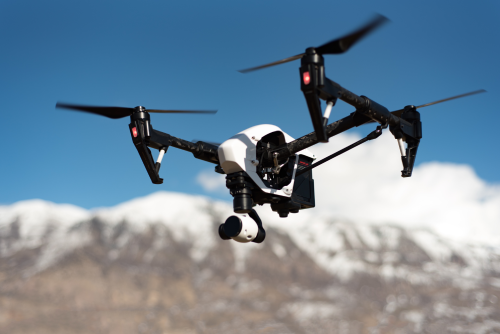
When people ask how drones are used in firefighting support, the short answer is simple: they help firefighters see more, decide faster, and reduce risk before sending people into danger. In India, where fire incidents can range from crowded urban buildings to factories, godowns, grasslands, and forest edges, drones are becoming valuable support tools, not replacements for trained fire crews.
Quick Take
- Drones support firefighting by providing an aerial view, thermal imaging, live video, mapping, and safer reconnaissance.
- Their biggest value is not “fighting” the fire directly, but helping teams understand the scene quickly.
- Common use cases include hotspot detection, roof inspection, locating trapped people, monitoring fire spread, and assessing industrial or forest-edge incidents.
- Thermal cameras can reveal heat patterns, but they are not magic and can still be misread.
- Small drones are useful for rapid response; more advanced systems add zoom cameras, thermal payloads, mapping tools, and specialised sensors.
- In India, drone operations for emergency response still need proper coordination, trained pilots, and verification of the latest DGCA and local rules.
- Hobbyists should never fly personal drones near an active fire scene unless officially authorised.
Why drones matter in firefighting support
A fire scene changes fast. Smoke blocks visibility. Heat affects decisions. Roofs can weaken. People may be trapped in places that are hard to reach. In many cases, the first few minutes are about understanding the situation, not just spraying water.
That is where drones help.
Instead of relying only on ground-level views, a drone can give the incident commander an overhead picture of:
- where the fire is strongest
- how it is spreading
- whether adjacent buildings are at risk
- whether the roof is heating unevenly
- whether there are people on terraces, balconies, or escape routes
- whether crews should approach from another side
This is why drones are often described as force multipliers. They do not replace fire engines, ladders, or breathing apparatus. They help those resources get used more intelligently.
The main ways drones are used in firefighting support
Rapid scene size-up before crews commit
“Size-up” means quickly assessing the incident before making major tactical decisions.
At a building fire, a drone can show:
- the seat of the fire, or likely origin area
- smoke venting from windows, roof openings, or shafts
- blocked access routes
- nearby parked vehicles or obstacles
- fire extension to upper floors or neighbouring structures
This is especially useful in Indian cities where narrow lanes, illegal extensions, rooftop tanks, overhead wires, and close building spacing can complicate access.
A drone can often be airborne in minutes and provide a live view while ground crews are still positioning.
Thermal hotspot detection
A thermal camera detects heat differences instead of normal visible light. This helps teams spot:
- hidden hotspots after visible flames are knocked down
- heat buildup on roofs and walls
- fire spread inside connected structures
- embers in vegetation fires
- overheating equipment in industrial incidents
For example, after a warehouse fire appears controlled, a thermal drone may reveal a hot corner under roofing sheets or inside stacked goods. That helps crews focus overhaul work instead of reopening the whole site blindly.
Important limit: thermal cameras do not “see everything.” Reflective surfaces, insulation, thick smoke, glass, and environmental heat can affect what the image shows. Thermal feeds are useful decision aids, not perfect truth.
Searching for trapped or missing people
Drones are often useful in the rescue side of fire response.
They can help look for:
- people on terraces or balconies
- workers stranded on industrial structures
- persons who ran into nearby fields or smoke zones
- missing people on the edge of forest or grass fires
- victims in low-visibility conditions after dark, if operations are authorised and equipment supports it
A drone with zoom and thermal capability can scan areas faster than crews on foot, especially when access is poor.
That said, thermal identification of people is not always easy. Hot backgrounds, debris, metal roofs, sun-heated surfaces, and smoke can create confusion. Drone findings should be confirmed by trained responders before action.
Monitoring roofs and structural risk
One of the most practical firefighting uses of drones is checking roofs and upper structures without sending firefighters into unnecessary danger.
From above, a drone may help identify:
- heat concentration under roofing material
- sagging areas
- partial collapse risk
- hidden fire spread along ducts, shafts, or false ceilings
- extension into nearby terraces or upper utility spaces
This is very relevant in:
- commercial buildings
- factories
- cold storage sites
- old markets
- warehouses
- schools and institutional buildings
A roof that looks fine from the street may be badly compromised from above.
Tracking spread in grassland, forest-edge, and open-area fires
Not every fire incident in India is a city building fire. Drones are also useful for:
- grass fires
- scrub fires
- landfill fires
- forest-edge incidents
- plantation and farm-perimeter fires
In these cases, the drone can help map:
- the fire perimeter
- active flame fronts
- wind-driven direction changes
- safe access routes
- threatened homes, roads, power lines, or assets
This can help teams decide where to deploy vehicles, create control lines, or protect exposures first.
In larger vegetation fires, drones are particularly useful at the edge of the incident, where crews need updated visibility but may not have a clear line of sight from the ground.
Industrial and hazardous-area assessment
Factories, chemical storage sites, oil facilities, and large industrial campuses present extra risk. A drone allows remote observation before sending people too close.
This can support decisions on:
- the safest approach path
- whether tanks, pipelines, or adjacent units are heating up
- the spread of smoke over nearby worker areas
- whether there is structural damage to upper sections
- whether evacuation zones need adjustment
Some specialised systems can carry gas-sensing payloads, but this is a more advanced use case. Gas detection from drones requires proper calibration, trained interpretation, and clear operating procedures. It should not be treated like a simple add-on feature.
Supporting command and coordination
An aerial feed is useful not only for the pilot, but for the full incident command team.
Live drone video can support:
- better tasking of crews
- faster identification of changing conditions
- documentation of where teams have already worked
- communication between fire, police, and disaster management teams
- traffic and perimeter decisions
In a chaotic multi-agency incident, a clear top-down view often reduces guesswork.
Post-fire assessment and documentation
After flames are controlled, drones can still be useful.
They can help with:
- identifying remaining hotspots
- documenting collapse or damage patterns
- mapping the affected area
- estimating impact on neighbouring structures
- supporting safer re-entry planning
They may also assist later review, insurance documentation, or technical investigation, depending on agency procedures. But drone footage should be handled carefully and professionally. It is not a substitute for formal investigation methods.
A typical firefighting drone workflow
Different agencies follow different standard operating procedures, but a practical drone support workflow often looks like this:
1. Receive tasking from incident command
The drone team should know exactly what they are being asked to do:
- locate fire spread
- check the roof
- search for victims
- identify hotspots
- map the perimeter
A drone without a clear mission can waste time.
2. Establish a safe launch area
The launch site should be:
- outside hose movement and crowd pressure
- clear of overhead wires
- away from heavy smoke if possible
- coordinated with ground crews and vehicle movement
3. Confirm airspace and scene coordination
The drone team must coordinate with the incident commander and, where relevant, with other authorities. If any manned aircraft could be involved, deconfliction is critical.
4. Fly a rapid visual survey
The first pass often focuses on:
- visible flame location
- smoke movement
- roof condition
- exposures
- access routes
5. Switch to thermal scan if needed
The operator then checks for:
- heat concentration
- hidden spread
- isolated hotspots
- upper-floor or roof heat signatures
6. Feed information to the command team in real time
Good drone support is not just flying. It is communicating findings clearly and quickly.
7. Re-fly during key changes
Another short flight may be useful after:
- a knockdown
- a venting change
- a roof collapse
- a wind shift
- a crew repositioning
8. Log, save, and review the data
Important visuals should be preserved according to agency procedure, especially if they affect safety review or investigation.
What equipment is used for firefighting support
Not every fire-support drone setup is the same. The right choice depends on the job, budget, and team training.
| Drone capability | What it helps with | Best use case | Main limitation |
|---|---|---|---|
| Standard RGB camera | Live overhead video in normal light | Initial size-up, route planning, perimeter monitoring | Limited through smoke or darkness |
| Thermal camera | Detects heat differences | Hotspot detection, roof scan, victim search support | Can be misread; not perfect through all materials |
| Zoom camera | Close inspection from safer distance | Upper floors, tanks, industrial structures | Needs stable flight and trained interpretation |
| Low-light camera | Better visibility in dim scenes | Night support, post-sunset monitoring | Still affected by smoke and glare |
| Mapping software | Creates area maps or stitched views | Vegetation fires, post-fire assessment | Usually not for ultra-fast tactical decisions |
| Loudspeaker/spotlight payloads | Communication or illumination | Controlled rescue support in limited cases | Adds weight, complexity, and operational risk |
| Specialised gas sensor payload | Hazard awareness support | Advanced industrial or hazmat operations | Requires expert use and validation |
For many fire departments, the most practical starting combination is a stable drone with a good daylight camera and a thermal camera operated by a trained team.
Real-world scenarios where drones help
Urban apartment or market fire
A fire breaks out on the upper floor of a crowded mixed-use building. Street access is tight, smoke is heavy, and people are gathering below.
A drone can quickly show:
- whether fire has reached the terrace
- whether adjacent buildings are threatened
- whether anyone is trapped on upper balconies
- whether the rear side offers safer access
This can save time when every minute matters.
Warehouse or factory fire
From ground level, crews may only see smoke pouring out. A drone can help identify:
- which roof section is hottest
- whether fire has spread across storage bays
- whether nearby tanks or units are heating up
- whether collapse risk is increasing
This makes water application and crew positioning more targeted.
Grass or forest-edge fire near settlements
A drone can trace the active edge, identify wind-driven spread, and help teams protect the most vulnerable side first. In open terrain, this overhead view can be far more useful than trying to judge spread only from the road.
What drones still cannot do well
A lot of marketing around emergency drones is overly dramatic. In reality, drones have limits.
They are excellent for information. They are much less effective as direct firefighting machines.
Water-dropping drones are not a mainstream answer
Yes, there are heavy-lift drones designed to drop water or fire suppressant. But in most real-world Indian firefighting situations, these are still a niche solution.
Why?
- payload is limited compared to a fire engine or traditional aerial firefighting system
- flight time drops sharply with heavy loads
- repeated refill cycles reduce efficiency
- strong heat, turbulence, and smoke complicate close drops
- urban use is difficult in cluttered environments
For now, the strongest role of drones is support, not primary suppression.
Smoke, heat, and wind are serious operational challenges
Even a high-quality drone can struggle with:
- thermal updrafts near flames
- high winds around buildings
- GPS interference in dense urban zones
- reduced sensor performance in heavy smoke
- battery drain in demanding flight conditions
That is why trained operation matters so much.
Safety, legal, and compliance points in India
If you are reading this as a hobbyist, startup, industrial safety team, or municipal buyer, this section matters.
Drones near active fires are not casual tools
An emergency scene is one of the worst places for untrained flying. Risks include:
- collision with structures, wires, or responders
- distraction to command staff
- interference with rescue work
- conflict with any manned aviation support
- privacy violations
- contaminated or unreliable footage being treated as evidence
Verify the latest Indian rules before operating
Drone operations in India can involve DGCA requirements, Digital Sky processes, airspace limitations, local authority coordination, and organisation-specific approvals. These can change.
Before planning any operational use, verify the latest:
- drone category and compliance requirements
- operator eligibility and training needs
- airspace permissions or restrictions
- rules for emergency or night operations
- SOPs for police, fire, industrial, or disaster response use
- insurance and liability arrangements
Do not assume that a drone being technically capable means it is automatically legal to deploy everywhere.
Emergency response needs a chain of command
At an incident, the drone team should operate under an authorised command structure. That usually means:
- a designated pilot
- a visual observer where needed
- clear tasking from incident command
- communication with the ground team
- proper logging of flights and battery status
Never self-deploy as a bystander
If you own a camera drone, do not fly it over a fire “to help” unless you have been officially tasked and cleared to operate. Unauthorised flying at an emergency scene can create more danger than value.
What features matter if an agency is evaluating a firefighting drone
For departments, companies, or institutions considering a drone program, these factors matter more than flashy claims:
Reliable thermal performance
The thermal camera should provide usable, interpretable imaging, not just a token feature.
Strong live video link
A choppy or unstable video feed is a major handicap in emergency work.
Fast deployment
A drone that takes too long to unpack and launch loses tactical value.
Stable flight in difficult conditions
Urban wind funnels and heat-disturbed air are common at fire scenes.
Good battery management
Emergency teams need disciplined battery rotation, charging, storage, and record-keeping.
Durable workflow
The drone should fit the team’s reality. A simpler system used well is often better than an advanced one that hardly gets deployed.
Training and SOPs
This is the real make-or-break factor. Even a great drone becomes a liability without trained operators and clear procedures.
Common mistakes in firefighting drone use
These mistakes are more common than many people realise:
- Flying too close to heat and losing stability
- Treating thermal images as self-explanatory without training
- Launching without a clear mission objective
- Failing to coordinate with the incident commander
- Ignoring overhead wires, cranes, or metal structures
- Sending the drone up once and assuming the picture will stay valid as conditions change
- Using consumer drones without proper operational planning
- Overpromising water-drop capability
- Forgetting battery limits during extended incidents
- Letting unauthorised footage circulate without control or context
The best drone teams are disciplined, boring, and procedure-driven. That is exactly what emergency operations need.
FAQ
Can drones actually put out fires?
Usually, no. Most drones used in firefighting are support tools for visibility, mapping, and thermal inspection. Heavy-lift suppression drones exist, but they are not a practical replacement for conventional firefighting resources in most situations.
Are thermal cameras able to see through smoke?
They can often detect heat patterns better than normal cameras in smoky conditions, but not perfectly. Thick smoke, reflective surfaces, insulation, glass, and hot backgrounds can still limit or distort what you see.
Can a normal consumer drone be used for firefighting support?
Only in a limited sense, and only if used by an authorised, trained team within the law and operational SOPs. Consumer drones may be useful for basic visual awareness, but serious fire-support work often needs better thermal capability, reliability, and scene coordination.
Who should operate a drone at a fire incident?
A trained and authorised pilot working under the incident command system. The pilot should not freelance or act independently from the command team.
Are drones useful at night during fire incidents?
Yes, especially with thermal and low-light cameras, but night operations bring more risk and may involve additional legal and operational requirements. Teams should verify the latest rules and use approved procedures.
How close should a drone fly to a fire?
There is no universal safe distance. It depends on heat, wind, turbulence, smoke, structures, and the drone’s capability. Operators should stay conservative and only move closer when it is necessary, safe, and within procedure.
Can drones help in forest and grass fires in India?
Yes. They are useful for mapping the fire edge, tracking spread, checking threatened areas, and spotting hotspots after visible flames reduce. Their value is especially high where ground visibility is poor.
Do fire departments need special software with drones?
Not always, but software for live sharing, mapping, thermal review, and logging can significantly improve usefulness. The right choice depends on whether the team needs quick tactical support, documentation, or area mapping.
What is the biggest mistake buyers make?
Buying for specs instead of workflow. A drone program succeeds when the team has trained operators, batteries, maintenance, clear mission types, and a command process. Hardware alone does not solve emergency response.
Should hobbyists volunteer drone footage to fire services?
Only if requested and only through proper channels. Flying near the incident without authorisation is unsafe and may interfere with operations.
Final takeaway
The real value of drones in firefighting support is not dramatic water drops or flashy footage. It is faster awareness, safer decision-making, and better use of trained crews on the ground. If you are exploring this area in India, focus first on lawful operation, thermal understanding, pilot training, and clear emergency SOPs. That is what turns a drone from a gadget into a genuinely useful firefighting support tool.
