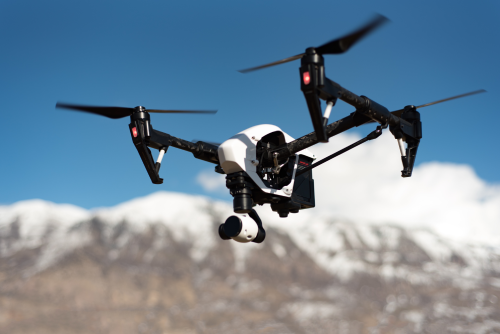
If you are wondering how to learn drone flying faster, the answer is not “fly more and hope for the best.” The fastest learners use a simple system: short practice sessions, the right training environment, a simulator or beginner-friendly drone, and a few repeatable drills that build control without crashes.
For beginners in India, speed matters, but safety and compliance matter more. You will progress much faster when you practice legally, avoid risky locations, and learn the basics of control before trying cinematic shots or long-range flights.
Quick Take
- Learn the four core controls first: throttle, yaw, pitch, and roll.
- Use a simulator or a small beginner-friendly drone before relying on an expensive camera drone.
- Practice in short sessions of 20 to 30 minutes, not random long flights.
- Start in a wide, open area with low wind and minimal distractions.
- Repeat a few basic drills: hover, straight line, square pattern, nose-in orientation, and figure-8.
- Keep the drone close and within visual line of sight, meaning you can clearly see it with your own eyes.
- Use beginner mode, low speed, and altitude limits when available.
- Follow a pre-flight checklist every time.
- In India, always verify the latest DGCA, Digital Sky, airspace, and local restrictions before flying.
- Do not rush into sport mode, crowded areas, or complex shots.
The fastest way to learn drone flying
Most beginners think fast learning comes from buying a better drone. In reality, it comes from reducing variables.
You learn faster when:
- the weather is calm
- the area is open
- the drone is set to a beginner-friendly mode
- the battery is fully charged
- you know exactly which drill you are practicing
- you stop the session before fatigue leads to mistakes
A beginner who does five focused 25-minute sessions usually improves more than someone who flies once for two hours with no structure.
Think of drone flying like learning to drive. You do not start with highway driving at night in the rain. You first learn steering, braking, lane position, and awareness. Drone flying is the same.
Pick the right training path for your goal
Different learners should start differently. If your goal is clear, your progress gets faster.
| Your goal | Best starting path | Why it helps you learn faster |
|---|---|---|
| Casual hobby flying | Simulator plus a beginner-friendly drone | Low-risk practice and faster confidence |
| Social media and travel content | GPS-stabilized camera drone in beginner mode | Easier hovering, smoother learning curve |
| FPV interest | Simulator first, then supervised FPV training | FPV has a steeper learning curve |
| College or technical learning | Simulator, basic drone theory, then real flights | Builds understanding, not just stick habits |
| Small business or professional work | Structured training with checklists and compliance awareness | Safer habits from day one |
If you are brand new, avoid learning on a crowded rooftop, near trees, or in a place where one mistake can destroy the drone. A simple open field teaches faster than a “nice-looking” but risky location.
Start with the right drone setup
You do not need the most expensive drone to learn quickly. You need the most forgiving one.
A good beginner setup usually has:
- stable GPS-assisted hover if available
- beginner or cine mode
- low-speed handling
- a reliable return-to-home or fail-safe feature
- clear battery and signal warnings
- propeller guards if suitable for your training setup
- spare batteries
- extra propellers
If you already own a camera drone, that is fine. Just make sure you start in its slowest, most stable mode. Do not treat obstacle avoidance or automation as a replacement for piloting skill. These features help, but they do not remove the need for control, judgment, and situational awareness.
If you have access to a simulator, use it. A simulator helps you build muscle memory without paying for mistakes.
Learn the four controls before you try “content”
Many beginners want photos and videos on day one. That slows learning.
First understand what each stick input does.
Throttle
Throttle controls up and down movement.
Beginner mistake: climbing too quickly because of panic.
Practice goal: smooth takeoff, hold altitude, gentle landing.
Yaw
Yaw rotates the drone left or right without moving it sideways.
Beginner mistake: turning too much and losing orientation.
Practice goal: slow, deliberate rotation while keeping position.
Pitch
Pitch moves the drone forward or backward.
Beginner mistake: pushing too much and overshooting.
Practice goal: short, controlled forward and backward movements.
Roll
Roll moves the drone left or right.
Beginner mistake: confusing roll with yaw.
Practice goal: side-to-side movement without altitude changes.
Once these are clear, your learning speed increases sharply because you stop reacting randomly.
Safety and legal checks in India before every practice session
This is not the exciting part, but it is the part that keeps you flying.
Drone rules in India can depend on the drone category, weight, purpose, location, altitude, and the latest official guidance. Before you fly, verify the current DGCA and Digital Sky requirements that apply to your drone and use case. Also check for state, local, campus, housing society, event, or property restrictions where relevant.
At a minimum, be conservative about these points:
- Do not fly near airports, airfields, defence areas, or other sensitive locations.
- Check whether the area falls under any no-fly or restricted airspace.
- Keep away from crowds, roads, and public gatherings.
- Respect privacy. Do not record people or private property in a way that could create complaints or legal trouble.
- Fly only where you can maintain visual line of sight.
- If your drone category or purpose requires registration, permissions, pilot credentials, or NPNT-related compliance, verify the latest official requirement before flying.
- If you are flying for work, clients, mapping, inspection, surveying, or agricultural operations, be even more careful with permissions, documentation, and insurance.
A good rule for beginners in India: if the location feels legally unclear, crowded, or sensitive, do not use it as your training ground.
Your first 7 practice sessions
The fastest way to learn drone flying faster is to break it into short sessions with one clear target each.
Session 1: Simulator or powered-off stick practice
Time: 20 to 30 minutes
Goal: know which input does what.
Do this:
- Hold the controller and say each control out loud.
- Practice tiny stick movements.
- If using a simulator, hover in place and make small corrections only.
- Focus on smoothness, not speed.
Do not move on until you can explain throttle, yaw, pitch, and roll without thinking.
Session 2: Basic takeoff, hover, and landing
Time: 20 minutes
Goal: lift off calmly and land under control.
Do this:
- Pick a calm day and an open area.
- Take off to a low safe height.
- Hold a stable hover for 15 to 20 seconds.
- Make tiny corrections only.
- Land slowly and repeat.
Practice this 5 to 8 times.
What you are learning: – not overcorrecting – reading drift – keeping calm near the ground
Session 3: Straight lines and box pattern
Time: 25 minutes
Goal: move deliberately, not randomly.
Do this:
- Fly forward a short distance and stop.
- Fly backward to your start point.
- Fly left and stop.
- Fly right and return.
- Then make a square in the air: forward, right, back, left.
Keep it slow. The goal is precision.
Session 4: Yaw control and orientation
Time: 25 minutes
Goal: stay in control even when the drone faces a different direction.
Orientation means understanding the drone’s left and right relative to your position. This is where many beginners struggle.
Do this:
- Hover in front of you.
- Yaw slowly 90 degrees, then back.
- Yaw 180 degrees so the drone faces you.
- Practice small left and right movements while it faces you.
This “nose-in” practice is harder, but it accelerates learning more than almost anything else.
Session 5: Altitude discipline and figure-8
Time: 25 to 30 minutes
Goal: combine movement without losing height control.
Do this:
- Fly in a large horizontal figure-8.
- Keep your altitude nearly constant.
- Use slow turns and smooth stick input.
- If it gets messy, stop, hover, reset, and continue.
This builds coordination between pitch, roll, yaw, and throttle.
Session 6: Emergency habits and recovery
Time: 20 minutes
Goal: know what to do before you need it.
Practice these safely in a low-risk setting:
- Stop the drone and hover.
- Bring it back to yourself in a straight line.
- Descend and land quickly but smoothly.
- Recognize low battery, signal, or wind warnings.
- Practice canceling a bad move with a pause and stable hover.
The most useful emergency skill is not a dramatic manoeuvre. It is the habit of stopping, hovering, thinking, and landing safely.
Session 7: A simple real-world mission
Time: 30 minutes
Goal: turn isolated skills into one clean flight.
Mission example:
- Take off.
- Hover for 10 seconds.
- Fly forward.
- Do a slow 90-degree yaw.
- Move sideways.
- Return to your starting area.
- Land within a marked spot.
If you can do this smoothly three times, you are no longer just “trying” to fly. You are controlling the aircraft.
The drills that improve skill fastest
If you only have limited battery time, focus on these drills.
Hover box
Imagine a box in the air. Keep the drone inside it for 20 seconds.
Why it works: – builds smooth correction habits – teaches patience – improves confidence
Short-line drill
Fly 5 to 10 metres forward, stop, return, stop.
Why it works: – improves braking and timing – prevents the common habit of constant drift
Square pattern
Fly a square at one altitude.
Why it works: – teaches directional control – exposes weak yaw and roll coordination
Nose-in hover
Turn the drone to face you and hold position.
Why it works: – solves orientation confusion – speeds up real control dramatically
Figure-8
Fly two connected circles smoothly.
Why it works: – combines all basic skills – prepares you for more natural camera movement later
Use a repeatable pre-flight routine
Beginners who skip checklists usually learn slower because small mistakes interrupt practice.
Before every session, check:
- batteries charged
- propellers undamaged and properly fitted
- controller charged
- firmware and app status checked before arriving at the field, not during practice
- memory card inserted if needed
- home point or return setting confirmed if your drone supports it
- GPS lock or positioning status confirmed where applicable
- wind conditions acceptable
- people, wires, poles, trees, and animals clear of the area
- local restrictions and permissions checked
After every session, note:
- what went well
- what felt difficult
- battery behavior
- any warning messages
- whether the drone drifted, felt unstable, or had calibration issues
A simple training log helps you improve faster because it turns each flight into feedback.
How to practice if you only have weekends
Not everyone can fly daily. You can still improve quickly.
Use this routine:
- Weekday: 15 minutes simulator or controller review
- Weekend flight 1: hover, lines, square pattern
- Weekend flight 2: orientation, figure-8, landing accuracy
- After each session: write one weakness and one target for next time
Even two real sessions per week can produce strong progress if they are planned.
How creators can learn faster without ruining shots
Many people buy a drone mainly for content. That often leads to early mistakes because they try cinematic movement before basic control.
If you are a creator:
- first master stable hovering and straight-line movement
- then learn slow yaw turns
- then practice reveal shots at low altitude in a safe open area
- keep camera moves simple at first
- do not combine speed, altitude, rotation, and framing all at once
A good beginner camera sequence is:
- take off
- hover
- fly forward slowly
- add a gentle yaw
- stop
- return and land
That is enough to create usable footage while still building core skill.
How professionals and small businesses should train
If your goal is survey, inspection, agriculture, real estate, or commercial work, fast learning does not mean risky learning.
Prioritise:
- checklists
- location planning
- airspace and permission verification
- battery discipline
- emergency return habits
- smooth, repeatable manual control
- clear client communication about what can and cannot be done legally
A business operator who can produce safe, consistent, well-planned flights is more valuable than someone who can only do flashy moves.
Common mistakes that slow down learning
These are the habits that make beginners feel stuck.
1. Flying in wind too early
What feels like a small breeze on the ground can feel much stronger to the drone. Wind makes control harder and can create panic.
Fix: learn in calm conditions.
2. Practicing in tight spaces
Trees, buildings, cables, and walls make you tense and reactive.
Fix: choose a larger open area than you think you need.
3. Looking only at the screen
The live camera feed is useful, but beginners need to watch the actual drone too.
Fix: keep visual line of sight and scan between drone, surroundings, and controller status.
4. Making large stick movements
Big inputs create big corrections, which create more mistakes.
Fix: use small, brief stick movements and pause.
5. Skipping orientation practice
Many pilots can fly away from themselves but struggle when the drone turns.
Fix: practice nose-in hover early.
6. Depending too much on GPS or obstacle sensing
Automation helps, but it does not solve poor pilot judgment.
Fix: treat these as backups, not skill replacements.
7. Draining batteries too low
Low battery stress makes landings messy and risky.
Fix: end training sessions early, while you still have margin.
8. Switching to fast mode too soon
Sport or high-speed modes can make beginner mistakes more expensive.
Fix: stay in beginner or normal mode until your landings, hover, and orientation are reliable.
9. Ignoring warnings or calibration issues
If the app or drone reports something unusual, do not “just try one flight.”
Fix: stop and understand the issue first.
10. Trying advanced shots before basic control
Orbit shots, tracking, and dramatic reveals look easy online. They are not beginner drills.
Fix: earn those shots by mastering simple patterns first.
How to know you are ready to level up
You are ready for harder flights when you can do these consistently:
- take off and land smoothly
- hover without constant panic corrections
- fly a square pattern cleanly
- hold altitude reasonably well
- recover calmly when the drone faces you
- bring the drone back in a straight line
- stop and hover immediately when unsure
Once these feel normal, you can start practicing:
- smoother camera movement
- more precise landing spots
- gentle reveal shots
- basic route planning
- controlled flying in slightly less perfect conditions
Do not confuse confidence with readiness. Readiness is repeatability.
FAQ
How long does it take to learn drone flying?
Most beginners can learn basic control in a few sessions if they practice properly. Smooth, confident flying usually takes longer. The exact time depends on your drone, training environment, and whether you use a simulator.
Is a simulator really worth it?
Yes, especially if you are nervous or your drone is expensive. A simulator builds muscle memory, helps with orientation, and lets you make mistakes without repair bills.
Should I learn indoors or outdoors?
Indoor practice can help only with very small beginner drones in a safe space. For most camera drones, outdoor practice in a large open area is the better choice. Avoid wind and obstacles.
Do I need a license to learn drone flying in India?
The answer depends on the drone category, use case, and current rules. Do not assume. Verify the latest DGCA and Digital Sky guidance before flying, especially if the drone is not a toy, or if you plan to use it professionally.
What is the best weather for beginners?
A calm, clear day with minimal wind is best. Avoid gusty weather, rain, poor visibility, and extreme heat that can stress batteries and concentration.
Can I learn on an expensive camera drone?
You can, but it is often a slower and more stressful way to start. Use beginner settings, low speed, open locations, and preferably simulator practice first.
How many batteries should I have for training?
More than one helps because you learn through repetition. But do not treat extra batteries as a reason for marathon sessions. Short, focused practice is still better.
What should I do if I panic mid-flight?
Stop moving aggressively. Hover if possible. Take a breath. Reorient yourself, bring the drone back slowly, and land. Panic becomes dangerous when it turns into random stick inputs.
Is return-to-home enough to save me if something goes wrong?
It is useful, but it is not a guarantee. Conditions, settings, obstacles, and signal situations matter. Learn manual recovery habits and do not rely blindly on automation.
What is the single most important skill for beginners?
Orientation. If you always know which way the drone is facing and can stop it cleanly, almost every other skill becomes easier.
Final takeaway
If you want to learn drone flying faster, do not chase advanced shots or long flights. Spend your next seven sessions on calm-weather practice, basic control, orientation, and repeatable drills in a safe legal location. That one decision will save you more time, money, and crashes than any upgrade you can buy.
