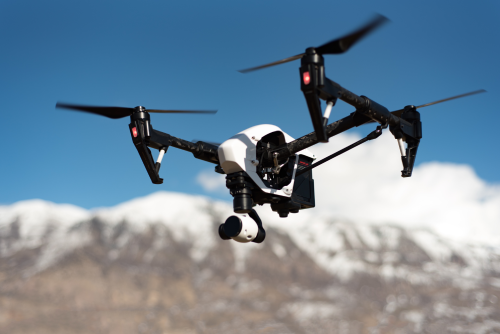
If you want to learn how to practice drone flying without crashing, the goal is not fearless flying. It is controlled, boring, repeatable flying in the right place, with the right settings, before you ever try anything “cinematic” or fast. Most beginner crashes happen because pilots skip the basics, fly too far too soon, or practice in the wrong conditions.
The good news is that you can reduce your crash risk sharply with a simple training routine. A few disciplined sessions will teach you more than one long, overconfident flight.
Quick Take
- Start with a simulator or a small, low-risk practice drone if you are completely new.
- Choose a wide, empty open area with no trees, poles, wires, traffic, animals, or people.
- Fly in calm weather only. If the drone is fighting the wind, you are not really practicing.
- Use beginner settings: low speed, lower maximum distance, and a sensible return-to-home altitude.
- Learn one control input at a time: throttle, yaw, pitch, and roll.
- Keep the drone close and low at first. Close enough to clearly see its orientation.
- Practice short drills, not random flying. Hovering, straight lines, squares, and figure eights build real skill.
- Land early. Many mistakes happen when the battery is low and the pilot starts rushing.
- In India, always verify the latest DGCA, Digital Sky, airspace, and local permissions before flying.
Why beginners crash in the first place
Before talking about drills, it helps to understand what usually causes a crash.
1) Losing orientation
Orientation means knowing which way the drone is facing. When the nose points toward you, the controls feel reversed. Beginners often panic and add the wrong input.
2) Flying too far away
A drone that looks tiny in the sky is harder to control. You can no longer judge its direction, height, or distance from obstacles.
3) Practicing in wind
Even a stable GPS drone can drift, tilt, or struggle in gusts. Small drones are affected even more. Wind turns a basic lesson into a rescue mission.
4) Takeoff and landing mistakes
A lot of crashes happen near the ground. Uneven surfaces, grass catching propellers, rushed hand movements, or last-second stick inputs can tip the drone over.
5) Panic after a warning
Low battery, weak signal, obstacle alerts, or a sudden drift can make a beginner overcorrect. Panic usually causes harder crashes than the original problem.
6) Flying around obstacles too early
Trees, cables, terrace edges, lamp posts, and building corners leave no room for recovery. New pilots need space, not challenge.
7) Wrong settings
Sport mode, high sensitivity, high altitude, long distance limits, or a badly chosen return-to-home height can create trouble quickly.
8) Skipping the pre-flight check
Loose propellers, partially charged batteries, poor GPS lock, or a bad home point can turn a simple practice flight into a search operation.
Pick the safest way to start
There is no rule that says your first practice session must be with your main camera drone outdoors. In fact, that is often the expensive way to learn.
Best beginner practice options
| Practice method | Best for | Advantages | Limits |
|---|---|---|---|
| Flight simulator | Total beginners | No crash damage, great for stick control and orientation | Does not fully teach real wind, depth, or takeoff/landing feel |
| Small trainer drone | First real flights | Low cost, lower consequence, useful for hover control | Less stable, often weaker in wind, limited camera/GPS |
| GPS camera drone in beginner mode | Buyers who already own one | Real-world training on the actual drone you will use | Higher repair cost if you rush or choose the wrong location |
What to carry for safer practice
- Fully charged batteries
- Spare propellers
- A clean landing pad or flat mat
- Microfiber cloth for the camera and sensors
- Your phone/controller fully charged
- Sun cap or sunglasses if needed, but never so dark that you struggle to see the drone
- A second person as a spotter if possible
The best first practice location
Look for:
- A large empty field
- Flat ground
- No overhead wires
- No crowd, traffic, or animals
- No nearby trees or light poles
- Good mobile signal if your drone setup depends on the app
- Clear line of sight
In India, people often try first flights from rooftops, apartment compounds, narrow parks, or near roads. Those are poor beginner choices. A quiet open ground, with permission if needed, is much safer.
Safety and legal checks in India before you practice
This article is about avoiding crashes, but safe practice also means lawful practice.
Verify the latest rules before flying
Drone rules can change. Before you practice in India, verify the current requirements from official sources such as DGCA and Digital Sky, especially for:
- Whether your drone category needs registration
- Whether your model has required compliance features such as NPNT, if applicable
- Whether you need any pilot qualification for your use case
- Whether the area is allowed for drone operations
- Local restrictions near airports, defence areas, government facilities, or sensitive zones
- Any state, police, municipal, campus, or landowner permission requirements
Do not assume that because a place is open, it is automatically legal.
Basic safety rules that reduce crashes and trouble
- Do not fly over people, roads, or moving vehicles.
- Do not practice near airports, helipads, power lines, rail tracks, or crowded public spaces.
- Keep the drone within visual line of sight. That means you can directly see it without binoculars.
- Respect privacy. Do not point a camera into homes, terraces, or private property.
- Avoid night flights unless you are clearly permitted, equipped, and trained for them.
- If security staff, police, or the landowner ask you to stop, comply calmly and verify before flying again.
Set your drone up before the first takeoff
In the app or controller, check these items:
- Beginner mode or cine mode if available
- Low speed settings
- Maximum altitude set conservatively
- Maximum distance kept short for practice
- Return-to-home altitude high enough to clear nearby obstacles, but not absurdly high
- Home point recorded correctly
- Battery levels healthy on both aircraft and controller
- GPS lock adequate if your drone depends on it for stable hovering
- Propellers secure and undamaged
A useful beginner habit: wait a little longer than you think you need before takeoff. Rushing the setup is one of the easiest ways to create a preventable problem.
Learn the controls before you try to “fly around”
Every drone pilot should understand the four basic control movements.
The four basic controls
- Throttle: controls up and down movement
- Yaw: rotates the drone left or right without moving sideways
- Pitch: moves the drone forward or backward
- Roll: moves the drone left or right
Do not mix all four aggressively in your first sessions. Good flying starts with clean, small inputs.
A low-crash practice plan that actually works
Treat your first sessions like driving lessons, not entertainment. Each flight should have one goal.
Session 1: Controller familiarisation without pressure
If you have a simulator, start there. If not, use the powered-on drone only after reading the manual and understanding the stick layout.
Practice these ideas mentally first:
- Identify which stick controls altitude and rotation.
- Identify which stick controls forward, backward, and sideways movement.
- Say the movement out loud before you touch the stick.
- Use tiny inputs, not full-stick movements.
Your goal is to make your hands calm.
Session 2: Safe takeoff and hover
This is the most important early lesson.
- Place the drone on a flat, clear surface or landing pad.
- Wait for GPS/home point confirmation if your drone needs it.
- Take off and climb slowly to a low, safe height, usually just a few metres.
- Center the sticks and let the drone hover.
- Watch whether it holds position well.
- Make only tiny corrections.
- Land smoothly after 30 to 60 seconds.
- Repeat several times.
What you are learning:
- Smooth takeoff
- Trusting the drone’s stability
- Not overcontrolling
- Smooth landing
Many beginners keep “helping” the drone when it is already stable. That creates wobble. If the drone is hovering well, your job is mostly to leave it alone.
Session 3: Nose-out hover only
“Nose-out” means the front of the drone is pointing away from you. This is the easiest orientation for beginners because left and right feel natural.
Drill:
- Take off and hover at low height.
- Keep the nose pointing away from you.
- Hold position for 20 to 30 seconds.
- Move slightly forward, stop, and return.
- Move slightly left, stop, and return.
- Move slightly right, stop, and return.
- Land.
Do not rotate the drone yet unless needed.
Session 4: Yaw control without drifting
Now learn yaw, or rotating the drone.
Drill:
- Hover steadily in front of you.
- Yaw 10 to 20 degrees left.
- Stop.
- Yaw back to center.
- Repeat to the right.
- Then try 90-degree turns and return to the original heading.
Your job is to rotate without climbing, dropping, or drifting far away.
Session 5: Slow box pattern
This teaches clean pitch and roll control.
Imagine a square in the air.
- Take off and hover.
- Move forward a short distance.
- Stop and hover.
- Move right the same short distance.
- Stop and hover.
- Move backward.
- Stop and hover.
- Move left back to the starting point.
- Land.
Do the same pattern in the opposite direction.
This drill teaches braking. Beginners often focus on movement but not stopping. Good pilots know how to stop exactly where they want.
Session 6: Nose-in orientation practice
This is where many people struggle. “Nose-in” means the front of the drone faces you. Left and right now feel reversed.
Start very slowly.
- Hover at a comfortable distance, still low and close.
- Rotate the drone to face you.
- Do not move it much at first. Just hold the hover.
- Try a tiny movement to your left, then stop.
- Try a tiny movement to your right, then stop.
- If confused, yaw back to nose-out and reset.
This session is not about speed. It is about staying calm when the controls feel strange.
Session 7: Straight lines and controlled turns
Now combine movement and orientation.
Drill:
- Fly forward in a straight line.
- Stop cleanly.
- Yaw 90 degrees.
- Fly forward again.
- Stop.
- Repeat to form a larger square.
Then practice:
- Forward and back
- Left and right
- 180-degree turn and return
Do not let the drone wander. Every movement should start, stop, and reset.
Session 8: Figure-eight at low speed
This adds coordination.
- Start in a wide open area with good space.
- Fly a very large, slow figure-eight pattern.
- Keep the height almost constant.
- Keep speed low.
- Focus on smoothness, not perfection.
If the drone starts getting farther than you can comfortably read, stop and bring it back.
Session 9: Return-to-home and failsafe understanding
Do not wait for a real emergency to learn what your drone does.
In a safe, open area:
- Ensure the home point is correctly recorded.
- Confirm your return-to-home altitude makes sense for the area.
- Fly a short distance out.
- Trigger return-to-home once.
- Observe how the drone behaves.
- Be ready to cancel if needed.
You are not trying to “test limits.” You are learning what the feature actually does on your model.
Session 10: Landing drills
A smooth landing saves propellers, gimbals, and pride.
Practice:
- Straight-down landing from a stable hover
- Gentle descent without side drift
- Landing on a visible pad or marked spot
- Go-around: if the approach looks bad, climb a little, reset, and try again
Never force a bad landing. Aborting and resetting is smart piloting.
How to choose the right weather for practice
Weather matters more than many beginners realise.
Good beginner conditions
- Calm air
- Good visibility
- Dry conditions
- Moderate light, such as early morning or late afternoon
- A clear horizon and no glare that makes the drone hard to see
Conditions to avoid
- Gusty wind
- Rain or drizzle
- Dust storms
- Very strong midday heat shimmer that makes visual tracking harder
- Fog or haze
- Flying right before sunset if you are already losing sight of orientation
A practical rule: if you can see flags moving strongly, leaves shaking continuously, or the drone leaning a lot just to hover, it is not a good beginner session.
Settings that make practice safer
Modern drones have many smart features, but beginners often ignore the ones that reduce risk.
Use these settings wisely
- Beginner mode: limits speed, distance, and sometimes altitude
- Cine mode: smoother and slower response for better control
- Obstacle sensing: helpful, but never a replacement for good judgment
- Return-to-home altitude: should clear nearby obstacles if the drone comes back automatically
- Low battery warning: take it seriously and return early
- Signal warnings: do not continue flying farther when the signal is already weak
Settings to avoid early on
- Sport mode
- High sensitivity or aggressive stick response
- Long-range practice
- High-altitude flights
- Fast descending spirals
- Automatic camera moves near obstacles
Your first job is to become predictable, not impressive.
Common mistakes that lead to crashes
Taking off from grass or uneven ground
Grass can snag propellers or tilt the drone during startup. Use a flat surface or a landing pad.
Calibrating everything all the time
Many beginners repeatedly calibrate the compass or sensors because it feels “safe.” But unnecessary calibration, especially in a poor location, can create problems. Follow the manufacturer’s guidance and only calibrate when the app or manual indicates it is needed.
Flying with a half-charged mindset
Not half-charged batteries. Half-charged focus.
A distracted pilot is dangerous. Do not practice when you are in a hurry, showing off to friends, taking a phone call, or trying to learn camera settings and flight skills at the same time.
Looking only at the screen
The live camera view is useful, but for beginner line-of-sight practice, your main reference should be the actual drone in the air.
Descending too fast
Some drones become unstable in fast descents, especially if the pilot is also turning or moving aggressively. Descend gradually.
Continuing after the first bad sign
If the app shows warnings, the drone is drifting oddly, the wind picks up, or your confidence drops, land and reassess. Good pilots stop early.
A simple pre-flight checklist you can actually remember
Before every practice session, ask:
- Is this location safe and legally okay to fly in?
- Is the weather calm enough for my skill level?
- Are the batteries, propellers, and controller ready?
- Is the home point correctly recorded?
- Are my speed, altitude, and distance settings conservative?
- Is there enough open space in every direction?
- Do I know exactly what drill I am practicing on this battery?
If you cannot answer “yes” to all seven, do not take off yet.
When you are ready to level up
Once you can do all of the following calmly, you are ready for more advanced practice:
- Stable low hover
- Clean takeoff and landing
- Nose-out and nose-in control
- Smooth square patterns
- Slow figure-eight pattern
- Safe return-to-home understanding
- Consistent landings with battery to spare
Only then should you start working on:
- Cinematic moves
- Orbit shots
- Reveal shots
- Higher-altitude composition
- Tracking movement
- More complex manual camera work
Skill builds in layers. Skip a layer, and the next one becomes risky.
FAQ
Should I practice indoors or outdoors?
For most camera drones, outdoors in a large open area is safer than indoors. Indoors, walls, fans, furniture, and GPS limitations can create problems quickly. A very small trainer drone may be fine indoors if the space is clear, but your main drone usually belongs outside in open space.
Is a simulator really worth it?
Yes, especially if you are nervous about crashing or if your first drone is expensive. A simulator helps with orientation, stick control, and panic reduction. It does not replace real-world flying, but it makes the first outdoor sessions much less stressful.
How long should a beginner practice in one session?
Shorter is better. Aim for focused sessions of around 15 to 25 minutes with clear drills. Fatigue and overconfidence tend to rise in long sessions, especially on the last battery.
How much wind is too much for a beginner?
There is no single number that suits every drone. If the drone struggles to hold position, if the app warns about wind, or if you can visibly see gusts affecting the aircraft, postpone practice. Calm conditions are best for learning.
Should I use Sport mode to get better faster?
No. Sport mode can be useful later, but it reduces your margin for error. Beginners learn faster in low-speed modes because they have time to think, stop, and recover.
What if my drone drifts during hover?
First, stay calm. Small movement can happen. Check whether you have adequate GPS, whether the wind is picking up, and whether the takeoff area was suitable. If the behavior feels unusual or increasing, land safely and inspect the drone rather than trying to “fight through it.”
How far away should I keep the drone while practicing?
Keep it close enough that you can easily tell which way the nose is pointing and how high it is. If you have to guess, it is already too far for your current skill level.
Do I need permission to practice in an open field in India?
Maybe. It depends on the airspace, the drone category, the landowner, and current rules. An empty field is not automatically legal airspace. Verify the latest DGCA and Digital Sky guidance, and make sure you also have permission from the property owner or local authority where relevant.
Is obstacle avoidance enough to prevent crashes?
No. Obstacle sensing is a backup, not a shield. It may not detect thin wires, branches, low-contrast objects, or everything during fast movement. Fly as if the sensors are not there, and let them serve as an extra layer of protection.
What is the safest first upgrade after basic practice?
Better landing discipline and better planning. Not speed. Once your basics are solid, start practicing smooth camera-oriented moves in the same open area before trying more complex locations.
The next step
If you want to practice drone flying without crashing, do not chase “confidence” first. Chase repeatable control: safe setup, calm weather, short drills, close-range flying, and early landings. Pick one open legal location, use one simple drill per battery, and do that for a week before trying anything fancy.
