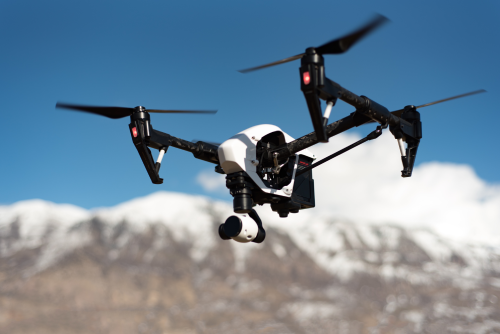
DJI vs other drone brands: which is better in India? For most beginners, hobbyists, and content creators, DJI is still the safest all-round choice because its drones are usually easier to fly, produce better footage, and come with a more polished software ecosystem. But in India, the best brand is not always the same as the best drone on paper: warranty support, spare parts, compliance, and your actual use case matter just as much.
Quick Take
- For most personal buyers in India, DJI is usually the better pick.
- For enterprise work, training fleets, custom payloads, or procurement-heavy use cases, other brands can be a better fit.
- For FPV racing or cinematic FPV, specialist FPV brands often make more sense than DJI.
- Cheap non-DJI camera drones can look attractive, but they often fall short on stability, app quality, batteries, and after-sales support.
- In India, always verify legal compliance, seller paperwork, and service support before buying, not after a crash.
What “other drone brands” means in India
One reason this question gets confusing is that “other brands” can mean very different things.
In the Indian market, you are usually comparing DJI against one of these groups:
1) Other foreign consumer camera drone brands
These are brands that compete with DJI in photography, videography, travel flying, or recreational use. Depending on availability, examples may include Autel and a few lower-cost import brands.
These alternatives can be good, but availability in India is inconsistent. Support and spare parts can also vary a lot by seller.
2) Indian enterprise drone brands
These are often aimed at mapping, inspection, training, agriculture, security, and government or industrial use. In this segment, Indian brands may offer better local deployment support, documentation, training, and commercial service contracts.
They are not always direct substitutes for a compact DJI camera drone for travel or casual content creation.
3) FPV and DIY brands
If you want to build, repair, race, or fly cinematic FPV drones, brands in the FPV ecosystem can make more sense than DJI.
These drones are usually more modular, more repairable, and more skill-intensive. They are not as beginner-friendly as a typical consumer camera drone.
So the real question is not just “DJI vs others.” It is:
- DJI vs other camera drone brands
- DJI vs Indian commercial platforms
- DJI vs FPV and DIY ecosystems
That distinction matters a lot in India.
Why DJI usually wins for most Indian buyers
If you are buying your first serious drone, DJI tends to stay ahead for a few practical reasons.
Flight stability and ease of use
DJI has long been strong at making drones feel calm and predictable in the air. That matters for beginners.
A stable drone is easier to:
- frame shots
- recover from small mistakes
- fly in light wind
- trust during takeoff and landing
For a new flyer, this often matters more than a flashy feature list.
Better software and app experience
A drone is not just hardware. The mobile app, firmware updates, flight logs, Return to Home, camera controls, and warnings all shape the ownership experience.
DJI’s software is usually more polished than what you get from many cheaper alternatives. In real life, that means:
- fewer confusing menus
- better preview and camera settings
- smoother firmware workflow
- more reliable beginner guidance
- stronger ecosystem integration
For Indian buyers who may not have easy access to in-person support, good software matters a lot.
Better image quality for the class
DJI often leads its segment in the combination of:
- image processing
- dynamic range
- color
- stabilization
- low-light usability
- reliable video bitrate and codec options
You may find another brand that matches DJI in one area, but DJI often wins on the full package.
If your goal is travel videos, YouTube, reels, real-estate visuals, or social media content, that consistency is valuable.
Stronger accessory ecosystem
With DJI, it is usually easier to find:
- extra batteries
- propellers
- ND filters
- carrying cases
- chargers
- tutorials
- third-party accessories
In India, this does not mean every item is always easily available. But compared with lesser-known brands, DJI usually has a much bigger ecosystem.
Safer for first-time flyers
DJI’s warning systems, beginner modes, and automation features can reduce rookie mistakes.
These do not replace skill, but they help.
A beginner who wants to buy one drone and start learning safely is often better off with a DJI drone than with a cheaper alternative that looks similar in marketing material but behaves very differently in the air.
Where other brands can be better than DJI
This is where the answer becomes more interesting. DJI is not automatically the best choice for everyone.
1) If you need local enterprise support
For surveying, inspection, public safety, agriculture, industrial work, or training, local support can matter more than cinematic footage.
In these use cases, other brands, especially Indian enterprise vendors, may offer:
- on-site training
- deployment assistance
- local service contracts
- procurement-friendly paperwork
- payload options
- custom integrations
- fleet management support
If your business needs uptime, documentation, and support more than travel-friendly design, DJI may not be the most practical option.
2) If you need custom payloads or integration
DJI consumer drones are great at being polished products. But that polish can also mean a more closed ecosystem.
If you need:
- custom sensors
- special mounting
- integration into a business workflow
- academic experimentation
- hardware-level modification
then another platform may suit you better.
This is especially true for colleges, research teams, robotics students, and specialized industrial users.
3) If you want a repairable FPV setup
For FPV, the buying logic changes completely.
A typical FPV pilot values:
- modular parts
- field repairability
- frame options
- motor choice
- flight controller tuning
- radio ecosystem flexibility
That is a different world from DJI’s mainstream camera drone approach.
DJI can still be part of FPV through video systems or certain product lines, but if your goal is to build, crash, repair, and tune your aircraft, specialist FPV brands are often a better fit.
4) If you prefer fewer software restrictions
Some non-DJI platforms may give pilots more manual control and fewer built-in software restrictions.
For experienced operators, that can be an advantage.
But in India, this should not be misunderstood. More freedom in software does not mean more freedom under the law. The pilot is still responsible for flying legally, safely, and in permitted airspace.
5) If procurement rules matter more than brand appeal
For institutions, corporations, government-linked projects, or large training programs, buying decisions are often about:
- documentation
- vendor support
- service level agreements
- training packages
- fleet readiness
- audit trail
- compatibility with internal policy
In those situations, the “best drone” is often the one that is easiest to deploy and support at scale, not the one with the best consumer camera.
DJI vs other drone brands in India: side-by-side comparison
| Factor | DJI | Other foreign consumer brands | Indian enterprise brands | FPV/DIY brands |
|---|---|---|---|---|
| Ease of use | Usually best-in-class | Varies a lot | Often not beginner-focused | Steep learning curve |
| Camera quality | Usually excellent for the size | Can be good, but inconsistent across brands | Often secondary to mission use | Depends on setup |
| App/software polish | Strong | Mixed | More mission-focused than creator-focused | Depends on components and apps |
| Beginner friendliness | Very high | Medium to low | Low for casual buyers | Low |
| Spare parts ecosystem | Usually strong | Can be patchy in India | Better through vendor contracts than retail shelves | Strong in specialist communities |
| Repairability | Moderate; some parts are integrated | Varies | Depends on vendor model | Usually high |
| Travel friendliness | Excellent in compact models | Varies | Usually poor | Poor to moderate |
| Mapping/industrial workflows | Limited in consumer lines; stronger in pro ecosystems | Limited | Often stronger for Indian commercial deployments | Not ideal |
| Customization | Limited to moderate | Moderate | Often better | Best |
| Best for | Most personal buyers and creators | Niche buyers, brand-specific preferences | Businesses, institutions, industrial users | FPV pilots, builders, racers |
Which is better in India for different buyers?
This is the section that matters most if you are actually trying to decide.
For beginners and first-time buyers: DJI
If this is your first serious drone and you want the easiest learning curve, DJI is usually the better choice.
Why:
- easier setup
- better flight confidence
- better stabilization
- stronger tutorials and community support
- better resale value in many cases
If you buy a no-name or weakly supported alternative to save money, you may end up spending more time troubleshooting than flying.
For travel creators and vloggers: DJI
If you want a compact camera drone for holidays, mountain trips, beaches, real-estate clips, or social content, DJI is still the strongest default.
The reason is simple: you want a drone that is small, quick to launch, reliable, and consistently good on video.
That is exactly where DJI is strongest.
For students learning drone technology: it depends
If the goal is just flying and basic aerial photography, DJI is a good starting point.
But if the goal is learning:
- drone electronics
- tuning
- parts replacement
- flight control systems
- robotics integration
then a modular or DIY platform may be more educational.
Students should first decide whether they want to learn flying or learn drone engineering. The best brand may be different for each.
For wedding teams, social media agencies, and real-estate creators: usually DJI
This kind of buyer needs:
- fast setup
- reliable footage
- smooth orbit and tracking-style shots
- strong portability
- dependable batteries
- predictable results under time pressure
That is classic DJI territory.
However, before buying, check local service access. If your city has weak support and you rely on the drone for paid work, downtime can become expensive.
For surveying, inspection, agriculture, and industrial operations: often non-DJI
In these use cases, camera quality alone is not enough.
You may need:
- mission planning
- GIS or mapping workflow compatibility
- local training
- service agreements
- payload support
- compliance documentation
- organization-level support
For many Indian businesses, an Indian enterprise vendor or mission-focused platform may be more practical than a consumer-focused DJI drone.
For FPV pilots and builders: other brands
If your goal is racing, freestyle, cinematic FPV, or hands-on building, go into the FPV ecosystem rather than expecting a mainstream camera drone to do that job.
You will get:
- more tuning control
- better crash repair economics
- more component choice
- stronger upgrade paths
But you will also need more skill and patience.
The India-specific factors that matter more than brand marketing
In India, the best drone purchase is often decided by boring things that buyers ignore until it is too late.
1) Seller legitimacy
Before paying, ask:
- Is this an authorized sales channel or a parallel import route?
- Will the invoice support warranty claims?
- Is after-sales support actually available in India?
- Can the seller provide batteries and props later?
A good drone sold through a weak channel can become a bad purchase very quickly.
2) Service and repair turnaround
Ask what happens if:
- you crack an arm
- damage the gimbal
- need a battery replacement
- need firmware assistance
- have a controller issue
For professional users, repair turnaround matters more than brochure features.
3) Spare battery availability
A drone with only one battery is often not useful enough.
This is especially important in India where battery availability can fluctuate. Before buying the drone, check whether extra batteries are realistically available from the same seller or network.
4) Compliance and paperwork
Do not assume a drone sold online is automatically compliant for your intended use in India.
Before buying, verify the latest official requirements related to:
- drone category and intended use
- registration or platform requirements where applicable
- airspace permissions
- any current DGCA and Digital Sky process relevant to your operation
- training requirements, if any, for your type of operation
- whether NPNT or other compliance features are relevant for your use case under current rules
Rules and implementation can change. Always verify the latest official position before purchase or flight.
5) Insurance and commercial risk
If you are using a drone for paid work, do not think only about the drone’s purchase cost.
Think about:
- liability exposure
- accidental damage
- job delays due to breakdowns
- replacement access
- client expectations
For professionals, a slightly more expensive but better-supported platform can be the cheaper decision over a year.
How to choose between DJI and other brands in 6 steps
1) Decide your main use case
Pick one primary purpose:
- casual fun
- travel content
- social media creation
- FPV
- commercial imaging
- mapping or inspection
- training and education
If you try to buy one drone for every purpose, you usually make a worse purchase.
2) Set your skill level honestly
Ask yourself:
- Do I need a forgiving beginner platform?
- Am I ready to tune and troubleshoot?
- Do I need automation or manual control?
Beginners often overestimate how much “open control” they actually want.
3) Check service in your city or state
Do this before comparing camera specs.
A slightly weaker drone with real support can be smarter than a better drone with no practical service path.
4) Verify compliance before payment
Do not rely only on a marketplace listing or reseller claim.
Check the latest official requirements for your category and intended use in India.
5) Budget for the full kit
Your budget is not just the drone.
Also consider:
- extra batteries
- propellers
- memory cards
- filters
- carrying case
- landing pad
- insurance if needed
- training if needed
6) Think about year-two ownership, not week-one excitement
Ask:
- Will batteries still be available later?
- Can I get repairs done locally?
- Is the app reliable?
- Will I outgrow this drone in six months?
That question alone can save a lot of money.
Safety and legal checks before you fly in India
No matter which brand you buy, do not treat the drone as just another gadget.
Before flying, make sure you:
- verify the latest DGCA and Digital Sky guidance relevant to your drone and use case
- understand where you are allowed to fly
- avoid airports, sensitive areas, strategic locations, crowded places, and restricted zones
- keep visual line of sight unless your operation is specifically authorized otherwise
- respect privacy and get permission when filming people or private property
- update firmware carefully and test in a safe area after major updates
- check weather, wind, battery health, compass/GNSS readiness, and Return to Home settings before takeoff
A good drone cannot save a careless pilot.
Common mistakes buyers make
Buying on brand name alone
DJI is strong, but that does not mean every buyer should buy DJI. An agriculture operator and a travel vlogger do not need the same kind of aircraft.
Buying the cheapest camera drone available
Many low-cost alternatives look good in listings but disappoint in:
- wind handling
- video stability
- battery performance
- app reliability
- spare parts
- service
Ignoring batteries and accessories
A drone with one battery often feels exciting for the first weekend and frustrating after that.
Not checking warranty validity in India
This is one of the biggest mistakes. Always confirm how support works locally.
Confusing FPV drones with camera drones
They serve very different purposes. A buyer who wants smooth holiday footage usually should not start with FPV.
Forgetting compliance until after delivery
In India, rule-checking should happen before purchase, not after.
FAQ
Is DJI legal to buy and fly in India?
Buying and flying depend on the drone, your use case, and the latest applicable rules. Do not assume legality based on marketplace availability. Verify current DGCA and Digital Sky requirements before purchase and before flight.
Is DJI better than Indian drone brands?
For most casual users and creators, DJI is usually better as a polished consumer product. For enterprise, industrial, training, or procurement-heavy use cases, Indian brands may be more practical because of local support and mission-specific solutions.
Are cheap non-DJI drones worth it for beginners?
Usually only if your expectations are very modest. For serious camera use, many low-cost alternatives fall short in stability, app quality, spare parts, and long-term ownership.
Which is better for professional content creation in India?
For solo creators, social media teams, and many real-estate or wedding shooters, DJI is often the better fit. For specialized industrial imaging or structured commercial operations, non-DJI platforms may be better.
Should I buy DJI if I live far from a major city?
Only after checking real service options, not just seller claims. If repairs or battery replacement will be difficult, local support may matter more than the brand.
Is DJI good for students?
Yes, if the goal is safe flying and aerial imaging. If the goal is to learn electronics, tuning, robotics, or UAV system design, a modular or DIY platform may teach more.
What is the best brand for FPV in India?
For FPV, specialist FPV ecosystems are usually more suitable than mainstream DJI camera drones. The right choice depends on whether you want racing, freestyle, cinematic flying, or indoor practice.
Do I need NPNT and registration?
That depends on the drone category, intended use, and the latest Indian rules. Since requirements can change, verify the current official guidance instead of relying on old blog posts or seller messages.
Final takeaway
If you are a beginner, hobbyist, traveller, or creator in India, DJI is usually the better overall choice because it combines ease of use, strong image quality, stable flight, and a mature ecosystem better than most rivals.
But if your real priority is enterprise support, local service contracts, custom payloads, institutional procurement, or FPV building, another brand may be the smarter buy.
So do this before you spend: pick your use case, verify current compliance, check warranty and batteries in India, and only then choose the brand. For most personal buyers, that process still ends with DJI.
