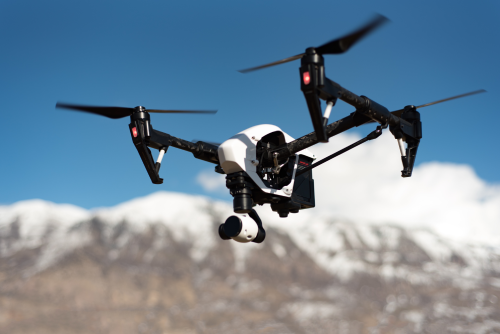
If you are searching for the best drones for inspection companies, the right answer depends less on brand hype and more on the jobs you actually bill for. A drone that is perfect for roof surveys or solar inspections may be the wrong tool for telecom towers, substations, wind turbines, or confined-space work.
For most inspection businesses in India, the best buying decision comes from matching the aircraft, camera payload, software workflow, and compliance requirements to your most common sites. Buy for repeatable output, safe standoff distance, and service support, not just for headline specs.
Quick Take
- There is no single best drone for every inspection company.
- For visual inspections and entry-level enterprise work, the DJI Mavic 3 Enterprise is one of the strongest starting points.
- For solar, electrical, and hotspot detection work, the DJI Mavic 3 Thermal is often the most practical compact option.
- For tougher industrial sites and all-round utility-style work, the DJI Matrice 30T is a serious step up.
- For larger firms that want one platform for thermal, zoom, mapping, and even LiDAR, the DJI Matrice 350 RTK is the long-term workhorse.
- For tanks, boilers, underground spaces, and other GPS-denied confined environments, a collision-tolerant indoor drone such as the Flyability Elios 3 is in a different class altogether.
- In India, after-sales support, batteries, pilot training, client approvals, and compliance checks often matter more than raw camera numbers.
Best Drones for Inspection Companies at a Glance
| Drone | Best for | Main strengths | Main trade-offs |
|---|---|---|---|
| DJI Mavic 3 Enterprise | Visual inspections, rooftops, facades, construction, basic tower work | Portable, quick to deploy, strong image quality, enterprise workflow, optional RTK | No thermal, less suitable for rough weather and demanding industrial sites |
| DJI Mavic 3 Thermal | Solar, electrical, building diagnostics, compact thermal jobs | Thermal plus zoom in a small kit, easy field deployment, good for multi-site days | Thermal interpretation needs training, limited in high wind or harsher environments |
| DJI Matrice 30T | Telecom, utilities, substations, wind, mining, industrial assets | Integrated zoom, thermal, wide camera, rangefinder, more robust field platform | Higher cost, larger kit, more operational overhead |
| DJI Matrice 350 RTK | Large infrastructure, enterprise fleets, mixed survey plus inspection workflows | Modular payloads, scalable, RTK-ready, strong platform for advanced operations | Expensive, complex, overkill for many small teams |
| Flyability Elios 3 or similar indoor drone | Tanks, boilers, mines, ducts, confined-space inspections | Collision-tolerant design, indoor and GPS-denied capability, safer than sending people first | Very specialized, expensive, not an outdoor general-use drone |
| Indian enterprise OEM option | Tenders, security-sensitive work, domestic procurement preference | May fit client or procurement rules better, local customization potential | Must be evaluated carefully for payload quality, software maturity, and support response |
What inspection companies should buy for
A lot of companies buy a drone as if they are buying a flying camera. That is the wrong mindset for inspection work.
You are really buying a field system for collecting usable evidence safely and repeatedly.
Sensor mix matters more than marketing
For inspection work, these are usually more important than top speed or flashy video:
- A wide camera for context shots
- A zoom camera for detail from a safer distance
- A thermal camera for heat-related anomalies
- A mechanical shutter for accurate mapping and less image distortion
- RTK for better positional accuracy and repeatable missions
- A rangefinder for estimating distance to a target
- Obstacle sensing for safer close-proximity work
If you inspect live electrical assets, solar modules, telecom structures, wind turbines, facades, or industrial equipment, zoom and thermal can matter far more than cinematic video quality.
Buy for repeatability, not just image quality
Inspection clients often want trend monitoring over time, not just a one-time flight.
Repeatability means you can return later and capture the same asset from similar positions, angles, and distances. That matters for:
- Solar plant maintenance
- Roof deterioration tracking
- Bridge crack monitoring
- Tower corrosion tracking
- Construction QA and progress verification
This is where enterprise software, waypoint missions, RTK, and proper metadata become important.
Standoff distance is a real safety issue
Standoff distance means how far you can stay from an asset while still getting useful detail.
A compact drone without good zoom may force you too close to:
- Live conductors
- Tall towers
- Wind turbines
- Facades near traffic
- Sensitive plant machinery
For serious industrial inspections, the safest drone is often the one that lets you collect more detail from farther away.
The software ecosystem often decides profitability
A drone can fly beautifully and still be a poor business purchase if the workflow after the flight is messy.
Ask what your team actually needs to deliver:
- Geotagged photos
- Thermal reports
- Annotated defect images
- Orthomosaics
- 3D models
- Asset-wise folders
- PDF inspection summaries
- Cloud collaboration or offline delivery
If generating a client report takes longer than the flight, your margins disappear.
Support and downtime matter more than many buyers expect
Inspection companies do not just need a drone. They need a machine that can stay in service.
Before buying, ask:
- How fast can batteries be replaced if one fails?
- Is there authorised or trusted service support in India?
- What is the realistic repair turnaround?
- Are spare props, chargers, and batteries easy to get?
- Can your dealer provide training and workflow onboarding?
- If the aircraft is grounded, do you have a backup plan?
A drone that sits in repair for weeks is a business problem, not a technical issue.
The best drones for inspection companies
DJI Mavic 3 Enterprise
For many small and mid-sized inspection companies, the DJI Mavic 3 Enterprise is the best starting point if your work is mainly visual.
Why it stands out
It is compact, relatively easy to transport, and quick to deploy on site. That matters when your team is covering multiple properties or construction sites in a day.
Its strengths typically include:
- Strong visual inspection quality
- Enterprise flight features
- Good suitability for rooftops, facades, construction, and basic asset documentation
- Mechanical shutter advantages for measurement-oriented image capture
- Optional RTK support for improved accuracy
Best fit
This drone makes the most sense for:
- Roof inspection companies
- Real estate and facade survey teams
- Construction QA and progress monitoring firms
- Engineering consultants entering drone inspections
- Companies that want one aircraft for light mapping plus visual checks
Where it is less ideal
It is not the best choice if thermal inspection is core to your business. It is also less suitable than larger industrial platforms for harsher weather, long standoff work, or more demanding utility environments.
Practical example
If your company mainly inspects building exteriors, warehouses, construction sites, and telecom structures in normal weather, the Mavic 3 Enterprise is often enough to start generating revenue without jumping straight into heavy enterprise costs.
DJI Mavic 3 Thermal
If your business sells solar inspections, electrical hotspot checks, rooftop moisture screening, or general thermal surveys, the DJI Mavic 3 Thermal is one of the most practical inspection drones available.
Why it stands out
The big advantage here is that you get thermal capability in a portable form factor. That means less deployment friction and faster movement between sites.
Typical strengths include:
- Thermal plus visual workflow in one compact system
- Useful zoom capability for safer stand-off capture
- Good fit for solar and electrical inspections
- Easier transport and setup than larger industrial platforms
- Lower operational burden than heavy enterprise rigs
Best fit
It suits:
- Rooftop solar O&M teams
- Industrial maintenance contractors
- Electrical inspection service providers
- Building diagnostics firms
- Companies that want to add thermal inspections as a premium service
Where it is less ideal
Thermal imaging is easy to oversell and easy to misuse. A heat anomaly is not always a defect diagnosis by itself. Your team still needs training in thermal interpretation, inspection timing, emissivity settings, and reflective surface pitfalls.
It is also not the best answer for rough-weather utility work where a more robust platform is worth the extra money.
Practical example
A three-person company doing solar rooftop inspections across commercial properties in one city can get a lot of value from this class of drone. It is fast enough to deploy, portable enough for frequent travel, and specialized enough to create billable thermal deliverables.
DJI Matrice 30T
The DJI Matrice 30T is often the point where a drone stops feeling like a high-end camera platform and starts feeling like an industrial tool.
Why it stands out
This platform is built for tougher field conditions and more demanding sites. It combines wide, zoom, and thermal views in a package that is still field-portable, while giving inspection teams better confidence around large infrastructure and industrial assets.
Its usual strengths are:
- More robust industrial design
- Integrated multi-sensor inspection workflow
- Stronger fit for utility, tower, and infrastructure work
- Rangefinder support for better target referencing and safer working distance
- Faster deployment than very large modular systems
Best fit
This is a strong choice for:
- Telecom tower inspection companies
- Substation and utility contractors
- Wind turbine inspection teams
- Mining and industrial asset service firms
- Companies working at sites where conditions are less forgiving
Where it is less ideal
If your work is mostly basic visual roof surveys or real estate facades, it may be more drone than you need. The total kit cost, battery ecosystem, and training effort are all higher than with a compact enterprise model.
Practical example
If you have recurring contracts for towers, substations, industrial chimneys, and large plants, the Matrice 30T often makes more sense than trying to push a compact drone beyond its comfort zone.
DJI Matrice 350 RTK
If your company is building a serious inspection business rather than just adding drone capture as a side service, the DJI Matrice 350 RTK is one of the most scalable platforms to consider.
Why it stands out
The real value of the Matrice 350 RTK is not just the aircraft. It is the payload ecosystem and operational depth.
Depending on configuration, it can support:
- Zoom and thermal payloads
- Mapping cameras
- LiDAR systems
- Higher-end enterprise workflows
- More complex mission planning and repeatable operations
This makes it attractive to companies that do not want to buy separate platforms for every advanced job type.
Best fit
It is best for:
- Large inspection firms
- Utility and power infrastructure companies
- EPC and engineering firms
- Survey companies adding inspection services
- Teams that need to scale pilots, payloads, and workflows across multiple crews
Where it is less ideal
For a first-time buyer, this can be overkill. It is larger, more expensive, more complex to operate, and harder to justify unless your revenue pipeline clearly supports it.
You also need stronger SOPs, pilot discipline, maintenance practices, and client management to use this class of platform well.
Practical example
If your company handles a mix of bridge inspections, plant inspections, corridor work, topographic deliverables, and advanced thermal jobs, a Matrice 350 RTK-class platform can be the backbone of the business.
Flyability Elios 3 or a similar collision-tolerant indoor drone
This is not a general inspection drone. It is a specialist tool for a specialist problem.
If your company inspects tanks, boilers, ducts, tunnels, mines, underground cavities, or confined industrial spaces, a normal GPS-dependent outdoor drone is often the wrong answer. That is where a collision-tolerant indoor platform becomes the best option.
Why it stands out
A drone such as the Elios 3 is designed for:
- GPS-denied environments
- Tight spaces
- Low-light interiors
- Hazardous areas where sending a person first is risky
- Close inspection where wall contact is possible
Its protective cage and specialized stabilization approach are the main reasons it exists.
Best fit
This class is suitable for:
- Shutdown inspection teams
- Industrial NDT and maintenance companies
- Cement, steel, refinery, and process-plant contractors
- Mining and underground inspection operators
- Firms where confined-space inspection is a core revenue line
Where it is less ideal
It is expensive and highly specialized. If 90 percent of your business is outdoor visual inspection, this should not be your first aircraft.
Practical example
If a client regularly asks for internal tank or boiler inspections where scaffolding or rope access is costly and risky, a collision-tolerant indoor drone can pay for itself far faster than a general-purpose camera drone.
When an Indian enterprise OEM may be the better choice
For some buyers in India, the best drone is not necessarily the most globally popular one.
An Indian-manufactured or India-supported enterprise platform can make more sense if:
- Your client has procurement preferences
- You work on sensitive sites
- You need stronger local customization
- You want closer access to engineering support
- You are bidding for projects where documentation and domestic sourcing matter
In that case, evaluate vendors on these points:
- Camera and thermal payload quality
- Stability and close-inspection control
- Software maturity
- Training and support response
- Spare parts availability
- Compliance documentation
- Real on-site demo performance
Do not buy only from a brochure. Ask the vendor to fly your kind of asset, not a generic field demo.
India-specific legal, safety, and compliance checks
Inspection work can touch sensitive infrastructure, industrial sites, urban areas, and restricted airspace. So before buying or flying, be conservative.
What to verify before operations
- Check the latest DGCA and Digital Sky requirements for your aircraft category and intended use.
- Confirm whether the exact aircraft and configuration fit the current compliance pathway for your operations in India.
- Verify airspace restrictions for every site, especially near airports, military areas, ports, strategic facilities, and dense urban zones.
- Get written approval from the asset owner or site operator.
- Check whether the client requires special data handling, offline workflows, or additional security clearances.
- Maintain SOPs, pre-flight checklists, maintenance records, and battery logs.
- Consider liability and equipment insurance based on project risk and client contracts.
- Train pilots specifically for close-proximity industrial inspection, not just general flying.
Safety reminders that matter in inspection work
- Do not fly too close to live electrical assets.
- Do not rely on obstacle avoidance alone near wires, lattice structures, or reflective surfaces.
- Do not inspect busy roads, plants, or rooftops without a ground safety plan.
- Do not promise thermal diagnosis without qualified interpretation.
- Do not treat a first site visit as the time to experiment with a new aircraft.
Regulations and platform status can change. Always verify the latest official guidance and project-specific permissions before acting.
How to shortlist the right drone for your company
If you are comparing options right now, this process will save you money.
1. List your top three revenue jobs
Write down the inspections you expect to do most often, such as:
- Rooftop solar
- Telecom towers
- Industrial electrical assets
- Bridges and facades
- Construction QA
- Internal tank or boiler inspections
Your most common job should guide the first purchase.
2. Define the client deliverable
Ask what you actually hand over:
- Defect photos
- Annotated report
- Thermal findings
- Orthomosaic
- 3D model
- Maintenance recommendation package
This will tell you whether you need thermal, RTK, zoom, or better reporting software.
3. Match the drone to the environment
Choose based on where you fly most:
- Urban rooftops: compact system
- Open industrial plants: more robust platform
- Windy tower sites: stronger industrial aircraft
- Indoor confined spaces: collision-tolerant indoor drone
4. Budget for the full kit
The aircraft body is only part of the spend.
Also budget for:
- Extra batteries
- Multi-battery charger
- Carry case
- Spare props
- RTK accessories if needed
- Thermal analysis or mapping software
- Pilot training
- Insurance
- Backup storage and reporting workflow
5. Demand a real demo
The best pre-purchase test is simple: make the vendor fly one of your actual assets and show the full reporting workflow afterward.
If the drone captures good footage but the workflow is slow, messy, or hard to standardize, it is not the right business tool.
Common mistakes inspection companies make
- Buying a consumer drone and expecting enterprise-grade inspection results
- Choosing based only on zoom claims instead of full workflow
- Underestimating battery costs and field charging needs
- Ignoring weather resistance for industrial work
- Treating thermal images as automatic diagnosis
- Forgetting that software and reporting affect profit
- Skipping pilot training for close-proximity inspection
- Not checking client data and security requirements in advance
- Running paid jobs without a backup aircraft or backup plan
- Failing to build repeatable SOPs for recurring inspections
FAQ
What is the best first drone for a small inspection company?
If your work is mainly visual, the DJI Mavic 3 Enterprise is one of the best first buys. If thermal is central to your service offering from day one, the DJI Mavic 3 Thermal is usually the smarter start. Choose based on your expected billable work, not on social media popularity.
Do all inspection companies need a thermal drone?
No. Thermal is essential for some jobs, such as solar, electrical, and certain building diagnostics. For facade documentation, construction progress, stock checks, and many visual defect surveys, a strong visual inspection drone may be enough. Buy thermal only if clients will actually pay for thermal findings.
Is RTK necessary for inspection work?
Not always. RTK is most useful when you need higher positional accuracy, repeatable inspection paths, mapping outputs, or consistent revisits over time. For basic visual inspections, you may not need it immediately. For survey-grade deliverables or repeat monitoring, it becomes much more valuable.
Can one drone do both mapping and inspection?
Sometimes, yes. A drone like the Mavic 3 Enterprise can handle light mapping and visual inspection. A larger platform such as the Matrice 350 RTK can support a broader range of mapping and inspection payloads. But if your business includes confined-space work, you will likely need a separate specialized indoor drone.
Are consumer drones good enough for paid inspection jobs?
They can help with quick site overviews, but they are usually not the best primary tool for professional inspection work. Consumer drones often lack enterprise workflows, thermal options, RTK support, better reporting integration, and the support expectations serious clients may require.
What should Indian companies verify before buying an inspection drone?
Verify the latest DGCA and Digital Sky requirements, airspace rules for likely sites, client approval expectations, after-sales support, spare battery availability, software compatibility, and documentation for the exact aircraft you plan to operate. Also check whether your clients prefer domestic vendors or special data handling practices.
How many batteries should an inspection team start with?
There is no one number for every business, but do not plan around a single flight battery set. Inspection work involves repeat passes, safety margins, travel delays, and weather changes. Buy enough batteries to complete a normal site day without rushing decisions in the air.
Can I inspect tanks or boilers with a normal outdoor drone?
Usually that is a bad idea. Indoor and confined environments often have poor satellite reception, tight clearances, low light, dust, and collision risk. For those jobs, a collision-tolerant indoor drone is the correct class of tool.
What matters more: zoom or thermal?
Neither is always more important. Zoom matters when you need safe standoff distance and visual detail. Thermal matters when temperature anomalies are part of the inspection. Many inspection companies need both, but the priority depends on the asset class and the report you sell.
Final takeaway
For most visual inspection startups, the DJI Mavic 3 Enterprise is the smart first buy. If thermal is part of your revenue plan, look closely at the DJI Mavic 3 Thermal. If you work on tougher utility or industrial sites, the Matrice 30T is a better fit, while the Matrice 350 RTK makes sense for companies building a larger multi-service operation. And if confined-space inspection is your niche, an indoor collision-tolerant drone is not optional, it is the business. Before you place an order, insist on a live demo on your actual asset, check support in India, and verify the latest compliance requirements.
