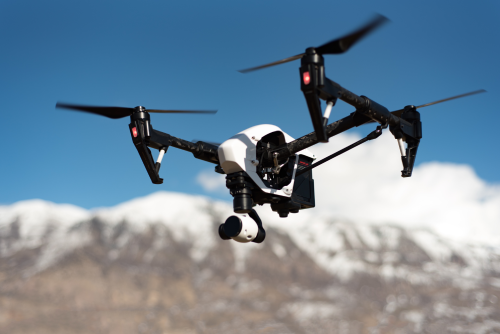
For builders and developers, the best drone is not the one with the flashiest spec sheet. It is the one that can reliably document progress, inspect hard-to-reach areas, and produce usable data for reports, billing, planning, or marketing. In India, the right choice also depends on compliance, local service, batteries, and how rough your sites are in real working conditions.
Quick Take
- Most builders do not need a single “do-everything” drone.
- If your main job is weekly progress photos and short update videos, a compact camera drone is usually enough.
- If you need maps, stockpile volumes, contour models, or cut-and-fill measurements, look for an enterprise mapping drone with RTK and a mechanical shutter.
- If you inspect roofs, façades, solar assets, or moisture and heat issues, a thermal drone is a better buy than a prettier camera drone.
- Large campuses, roads, industrial parks, mines, and corridor projects usually justify a heavy enterprise platform only when there is a real survey or inspection workload.
- In India, local after-sales support, spare batteries, training, repair turnaround, and compliance guidance often matter more than one extra camera lens.
- Always verify the latest DGCA, Digital Sky, airspace, and model-specific compliance position before buying or flying.
What builders and developers actually use drones for
A drone for construction or real estate work usually falls into one of five jobs:
- Site progress monitoring: weekly or fortnightly images from the same angles to show what has changed
- Measurement and mapping: orthomosaics, 3D models, stockpile volumes, contours, cut-and-fill checks
- Inspection: roofs, façades, towers, elevated tanks, solar rooftops, waterproofing issues, external defects
- Sales and marketing: launch videos, aerial site context, amenity showcases, approach roads, surrounding development
- Client and investor reporting: faster visual proof of milestones without waiting for manual site walks
That is why the best drones for builders and developers are not all in one category. A real estate marketing team and an earthwork contractor need very different machines.
Best drones for builders and developers at a glance
| Buyer profile | Best drone class | Example models | Best for | Main limitation |
|---|---|---|---|---|
| Small builder, architect, site manager | Compact camera drone | DJI Mini 4 Pro class | Weekly updates, basic visuals, light inspections | Not ideal for precise mapping or windy large sites |
| Growing builder or mid-size developer | Mid-range all-round camera drone | DJI Air 3 class | Progress reports, safer zoom checks, decent marketing | Still not a true survey drone |
| Premium real estate developer, brand-focused team | High-end camera drone | DJI Mavic 3 Pro or Mavic 3 Classic class | Better image quality, polished campaigns, premium visuals | Measurement workflow is secondary |
| Contractor, PMC, survey-heavy builder | Enterprise mapping drone | DJI Mavic 3 Enterprise class | Orthomosaic maps, stockpiles, cut-fill, repeatable missions | Less focused on cinematic output |
| Facilities, solar, maintenance, inspection teams | Thermal enterprise drone | DJI Mavic 3 Thermal or similar enterprise thermal class | Heat loss, hotspot checks, roof and solar inspection | High cost if thermal is rarely used |
| Large infra, industrial, mining, corridor or specialist survey firm | Heavy enterprise RTK platform | DJI Matrice 350 RTK with mapping payload class | Large areas, advanced survey, LiDAR, industrial inspection | Expensive, complex, overkill for most builders |
Example models are reference points only. In India, confirm the exact model’s legal suitability, seller authorisation, after-sales support, and current compliance position before purchase.
The best drone classes for builders and developers
Compact camera drones: best for weekly site progress on smaller jobs
If you manage a few residential or commercial sites and mainly want recurring visual updates, a compact drone in the Mini-class is often the smartest starting point.
It works well for:
- Weekly progress reports
- Before-and-after comparisons
- Sales updates for clients and investors
- Basic roof and elevation visuals
- Social media and brochure support
Why it makes sense:
- Easy to carry
- Quick to launch
- Lower total investment than enterprise systems
- Good enough image quality for documentation and light marketing
- Less intimidating for teams that are new to drone workflows
Where it falls short:
- Wind handling is weaker than larger drones
- Small sensors are not ideal for low light
- It is not the right tool for survey-grade results
- Large construction sites can outgrow it quickly
Choose this class if your business needs visibility more than measurement.
Mid-range all-round camera drones: best for growing builders who need one practical aircraft
For many builders and developers, this is the sweet spot. A drone in the Air-class gives you better wind performance, better battery endurance, and often a second camera or zoom option for safer inspections from a distance.
It suits:
- Mid-size residential projects
- Warehouses and industrial sheds
- Repeated site progress flights
- Marketing plus documentation in one aircraft
- Quick façade or rooftop checks
Why builders like this class:
- Better balance of portability and stability
- More confidence in wind than very small drones
- Dual-camera setups are useful for overview plus closer framing
- Good enough for serious client-facing visuals
- Easier to justify than a full enterprise platform
The catch:
- You still should not mistake it for a mapping drone
- Output depends heavily on pilot consistency
- If measurement accuracy affects payment, claims, or disputes, this class alone is not enough
If your team says, “We want one drone for progress, inspections, and decent visuals,” this is often the best starting point.
High-end camera drones: best for premium marketing and polished real estate visuals
Some developers care as much about presentation as documentation. If launch films, premium project showcases, and investor presentations are a major part of your workflow, a Mavic 3 Pro or Mavic 3 Classic type of camera drone makes sense.
Best for:
- High-end residential marketing
- Township and plotted development showcases
- Clubhouse, amenities, and landscape visuals
- Fly-through-style exterior campaigns
- Executive updates where image quality matters
Why this class stands out:
- Better image quality than smaller drones
- More dynamic range for sunrise, sunset, and high-contrast scenes
- Better optical options on some models
- More polished output for ads, sales teams, and premium brochures
Where buyers make a mistake:
Many builders assume a premium camera drone can also replace a mapping drone. It usually cannot. If your real need is stockpile volume, orthomosaic maps, or measurable terrain outputs, spend on the survey workflow instead of on cinematic lenses.
Buy this class when visual storytelling directly supports your sales engine.
Enterprise mapping drones: best for stockpiles, cut-and-fill, and site measurement
If the drone needs to create maps you can work with, this is the class most builders should look at first. A drone like the DJI Mavic 3 Enterprise class is built more for workflow than glamour.
This is the right fit for:
- Earthwork tracking
- Stockpile volume checks
- Site layout verification
- Orthomosaic mapping
- Progress maps for large sites
- Basic survey support workflows
Key features that matter here:
- Mechanical shutter: helps reduce distortion when capturing mapping photos
- RTK support: Real-Time Kinematic positioning improves location accuracy
- Waypoint and automated mission planning: lets you repeat the same flight path regularly
- Better integration with mapping software: useful when you need deliverables beyond photos
Why this class is often the real “best drone” for builders:
- It produces decision-ready outputs, not just pretty footage
- It can save repeated manual effort on large sites
- It makes progress reporting more objective
- It supports volume and earthwork monitoring much better than consumer drones
But be realistic:
- It still needs proper workflow, trained operators, and software
- A drone map is not automatically a legal survey
- If the project is billing-sensitive or dispute-sensitive, use proper controls and qualified professionals where needed
If your company talks about contours, stockpiles, excavation, or quantities, this is the category to prioritise.
Thermal enterprise drones: best for inspection, maintenance, solar, and defect detection
Thermal drones are not for every builder, but they are extremely useful when surface temperature tells you something visible light cannot.
Good use cases include:
- Solar rooftop and solar park inspection
- Roof moisture or insulation checks
- HVAC and electrical hotspot inspection
- Façade defect screening
- Building envelope review
- Industrial and facility maintenance
Why this class is valuable:
- It can help teams find issues faster without extensive access equipment
- It reduces the need to expose people to risky inspection positions
- It turns the drone into a maintenance tool, not just a camera
Who should buy one:
- Developers with large operational assets
- Facility management teams
- Solar EPC and O&M firms
- Industrial builders handling post-handover maintenance work
Who should not buy one:
- Builders who will use thermal twice a year
- Teams without anyone trained to interpret thermal images properly
Thermal data is useful only when the operator and reviewer understand what they are seeing. A hotspot is not always a defect, and a cool patch is not always a leak.
Heavy enterprise RTK platforms: best for large infrastructure and specialist survey work
For roads, rail-adjacent work, mines, industrial zones, transmission corridors, or large campuses, a Matrice-class platform with advanced payloads becomes relevant.
This class is built for:
- Large-area mapping
- LiDAR work
- Advanced inspection payloads
- Bigger cameras and specialist sensors
- More demanding industrial operations
Why only some buyers need it:
- It is expensive
- Training requirements are higher
- The operating workflow is more complex
- Logistics, batteries, transport, and maintenance are heavier
- It is overkill for a normal apartment or villa project
Choose this only if your business has recurring work that justifies it, or if your team is already serious about surveying, infrastructure monitoring, or industrial inspection.
What matters more than brand names
When comparing the best drones for builders and developers, these features matter more than flashy marketing.
1. Repeatable flight planning
A construction drone should be able to fly the same route, height, and angle every week. That is how you make progress reports actually useful.
2. Camera type
A nice camera is important, but ask what the output is for:
- Marketing footage
- Progress photos
- Orthomosaic maps
- Inspection zoom
- Thermal analysis
Different jobs need different camera setups.
3. Mechanical shutter and RTK for mapping
If you want maps and measurements, these are far more important than cinematic features.
4. Zoom capability
A medium telephoto or zoom camera can help inspect façades, towers, and roofs from a safer distance without flying too close to structures.
5. Battery ecosystem
For real site work, one or two batteries are not enough.
A practical starting point:
- 3 batteries for light documentation work
- 4 to 6 for regular mapping or full-day operations
Also check charging speed, battery availability, and replacement lead times in India.
6. After-sales service and spares
This is a business tool. Ask:
- Who repairs it in India?
- How long do batteries and propellers take to arrive?
- Is there authorised service?
- Can the seller train your team?
- Is firmware support available?
- Will they help with workflow setup?
7. Software compatibility
The drone is only half the purchase. You may also need:
- Mission planning software
- Photogrammetry software
- Storage and backup
- CAD or GIS compatibility
- Reporting templates
If the output cannot be used by your engineer, architect, surveyor, or client, the drone has not solved your problem.
How to choose the right drone for your business
Step 1: Decide your main deliverable
Pick one primary output first:
- Weekly progress photos
- Marketing videos
- Site maps
- Stockpile volumes
- Inspection
- Thermal reporting
If you try to optimise for everything, you usually overspend.
Step 2: Decide how accurate the output must be
Ask yourself:
- Is this for internal updates?
- Is this for contractor billing or quantity review?
- Is this for a consultant deliverable?
- Could the output be challenged later?
The more sensitive the output, the more you should lean toward enterprise mapping workflow, controls, and trained operators.
Step 3: Match the pilot skill level
A small in-house team may do well with a compact or mid-range drone. A specialist survey or QA team can justify enterprise hardware.
Step 4: Factor in site conditions
Indian construction sites bring:
- Dust
- Heat
- Wind
- Poor take-off areas
- Dense urban obstacles
- Signal clutter
A drone that feels fine on a test lawn may be frustrating on a real site.
Step 5: Budget for the full kit, not just the aircraft
Include:
- Extra batteries
- Charger hub
- Spare props
- Landing pad
- Hard case
- Memory cards
- Software
- Training
- Insurance where appropriate
- Maintenance and downtime backup
Safety, legal, and compliance checks in India
Before buying or flying a drone for construction work in India, verify the current official position instead of relying on old videos, dealer claims, or social media summaries.
Keep these points in mind:
- Check the latest DGCA and Digital Sky guidance for the exact drone category and intended use.
- Verify current airspace restrictions for every site. Private land ownership does not automatically mean unrestricted airspace use.
- Construction sites near airports, helipads, defence areas, government zones, ports, refineries, or sensitive urban locations may have added limits.
- Confirm whether your operation requires a trained or certified remote pilot under current rules.
- Ask the seller whether the exact model, firmware, and operation type are legally supportable in India.
- Use written permission from the site owner or client, and brief site security before flight.
- Avoid flights over workers, lifting operations, public roads, neighbouring occupied buildings, or crowds.
- Think about privacy. Residential developments often sit next to occupied homes, schools, or offices.
- Consider third-party liability insurance and equipment cover for commercial use, especially when clients require it.
When rules are unclear, verify first and fly later.
When local support beats a famous brand
Many builders make the mistake of buying purely on YouTube reviews or imported-market hype. For business use in India, a less glamorous but well-supported package from a reliable local distributor or Indian manufacturer can be the smarter choice.
That is especially true if you need:
- On-site training
- SOPs for your staff
- Faster repair turnaround
- Replacement batteries without long delays
- Procurement documentation
- Help with mapping workflows
- Support for tenders or enterprise deployment
A drone that is down for three weeks during slab cycles or earthwork stages is not cheaper just because it looked cheaper on day one.
Common mistakes builders make when buying a drone
Buying for visuals when the real need is measurement
If the site team needs quantity tracking, do not buy a cinema-first drone and hope software will fix it.
Ignoring software and training costs
A mapping drone without software, workflow setup, and trained operators will underdeliver.
Assuming all drone maps are survey-grade
Photogrammetry outputs can be very useful, but accuracy depends on workflow, controls, conditions, and operator quality.
Underestimating battery needs
Real projects need repeat flights, retakes, and reserve power.
Skipping repeatable flight plans
Ad hoc flying creates pretty footage, but weak reporting. Builders need consistency.
Choosing the cheapest seller instead of the best support
For a business tool, spares and repair turnaround matter.
Flying too close to structures and people
A zoom camera is often safer than forcing the drone into narrow spaces around workers and scaffolding.
Forgetting data management
Drone files pile up fast. If you do not have naming, storage, and backup discipline, your reporting workflow will become messy.
FAQ
Can one drone handle both marketing and site measurement?
Sometimes, but not perfectly. A mid-range all-rounder can cover progress visuals and basic documentation, but serious measurement work is better served by an enterprise mapping drone with RTK and a proper workflow.
Do builders really need RTK?
Not always. If you only need visual updates, no. If you need accurate maps, stockpile volumes, or repeatable georeferenced site data, RTK is highly valuable.
Is a sub-250g drone enough for construction work?
It can be enough for small sites, progress photos, and basic visual reporting. It is usually not the best choice for windy sites, large campuses, or precise mapping jobs.
Should I buy a drone or hire a drone service company?
Buy if you need frequent flights across multiple sites and want faster internal reporting. Hire a service provider if your requirement is occasional, highly technical, or accuracy-critical.
Can a drone replace a surveyor?
No. A drone is a powerful survey support tool, but it does not automatically replace professional survey methods, ground control, or qualified survey practice where those are required.
Is thermal worth it for normal building projects?
Only if you have a recurring inspection use case. It makes sense for solar, facilities, building envelope checks, electrical inspection, and industrial maintenance. It is overkill for basic site progress reporting.
What should I ask a seller before buying in India?
Ask about legal suitability of the exact model, local service centre support, battery and propeller availability, warranty terms, training, mapping workflow support, and expected repair turnaround.
How many batteries should a builder buy?
For light site documentation, 3 is a practical minimum. For mapping or full-day site work, plan for 4 to 6 depending on the platform and workload.
What is the best first drone for a small developer?
A compact or mid-range all-round camera drone is usually the safest first buy. It lets you learn the workflow without jumping straight into expensive enterprise hardware.
Final takeaway
If you are a builder or developer, buy the drone that matches your output, not the one with the loudest marketing. For simple progress reports, a compact or mid-range camera drone is enough. For maps and measurement, move straight to an enterprise mapping platform. For thermal inspections, buy thermal. And in India, never ignore compliance, service support, batteries, and operator training—they often decide whether your drone becomes a useful site tool or an expensive cupboard item.
